Hung Yen is famous for its time-stained relics and captivates visitors with its rustic but rich culinary treasures. Let's explore with Travelviet.net the specialties in Hung Yen that must be tried once when traveling and bought as gifts in this peaceful land.
Articles on the same topic: Top 15 quality Hung Yen restaurants with unforgettable views Top 13 attractive tourist activities to experience in Hung Yen Top 8 Homestays in Hung Yen are beautiful, cheap and full of amenities 13 beautiful tourist destinations in Hung Yen that attract tourists What to buy as a gift when traveling to Hung Yen? 9+ Traditional craft villages in Hung Yen are the most attractive to tourists List of 10+ most special historical sites in Hung Yen
Specialties in Hung Yen must be tried once when traveling and bought as gifts
Coming to Hung Yen, don't forget to taste famous delicacies and bring home authentic hometown specialties to make the trip more complete and memorable.
Tieu Quan chicken patties
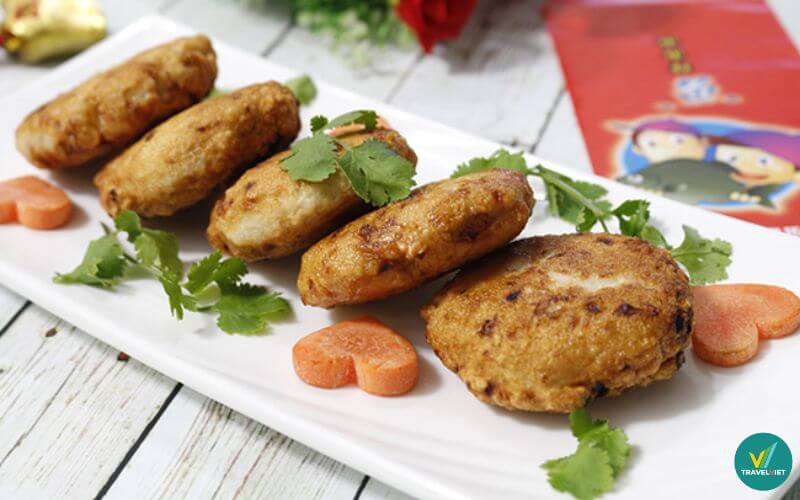
Among the specialties in Hung Yen, Tieu Quan chicken rolls always make diners fascinated by their original flavor that is hard to match anywhere else. The selected chicken must be a healthy young rooster with naturally sweet meat, then pounded with a stone mortar and then grilled on areca leaves, a traditional process that creates a characteristic aroma.
Tieu Quan chicken patties
Each piece of patty is golden, soft but still chewy, giving off a seductive greasy taste. One taste of Tieu Quan chicken patties is enough to understand why this dish is always on the list of "forever remembered" flavors of Pho Hien land.
Hung Yen sardines
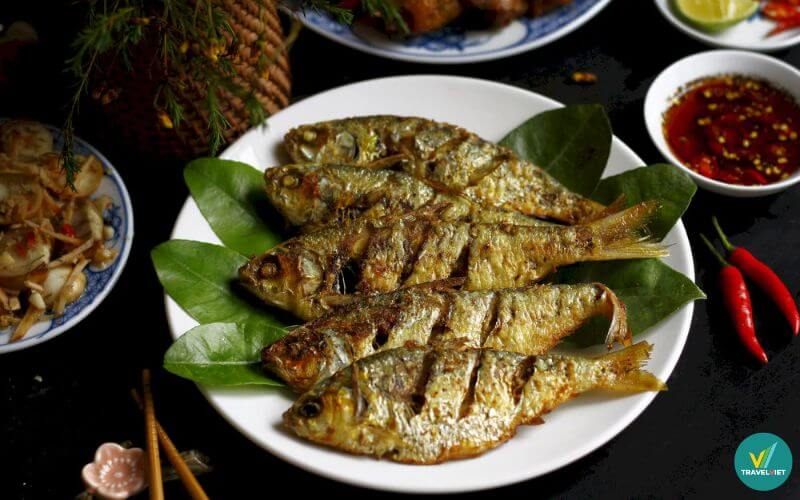
Sardines are one of the most prominent Hung Yen specialties every spring. The fish are caught fresh from the rivers, with thick bodies, small bones and silver scales that sparkle like the morning sunlight.
Hung Yen sardines
The traditional way of processing does not cut the belly but only removes the intestines through small cuts to help preserve the sweet and fatty taste of the fish. When the fish is grilled over charcoal, the aroma spreads far away, the crispy golden skin embracing the soft, tantalizing meat. Just a little salt and pepper or a few drops of lemon is enough to fully feel the quintessence of the river in this peaceful countryside.
Braised frog in Phuong Tuong
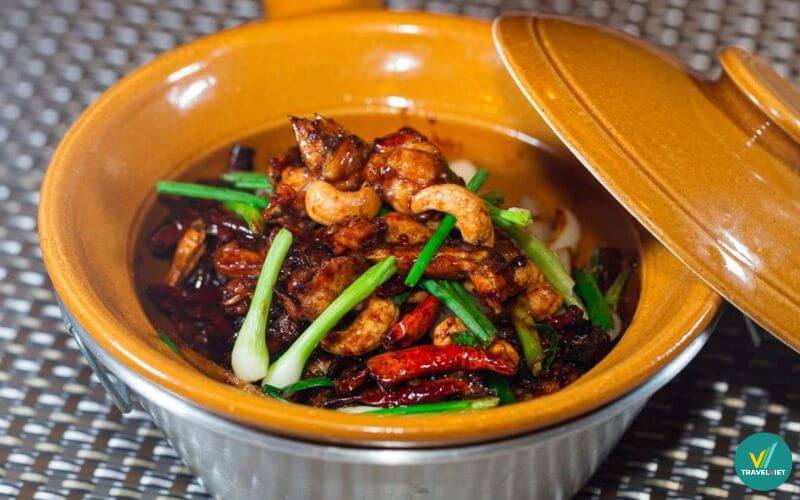
Phuong Tuong braised frog is a specialty in Hung Yen bearing the culinary imprint of Tien Lu village. The dish is attractive from the selection of ingredients, because the frogs are caught in the right season so the meat is firm, sweet and fragrant. People here have a unique secret when cleaning frogs with bamboo leaves and straw, helping the meat retain its natural aroma.
Braised frog in Phuong Tuong
After being prepared, the frog is lightly rolled, marinated with spices and then braised until golden like honey. Pick up a piece and you will feel the characteristic soft, sweet, fragrant taste - a flavor that makes it difficult for anyone who tries it to stop.
Pho Hien eel noodle soup
Referring to specialties in Hung Yen, Pho Hien eel vermicelli noodle soup is always a dish that makes visitors admire at first sight. The vermicelli bowl is a harmonious blend of a series of delicate ingredients: golden fried eggs, fragrant pork sausage, tender pork belly, and greasy stir-fried or fried eel.
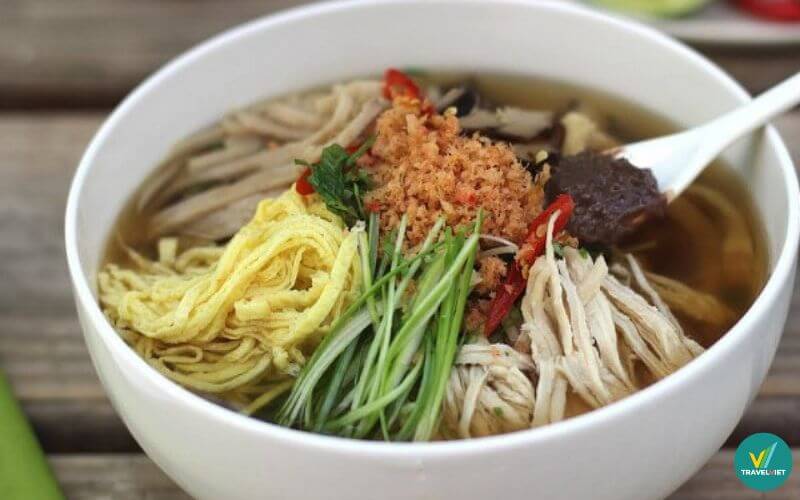
Pho Hien eel noodle soup
All mixed with clear, fragrant and naturally sweet broth, creating a unique flavor that is not mixed anywhere else. With just the first spoonful, you will fully feel the quintessence of Hien Street cuisine - clean, bold and seductive.
Perch soup
In the list of specialties in Hung Yen that are most popular with tourists, perch soup is always a name that is hard to miss when coming to Kim Dong areas or Hung Yen city. The perch is carefully selected, cleaned and then fried to a golden crisp to preserve the fragrant crust and soft, sweet meat inside. The soup is clear and refreshing, with the natural sweetness of fish mixed with the flavor of vegetables, making the soup bowl both rustic and typical of the Northern countryside.
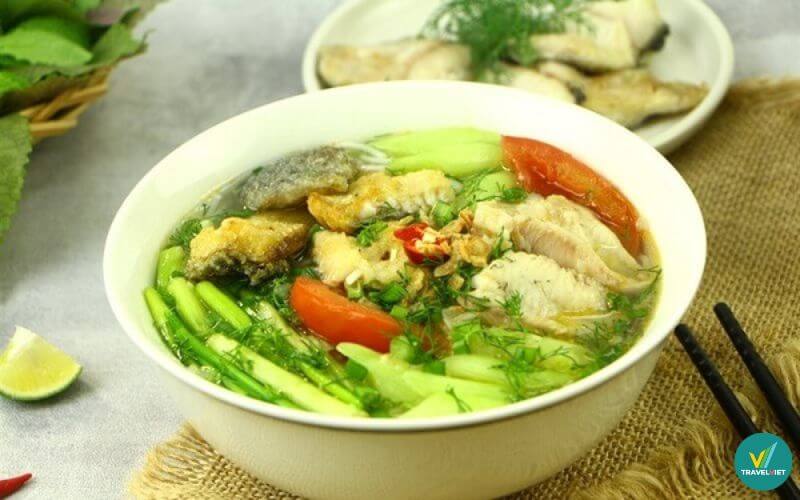
Perch soup
Tuong Ban
Ban sauce is one of the specialties in Hung Yen that carries the long-standing cultural value of Ban Yen Nhan village. The standard jar of soy sauce has a golden brown color, moderate viscosity and the strong aroma of hand-fermented soybeans.
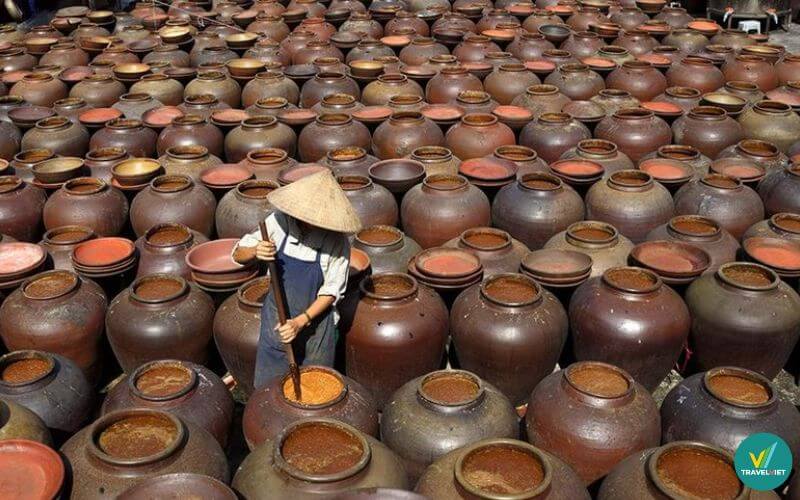
Tuong Ban
In addition to being a spice, Ban soy sauce is also the "soul" of a series of rustic dishes such as banh te, banh duc, boiled water spinach or pork belly. The harmonious sweet and salty taste and unique fatty aroma make Ban soy sauce a meaningful hometown gift, reminiscent of the simple rice tray of Pho Hien people.
Dong Tao Chicken
In the list of specialties in Hung Yen, Dong Tao chicken is definitely the most famous symbol. This rare breed of chicken has large, rough legs but its meat is soft, sweet, and rich in nutritional value.
From that special ingredient, people create many attractive dishes such as boiled chicken, grilled chicken, chicken sticky rice, chicken salad with lemon... each dish retains the natural sweetness of the typical chicken. Not only delicious, Dong Tao chicken also represents the sophistication of Hung Yen culinary culture, and is a luxurious gift sought after by many people.
Phu Thi rice rolls
Phu Thi rice paper rolls are a prominent Hung Yen specialty of Me So commune, famous for their extremely thin but soft rice paper crust that still retains just the right amount of chewiness. Fragrant stir-fried pork with dried onions mixed with a dipping sauce skillfully mixed from fish sauce, rice vinegar and chili garlic to create a rich flavor that is hard to find elsewhere.
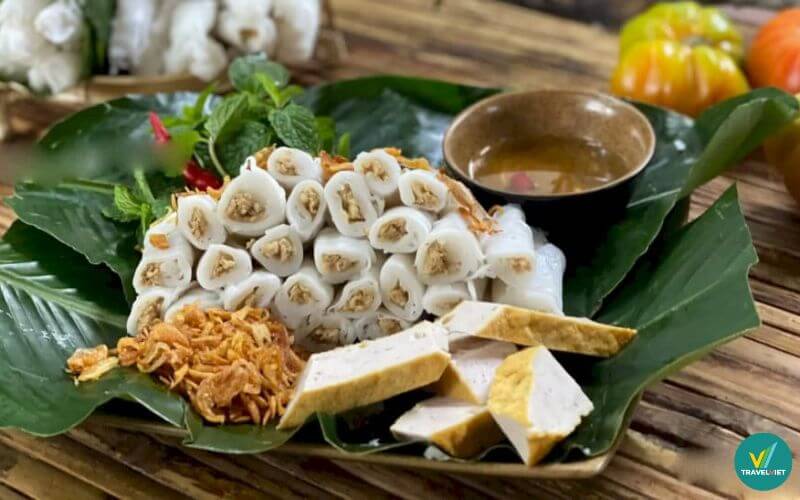
Phu Thi rice rolls
In particular, just one drop of Ca Cuong essential oil is enough to enhance the dish, making the bowl of dipping sauce more unique and attractive. Hot spring rolls served with cinnamon rolls in the morning is a simple but unforgettable culinary experience when visiting Hung Yen.
Longan lotus sweet soup
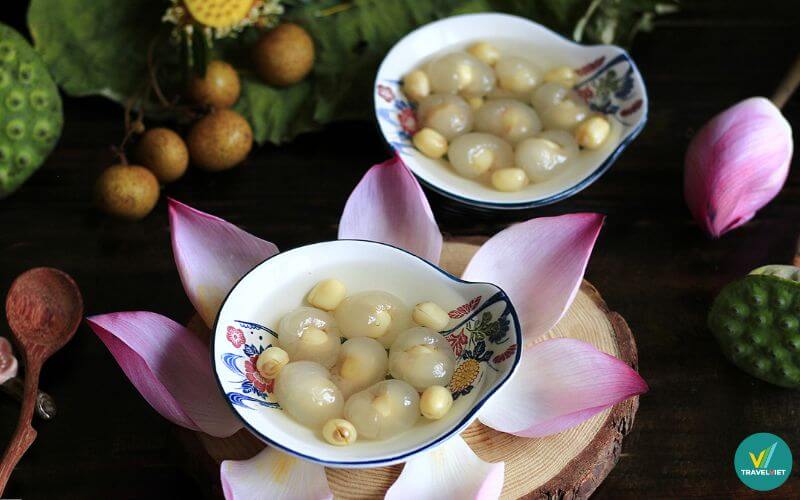
Longan lotus sweet soup is the most delicate sweet dish among the specialties in Hung Yen, once the king's dish because of its rare elegant flavor. Longan is dried from the famous longan, combined with fragrant lotus seeds, soft green beans and a little tapioca starch to create a bowl of clear, sweet and refreshing sweet soup.
Longan lotus sweet soup
Each spoonful of tea is a blend of natural sweetness and gentle fragrance, bringing a pleasant feeling of relaxation. This is a great gift for those who want to bring a little "pure flavor" of Pho Hien home.
Banh Khuc Hung Yen
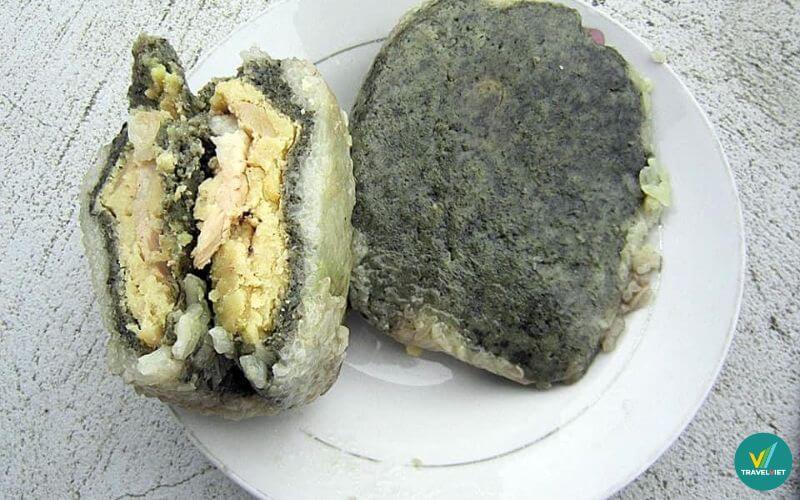
Banh Khuc is a familiar specialty in Hung Yen, packed with the rustic flavor of the countryside. Fresh vegetables are pounded to create a cool, soft green shell, covering green beans mixed with fragrant pork and fried onions.
Banh Khuc Hung Yen
The cake is rolled in sticky rice and then wrapped in banana leaves. When steamed, it will emit a fragrant blend of sticky sticky taste, fatty meat and the characteristic scent of vegetable chunks. Not fancy, but each cake is a whole memory for those who grew up in the Northern countryside.
Van Giang harrow gear
Van Giang's harrow is one of the specialties in Hung Yen marked by the ingenuity of the baker. Eight lim or eight oval rice is soaked for enough hours to keep its elasticity, then stirred until smooth before wrapping.
The filling includes minced pork, wood ear mushrooms, eggplant and pepper, creating a unique fragrant flavor. When peeling off the dong leaf layer, the cake is soft, smooth, and has the rustic but delicate taste of Northern Delta cuisine. Although simple, harrow gears are still a nostalgic gift for anyone who has ever enjoyed them.
Ben Hiep spring rolls
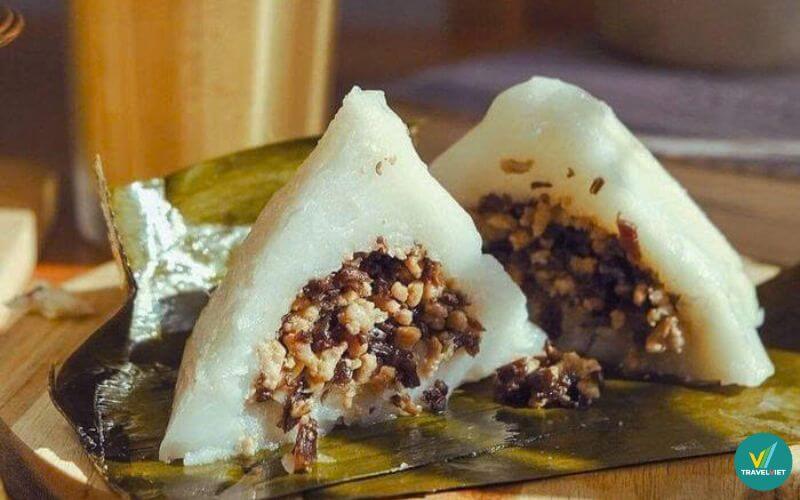
Ben Hiep spring rolls have long become one of the Thai Binh specialties closely associated with local people's lives. The cake is small, beautiful but delicate with a thin, soft and fragrant rice flour crust, enveloping a hot, rich and delicious meat filling.
Ben Hiep spring rolls
Peeling off the green banana leaves, the hot steam rising mixed with the unique aroma makes it difficult for diners to resist. Although simple, Ben Hiep spring rolls still have the power to conquer anyone thanks to their rustic, rustic flavor, so that you only need to eat it once to remember it forever.
Thai Thuy jellyfish salad
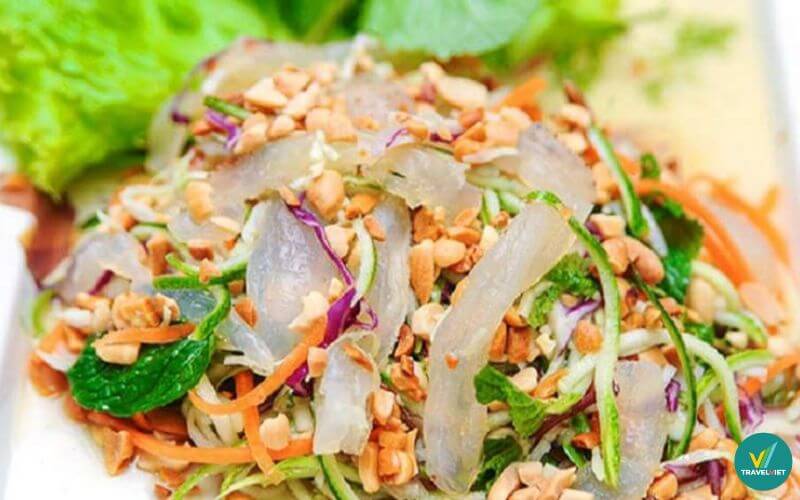
Among the dishes with the breath of the sea, Thai Thuy jellyfish salad is a Hung Yen specialty that makes many tourists fascinated. Fresh jellyfish are carefully prepared, retaining their natural crunch, then mixed with green vegetables, grated coconut, fresh squid and sprinkled with a little fatty peanuts.
Thai Thuy jellyfish salad
Each piece of salad is a blend of the salty taste of the sea, the crunchiness of jellyfish and the coolness of vegetables. It is that unique, harmonious flavor that makes the dish a great choice on summer days and an unforgettable culinary experience when visiting Hung Yen.
Goi Nhach salad
Goi Nhach salad is a typical specialty dish in Hung Yen that no other region can prepare with the same "quality" as here. After cleaning, the fresh mussels are sliced thinly, mixed with golden roasted mussels and octopus.
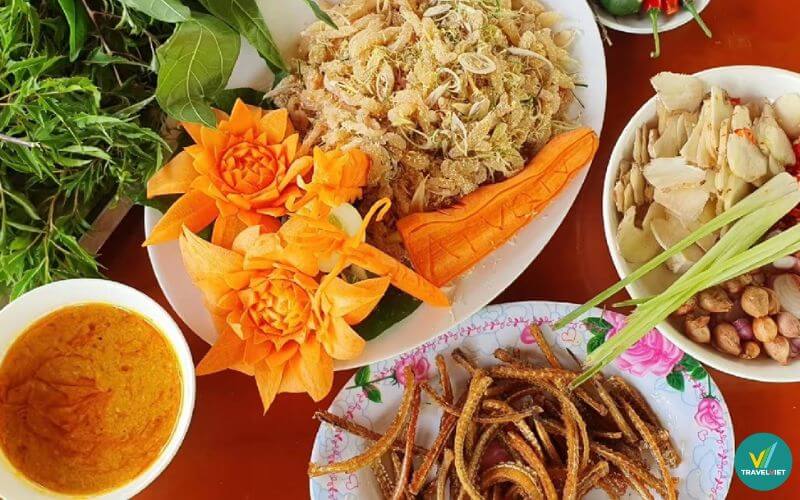
Goi Nhach salad
When eaten with raw vegetables such as fig leaves, apricot leaves, polyscias fruticosa leaves and rice paper, the salad's flavor becomes even more rounded, sweet, fragrant and a little spicy to stimulate the taste buds. With only about 30,000 VND, you can fully enjoy this unique dish and feel the typical rustic culinary spirit of Hung Yen.
Quynh Coi fish soup
Quynh Coi fish soup is a long-standing famous dish, associated with the rustic flavors of the Northern Delta. The dish uses fresh perch, combined with herbs, ginger and a sweet, carefully simmered broth, creating a rich flavor that will make anyone who tastes it gasp.
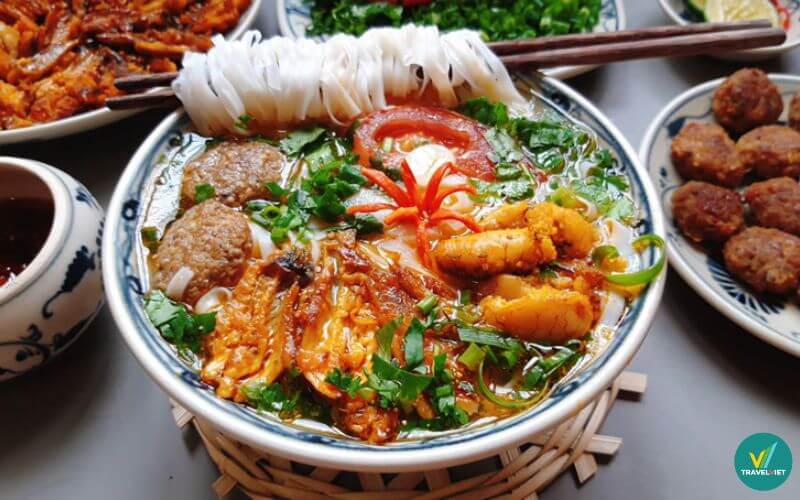
Quynh Coi fish soup
Not only attractive because of its unique delicious taste, Quynh Coi fish soup also brings high nutritional value, helping to energize the journey of discovery. The price of each bowl usually ranges from 20,000 - 45,000 VND, very easy to enjoy. This is definitely a specialty that you should try at least once when coming to Hung Yen.
Tien Hai spring rolls
Tien Hai sausage has long become the pride of people in the delta and is now also mentioned as one of the specialties you can find when visiting Hung Yen. The sausage dish is made from 100% fresh pork, pounded, skillfully seasoned and wrapped by hand according to family secrets.
The finished product produces spring rolls that are light and chewy, sweet and fragrant, and rich in traditional flavor. Although the production process is now supported by machines, the inherent rustic flavor is still fully preserved. If you have the opportunity, you can visit reputable establishments to buy quality sausages as gifts for family and friends.
Kien Xuong fried rice worm
Kien Xuong worm cake is a typical dish that only appears seasonally, around September to October of the lunar calendar. The worms are cleaned, mixed with eggs, minced meat, dill, lolot leaves... then fried until golden and fragrant.
Snakehead meat is greasy, soft, naturally sweet and has a very unique aroma, making everyone who has tried it "addicted" and always looking forward to it every time it comes back. Currently, this specialty is also prepared by many restaurants in Hung Yen, making it easier for tourists to enjoy.
Pho Xuoi pork sausage
Coming to Hung Yen, visitors will enjoy Pho Xuoi sausage - a unique version of sausage with a strong hometown flavor. The sausage is meticulously prepared: lean meat is pounded by hand, the skin is sliced thinly, mixed with delicious fish sauce and then wrapped in fresh banana leaves. When boiled, the sausage produces supple, lightly crispy rounds with a faint, characteristic aroma. This is a delicious specialty that is very suitable to enjoy on the spot or buy as a gift.
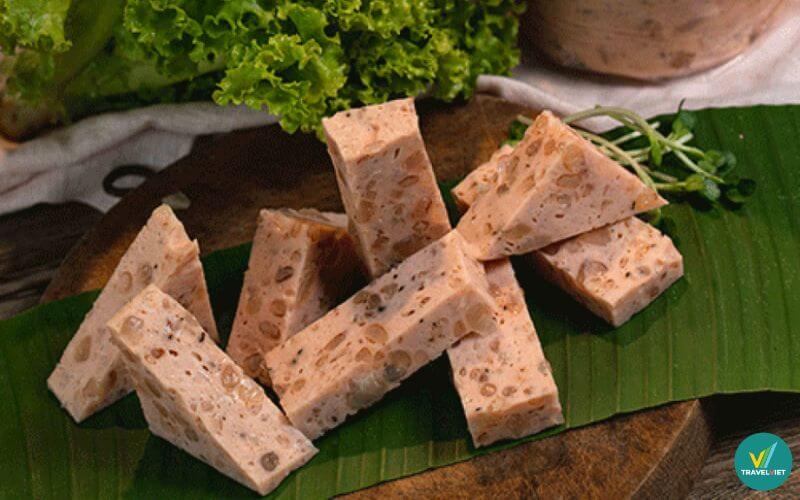
Pho Xuoi pork sausage
Turmeric cake
Turmeric cake is a famous specialty of the delta, including Tien Hai. Now this cake is more popular and is sought after by many tourists when coming to neighboring provinces, including Hung Yen.
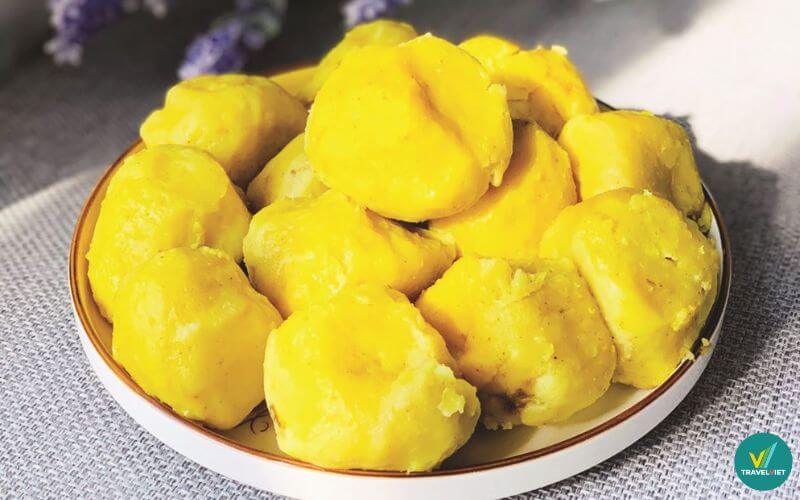
Turmeric cake
The cake has a natural yellow color from fresh turmeric, and is completely not overpowering thanks to the skillful preparation of the maker. The crust is soft and flexible from ordinary rice flour, the filling includes onions, pork rinds, a little cinnamon and fish sauce, all blending together to create a rich, fragrant, and strange flavor.
Dau Village Day Cake
Dau Village Day Cake (Van Giang, Hung Yen) is one of the most typical specialties of the province. Each cake is the crystallization of the meticulousness, ingenuity and pride of the local people.
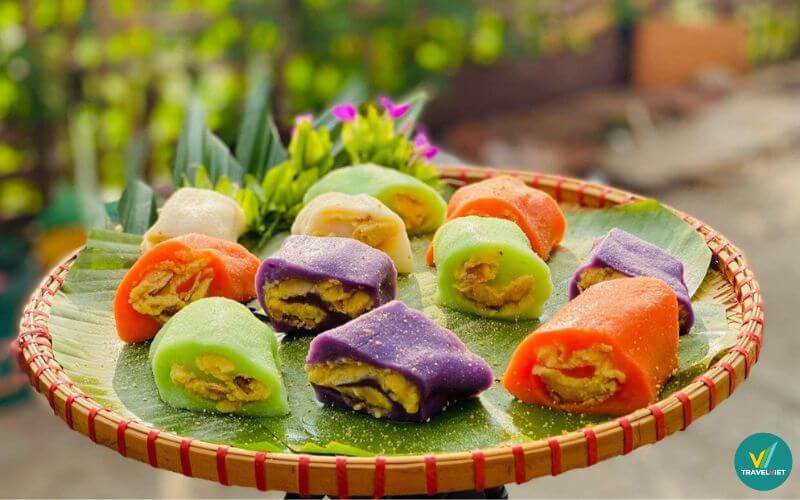
Dau Village Day Cake
The cake is made from carefully selected yellow flower glutinous rice, finely ground and cooked to a perfect fragrant consistency. There are two types of filling: savory from lean meat and fatty green beans, or sweet from mashed green beans. Soft, fragrant and rich in countryside flavor, Lang Day cake is not only a delicious dish but also an indispensable part of the traditional feast every Tet holiday.
Dai Dong hemp cake
Dai Dong gai cake is famous for its characteristic shiny black color from hemp leaves and sweet aroma that makes diners want to enjoy it right away just by opening the banana leaf. The soft, flexible crust made from glutinous rice flour combined with the smooth yellow green bean filling creates a fatty - fleshy - light taste that is very easy to eat.
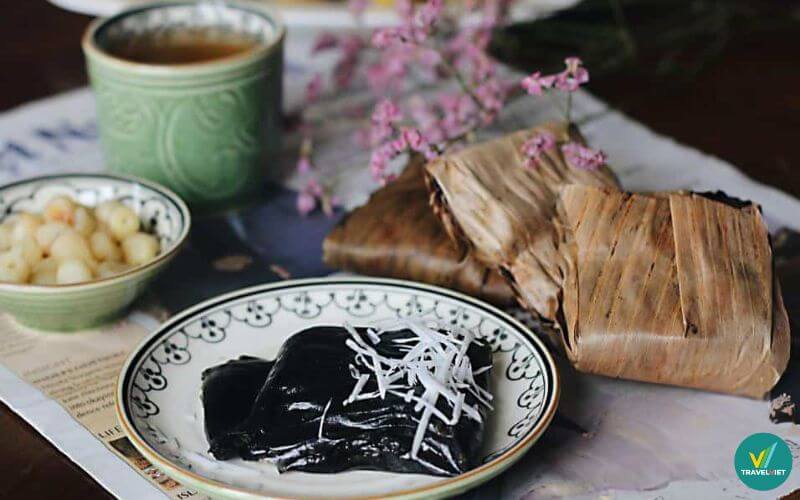
Dai Dong hemp cake
Initially it only appeared around Tet, but now banh gai has been made all year round and has become a hometown gift that many tourists seek to buy when visiting Hung Yen and surrounding areas. The price of the cake is quite affordable, only from 7,000–10,000 VND/piece, very suitable for buying as a gift or taking home to enjoy.
Hung Yen egg lychee
Referring to Hung Yen specialties, egg lychee is a name not to be missed. From late May to mid-June, red lychee gardens cover the entire hillside, signaling the full harvest season and bringing a bustling atmosphere to the whole countryside.
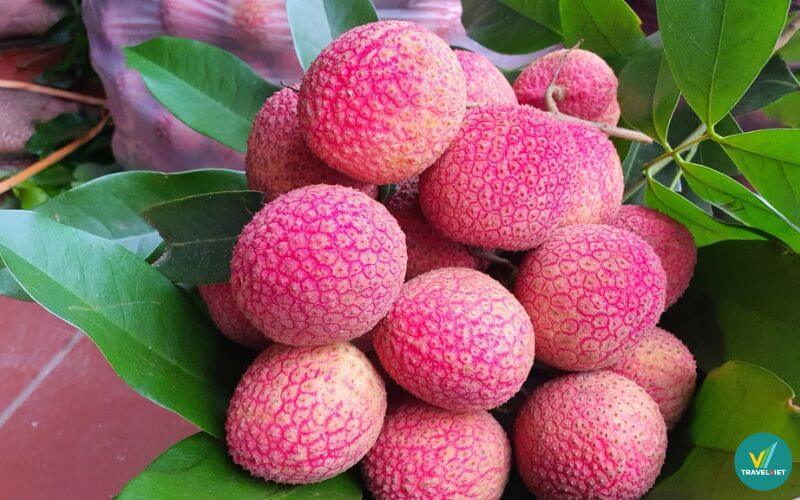
Hung Yen egg lychee
Lychee eggs have a large round shape like a chicken egg, thin shell, thick pulp, sweet taste and light natural fragrance. When peeling off the shell, the clear, plump white flesh melts right at the tip of the tongue. This is not only a specialty fruit but also the pride of the people of Hung Yen, containing the alluvial flavor and rustic features of the rich countryside.
Guava bo
Bo guava is a famous specialty guava at one time, closely associated with the lives of people in the Northern Delta. The fruit is only as small as a fist but has a unique aroma and taste that changes with each layer: initially a bit acrid, then slightly sour and ending with a spreading sweetness. Today, although not as popular as before, guava is still a memorable gift, sought out by many tourists because of its special flavor and nostalgic feeling that is hard to find in modern guava varieties.
Hung Yen longan
Longan has long become a symbol of Hung Yen, a fruit associated with the history, pride and culture of the people here. Thanks to the warm climate, fertile soil and meticulous care, Hung Yen longan has a very unique flavor: thick, crispy pulp, sweet but not harsh, especially a natural aroma that is not mixed with any other region.
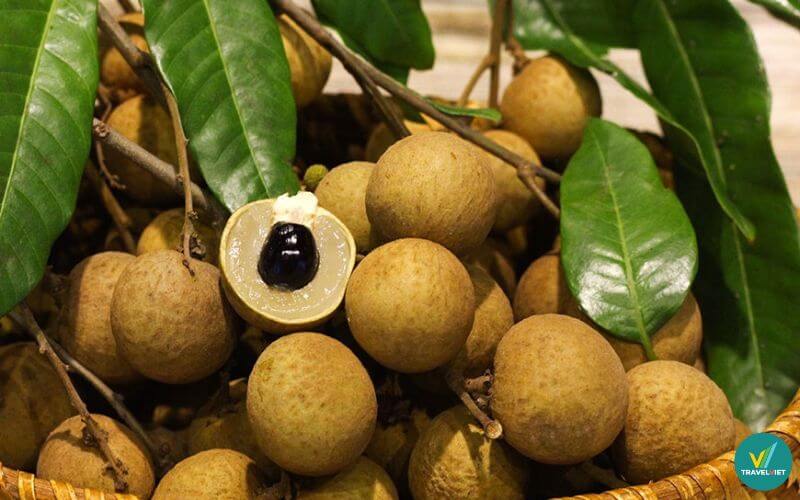
Hung Yen longan
The longan season lasts from July to August - the best time to enjoy the round, heavy fruit bunches. Longan is not only a delicious fruit but also the quintessence of the alluvial land, a gift that any tourist wants to bring back.
Longan flower honey
Longan flower honey is one of the most outstanding specialties of Hung Yen, associated with the vast longan growing areas in Hong Nam and Tan Hung. Honey is harvested in April and May, right when longan flowers bloom, when bees freely collect nectar in the fragrant space.
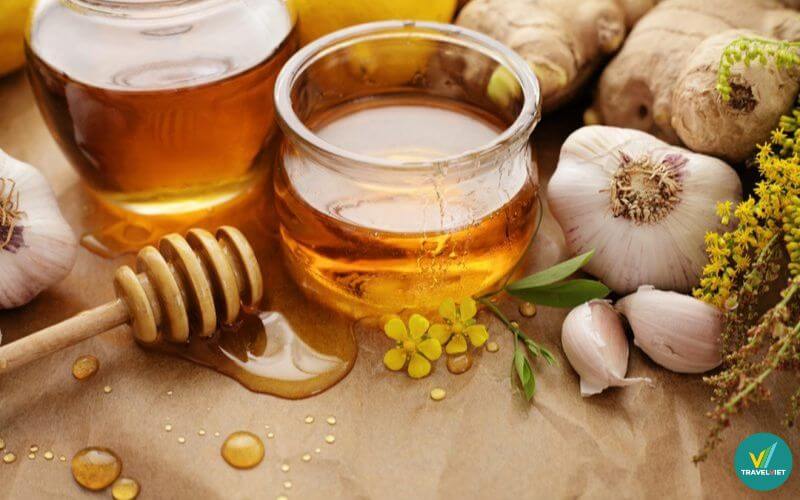
Longan flower honey
The finished honey has a shiny amber color, a thick consistency, a sweet taste and a light natural fragrance. Not only is it a nutritious food that many people trust, longan honey is also used for beauty, food preparation, tea or as a meaningful gift.
Lac Dao Wine
When talking about Hung Yen, if you haven't tried Lac Dao wine, it's like you haven't fully felt the soul of the countryside here. The wine is made from fragrant sticky rice and brewed according to the traditional "three toa" method, requiring meticulousness and long-standing experience of the people.
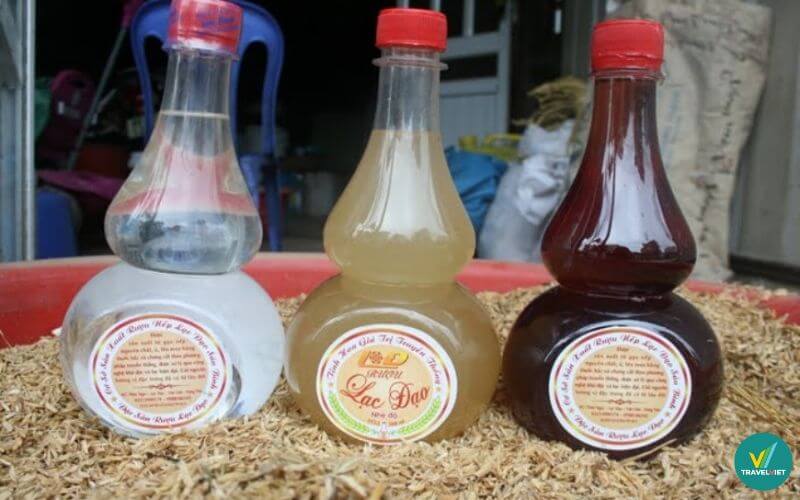
Lac Dao Wine
With just a small sip, you will feel the spicy taste spreading on the tip of your tongue, the aftertaste is mellow but still strong, making the drinker easily "drunk without being tired". Thanks to that unique rich flavor, Lac Dao wine always appears during holidays, becoming a drink that captivates many tourists from far and wide.
Siu Chau Candy
Siu Chau candy is a long-standing specialty gift of the Chinese community in Pho Hien, containing traditional culinary imprints through many generations. The candy shell is light and crispy, inside is golden roasted peanuts mixed with molasses and sliced fresh ginger.
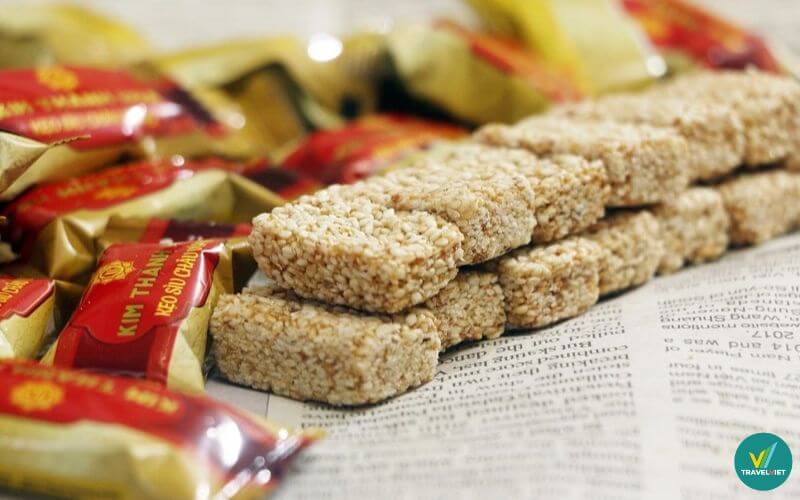
Siu Chau Candy
The flavor of the candy is a delicate blend of sweet - spicy - sweet, very suitable to enjoy with a cup of hot tea on cold days. Both simple and delicious, Siu Chau candy is a hometown gift that visitors will always remember every time they come to Hung Yen.
Banh Cay in Nguyen village
Nguyen village fiddler cake is a famous specialty of Hung Yen thanks to its delicious taste, easy to eat and suitable as a gift. The cake is made from glutinous rice, sugar fat, ginger and malt, going through many processing steps to create a harmonious, rich, crunchy flavor. With only about 40,000 VND for a box, Banh Cay becomes a rustic yet sophisticated snack. When enjoyed with a cup of hot tea, the flavor becomes even more complete.
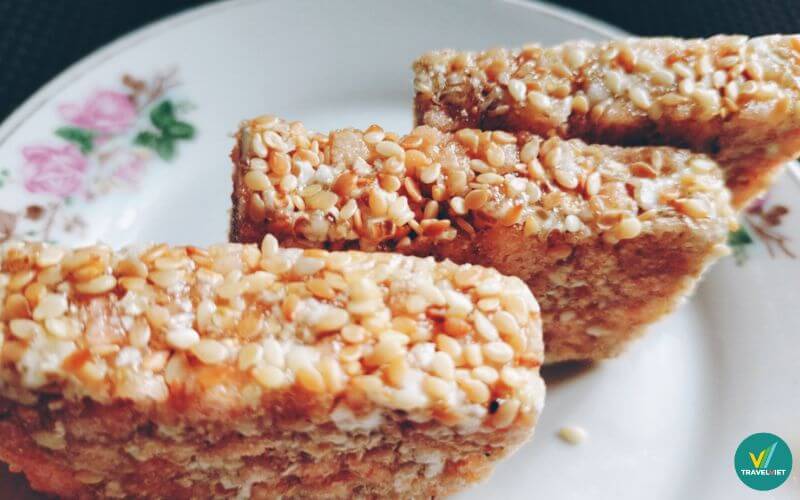
Banh Cay in Nguyen village
Above are the specialties in Hung Yen that you must try once when traveling and buy as gifts. These dishes have delicious, quintessential flavors and are rich in homeland identity, and will definitely leave an unforgettable experience for visitors.
Hung Yen 1433 view
Update day : 18/11/2025

Located adjacent to the Red River, which is red and heavy with silt all year round, in Hung Yen city, Xich Dang Temple of Literature, also known as Temple of Literature of Hung Yen, is an important relic in the Pho Hien relic complex. The Temple of Literature was built in 1832, after nearly 400 years of existence and enrolling 161 students who passed the university entrance exam in Upper Son Nam town, the Temple of Literature has become a symbol of the studious tradition of the people of the "Nhat Nhat" land. Kinh period, second Pho Hien". Although located in a residential area, right on Yen Lenh bridge, on Highway 38 connecting Ha Nam with Hung Yen, you can observe Xich Dang literary temple from two hundred-year-old rice trees planted in front of the gate. Located on the entrance path, there are also statues of two large stone pigs carved in the 18th century. Tam Quan, also known as Nghi Mon gate, is one of the works that still retains unique architectural features among the remaining literary temples in Vietnam. Built in a matchlock architectural style, two floors and eight roofs have an attic. On both sides of the Tam Quan there are two loudspeaker platforms, used to announce the names of candidates and announce the regulations in the examinations. Instead of the drum tower like in the Quoc Tu Giam and Mao Dien literature temples, in the Xich Dang literature temple, the drum tower is replaced by a bell tower. The sound of the bell and the bell ringing is the signal that the exam has begun and ended, and it is also a call to express gratitude and gratitude to the wise men during each festival. The two bells and bells of the Temple of Literature are also ancient relics cast and created in the 18th century. Inside the gate there is a large yard, in the middle of the yard is the ten-way street, on both sides of the yard there are a bell tower and a grand building with 2 rows of left and right vu. These two rows are currently used to display images and artifacts related to education in Hung Yen province. The Xich Dang Temple of Literature is structured in the style of Tam: including the Pre-Temple, the Middle Temple and the Rear Palace. The roof system is structured in a "real estate" style, with the main side facing south. The interior of the temple shines with a system of grand pagodas, arches, hammock doors and a system of pillars and rafters completely painted with gold and covered with metal. The most valuable artifacts in the temple of literature that have been preserved to this day are 9 stone stele engraved with the names, hometowns, and positions of 161 people who passed the university entrance exam in the ancient town of Son Nam, including 138 people in Hanoi. Hung Yen and 23 in Thai Binh.
Hung Yen
From January to December
6728 view

Referring to Hung Yen is mentioning a land with many places for tourists to visit. Hung Yen tourism is famous for types of tourism such as spiritual cultural tourism, community tourism, eco-tourism, and craft village tourism. Some famous tourist attractions include Nom village, Noi street, chrysanthemum garden, Tran temple, etc. Especially, it is impossible not to mention the famous spiritual place in this land, Chu Dong Tu temple. The temple was built on a rectangular high ground, and has a long history. The temple worships Saint Chu Dong Tu and his two wives, Princess Tien Dung and Princess Tay Sa. This place is associated with the legend of love and at the same time is associated with the famous victories of our nation such as the war of Quang Phuc against the Liang army; Tran Nguyen Han and Nguyen Trai fought against the Ming army; many uprising movements in the resistance war against the French colonialists,... The temple consists of two areas: Da Trach temple and Da Hoa temple. These two temple areas are not too far apart and are both located in Khoai Chau district. The total area of the temple is 18,720 square meters, including 18 rooftops of different sizes. These two temples have both been certified by the state as national cultural relics. The temple attracts tourists not only because of its ancient, mossy appearance, but the statues are also one of the notable highlights at the temple. A typical example is the statue of Saint Chu Dong Tu and his two wives placed in the harem. The statue is cast in bronze, painted, and has very sophisticated eyeliner, and currently there are three such statues placed in the Third Palace. Visitors can choose to come here from 10 to 12 of the second lunar month every year, to not only be able to see the temple but also participate in the Chu Dong Tu festival. This festival is held to commemorate the merits of Saint Chu Dong Tu and Princess Tien Dung for curing diseases and helping people. The festival is very unique with many diverse activities such as palanquin procession, dragon dance, ca tru singing, unique folk games,...
Hung Yen
March to April
6302 view

The temple was built on a high, flat, rectangular area of land with an area of 18,720m². The temple's face faces west, looking straight at Tu Nhien beach (Ngu Doi village, Tu Dan commune) - where Princess Tien Dung, daughter of the 18th Hung King, met Chu Dong Tu and the two became husband and wife. The temple is divided into three zones. The outer area has an area of 7,200m², has no walls, the only architecture is a 2-storey stele house, 8 curved roofs, with doors opening in 4 directions. In the stele house, there is a stone stele with content about the time of restoration of Da Hoa temple and the fateful meeting of Chu Dong Tu - Tien Dung. From here, follow the 6m wide paved road with rows of ancient rice trees radiating cool shade on both sides, and you will reach the main gate. Through the main gate you enter the middle area. This area has an area of 3,400m², surrounded by low walls, planted with many green trees and divided into two areas: the right area has a bell tower, inside there is a 1.5m high bronze bell; The left area has a porch, inside there is a stone porch with a width of 1.2m; Separating these two areas is a tiled road leading from the main gate to Ngo Mon with three entrances and exits, above which hangs a large letter with four words painted in red and gilded with "Bong Lai Cung Khuc". Stepping through the Ngo Mon gate is to enter the inner area. With an area of 11,520m², the architecture is in the royal style of the Nguyen Dynasty but has a harmonious combination of Buddhism, Confucianism, and Taoism. The inner area includes: a courtyard, a worship house, an adoration yard, an incense burner, and a palace. second palace, third palace and harem. Connecting the palaces are the hermitage, the tarpaulin, the horse house, the artillery house... In the harem there are 3 shrines: Saint Chu Dong Tu (in the middle), Princess Tien Dung Queen (left), concubine Hong Van – Tay Sa (right). The overall architectural works in this area include 18 houses with curved tile roofs shaped like 18 stylized dragon boats. This is a special architecture to recreate the scene of Princess Tien Dung's boat sailing on the river wharf in the past. In addition to its unique architecture, Da Hoa Temple also preserves many rare relics, typically: 3 wooden altar thrones dating from the late 17th and 18th centuries. These are considered the oldest thrones still found. seen in our country today; pair of ceramic Bach Tho jars (one hundred Tho words, none of which are similar, are engraved on the side of the jar)... Leaving Da Hoa temple, visitors will go to Da Trach temple (Yen Vinh village, Da Trach commune), a place associated with the legend of Da Trach lagoon. Legend has it that at the location of Chu Dong Tu and his two wives, princesses Tien Dung and Hong Van, "transformed" into the sky on the night of the 17th day of the 11th lunar month, they collapsed into a large lagoon, Da Trach lagoon (the lagoon was formed). after just one night). Thinking that it was a divine response, local people built a temple to worship the three gods in the Da Trach lagoon area and named it Da Trach temple, also known as Hoa temple. Da Trach Temple has been restored many times, however, the current architecture is the result of the restoration in 1890 with the character Cong (工), facing east, overlooking a semi-circular lake, the roof is carved with many dragon shapes, The phoenix is very beautiful, consisting of three rooms. Among them, the harem is the most beautifully designed space with a three-step rolling dome, giving visitors the feeling of standing in a boat cabin. From the outside, on the right, first is the altar for worshiping the temple, the statue of military mandarins, then the altar for worshiping the parents of Saint Chu Dong Tu; On the left is the altar of Be Nguoi Quan Quan (a statue of a carp made of wood painted with lacquer and gilded with shiny gold), next is the altar of Trieu Viet Vuong (548 - 571). In the middle of the harem are 3 altars: Thanh Chu Dong Tu (in the middle), Princess Tien Dung Queen (left), concubine Hong Van (right). There are also statues of two horses, one red, one white. Legend has it that those were the two horses that Saint Chu Dong Tu and his two wives rode to heal the people. In addition to the main architecture, in the temple area there is also a bell tower, inside is placed a Da Trach bell (Da Trach temple bell) cast in the 14th year of Thanh Thai (1902), 1.5m long, 0.8m wide; two rows of nine-room houses. Previously, this was the place for nine palanquins; two stone stele standing opposite each other (one stele is broken), built in the 17th year of Gia Long (1819), 1.6m high, 0.8m wide, 0.17m thick; a semicircular lake; Many horizontal panels and parallel sentences record the legend of Chu Dong Tu - Tien Dung - Tay Sa; especially the image of a hat and a stick - two objects that Saint Chu Dong Tu used to save humanity. Da Trach Temple was recognized by the State as a national historical architectural and artistic relic in 1989. To remember the merits of Saint Chu Dong Tu and Princess Tien Dung, every year, local people organize the Chu Dong Tu festival. This is one of the 16 largest festivals in the country with attractive cultural and sports activities. The most unique is the water procession with the participation of 10 boats following each other to the Red River to take water for Holy Mass at Da Hoa and Da Trach temples. This activity is organized according to ancient customs, taking place for two hours. While the boats move, there is also a dragon dance performance on the boat.
Hung Yen
From January to December
6441 view

Nom village is located in Dai Dong commune, Van Lam district, Hung Yen province, about 20km from Hanoi capital. Years have passed, Nom village is still a land cherished and preserved by the people of Hung Yen. In the face of bustling, hustle and bustle life, it is difficult to find a place where people feel so peaceful. The beauty of architecture, culture and people are still intact after more than 20 years of upheaval. Because of that "sustainable" beauty, Nom village tourism in Hung Yen is also of interest to many people. Moving away from the city to a small village, you will find it both familiar and strange. Familiar like being at home, strange because of a new land. In Nom village, the simple traditional beauty such as banyan trees, wells, and communal house roofs are still preserved. Through the mossy village gate, the scene inside the village is typical of ancient Vietnamese villages. The small houses are all tinged with time, the daily activities of the people take place calmly and peacefully. Feeling extremely comfortable and relaxed. Traveling to Hung Yen will not be complete if tourists have not visited Nom village. In addition to enjoying Hung Yen specialties, going to Nom village is also an opportunity for visitors to learn about the culture of the people here. Through interesting architecture and destinations. Stepping through the village gate, Nom market is the place where you can experience the most perfect Vietnamese countryside market. Nom Market was formerly the busiest market in Van Lam area. The market is simple, not reinforced concrete like the city center markets. An attractive place in Nom village is Nom pagoda. The pagoda also has another name, Linh Thong Co Tu. According to many Chinese documents, the pagoda was built on a large pine hill during the Later Le Dynasty. However, through analysis of terracotta statues in the temple, many archaeologists believe that the temple has existed for about a thousand years. Nom Pagoda has bold Asian architecture, typical of ancient Vietnamese pagodas. The pagoda houses more than 100 terracotta statues with exquisite sculptures. The pagoda is very sacred and treasured by the people of Nom village. The houses in Nom village are also places many tourists come to explore. Many houses are 200 years old and have unique architecture. Kinh Bac culture is authentic and alive through every house.
Hung Yen
From January to December
6387 view

Crescent Lake is still considered the golden heart of Hung Yen. This is a landscape that all Hung Yen people know about. Hung Yen Crescent Lake is located in the center of Hien Street, adjacent to Bach Dang Street, to the East is next to Bai Say, to the Southwest is the Red River dyke. From the city center, it only takes about 1km to get here. Traveling to Hung Yen, visiting Crescent Lake, visitors will be immersed in a quiet and peaceful natural scenery. Coming here, you can breathe in the clear air, it seems like all the fatigue and sadness have disappeared, leaving only moments of true peace. Hung Yen Crescent Lake not only has poetic beauty but is also located right in a sacred land, where there are many communal houses, shrines, temples and pagodas. There are two famous spiritual sites located right on the lakeside that many tourists visit: Tran temple and Mau temple. These are two places with many historical imprints, silhouetted on the quiet surface of Crescent Lake. True to its name, many people can imagine the shape of the surface of Hung Yen Crescent Lake. This place is like an impressive crescent moon. The beauty of the lake is shown to be both rustic and extremely vivid in every song, poem, and work of art. Coming to Crescent Lake, you will enjoy the peaceful, fresh atmosphere and leave many unforgettable emotions in your soul. Crescent Lake contains a slowly flowing stream of water, a quiet and peaceful space, creating a gentle and poetic scene. Initially, the lake was a section of the Red River left after changing its course. People here compare the lake to a falling piece of Hang Nga's mirror. Although the lake is not connected to anywhere, the water in the lake is always full and clear. On one side is the Red River dyke with lush green grass, on the other side is bustling streets. If you are looking for a quiet space, close to green nature in Hung Yen, Crescent Lake is a place that is hard to miss. Surrounding Crescent Lake are many green trees, each tree reaching out to cast a shadow on the calm lake surface. Every time there is a breeze, the swaying trees give people a rustic and peaceful feeling. In the middle of the lake is a 10m high flagpole with a red flag with a yellow star fluttering, this is considered a special highlight in the peaceful lake surface. Visiting Crescent Lake, visitors can rest on the benches, admire the scenery, and enjoy the cool breeze. Walking around the lake, you will hear the gentle sound of water flowing, letting your soul be blown by the wind, the scene is like a lyrical song. In the hustle and bustle of modern life, coming here makes time seem to settle down and the soul feels lighter. Crescent Lake is where many cultural events and annual festivals of Hung Yen city take place. In 1905, Governor Le Hoan organized the Kieu Bay competition at the lake with the participation of Nguyen Khuyen and Chu Manh Trinh. During the French colonial period, the French built a small road from the Mau Temple gate to the temple. guard, divide the lake in two to deploy recreational boating activities. After the success of the August Revolution, this road was demolished to return the lake's pristine beauty.
Hung Yen
From January to December
7360 view

The temple worships Ba Chua Muoi (ie the temple of Concubine Nguyen Thi Nguyet Anh), the third wife of King Tran Anh Tong. The palace and temple of Lady Chua Muoi are located in Thuy Hai commune, Thai Thuy district, Thai Binh province. Ancient books recorded: Lady Muoi's real name is Nguyen Thi Nguyet Anh, born in 1280 at Quang Lang site, Thuy Van district, Thai Binh district (now Thuy Hai commune, Thai Thuy district, Thai Binh province) in a family. work in salt. Since childhood, she had an unusual appearance, read books and was very intelligent. Every time she finishes school, Nguyet Anh often goes to the fields to help her parents work. But every time she helps her parents, wherever she goes, the weather gets shady, while salt making requires sunlight. The stronger the sunlight, the more beautiful the salt. Worried about the traditional profession and livelihood of local residents, the village elders gathered together and discussed a plan to build her a boat to bring salt to trade elsewhere. During a trade, her boat parked at the river wharf near Thang Long citadel, coincidentally right on the occasion of King Tran Anh Tong's business trip across the river. By fate, the king was so captivated by her beauty that he took her to the palace, showered his love on her, and made her his third concubine. But unfortunately, she could not give birth to a child and became sad and sick. After that, King Tran Anh Tong took her back to her maternal hometown in the hope that her illness could improve. Seeing the Queen sitting by the window overlooking the village's salt fields every afternoon, the shepherd children gathered around her to use mannequins to dance around her to relieve her sadness. One afternoon, while watching the children dancing happily, she laughed and escaped (April 14, Year of the Dog). When the king heard the news, he was extremely merciful, ordained her as a Blessed Deity and allowed the people to build a temple called the Temple of the Salt Lady. Over time, the temple was damaged and demolished. In 1988, people in the area temporarily rebuilt a small palace to worship her. In 2012, the Ministry of Culture, Sports and Tourism restored this monument. The current palace has 3 rooms, with a harem and altars and statues; In the palace, there are a number of specific items related to the salt making profession such as wheelbarrows, ladles to scoop water for salt and water, rakes for salt on the drying yard... Ba Chua Muoi temple still preserves a banner of conferral of conferments from the Tran and Tran dynasties. two sets of ancient couplets. The temple is a special architectural work combining temple and pagoda, located on Trang Quang Lang land. The pagoda facing North is the place to worship Shakyamuni Buddha. The temple facing south is the place to worship Saint Mother Tam Phi Nguyen Thi Nguyet Anh (ie Lady of Salt). This is the most beautiful temple - pagoda, in the stone stele in 1596, there is the following passage: "Thai Binh's fairy tale is famous for its national pagoda, the traditional version is only famous, and the Nam Bang is famous for its scenic beauty..." Meaning: "The area Thai Binh Hung Quoc Pagoda is a traditional scenic place, the most precious scenic spot in the South..." Source: Vietnamese Rural Newspaper
Hung Yen 7885 view

Dong Bang Temple is located on the Diem river in Dao Dong site, Vong Lo district, Phu Phuong district, now Dong Bang village, An Le commune, Quynh Phu district, Thai Binh province. The temple's self-name is Bac Hai Linh Tu, a place to worship Father Bat Hai Dong Dinh - a person who made great contributions to pacifying Thuc to defend the country and recruit people to establish hamlets and build the country and society in the early days. Dong Bang Temple is known to the people as a sacred temple dating back to the reign of the 18th Hung King. The temple has the title "Tam Ky Linh Ung - Vinh Cong Great Vuong, Supreme Spirit". Legend has it that, during the reign of King Hung Vuong 18, our country was invaded by foreign invaders, the court had to set up an altar to summon Linh Son Tu Qi to help the country defeat the invaders. At that time, the water god of Dao Dong village appeared to assist the king in defeating the enemy and had the first contribution in guarding the eight western estuaries. He was ordained as "Tran Tay An Tam Ky Linh Ung - Vinh Cong Great King, Supreme Spiritual God". Since then, this place has been a spiritual place admired by people from all over and built temples. In the 13th century, Dao Dong village was also one of the important military defense lines of the Tran Dynasty, where soldiers were stationed and practiced naval warfare. Before going into battle, Hung Dao Dai Vuong and his generals all came to offer incense and pray at the temple. After his death, he was worshiped here by the people. Since then, Dong Bang Temple has also been a place to commemorate Hung Dao Vuong and the generals of the Tran Dynasty during the three great defeats of the Mongol Yuan army and the establishment of eight ancient Dao Dong sites. Not only does it have respectable historical values, Dong Bang Temple is also a valuable architectural and artistic relic such as a museum of bronze, stone and wooden art with an internal area of 6,000 square meters, including 13 buildings and 66 compartments are closely linked together to form a temple complex with a closed, imposing "first, second, second" style structure. The architectural pieces are in harmony with sophisticated carvings, hundreds of horizontal panels, couplets, great characters, lacquered and gilded scrolls on the themes of four sacred animals, four precious animals, sets of incense burners, altars, and dragons. The thrones and exquisite, beautiful wooden sculptures from the Khai Dinh and Bao Dai dynasties are still preserved intact. Because of the legends, historical and artistic values, Dong Bang Temple is known as the temple of inspiration and four seasons of incense and smoke. In particular, in 1986, Dong Bang Temple was recognized by the Ministry of Culture, Sports and Tourism as a national historical and cultural relic. According to annual custom, the Dong Bang Temple Festival is held for about a week from August 20 to the 26th of the eighth lunar month. The festival attracts a large number of disciples, people and tourists from near and far. . Dong Bang Temple Festival preserves traditional cultural beauties and noble human values, and is an opportunity to express gratitude, the tradition of "drinking water, remember its source" and the people's admiration and respect for the people. with His Majesty Father Bat Hai Dong Dinh and commemorate the death anniversary of National Cong Tiet Hung Dao Dai Vuong. Source: Department of Culture, Sports and Tourism of Thai Binh province
Hung Yen 7627 view

During his lifetime, despite being busy with thousands of jobs, Uncle Ho still cared about Thai Binh. The Party Committee and people of Thai Binh were honored to welcome Uncle Ho five times: the first time on January 10, 1946, the second time on January 10, 1946. 2 on April 28, 1946, the 3rd time on October 26, 1958, the 4th time on March 26, 1962 and the last time on December 31, 1966 and January 1, 1967, Uncle Ho. Ho returned to reward 5 tons of rice for the Party Committee and people of Thai Binh - the first province in the North to achieve 5 tons of rice/1 hectare. Relics and places marking Uncle Ho's visit to Thai Binh include: 1. Provincial Administrative Committee, Le Hong Phong ward, Thai Binh town. 2. Dia dike section, Hung Nhan district. 3. Town Fitness Tri House, Le Hong Phong Ward, Thai Binh Town. 4. Provincial Administrative Committee headquarters, Le Hong Phong ward, Thai Binh town. 5. Mill factory construction site, Le Hong Phong ward, Thai Binh town. 6. Town Stadium, Le Hong Phong Ward, Thai Binh Town. 7. Nam Cuong commune, Tien Hai district. 8. Ms. Luu's house, Nam Cuong Commune, Tien Hai District. 9. Nho Lam communal house, Dong Lam commune, Tien Hai district. 10. Mr. Du's house, Dong Lam commune, Tien Hai district. 11. A military unit, Dong Lam commune, Tien Hai district. 12. Phuong Cap communal house, Hiep Hoa commune, Thu Tri district. 13. The office of the Provincial Party Committee at the evacuation site, Dai Dong village, Tan Hoa commune, Vu Thu district. On the night of December 31, 1966, and the morning of January 1, 1967, Uncle Ho visited and worked with the Provincial Party Committee. People stay at a thatched house in Dai Dong village, Tan Hoa commune, Vu Thu district. After Uncle Ho's death, the Standing Committee of the Thai Binh Provincial Party Committee retained the house as Uncle Ho's memorial area in the province. The memorial house was recognized as a historical relic by the Ministry of Culture, Sports and Tourism on December 12, 1986. Source: Electronic Information Portal of Department of Culture, Sports and Tourism of Thai Binh province
Hung Yen 7518 view

Comrade Nguyen Duc Canh's memorial area is located in Diem Dien town, Thai Thuy district, Thai Binh province, this place records a deep impression on Nguyen Duc Canh, one of the first 7 party members who founded the Communist Party. , a first leader of the Vietnam Trade Union. The memorial area was built on the incense burner land of 8 relatives living together, with an area of 1,600m². The scene of the old house of Comrade Nguyen Duc Canh's family during his lifetime includes: The Ancestral Church (which was the teaching school of Comrade Nguyen Duc Canh's father), the house, and the kitchen were completely reconstructed. on old ground. The space is simple and humble, recalling the image of the order and family style of an ancient Confucian family. To pay tribute and commemorate Nguyen Duc Canh's great contributions to the Vietnamese revolutionary cause, Nguyen Duc Canh's memorial area was invested in repairing, upgrading, and expanding spaciously, worthy of a cultural and historical relic. National level. This is also the first cradle that molded and gave wings to the personality, soul, will and actions of loyal communist soldier Nguyen Duc Canh. Behind the house there is still a well preserved, this place more than 100 years ago marked a special moment. On the morning of the first day of Tet Mau Than (1908) (February 2, 1908), Mrs. Tran Thi Thuy went out to celebrate the well's birthday according to the custom of sprinkling coins into the well so that when the well is washed at the end of the year, the person who picks up the money will be the one who picks up the money. Lucky person, little boy Nguyen Duc Canh, was born here. People in the area call it Ngoc well, although in the coastal area, most well water is salty and cloudy, but this well has been full for hundreds of years, the water is still full, sweet and clear, visible to the bottom. Every day, visitors to the memorial area still come out to drink water and wash their faces to cool down. On the bank of the well is a stone stele about 3 meters wide, with the poem "Farewell" engraved on it - a letter from comrade Nguyen Duc Canh to his mother, written during the days of being detained by the enemy in a cell to be beheaded. Nguyen Duc Canh was beheaded by the French colonialists at dawn on July 31, 1932 at Hai Phong Prison. That year, he was only 24 years old, an age full of vitality. Before dying, he shouted: "Down with French imperialism and feudalism!", "Long live the Indochina Communist Party!". Every page of history here records profound impressions of Nguyen Duc Canh, a One of the first 7 members of the Party, he is one of the founders and an outstanding leader of the Vietnamese workers' movement. To pay tribute and engrave the great contributions of Nguyen Duc Canh to the Vietnamese revolutionary cause and to his hometown of Thai Binh, in Thai Binh city and Thai Thuy district, there are 2 roads named after Nguyen Duc Canh, 2 schools named after Nguyen Duc Canh. name Nguyen Duc Canh; The statue of comrade Nguyen Duc Canh is majestically placed at October 14 Square. The memorial was built on the land where he was born and raised, and is associated with the tradition of a family of studious, virtuous, patriotic, and people-loving people. This is also the first place that molded and gave wings to the personality, soul, will and actions of loyal communist soldier Nguyen Duc Canh. Source: Vietnam News Agency
Hung Yen 7464 view

Luu Xa Temple is a place to worship two famous historical figures of the Ly Dynasty (12th - 13th centuries), Luu Khanh Dam and Luu Ba. Bao Quoc Pagoda was the name given by King Ly to show respect for the mandarins who had many contributions to helping the four Ly dynasties (Thai Tong - Thanh Tong - Nhan Tong - Than Tong) build a prosperous country at that time. . The relics of Luu Xa temple and Bao Quoc pagoda are closely related to each other, forming a cluster of relics because they all share a common historical event. The temple and pagoda are located close to each other at the beginning of Luu Xa village - Canh Tan commune - Hung Ha district - Thai Binh province. Luu Khanh Dam and Luu Ba are two brothers from different mothers, their father is Mr. Luu Ngu - hometown in Cuu Chan district (now Thieu Trung commune - Thieu Hoa - Thanh Hoa). Mr. Luu Ngu was an official in the pre-Le dynasty (Kings Le Hoan and Le Long Dinh) to govern this river junction area. Realizing that the land of Luu Xa at that time was behind the river and in front of the lagoon, the river was winding like "The dragon flanks the tiger", so he set up a palace there and married a local woman. When he first married Ms. Tran Thi Ngoc, she was nearly 40 years old but had no children. He married a woman named Pham. After that, the two women became pregnant and gave birth on the same day, the only difference being that one was born at the Tiger hour, the other was born at the Horse hour, he was Luu Khanh Dam, the younger was Luu Khanh Dieu (Luu Ba). Mr. Luu Ngu brought his relatives from the countryside to live in Luu Xa land. When Ly Cong Uan ascended the throne, opening the Ly dynasty, Luu Ngu's children were soon warmed up and entered the court. Both brothers were mandarins of the same dynasty. As soon as the Ly Dynasty was established, the enemy invaded from the south. Luu Khanh Dam was assigned by King Ly Thai To along with his generals to lead the army to fight the enemy, capturing the king of Champa, Bo Hop, and bringing him back. As soon as the South calmed down, the Song enemy threatened to encroach on the North. He told the king: "I hope your majesty will not worry. Your majesty will personally go to command the four seas, beyond the realms, my servants and loyal brothers and generals will take care of fighting the enemy." During the Ly period, the Song invaders invaded the country three times. We were all defeated by our army and people. Thai To considered Luu Dam to be a man who defeated the south and had a "good plan" (good plan), proposed leaving the capital and appointed him the title of Thai Deputy to open the country, and assigned him to teach and instruct crown prince Phat Ma. Thai To died, Thai Tong ascended the throne, Luu Khanh Dam asked the king to exempt the villagers from service and taxes. When Thai Tong died, Thanh Tong ascended the throne and appointed Luu Khanh Dam as Binh Chuong. At the end of his life, Luu Khanh Dam returned to Luu Xa to repair the village pagoda and practice there. While in the village, together with monks Giac Hai, Duong Khong Lo, Nguyen Minh Khong organized for the people "Opening the Luoc River", "Making the Sinh River", "Digging the Hoa River" in Thai Binh. When he passed away, King Thanh Tong returned to attend the funeral ceremony. Because he was a founding citizen, the king gave the name of the pagoda where he practiced as "Bao Quoc Tu", gave him the title of king, and bestowed the title "Chinh Chieu Cam" ”, and built a 9-foot high, 9-storey tower next to King Luu Dam's mausoleum. The villagers of Luu Xa thanked him for building the temple and honored him as the village's Thanh Hoang. When Ly Nhan Tong ascended the throne, he bestowed upon him the four beautiful words "Showing spiritual understanding", and the following dynasties all granted him the title of deity. His temple (Luu Xa temple) and Bao Quoc pagoda were ranked national historical and cultural relics in 1990. Source: Thai Binh Department of Culture, Sports and Tourism
Hung Yen 7416 view
 AI Travelviet
 vn
vn en
en ja
ja ko
ko zh
zh


 vn
vn
 en
en
 ja
ja
 ko
ko
 zh
zh