Tourist destination
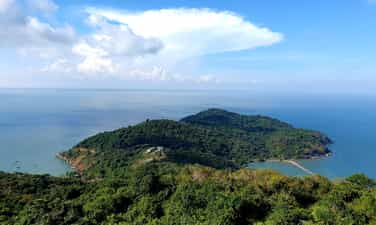
Ca Mau potato island
Hon Khoai is the name of a cluster of islands located southeast of Ca Mau cape in Tan An commune, Ngoc Hien district, Ca Mau province. Hon Khoai is more than 6 nautical miles (14.6km) from the mainland and has an important position in national defense and security. This place is considered a forward station guarding the air, sea and land in the southwest of the country. Hon Khoai Island includes many small islands: Hon Khoai, Hon Tuong, Hon Sao, Hon Doi Moi, Hon Da Le. Hon Khoai is the largest island with an area of about 4km2 and is also the highest island above sea level at 318m. In the past, this place was also known by many different names such as: Giang Huong Island, Doc Lap Island or Poulop Island during the French period. However, because of its shape like a giant potato, local people still call it Hon Khoai to this day. With a mild climate, not hot and dry all year round, visitors can visit Hon Khoai at any time of the year. However, to fully enjoy the beauty of Hon Khoai, you should come here during the dry season from November to April every year. For tourists in the Central or Northern provinces, you can choose to fly to Tan Son Nhat airport in Ho Chi Minh City then take a bus or rent a motorbike to Ca Mau with a ticket price of about 500,000 - 800,000 VND/ afternoon. For tourists in the South, with the developed inter-provincial bus system, you will not lose too much money and time if you choose a passenger car as a means of transportation. Some bus companies such as Phuong Trang, Thanh Buoi, Van Lang, Viet Hoang are operating routes to Ca Mau from the provinces with ticket prices of only about 100,000 - 150,000 VND/trip. In addition, if you are in the Western provinces, traveling to Hon Khoai by personal vehicle will bring many interesting experiences along the way. With a distance of about 300km from Ho Chi Minh City to Ca Mau, it will take you about 6-7 hours to travel by this type. Hon Khoai is an island of rocks, hills and primitive forests that are almost intact with many precious woods and rich flora and fauna, which has captivated many tourists. According to the latest research, the flora in Hon Khoai has more than 1,400 species including fruit trees, timber trees, medicinal trees... Animals are also quite rich with monkeys, wild chickens, pythons, monitor lizards, squirrels. white... and more than 20 species of precious birds. On the island there are 2 beaches, including Bai Lon in the southeast and Bai Nho in the north. When visiting Hon Khoai, the tourist boat will stop at Bai Nho, from there take a small boat to the shore about 50m. The first time you set foot here, visitors will be overwhelmed by the beautiful scenery. The most unique feature of this island is that the beaches have many strange round pebbles like goose eggs. Mother nature also favors this place with shady maple trees and casuarinas swaying in the cool breeze. When spring comes on Hon Khoai, apricot flowers bloom brightly yellow all over the island. Hon Khoai has a long, sheltered coastline, an anchorage and storm shelter for fishermen and a breeding and sheltering place for many marine species. From tiny plankton species to aquatic species with high economic value such as: squid, lobster, mantis shrimp, grouper, cobia,... Hon Khoai beach has wide sandy beaches. When the tide is low and the sea is calm, visitors can walk on the sand to learn about marine life and breathe the fresh air of the forest and sea. The road on the island has one main road from Bai Lon to the top of the island, about 3 km long, paved with smooth asphalt and shaded by green trees. What is special is that there are two streams on the island, providing fresh water all year round for units stationed on the island and fishermen fishing around the area. It is said that, because ancient fairies came down to this sweet stream to bathe, the island has since then been named Giang Tien. Because the island has few residents, there are only a few small grocery stores, mainly staffed by border guards guarding the island. Because of that, Hon Khoai still retains its wild beauty that is rare to find anywhere else. The most prominent building is probably the 100-year-old lighthouse - a place you cannot miss when coming to Hon Khoai. This tower is located on the highest peak of Hon Khoai, built by the French colonialists in 1920, this is considered one of the earliest lighthouses in Vietnamese waters. Traveling to Ca Mau, coming to Hon Khoai, you cannot miss the sea specialties with extremely attractive dishes such as: sweet potato fish, cobia fish, lobster, mud crab, grilled mantis shrimp,... Aromatic flavor Delicious and nutritious, the seafood dishes here become an interesting highlight and leave an unforgettable impression in the hearts of visitors. What makes tourists always remember Hon Khoai is probably the sincere hospitality of the island's soldiers, who guard the sea and sky for their homeland island day and night. And surely when leaving, visitors will love the beautiful Hon Khoai even more.
Ca Mau
6362 view


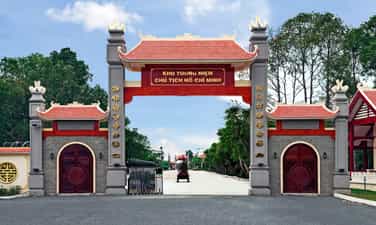
Bird Garden
It can be said that Ca Mau is the only province with a bird garden located right in the heart of the city. This unique bird garden is located within the grounds of the President Ho Chi Minh Memorial Area in Ward 1, Ca Mau city, Ca Mau province. With a large campus, many airy and cool green trees, President Ho Chi Minh Memorial Area in Ca Mau is not only a place to commemorate Uncle Ho, but also a tourist destination in Ca Mau that attracts tourists from near and far. President Ho Chi Minh's memorial area includes many works such as: Uncle Ho's worship space (where flower and incense offering ceremonies are held to commemorate Uncle Ho); Uncle lake floor; Bird garden (with an area of more than 3 hectares, the number of resident birds is estimated at over 12,000 individuals); Exhibition house, movie screening (serving the need to learn about the life and career of President Ho Chi Minh);... Harmoniously combined with a system of green trees and ornamental flowers to bring a cool and airy feeling . In particular, this area has many individual birds, storks, etc., coming in flocks and staying crowded, creating a unique bird garden in the heart of the city. Every year, on Tet holiday, birds gather here as if they had been dating forever. The scene of the bird garden in spring is so lyrical and poetic. In the afternoon, the sound of singing calls to you, the sound of flapping wings stirs the whole forest. According to counting results of the Institute of Natural Resources and Environment (under Hanoi National University) and the Royal Institute of Ornithology of Japan in April 2018, this bird garden has about 6,603 individual birds with about 53 other bird species. together. However, the number of birds in the garden fluctuates with each season of the year. At its peak, the garden had more than 10,000 birds coming to nest, breed and settle in the artificial bird garden in the heart of Ca Mau city. Most of these birds are storks (white storks, storks, storks), pileated gongs, cauldrons, red-necked birds (also called snake-necked birds) and gray herons. If you have the opportunity to travel to Ca Mau, this will be the closest and interesting place to visit for all tourists. Just less than 6 meters from a ditch, visitors will witness with their own eyes tens of thousands of birds, storks, gongs, teals, cauldrons, waterfowl, waterfowl... flying down to the mangrove forests and crowded bamboo banks. This bird sanctuary has existed for decades and has always been carefully and thoughtfully protected by the locality. Despite the streets and construction projects developing around it, the bird garden still exists as a precious feature of a city in the southernmost region of the country.
Ca Mau
6240 view


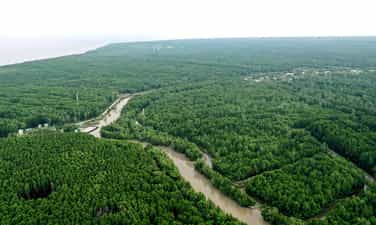
Ca Mau Cape
Ca Mau Mui National Park was established in 2003 when Dat Mui Nature Reserve was transformed into a National Park in the system of special-use forests of Vietnam. This is the largest primeval mangrove forest in our country, adjacent to the East and West Seas, so it is affected by both tidal regimes: semi-diurnal tides in the East Sea and diurnal tides in the West Sea. It is a breeding ground for many economically valuable aquatic species and a stopping point for many wintering migratory waterbirds. Currently, Mui Ca Mau National Park has a very diverse number of flora and fauna, with about 28 to 32 species of mangrove trees; about 26 species of mammals, 93 species of birds, 43 species of reptiles, 139 different species of fish, with 9 species of amphibians, 49 species of plankton, and many other rare species... Of which there are two species in the world red book: long-tailed macaque (Macaca fascicularis), silver langur (Trachypithecus cristatus) and four species in the Vietnam red book. Ca Mau Cape National Park, the mainland part belongs to the administrative territory of the communes: Dat Mui, Vien An and Dat Moi, in Ngoc Hien district, Ca Mau province, about 100km from Ca Mau city and nearly 400km from Ho Chi Minh City. Because the distance is quite far, the most reasonable means of transportation is by car or bus. Note that if you ride a motorbike, you need to be healthy and need to rest along the way. In Ho Chi Minh City, to get to Ca Mau, you can travel by bus with reputable bus companies such as Phuong Trang, Giap Diep, Hung Thinh... travel time is about 7-8 hours. In addition, you can book a flight with Vietnam Airlines with a flight time of 1 hour. Depending on the budget you have, choose to travel by car or plane. From Can Tho, you can go along National Highway 1A through the provinces of Hau Giang, Soc Trang, Bac Lieu, then continue about 67km to the center of Ca Mau City. Starting from Ca Mau City, you can rent a motorbike or car to go more than 50km along National Highway 1A for more than 1 hour, visitors will arrive at Nam Can town. From here, go more than 50km along the newly opened Ho Chi Minh Road to Dat Mui commune, Ngoc Hien district. When traveling to Ca Mau to Mui Ca Mau National Park, visitors will be impressed by the unique interesting things of this Dat Mui region. Each destination will be a unique and profound journey of new experiences. Ca Mau Cape National Park has the tourist attraction Ca Mau Cape Culture and Tourism Park, which is the sacred southernmost land of the Fatherland that any Vietnamese people wish to visit once. Coming here, visitors can visit and take commemorative photos at typical symbols of Dat Mui such as GPS coordinates milestone 0001, miniature panels (images of ships), visit the breakwater, wool brain symbol, mudskipper, forest village bridge, Ho Chi Minh trail end marker, Lac Long Quan Temple, Mother Au Co Statue, ... Or walk to the upper floors at the Hanoi Flag Tower project to see the panorama of Ca Mau mangrove forest and the East Sea. Vast and large, the cluster of Hon Khoai islands is hidden from afar. The forest and sea blend together to create a beautiful, poetic scene that is rare to find anywhere else. The people of Dat Mui "revealed" that Dat Mui Ca Mau has many flavors bestowed by the coastal region. Here, there are many delicious dishes such as stir-fried wool snails with coconut, fried crab with tamarind, braised pineapple fish, cobia cooked with sour rice, brown fish braised with fruit, mudskipper grilled with salt and chili... Especially Ca Mau crabs and shrimps are famous for their sweet taste, fragrant and firm meat with every fiber because they live in coastal alluvial lands, rich in minerals and rich food. The most interesting part of coming to Mui is enjoying Southern-style meals under the roofs covered with nipa palm leaves, surrounded by cool breezes with fruit wine, known as "Ca Mau wine" and listening to amateur music, it's truly unforgettable. Tourists can also buy as gifts for relatives and friends typical products of Dat Mui region such as: dried shrimp, dried pineapple fish, dried fish of all kinds, fish sauce, mangrove chopsticks, honey, souvenir products bearing the Dat Mui symbol... after finishing the trip to Ca Mau.
Ca Mau
6331 view


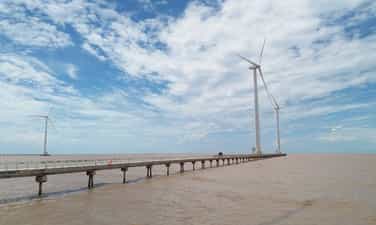
Bac Lieu fan field
Referring to wind power fields in Vietnam, of course, it is impossible not to mention the extremely poetic fields in Bac Lieu. In the past, almost everyone knew about Bac Lieu mainly because of anecdotes surrounding the house of Prince Bac Lieu or musician Cao Van Lau. Nowadays, coming to this southern land, visitors also have new experiences at Bac Lieu wind power fields. From Bac Lieu city, go through the ancient longan garden and Xiem Can pagoda to arrive. Bac Lieu wind power area is also known as wind power field or wind fan field, located in the coastal area of Vinh Trach Dong commune, Bac Lieu City, more than 10km from the city center. The road to the wind power farm is paved so it is not too difficult to move. In addition, this is also an opportunity to explore the landscape around the wind power field area with pristine mangrove forests and goby fish cages of people on the coast. Bac Lieu Wind Power Park is the first wind power project in Vietnam, built in 2010 with an investment of thousands of billions of VND. Currently, there are 62 towers and turbines located at sea, each turbine is about 80m high, the rotor is 42m long,... With what is happening here, Bac Lieu Wind Power Plant is truly worth considering as a typical example of clean and sustainable energy development not only in Bac Lieu but also in a large area of the sunny and windy Western coastal region. Anyone who comes here will enjoy the arrangement of wind turbines like giant and silent knights in the middle of a vast field where wherever they stand, they can take beautiful and impressive photos. The arrangement of turbine pillars combined with a concrete road above ground makes it easy to go from one area to another, and from afar the scenery is as beautiful as the European sky. Tourists coming here can freely check in and live virtually every corner. The scenery of walking in the distance, the wind blowing away a shawl or parasol is full of dreams. Right on the concrete road winding like a silk strip in the middle of the field, you can take a close-up portrait of yourself to see the wind turbines slowly rotating behind you. If you like, pan the camera down and you will see the sparkling mud fields, the biological system of the alluvial land is also extremely interesting, in the distance are fish sauce trees and mangrove trees with deep roots in the ground... In particular, recently the Mekong Delta Tourism Association decided to recognize Bac Lieu wind power area as a typical tourist destination of the Mekong Delta, making Bac Lieu a locality with 9 typical tourist destinations in the region. 8 points were previously recognized, including: Uncle Ho's Temple, Southern Don Ca Tai Tu Art Memorial Area and musician Cao Van Lau, Hung Vuong Square, Hunan Ecotourism Area, Artificial Beach - Nha Mat Tourist Area, Quan Am Phat Dai Area, Bac Lieu Hotel, Bac Lieu Prince's House Area. Only after a period of being recognized as a tourist destination, the wind power field increased its appeal to visitors, with an average of tens of thousands of visitors coming here every month to admire it. Currently, Bac Lieu wind power area has become a famous tourist destination in the Southwest region, enriching Bac Lieu tourist destinations. When visiting the wind power area, visitors should pay attention to the safety requirements of the national grid corridor and mandatory work areas that must be strictly implemented, especially in areas where entry is prohibited. Visitors can freely visit within the allowed scope but be polite and do not make noise that would affect the work of the engineers working here.
Ca Mau
6423 view


Mat house tourist area
Nha Mat tourist area is located on Bach Dang street, far from the city center. Bac Lieu is about 7km, located along the Bac Lieu coast with an area of more than 21 hectares. This is considered the largest and most attractive tourist destination in the Dong Bang Mekong region, combining an amusement park and a complex resort. One of the most tourist attractions of Nha Mat tourist area is the artificial beach also known as Tien Rong Beach, inside the beach is a towering majestic artificial mountain range. The amusement park is also equipped with a wave generation system, giving you the feeling of immersing yourself in real waves at sea. It is known that the water in the beach and water park is taken from the sea water source 3km away. In addition to the water amusement park, there are also many other monumental projects such as a green park along the beach, a high-end resort, a water music area designed with Singaporean technology, a food court serving Southern dishes, a shopping center, a 6D cinema, and a tennis court. And thrilling games such as skateboards, slides, rope swings, 30m high water slides... give you an exciting experience. In particular, Nha Mat tourist area pays great attention to green space, green grass fields, shady trees, giving visitors a feeling of comfort and relaxation when visiting. The scene is highlighted with unique and strange statues for you to take photos and preserve beautiful moments of your memorable vacation.
Ca Mau
6281 view


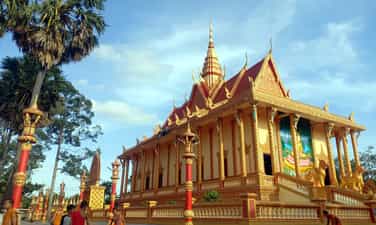
Xiem Can Pagoda
If you have traveled to the West many times and visited pagodas in this land, perhaps you will not feel too strange about the unique beauty of Khmer pagodas. However, for first-time visitors to Bac Lieu, Xiem Can Pagoda is truly a magnificent, beautiful and outstanding architectural work. According to historical records, this temple was built in 1887 with an initial area of 4,500 m2. In the beginning, the pagoda had the Khmer name Komphisako, demonstrating the erudition and profoundness of Buddhist wisdom. Later, a group of Chinese people who came to settle here translated the pagoda's name into Xiem Can. In Chinese, Xiem Can means "bordering water" and refers to the temple located next to the sea. So from then until now, the pagoda has been called Xiem Can, which is both simple and easy to remember, but also has something very impressive. To date, this beautiful temple in the West has gone through 9 generations of abbots and several times of restoration and repair. Maybe Xiem Can is not the oldest ancient pagoda, nor is it the largest pagoda, but in terms of magnificent beauty and scale, this pagoda is always the most popular destination in Bac Lieu. What distinguishes Khmer pagodas from other normal pagodas is the sophistication and meticulousness in each wall, roof and pillar. Only by going deep into the inner campus and looking closely will you fully feel the beauty that Xiem Can Pagoda possesses. The Siamese spiritual architectural complex includes many items facing East, built according to the typical Theravada Buddhist school. There is a system of surrounding city walls, three-entrance gate, main hall, bell tower, symbolic pillars, tomb tower and area for monks to rest. In terms of color, Xiem Can Pagoda in Bac Lieu has the same color scheme as other Khmer pagodas. It is a brilliant dark yellow color, mixed with orange-red tones to create the most points. The beauty and colors of this temple easily make visitors think of the majestic temple systems in Cambodia and Thailand. Coming to the three-entrance gate, you will see the cultural and religious imprint of the Khmer people expressed through many embossed reliefs. The gate nameplate is designed in the style of a pointed tower typical of Angkor architecture, with an image of a majestic Buddha sitting in the middle. In addition, below the gate nameplate there are two Krut magical birds and two winding five-headed snakes. Stepping through the gate, visitors will enjoy the feeling of walking under a cool, tree-lined street before admiring the beauty of the main hall of the temple. The main hall was built in a rectangular shape, 18m wide and twice as long. A special feature of the Main Hall is to focus on opening wide doors on both sides to avoid the morning sunlight shining directly into the shrine. Because all items in the temple are facing straight East. According to Khmer beliefs, the main hall usually faces East because they believe that Buddha's spiritual path goes from West to East. Located on a 1.5m high brick foundation with three steps and a surrounding corridor, the main hall of Xiem Can Pagoda has a roof corner of each peak covered with a long, curved, soft snake's tail. The main hall has a height of 36.3 m and is considered the tallest in the Southern Khmer pagoda complex in Vietnam. The beauty inside the Main Hall has a vibrant, outstanding and solemn color. This place is made with a total of 100 round concrete pillars, creating stability for the elegant building. At each junction between the column heads and the roof is the head of the snake god Nagar. In the Khmer concept, the snake was transformed by Buddha with compassion. Since then, the snake has become a protective mascot for the temple. Outside, opposite the main hall is a symbolic pillar with the image of a 5-headed snake, used to light candles on holidays. Here we want to imply that the teachings of Buddha Dharma will enlighten humanity, helping everyone to live a good life like a snake tamed thanks to the Buddha's compassion and forgiveness. Behind that is a traditional house - sala built extremely solidly and completely made of wood. Also quite elaborately decorated with unique motifs that remain intact even after many years. In the hallway there is also a large black bell. More specifically, above the sala at Xiem Can Pagoda, there are statues of Prince Sidatta riding on the back of a white horse being taken across the river by Xanac to find the path to enlightenment. Coming to Bac Lieu, don't forget to visit this temple. Source: Industry and Trade Magazine
Ca Mau
6272 view


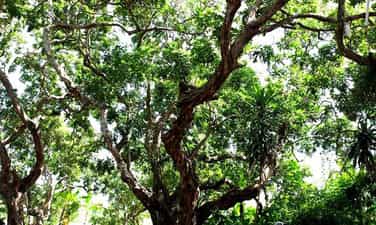
Ancient longan garden
Bac Lieu is one of 13 southwestern provinces in the Mekong Delta region. Above all, compared to other western provinces, Bac Lieu is considered a place with many tourist destinations attracting thousands of tourists to check-in here. Among them, Bac Lieu's ancient longan garden is famous for many tourists not only because of its sweet taste but also leaves an unforgettable impression with its unique sinewy, curving tree shape. Bac Lieu ancient longan garden is known as the most prominent longan garden in the Mekong Delta region with a history hundreds of years old. This place is about 6km from Bac Lieu city center towards the sea. The longan garden runs 11km long, passing through 2 communes (Hiep Thanh commune and Vinh Trach Dong commune) with a total area of more than 200 hectares. Moving on the road along the ancient longan garden, you will see ancient villas hidden deep in the longan garden, while on the other side are blue vegetable fields running for kilometers. At the same time, in the distance are the pure white salt fields that have been famous since ancient times. Currently, you can travel to the ancient longan garden by bus or personal vehicle. If you live far away, May bay will choose for you. You can take a flight to Ca Mau and then travel by bus about 60km to Bac Lieu. Next you need to follow the road named after the late musician Cao Van Lau about 6 km to the sea to reach the ancient longan garden. If visitors visit the longan garden from April to May, right in the longan flowering season, they will have the opportunity to see the unique and poetic scenery. The whole longan garden is dressed in the ivory white color of longan flowers and is filled with fragrance that attracts hardworking bees to collect honey. The combination of the gentle scent mixed in the wind and the characteristic color of longan flowers creates a charming picture while bringing a sweet scent to visitors, bringing an indescribable feeling of comfort. Besides, if tourists visit the longan garden from September to October, they will have a completely different experience. At this time, the foliage has gone to give way to the characteristic yellow-brown color of the longan fruit that covers the entire tree. Exploring the ancient longan garden in Bac Lieu at this time, visitors will enjoy specialty longans such as longan varieties of Su-bic and Tu-hut with thick flesh and unique sweet scent. The longan garden is located in the land created through the natural sedimentation process. This type of soil has good drainage, deep water level, thick cultivation layer suitable for fruit trees and especially longan trees. Coming to explore the ancient longan garden in Bac Lieu, visitors will learn about two famous longan varieties, Subic and Tu-hut, originating from China. Bac Lieu ancient longan garden with large, airy, dry and clean green space is suitable for visitors to organize picnics and camping activities with relatives, family and friends. In particular, if you come during the longan harvest, visitors will have the opportunity to participate in an extremely interesting longan picking experience with the people. The elegant sweetness and sweet scent of each longan makes it difficult for visitors to forget. Besides enjoying and buying delicious bunches of longan as gifts, visitors can try the wonderful banh xeo sold along the way to the longan garden. In addition, join in the festive atmosphere during Tet and Mid-Autumn Festival. Visitors to the longan garden can also eat seafood dishes that have just been caught from the sea, served with green vegetables grown on this land while listening to the melancholy melody from the song "Da Co Hoai Lang" to relax. Immerse yourself in the culture and cuisine of Bac Lieu.
Ca Mau
7093 view


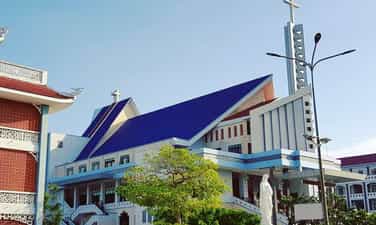
Tac Say Church
Tac Say Church, also known as Father Diep Church - The most famous church in the Western region. Coming to Tac Say church, in addition to visiting the grave of Father Truong Buu Diep, people can admire the unique architecture of the Catholic church, one of the most beautiful churches in the western provinces. Tac Say Church is located right on National Highway 1A, 37km from Bac Lieu in Hamlet 2, Tan Long commune, Gia Rai district, Bac Lieu province. According to local elders, the name Tac Say is due to the fact that in the past there was a small shortcut passing by the church, located among the reeds. The pronunciation of the Southern people gradually changed the sound "off" to "off". occlusion”. Tac Say church is considered a branch of the ancient Bac Lieu church. Initially, this place was visited by Father Jules DUCQUET, a French priest. Father then established 4 parishes in the Western region, including the Bac Lieu parish. In 1925, Tac Say church was established. In August 1926, Father Paul Tran Minh Kinh was appointed as the first parish priest of the church. In March 1930, Father Francis Truong Buu Diep took over a new position to replace Father Kinh. During his time here, Father Diep moved the church from the inside to the outside facade to its current location. Father Diep is also a person who has made great contributions to the formation and development of Tac Say church. Tac Say Church - a place associated with a famous figure - Father Truong Buu Diep, a priest who is considered a saint because of his holiness, bestowing grace and blessings on those who believe and pray. There are many different anecdotes about Father's death as well as the story about Tac Say church. But all say that Father Diep is a courageous man who dares to sacrifice his life to protect others. With the contributions of fellow workers and pagans at home and abroad, Tac Say Church has recently been restored and built with many new spacious items, not only a place of pilgrimage for local people but also a place of pilgrimage for local people. A spiritual tourist destination for many domestic and foreign groups to pilgrimage and worship. The church has a strange and unique architecture consisting of 3 floors, the ground floor is a place for guests to rest, the 2nd and 3rd floors are where mass is held with a very large lobby. The sanctuary is a place of worship and is also decorated with delicately carved precious woods, making the sacred atmosphere here more solemn. Diep's father's resting place has the architecture of a building with three large roofs, the middle roof has a large clock creating a highlight for the building. Built according to Asian architecture but still carries the beauty of Vietnamese culture. This project has the same shape as ancient Vietnamese temples but has been renovated and renovated accordingly. Traveling to Bac Lieu, coming here, everyone sincerely prays for peace, bringing people peace of mind, serenity, putting aside daily worries and worries with the desire to create for each person. human beings a peaceful, good, tolerant and compassionate life. Every year, especially on March 11 and 12, large numbers of people from many places come to pilgrimage and visit Tac Say Cathedral and Father Diep's grave. On weekdays, the church has 3 masses: 5:00 am, 9:00 am and 5:00 pm. On Sunday, there is an additional mass at 7:00 am.
Ca Mau
8494 view


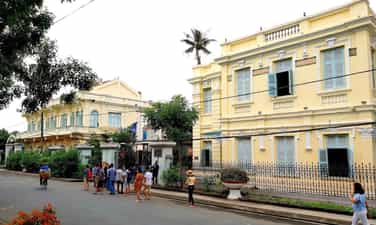
Prince's house in Bac Lieu
When talking about Bac Lieu, people not only mention Cao Van Lau and the art of Don Ca Tai Tu, but also many anecdotes about Ba Huy (The Prince of Bac Lieu), famous for his entertainment at one time. Traveling to Bac Lieu, it would be a mistake if you did not take the time to visit the Prince of Bac Lieu's house to admire the majestic architecture of the largest house in the six ancient Western provinces. Bac Lieu Prince's House is currently located at 13 Dien Bien Phu, Ward 3, Bac Lieu City, next to the bank of Bac Lieu River. The house has luxurious Western architecture, built from 1917 to 1919 when completed. The house possessed the most majestic architecture in the Western provinces at that time, so the people here called it "big house". The mansion was built by Mr. Tran Trinh Trach, aka Trach Council, father of Prince Bac Lieu when the prince was only 19 years old. Mr. Tran Trinh Trach is the owner of 74 fields, with 110,000 hectares of rice land and nearly 100,000 hectares of salt fields. At that time, the entire Bac Lieu province at that time had 13 lots of salt fields, 11 of which belonged to him. Mr. Trach has 7 children, 4 girls and 3 boys. Among the three sons, Tran Trinh Huy is notorious for playing around and is famous for his love of girls. It is known that the total assets that Prince Bac Lieu inherited and "wasted" on luxury entertainment is estimated at over 5 tons of gold. The villa was designed by a French engineer, most of the construction materials were brought from Paris. Many details, materials, and furniture in the house are imported from France, from bolts and screws to construction details, all of which are stamped with the letter P to show their origin. As soon as you step into the house, visitors will be fascinated by the meticulous and sophisticated design lines, exuding elegance and magnificence. Yellow lights radiate shimmering light, creating a cozy and elegant feeling. Each pillar of the house is decorated with many beautiful patterns. The first floor (ground floor) of the mansion includes 2 bedrooms, a living room and two large halls with a large staircase leading upstairs. Upstairs there are also 2 bedrooms and two large, airy halls, absorbing sunlight and wind, making the mansion always airy and cool. The stairs to the second floor are made of marble, divided into 3 sections, each section has 9 steps symbolizing longevity and eternity. The wooden stairs leading to the terrace were formerly the place where Mr. Trach, Prince Bac Lieu's father, used to dry money. Up to now, the project is more than five years old, but the architectural and artistic values at Mr. Ba Huy's mansion are not only not "outdated" compared to the times, but on the contrary, have become even more precious and highly appreciated. The kitchen part of the house was converted into a ticket counter for customers. The house also displays many objects associated with the anecdote of "The Black Prince". This car was bought by Mr. Tran Trinh Trach in 1930 in Saigon to welcome his son, Prince of Bac Lieu, back from studying abroad in France. Visiting the prince's house in Bac Lieu today, you will admire the precious remaining artifacts such as: 2 hot beds and a cold bed, a set of sofas made from a single piece of wood, a set of "Three unicorns" turntables (a round table with a stone surface, triangular kneelers carved with 3 unicorns), a set of "Banch statues" (shaped like an armchair placed on the back of an elephant), a "Tam Thanh" stall (3 walls) which is the sleeping place of Tran Trinh Khuong, his younger brother. of Prince Bac Lieu), the bed of Mr. and Mrs. Council Trach, the bed for guests to smoke opium, the card table, flower vases,... are all very valuable items. One place where people stopped the longest was the altar of Mr. Tran Trinh Huy and his first wife. It is said that no one can count how many wives Prince Bac Lieu has, but his first wife is Mrs. Ngo Thi Den, who was married properly, the daughter of a rich lord in the area. The remaining people are his concubines, including a woman of French nationality. Visiting the Bac Lieu Prince's mansion, in addition to being introduced to the architectural features, the birth of the house, and related items and utensils, visitors are also told many anecdotes about its owner (Mr. Ba Huy) by the tour guide. According to these anecdotes, the Prince of Bac Lieu was the first Vietnamese to own a private plane in the country; first visit to fields by plane; The first organizer of beauty contests (predecessor of later beauty contests) in the South... He is from Bac Lieu, owns a lot of land, salt department (salt making land), coal mining, and rents the most buildings, so he is very wealthy. Typically, the story of burning money to cook tea with Prince Bach or "The prince of Bac Lieu burns money to cook eggs to show that he is rich" has entered the lyrics... The Prince of Bac Lieu and his anecdotes have become nostalgic and of the past. Today, the mansion, also known by the popular name Bac Lieu Prince's House, has become a favorite destination for domestic and foreign tourists. And it is also the anecdotes about the dissipation, bohemian and luxurious lifestyle of the Prince of Bac Lieu that make tourists from far away more curious, curious to once see the residence of the Prince of Bac Lieu.
Ca Mau
8458 view


Bac Lieu Bird Sanctuary
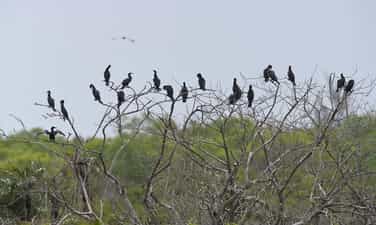
Bac Lieu Bird Park in the Mekong Delta is a remaining part of the rare mangrove forest in Vietnam today. 6km from Bac Lieu town towards the sea. Visitors just need to move on the road named after the late musician Cao Van Lau to the right, to the 30/04 canal to reach the bird garden in Hiep Thanh commune, Bac Lieu town. If you travel from the northern provinces, you can book a flight to Ho Chi Minh City. From here you will have two ways to move to Bac Lieu Bird Park. The first way is to travel by bus, from the Eastern or Western bus station to catch a bus to Bac Lieu with ticket prices ranging from 160,000 VND to 180,000 VND/person. The second way is to use a motorbike, follow National Highway 1A to Bac Lieu. From the center of Bac Lieu city, cross Quay bridge (Kim Son bridge), follow Cao Van Lau street in the direction of Mat house about 3km, turn right and continue about 3km across the 30/4 canal to reach the nature reserve. Bac Lieu bird garden. Bac Lieu Bird Sanctuary with an area of more than 385 hectares, including 15 hectares of primary forest, this place is home to about 46 different bird species such as guinea pigs, small cormorants,... 150 animals, 58 species of fish, 7 frog species, 10 mammal species, 8 reptile species, 109 plant species belonging to 90 genera of 46 families and a number of other animal species create a rich flora and fauna with high biodiversity. In addition, the flora of Bac Lieu bird park has about 181 species including date palms, toadstools, bean sprouts, fish sauce,... which play an important role in the life, reproduction and nesting of wild birds. wild. Normally, birds belonging to the stork group use date palm trees to make nests and breed, while fire herons will use betel trees and toads to build nests during the breeding season. Nowadays, with the stress of work and life, many people tend to go to nature to enjoy fresh, comfortable atmosphere. Therefore, Bac Lieu bird garden is increasingly becoming the focus of attention, attracting thousands of tourists here. Exploring Bac Lieu bird garden, visitors seem to be lost in a new world, when the noise of moving vehicles or skyscrapers growing close together gradually disappears, leaving only the silvery blue. of the natural jungle, the melodious sounds emanating from all kinds of birds and immersing yourself in the cool and fresh atmosphere. Coming to Bac Lieu bird garden, visitors can choose to walk around following the signs or rent a car to see the 5km long natural scenery with a rental price of about 40,000 VND/person. In addition, visitors can take a boat trip to see birds along the two sides. If you come to the bird garden in the afternoon, you can see a rare, charming and poetic scene when the purple color of the sunset blends with the nursery color of the ripe rice fields in the distance. Adding to the colorful picture is the image of different flocks of birds flying back to their nests. They fly in an orderly formation, some species fly forward in an arrow shape, some species choose to scatter and scatter so that when they return to their nest, they rush across a corner of the forest. Besides, when night falls, it is also the time when nocturnal foraging birds wake up and begin their hunting trip, breaking the silence of the night. The canal was built around the forest containing fish,... creating an additional food source for the animals here. Therefore, the number of bird species gradually increases, becoming increasingly rich and diverse. From May to October every year, birds often gather at Bac Lieu bird garden, they often nest in trees until January, then move to another place. This is considered the festival season for birds and is also the ideal tourist season to explore Bac Lieu bird garden.
Ca Mau
7666 view


