Tourist destination

Cu Lao Gieng
1. Some details about Cu Lao Gieng. Cu Lao Gieng is about 12km long and about 7km wide. This place also has many different names such as Cu Lao Dau Nuoc, Dinh Chau or Dien, Rieng, Den, Ven... Khmer people often call it Koh Teng. The name "Cu Lao Gieng" has many different meanings. There are many documents explaining that along the Mekong River there are many dunes and islets, of which Gieng islet was the first place to be formed, so it is called "gieng" (referring to January, the first month of the year). ). However, the above explanation is not convincing. According to people, the name "Cu Lao Gieng" comes from the word "Gieng" because the word "Doanh" (or "Dinh", meaning the place where troops are stationed) means camp (drive). 2. Road to Cu Lao Gieng. Cu Lao Gieng is about 25 km from Long Xuyen city center, about 60km from Chau Doc city. If you want to come here, from Long Xuyen take the An Hoa ferry to go to Cho Moi. Go straight to the end of the road, turn left, go straight towards My Luong - Tan My bridge. 3. Places to visit in Cu Lao Gieng. Located isolated between four sides of the river, visitors cannot help but be surprised and excited because this small land contains a complex of relics of many different religions. Traveling to Cu Lao Gieng Island, you can also immerse yourself in the fresh, fresh air of the "mango kingdom", enjoy the dishes of the Western river region... We would like to introduce to visitors the must-see attractions. passing at Cu Lao Gieng: - Cu Lao Gieng Dynasty House; - Monastery of Divine Providence; - Franciscan Monastery; - Rach Sau Church; - Ba Le Pagoda (Phuoc Hoi Tu); - Thanh Hoa Tu (also known as Ong Dao Ly Pagoda); - Ba Vu Pagoda; - Phuoc Thanh Pagoda; - Steel Wire Column Relic; - Mausoleum of Three Superior Quan; - Nguyen Toc worship palace; 4. Hotels and homestays on Cu Lao Gieng Cho Moi Island. Coming to Cu Lao Gieng, you should stay to experience the simple daily life of the people of the island. You can stay at motels, motels, hotels... in the area. In particular, there are service establishments qualified to receive international guests such as: Happy homestay An Giang in Binh Phuoc Xuan commune, 1-star Thanh Binh hotel (My Luong town) and Le Ngoc hotel (Tan My commune) , Ut Hum Homestay... With this type of homestay, visitors will be able to experience fishing with the host, wrapping banh tet, making tofu, making incense... really interesting. 5. Cu Lao Gieng Island specialties Coming here, visitors will enjoy rustic garden dishes, including catfish, puffed sticky rice, mango melon, toad melon, banana lemon wine... The most famous delicacy is mango pickle. Peel a young mango about the size of a big toe, cut it in half or quarters, remove the seeds and put it in water to soak. After that, people wash it, soak it in salt, then rinse it again while marinating it in sugar water with chili peppers. Then put the marinated mango in plastic wrap, tie the mouth tightly, place in a styrofoam box, cover with ice. To have delicious mango melon pieces is the secret to marinating them in the right amount of spices but not using alum or borax to create crunchiness. Pick up a piece of saffron-colored melon and bring it to your mouth to bite. The crunchy melon sounds "yes" in your teeth. Chew lightly: its salty, sweet, sour, and spicy taste absorbs quickly in your mouth. If you want it to be more salty, sweet and spicy, dip the melon in a plate of salt and chili. Also, don't forget to buy mango melon or fresh mango as gifts for relatives and friends. Currently, there are 500 hectares of clean and safe mangoes in the area according to VietGAP standards. You can shop at fruit stores at Tan My market, mango gardens, Huong Giang mango melon production facility, Truong Giang mango melon production facility... Standing on the My Luong - Tan My bridge, looking over the green island range in the rushing wind of the Tien River, is truly interesting and makes you feel extremely relaxed and romantic. In the distance, the clear ringing of bells and mysterious sounds from the churches captivates visitors. Cu Lao Gieng deserves to be a miniature Mekong Delta, representing a rural river civilization. Source: thamhiemmekong.com
An Giang
6576 view


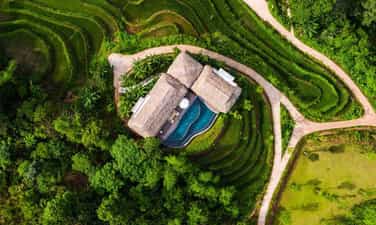
Avana Retreat primeval forest
Avana comes from the African word “A-yana”, which means a beautiful flower. Avana Resort with an area of 15 hectares, located on the hills of Panh hamlet, Bao La commune, Mai Chau district, Hoa Binh province. Humblely hidden among the Northwest mountains and forests, Avana Retreat looks like a small village from afar. This is considered the most prominent place to stay when you travel to Hoa Binh. The landscape design of Avana Retreat Hoa Binh is an interference between three cultures: Thai - Mong - Muong. Avana's 41 villas are located along the hillside, overlooking terraced fields or the green valley of Mai Chau. The landscape design is inspired by the unique cultural features of indigenous peoples, in perfect harmony with the natural landscape. Avana Retreat Hoa Binh owns 41 luxury villas designed in the style of stilt houses with earthen walls; palm leaf thatched roof; Rattan ceiling and unique brocade decorative details. Each villa ensures privacy with an extremely large balcony overlooking the mountains, valleys or terraced fields. The house's walls are made of earth, cool in summer and warm in winter. Furniture made entirely from wood. All room categories have bathtubs overlooking peaceful nature. Shampoo and shower gel are all custom-made with organic ingredients and scents specifically for Avana. In Avana, you can choose to enjoy meals at the waterfall or at the villa under shimmering lights and the sound of Pung waterfall. You can also enjoy cuisine at Green Chili Restaurant. The food at Avana is purely organic. Fresh ingredients are carefully selected, skillfully processed, and delicately presented. The dishes are not only delicious but also closely connected to nature and local culture. All will satisfy visitors' culinary pleasure. In addition, you and your family can also enjoy afternoon gifts, roast corn and potatoes next to the warm stilt kitchen. If you love to experience and explore, you will surely feel satisfied with the morning walking routes; Trekking on trails through the jungle or traveling on a Jeep. Each exploration journey in Avana not only helps you feel the beauty of the Northwest but to find yourself in nature. Besides, Avana Retreat Hoa Binh is an interference between three cultures: Thai - Mong - Muong. It is not difficult to understand that when coming to Avana, visitors will have a unique journey of cultural discovery. You can visit Muoc village - a White Thai village located humbly along a small stream. You can also visit Mr. Nhieu's lovely homestay (welcoming guests since 1992) to listen to stories about traditional Thai embroidery patterns; Scarves pieu; Ban flower festival; the practice of poking the floor; Back to Bao La market... In addition, explore the stilt house museum and brocade weaving village; Immersing yourself in the traditional Xoe dance of Thai girls will also help you understand and love the culture, history, and daily life of the indigenous people. Coming to Avana is not only about finding a peaceful place in the middle of the mountains but also about finding a pure childhood journey. Families with young children will definitely enjoy coming here, children will have the opportunity to experience many fun activities in nature. Treasure hunt games, Kid club or creative toys will make girls and boys fascinated. And the parents seem to be reliving their own innocent moments. At Avana, there is a special journey, the Peaceful Journey. Orchid Spa is the most beautiful part of Avana Retreat, located completely separate from the rest of the resort and located deep in the tropical rain forest. Immerse yourself in peace to feel each breath of nature with its shade; The sound of the stream is an effective way for you and your family to regenerate energy and balance your life. You can choose to meditate or yoga to get away from psychological disturbances or worries. The modern gym system will also help you maintain your exercise routine during your stay at Avana. It is not difficult for you to find a hotel in Hanoi or hotels near Hanoi such as: hotels in Hoa Binh; hotel in Quang Ninh; hotel in Hai Phong... But looking for a vacation place far enough away to forget the noise and dust of the city, close enough to return easily during a few Tet days, people immediately think of Avana.
Phu Tho
6685 view


Khau Pha Pass
Khau Pha is one of the four most dangerous passes in Vietnam. This place is not only winding and winding with steep cliffs but also precariously surrounded by majestic nature. This pass has a total length of about 30km, at an altitude of more than 1,200 meters and is also the dividing point of Van Chan district and Mu Cang Chai district. Experience exploring Khau Pha Pass on your own: If starting from Hanoi, you should follow Highway 32. On the way to Yen Bai, you can follow Google map, combined with asking people for directions. From Hanoi, you will go through Phu Tho province and then Van Chan district, through Nghia Lo, you will reach Khau Pha pass. Total travel time is about 5 to 6 hours, depending on weather conditions and your driving skills. Two popular vehicles chosen by many people are passenger cars and motorbikes. The advice is that taking a passenger car will help you move more easily and with less effort, while a motorbike will give you the feeling of truly enjoying the mountain roads. If traveling by bus, you should contact and book tickets from reputable bus companies. Do not catch a bus along the way to avoid unwanted risks. If you ride a motorbike, you must carefully check the vehicle's performance. The long distance through the Northwest mountainous roads requires a quality vehicle and a strong engine. According to the experience of most people who have had the opportunity to explore the beauty of Khau Pha Pass, September and October are the most ideal times. In early autumn, the weather here is very cool, a little chilly, and dry, so it is very suitable for tourist activities. At a location of more than 1000 meters, from the top of Khau Pha you will freely enjoy the beauty of Mu Cang Chai Rice Terraces, capturing the panoramic view of the lives of local people, and the most attractive is the journey. Cloud hunting is super fun. To hunt clouds smoothly, you also need a little "fate" with nature here. Usually in the fall and winter, the clouds on the top of the mountain will be very thick, floating, and soft. However, there are also sunny days where the clouds dissipate early, so you won't have a chance to hunt for clouds. However, the view from the top of the pass is extremely perfect, so you can rest assured that your trip, even if you cannot hunt clouds, will not be in vain. In addition, you can also consider coming to Khau Pha in May and June to see the fields in the rainy season. All the fields are like a giant mirror shining under the sunlight, the sparkling water surface makes you captivated. The process of reaching the top of Khau Pha pass will require overcoming 30km of extremely arduous trekking road, with many jagged rocks. Therefore, you need to have a steady handlebar and choose a quality motorbike that operates well to ensure your safety. In addition, on your self-sufficient journey to explore Khau Pha Pass, don't forget to bring a good camera and phone to record super impressive images. The view from the top of the pass is super beautiful, so you will definitely get hundreds of angles shaped like distilled water.
Lao Cai
5758 view


Tra Vinh
Tra Vinh is located at the end of the island, between Tien and Hau rivers. The terrain is mainly flat land with an altitude of less than 1m above sea level. Because it is located in the coastal plain, there are many sand dunes running along the coast, forming parallel curves. The closer the beds are to the sea, the taller and wider they are. With separation by rice fields and a network of roads and canals, Tra Vinh's terrain is quite complex. There are low areas sandwiched between high fields, and the slope is only shown on each field. In particular, the southern part of the province has low land, divided by bow-shaped sand dunes into many small depressions, with heights of only 0.5-0.8m. Therefore, every year, this area is often flooded with saltwater for a period of 3-5 months. Located in the Mekong Delta, Tra Vinh province also has common advantages such as: abundant radiant light conditions, high and stable temperature. However, due to the characteristics of the coastal climate, Tra Vinh province has some meteorological limitations such as strong winds, high evaporation, and little rain. Tra Vinh is located in the tropical region with a temperate climate, average temperature from 20 - 27 °C, average humidity 80 - 8000%/year, less affected by storms and floods. The rainy season is from May to November, the dry season is from December to April of the following year, the average rainfall is from 1,400 - 1,600mm, with favorable conditions for investment in production, business and tourism[4] . Every year, drought often occurs, causing difficulties for production with a number of consecutive days without rain from 10 to 18 days, in which districts such as Cau Ke, Cang Long, and Tra Cu are districts that rarely suffer from drought. Tieu Can district has an important drought at the beginning of the crop around June and July, while the remaining districts such as Chau Thanh, Cau Ngang, Duyen Hai have drought in the middle of the crop but in July and August are often more serious. Tra Vinh also faces a current difficulty: being flooded with salt water during some dry seasons of the year.
Vinh Long
7723 view


Dam Thi Tuong
Thi Tuong Lagoon, also known as Ba Tuong Lagoon, is known as the "sea and lake in the middle of the plain", an ideal destination for those who want to find a peaceful place. The uniqueness of customs and traditions combined with many cultural features of the indigenous people has created a rare beauty for Thi Tuong lagoon. Thi Tuong Lagoon is located in 3 districts: Cai Nuoc, Tran Van Thoi and Phu Tan, Ca Mau province. To reach this large river area, visitors from Ca Mau follow National Highway 1A to Rau Dua market, turn right across Cai Ban bridge, then follow the rural road 3m, passing about 7km to Thi Tuong hamlet. (Hoa My commune) to reach Dam Trong. Visitors can also from Rau Dua market go another 2km along Highway 1A to Cong Da Canal 4, turn right following the directions to Xeo Duoc Base Area, about 8km to reach Dam Giua - the most interesting and unique destination. Dam Thi Tuong. Dam Thi Tuong is associated with the anecdote that: in the past, Mrs. To Quy Thi, often called Thi Tuong, was good at martial arts and was the first person to come here to reclaim land. At that time, because Lord Ho could not marry King Thuy Te's daughter, he felt hatred. Lord Tiger sent flocks of birds to fill the sea with rocks, but Mrs. Tuong bravely chased away the birds to keep the lagoon for fishermen to live. Thanks to her efforts, people can farm and catch seafood from the lagoon, and their lives have improved much. Moved by her merit, people named the lagoon after her, from then on the lagoon was called Thi Tuong lagoon or also known as Ba Tuong lagoon. The lagoon consists of 3 main lagoons: Inner lagoon, Trung lagoon and Outer lagoon, of which Trung lagoon is the largest lagoon. The difference between a lagoon and a lake is its depth. While the middle lagoon is very deep, some are up to 10 meters deep, the upper and lower lagoons are very shallow, not reaching a person's head. The water level on the lagoon changes usually according to the rise and fall of the tide from 0.7m to 1.5m, which is very safe for tourists. The lives of people around Thi Tuong lagoon are closely linked to the water and natural aquatic resources. Because thanks to its special structure and connection to the sea, the vast water area nearly 10km long is always full of food for aquatic species to grow. Not only taking advantage of the natural resources of fish, shrimp, cockles, and seaweed living in the lagoon to feed the family; Thi Tuong fishermen also rely on the water for economic development. They use the water surface area to raise black tiger shrimp and crabs in Ca Mau. These are two types of seafood with high economic value, having a solid place in the list of Vietnamese specialties. Unlike other Ca Mau tourist destinations, Thi Tuong lagoon does not have restaurants, entertainment areas... Instead, the resting stop is the stilt houses of fishermen right on the lagoon surface. Here, in addition to Dam Thi Tuong Cooperative, there are also a few households doing business in tourism and dining services in the style of community tourism. Visitors can learn more about the daily life of the people here. To visit the lagoon, visitors can choose to go by motorboat to feel the rustic and simple life of this land. Not only do they admire the beautiful scenery of their homeland, visitors can also enjoy delicious specialties prepared by the people here and listen to them tell stories about the simple life on the lagoon, or listen to their stories. Listen to anecdotes and stories about Thi Tuong lagoon. In addition, visitors can freely use fishing tools to go to the lagoon to work as farmers, fish, set traps, find oysters, net crabs, crabs... and prepare dishes themselves, or ask people to prepare them. turn help. Specialties in the lagoon are very diverse, from dog fish, old calendar fish, galangal fish... to blood cockles, shrimp, crabs... The landscape of the lagoon is like a picture of a charming seaside countryside, lively yet peaceful with the sound of birds calling to welcome the dawn, or quiet yet vast when the sunset falls on the surface of the lagoon. Those are also the most beautiful times of the day for visitors to fully feel the vast space that nature has bestowed on Thi Tuong lagoon and save impressive photos. Especially when night falls, with thousands of sparkling lights on the surface of the lagoon, enjoying a few glasses of sole wine with specialties of fish, shrimp, crab, crab or humming a few Vong Co verses chatting with the people is still great. than.
Ca Mau
5940 view


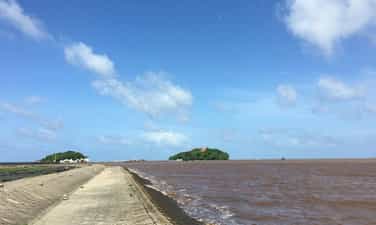
Ca Mau Silver Stone
Hon Da Bac is an island cluster in Kinh Hon hamlet, Khanh Binh Tay commune, Tran Van Thoi district, Ca Mau province. Viewed from land, Da Bac Island looks like a wonderful rockery in the middle of the vast ocean. Ca Mau people call Hon Da Bac the Pearl Eye of the West, not only to honor the beauty of the island but also to compare this place to a keen eye guarding the western sea of the country. The island cluster includes three islands: Ong Ngo island, Troi island, Lon island (Da Bac island) connected by beautiful bridges. Hon Da Bac was formed 180 million years ago (Middle Jurassic - Mesozoic) with a total area of nearly 6.5 hectares. Besides Troi island, which has an insignificant area, the remaining two islands are formed by stacked rocks. The highest peak at Hon Lon is 50m above sea level. Located 50 km west of Ca Mau city, although the area is not large, Hon Da Bac is an island with an important position in protecting territorial sovereignty, exploiting the sea and developing Ca Mau tourism. The sheltered Silver Stone Island creates a beautiful, safe bay, peaceful natural landscape, and fresh air. Departing from Ca Mau city to Hon Da Bac tourist area takes 1 hour and 30 minutes by car or motorbike along the road to U Minh Ha National Park, through Co Xang and Coi Nam, there is a bridge leading from the mainland to the island. This place is called Hon Da Bac because there are many granite stones stacked around each other, creating unique and impressive shapes. From a distance, you will see that the island is plated with silver, sparkling in the sunlight. Ong Ngo Island, where you arrive as soon as you cross the 400m bridge across the sea connecting the mainland to the island, has the beauty of pristine primeval forest, towering mountain rocks, and a surrounding coastline with foaming waves. Hon Da Bac is a place with bold historical traces. During the years of resistance against the US, the army and people of Khanh Binh Tay commune destroyed the enemy's 105 mm artillery platoon, liberated Hon Da Bac and ensured the safety of the coastal corridor of the revolutionary base area. Hon Da Bac was also the place where the counterintelligence campaign of the Vietnam People's Police forces (CM-12 Plan) took place to defeat the invasion of the counter-revolutionary organization "United Front of Patriotic Forces for the Liberation of Vietnam" led by Mai Van Hanh and Le Quoc Tuy. On June 22, 2009, the Ministry of Culture, Sports and Tourism issued a decision to recognize Silver Rock - CM12 counterintelligence plan command center (September 9, 1981 - September 9, 1984) as a National Monument, becoming one of the "red addresses" to educate and pass on revolutionary traditions to the younger generation. Currently, the Hon Da Bac historical relic site has 3 major works: the National Security Protection Monument, Uncle Ho's Memorial Temple, the People's Public Security Museum and the Relics Additional Exhibition House. Hon Da Bac, in addition to the wild beauty of mountains, forests, rocks, and clear blue sea, also has "fairy" masterpieces such as Fairy courtyards, Fairy wells, Fairy hands... All of them seem to have been molded by some mysterious hand into strange, beautiful shapes, arranged in rows and beaches stretching around the coast, adding to the fairyland look of the island. Located on the top of Hon Da Bac is Lang Ong Nam Hai - a place that displays a giant whale skeleton (about 14m long, 4m wide) and records the mysterious story of the Ong fish saving people in distress at sea. On the 23rd day of the 5th lunar month every year, local fishermen, those who are fishing offshore and tourists from everywhere often flock to Hon Da Bac to pay their respects to him. In addition, Hon Da Bac also attracts tourists with its abundant seafood resources. Tourists coming here can fish for brown fish, squid, shrimp, and dive into the sea with fishermen to catch oysters clinging tightly to underwater rock cavities. If visitors want to enjoy newly caught seafood, the fishermen's charcoal stoves are ready to serve visitors.
Ca Mau
6498 view


Ca Mau floating market
Ca Mau floating market is located at the end of Ganh Hao river, about 200m from Ganh Hao bridge in Ward 8, downtown Ca Mau city. This is where many trading ships gather, filled with agricultural products and people's goods. This is a market where local people meet every day and are busiest between 2 and 3 am. Visitors coming here will have the opportunity to experience a trip around the floating market in the early morning. Visitors can travel from Ca Mau city bus to Ca Mau floating market in only about 4km. You can travel by taxi or motorbike taxi. To make traveling more convenient, you can choose to ride a motorbike to move more freely when visiting. This floating market in Ca Mau only focuses on wholesale buying and selling all kinds of items from food, necessities, fresh fruits, and vegetables from gardens to traders. The people here are sincere and simple, they trade on small and large canoes and boats on the river, which will definitely leave in you unforgettable impressions of the uniqueness of the floating market typical of most of the islands. all western provinces. Fruits from the gardens such as gourds, squash, guava, melon, water coconut, papaya, mango, pineapple, rambutan, etc. In addition, this floating market also sells street mats, a typical item. But most of the time when people mention it, they immediately remember Ca Mau. Visitors here can sit on canoes or boats to visit stalls to buy necessary things or exchange goods right on the river, creating a bustling scene. You can buy gifts for the people and experience the daily life of the merchants here. In the evening, visitors can visit the floating market when it becomes romantically silent and peaceful. The boats in the morning have now become floating houses floating on the water. Children sit fishing, playing,... creating a beautiful, dim scene that is hard to find elsewhere. There are many types of fruits for you to enjoy, or buy to try your favorite fruits and buy them as gifts for your loved ones. You can ask the waiter to peel them for you to try the wonderful flavors of the fruits. Besides, the floating market also attracts many people to enjoy snacks and fresh meals every day in the city. On both sides of the river, there are also many shops selling beautiful small cakes with the typical flavors of Southern people. Ca Mau floating market is an interesting tourist destination that anyone coming to Ca Mau should visit. Coming to the floating market is to relax in a peaceful river area and explore the vibrant river culture. If you have the opportunity to travel to Ca Mau, definitely do not miss the opportunity to visit this famous market.
Ca Mau
6502 view


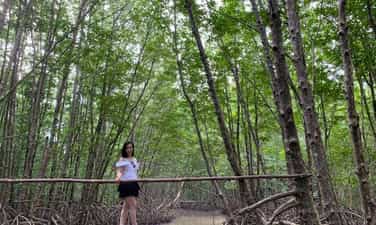
Nam Can mangrove forest
Ca Mau mangrove forest or Nam Can mangrove forest is a famous mangrove forest in the West. The forest has formed a solid protective membrane, preventing sea erosion, helping to control landslides and maintaining ecological balance. Coming here, tourists traveling to Ca Mau can not only visit, but can also participate in many other interesting outdoor activities such as boating, fishing and enjoying closeness to nature. During the resistance war against the French and the Americans, Nam Can mangrove forest became an important shelter for the revolutionary army. With its rugged river terrain, it played an important role in preventing enemy attacks and destroying small naval campaigns on the river. With the second largest area in the world, the mangrove forests here are second only to the Amazon forests of Latin America. The total area of the mangrove forest is 63,017 hectares, which is a habitat for many diverse species of creatures. When viewed from above, the forest looks like a V-shaped peninsula, with three sides facing the sea. Nam Can Ca Mau mangrove forest is a land with a quite pleasant climate. The best time to explore this land is during the dry season, from December to April. During this time, the air is dry and cool, creating favorable conditions for sightseeing and experiencing. However, from May to November, the long rainy season can hinder tourism activities. In particular, if visitors plan to tour Ca Mau in July or August, they will have the opportunity to enjoy many more delicious and attractive specialties. To visit Nam Can mangrove forest, visitors must travel by tourist boats, along both sides are rows of mangrove trees. Floating on the boat, the deeper you go, you will clearly feel the fresh and cool air. While walking, I heard local people tell stories about the origin of this forest. It's very interesting, isn't it? Going deeper inside, visitors will see wild, majestic natural scenes, the gradual appearance of an almost unexplored core of primeval forest. There are ancient trees with huge trunks that 5 to 6 people cannot hug... This place is extremely worthy of being chosen as the most attractive tourist destination in Ca Mau. Not only that, visitors also have the opportunity to see thousands of flocks of birds converging on the branches of mangrove trees, creating an extremely beautiful and interesting scene. Just by raising the camera, visitors will see countless wonderful photos with interesting scenery appearing before their eyes.
Ca Mau
6767 view


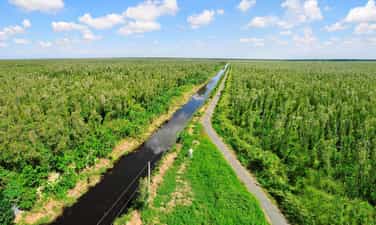
U Minh Ha Forest
U Minh Ha National Park is an ideal destination for those who love the natural and wild beauty of Dat Mui Ca Mau river. As a large-scale biosphere reserve, U Minh Ha is famous for its green vegetation, diverse ecosystems and unique natural scenery. U Minh Ha National Park is located in the west of Ca Mau province, within the administrative boundaries of 4 communes in 2 districts of U Minh and Tran Van Thoi. U Minh Ha is about 40 km from Ca Mau city center and can be reached by car. The total area of the forest is up to 8,527 hectares, one of the three core areas of the Ca Mau Cape World Biosphere Reserve. This place is famous for its Melaleuca forest ecosystem formed in alum, flooded conditions, and on peat soil. The ecosystem is diverse and rich with more than 250 species of plants, 40 species of mammals, 182 species of birds, 20 species of reptiles, amphibians and many other insect species. Among them, there are many rare species listed in the Red Book of the International Organization for Conservation of Nature. The weather in U Minh Ha is divided into two distinct seasons: dry season and rainy season. The dry season starts in May and ends in October, the rainy season lasts from November to April of the following year. According to U Minh Ha travel experience, visitors can visit and explore this National Park at any time of the year. The rainy season is when the water level is high, making it easier to travel by boat around the mangrove forests. On the contrary, the dry season will be more favorable for sightseeing because it is sunny and there is no rain. If you want to come here to explore the ecosystem or take check-in photos, the dry season will be a more ideal time. From City. Ho Chi Minh, there are 2 ways to get to U Minh Ha National Park. If traveling by motorbike, from City. Ho Chi Minh City, you can follow National Highway 1A, cross Ca Mau bridge to Ngo Quyen and Vo Van Kiet streets, follow the signs to reach U Minh Ha forest. On the way, you should ask local people to avoid getting lost. If traveling by bus, City Line. Ho Chi Minh - Ca Mau has passenger buses departing from Eastern, Western or An Suong bus stations. Bus ticket prices usually range from 180,000 - 200,000 VND/ticket. Reputable bus companies that you can refer to are: Phuong Trang, Lien Hung, Ngoc Ha, Mai Linh, Giap Diep... From Ca Mau bus station, take a taxi or motorbike taxi to get to U Minh Ha. Most tourists coming to U Minh Ha National Park go back and forth during the day, not staying overnight. Accommodation services around the forest are not yet developed, so you can stay at motels and hotels in Ca Mau city. U Minh Ha travel experience also shows that staying in the city center will be more convenient for moving and exploring other tourist destinations. When visiting U Minh Ha forest, you can participate in activities such as: Admiring the scenery of U Minh Ha forest from the observatory, Visiting the mangrove forest by boat, Fishing and collecting honey in the forest,... In addition, you need to note the following points when traveling to U Minh Ha Forest. First, bring a hat and umbrella to protect yourself from the sun, and choose comfortable clothes for ease of movement. Second, if you come here during the rainy season, you should wear long clothes and apply insect repellant cream to avoid mosquitoes. Third, call the Management Board in advance if you want to experience the boat trip to visit the U Minh Ha mangrove forest. Fourth, watch the time to get out of the forest, do not stay alone or sleep overnight in the forest to ensure safety. Finally, do not cut down trees or harm animals in the forest.
Ca Mau
6498 view


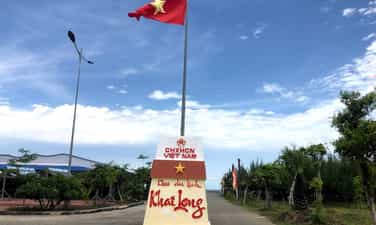
Khai Long Beach
Khai Long beach, located in Dat Mui hamlet, Dat Mui commune, Ngoc Hien district. Khai Long beach is located between two canals, But Mien and Khai Long. This is a golden sand beach stretching from a few dozen meters to over 100 meters, running nearly 4km long. The beach is 230 hectares wide and continues to reach the sea every year. When the tide is low, the sandy beach gradually widens and forms beautiful long, wavy sand beaches. The coast here is still wild and majestic with a clean ecological environment, surrounded by a marine forest ecosystem. Inside the beach, there is sea water spinach growing wild, blooming purple flowers like wallflowers. Along the Khai Long coast, there are many shrimp, fish, shrimp, cockles, clams... living and residing. Adjacent to Khai Long beach is Ca Mau Cape National Park (located in the world biosphere reserve of Ca Mau Cape). This place has Nam Can mangrove forest, Ca Mau Cape and is adjacent to Hon Khoai island cluster, Vam Lung wharf where weapons are received from the North to the South along the Ho Chi Minh Sea route. Source: Ca Mau Geography Board of Directors
Ca Mau
6112 view


