Relic point Vietnam
Việt Nam
Noc Cang Historical Site
The Noc Mang field site belongs to Phong Thanh village, Gia Rai district, today is hamlet 4, Phong Thanh A commune, Gia Rai district, Bac Lieu province. In the past, this place was a large swampy area, with many forests of melaleuca, bamboo, and reeds growing together, all year round only birds and poisonous snakes sheltered. People who went to reclaim the land to live and explore this area built leaf-roofed huts to shelter from rain and sun and avoid poisonous snakes. Because the land is swampy, it is impossible to build houses like on dry land, people cut trees to make stakes and stick them in the muddy ground, then put crutches on top as floors to build houses. The site of Noc Cang field is also associated with the indomitable struggle of farmers against the oppression and exploitation of the French colonialists and landlords. Mr. Muoi Chuc's family put in a lot of sweat and effort to transform this field into a rice field. While everyone was living and working peacefully, the landlords colluded with the tyrants and the French colonialists to use many cunning tricks to steal rice and land from Mr. Muoi Chuc's family. (In fact, the land Mr. Muoi Chuc and his brothers worked on was left by their ancestors who explored it). In 1927, after many cunning and sinister tricks to take over the land of Mr. Nguyen Van Chuc's family (Muoi Chuc), a landowner in Ca Mau, Ma Ngan, tricked him into selling the land to the wife of a district official, Ho. Thi Tran. After buying land but not being able to get it due to Mr. Muoi Chuc's family vehemently protesting, they borrowed the power of the French colonialists to suppress it in order to take the fields and rice of Mr. Muoi Chuc's family. So his family's struggle against the oppression of the French colonialists happened bloody on February 17, 1928. In this fight back, Mr. Muoi Chuc's family lost 4 people: Mr. Muoi Chuc, Ms. Muoi Chuc (with her unborn child), Mr. Nam Man, Mr. Sau Nhin. On the colonial side, one French official was seriously injured and died the next day, and several others were injured. The remaining members of Mr. Muoi Chuc's family were all arrested and convicted of "rioting, opposing public authority, and murder". Not to be deterred by that, his family continued to file a complaint... The press also strongly condemned it. In response to public opinion, the French government finally had to return the land to Mr. Muoi Chuc's family. The Noc Cang field incident is evidence of the crimes of the French colonial regime and its lackeys of mandarins, demonstrating the anti-oppression spirit of honest and simple farmers. Although the struggle of the farmers in the Noc Mang area was a spontaneous struggle, it demonstrated the struggle of the farming class in the Mekong Delta at that time, demonstrating the resilient spirit and kindness of the people. Southern farmers, contributing to the resilient and indomitable tradition of the Vietnamese people. On August 30, 1991, the historical event of Noc Mang field was recognized by the Ministry of Culture and Information as a historical - cultural relic, this relic is located in hamlet 4, Phong Thanh A commune, Gia Rai district, province Bac Lieu. After more than eighty years, Noc Mang field still retains the tragic song of the past, that event has entered the nation's history with the image of simple, honest and full of devotion farmers in Bac Lieu. Source: History of Gia Rai District Party Committee
Ca Mau
5422 view
Rating : National monument

Serai Cro Sang Pagoda
Seray C-ro Sang Pagoda, also known as Ca Sang Pagoda - is located in Ward 2, Vinh Chau Town, about 40km East-South from Soc Trang city center. This is one of the ancient Khmer pagodas in Soc Trang province with a harmonious architectural complex, dating back over 400 years. The pagoda was built in 1576, with an area of 22,230 square meters. The overall architecture of the temple includes: Main hall, sala, housing for monks, Khmer literacy school, tower for ashes of the dead and crematorium,... The gate of Seray C-ro Sang pagoda is an architectural work built of dark red concrete, below the gate there are 2 square pillars that support the tower roof. The upper archway includes 3 towers embossed with Khmer patterns, on which is written the name Serai C-ro Sang pagoda in Khmer with red letters. The main hall of the pagoda faces East. According to the Khmer concept, Buddha in the West faces East to bless the people, so the pagoda must be built in the East direction to match the direction of worshiping Shakyamuni Buddha in the main hall. The main hall of the current Serai C-ro Sang Pagoda was rebuilt in 2005 under the abbot of Venerable Ly Thi. The main hall was built on two levels higher than other buildings in the temple grounds. In the middle of each edge is a Buddha sitting in meditation facing the four directions with the intention: Buddha Dharma spreads and permeates all four directions. The main hall's ground level is surrounded by fences and there are stairs leading up to the Buddha worship area on each side of the main hall. The roof structure of the main hall is a special structure consisting of 5 towers, including 4 towers located on 4 sides corresponding to the positions of 4 meditating Buddhas below. Each tower is about 5m high and 3m wide at the base. The central tower in the middle of the main hall is about 7m high and 5m wide. It is this special feature that makes the main hall's roof so massive, but it does not lose its elegance and lightness; Each roof level is decorated with stylized dragon images in Khmer culture. Inside the main hall is a large space to worship Shakyamuni Buddha and many different Buddha statues, each reflecting a certain important event in the Buddha's life. Around the inside and outside walls of the main hall are decorated with images of Shakyamuni Buddha's life from birth to nirvana. During the resistance war against foreign invaders, especially the resistance war against America to save the country, Seray C-ro Sang pagoda was both a breeding ground for revolutionary cadres and one of the spearheads for the movements. The struggle of the Khmer people against the oppression of the US-Diem puppet government until the successful revolutionary struggle to liberate the South on April 30, 1975. With that historical significance, on May 12, 2004, the Chairman of the People's Committee of Soc Trang province recognized Seray C-ro Sang pagoda as a provincial-level revolutionary historical relic. Source: Soc Trang province electronic information portal
Can Tho
5717 view
Rating : Provincial level relics

Avalokiteśvara Linh Ung Pagoda (Buddhism 2)
Quan Am Pagoda located next to Dai Ngai river is associated with important historical events of Soc Trang province in particular and the country in general, and was the first place to welcome and care for Con Dao political prisoners returning to the mainland. Quan Am Pagoda is located in Ngai Hoi 2 hamlet, Dai Ngai town, Long Phu district (Soc Trang) with a long history. According to remaining documents, between 1860 and 1872, the pagoda was built and named Quan Am Co Tu. Quan Am Pagoda was initially built with simple leaves, but after many restorations and embellishments, it was completed and spacious as it is today. In particular, here on September 23, 1945, an event of important historical significance took place. Quan Am Pagoda and Buddhists along with the Party Committee, government and people of Soc Trang were honored to welcome and dedicatedly contributed to taking care of the group of loyal revolutionary soldiers of more than 1,800 people, who had just returned to the mainland after years of being imprisoned by the enemy in the "hell on earth" Con Dao. In the group of revolutionary soldiers at that time, there were comrades Le Duan, Nguyen Van Linh, Pham Hung, and many other officials present. The event of welcoming and taking care of the Con Dao political prisoners back to the mainland added strength, helping the Party Committee and people of Soc Trang overcome many difficulties in the early days of building the government and preparing for the resistance war against the colonialists. France. With these great historical meanings and values, Quan Am Pagoda was ranked by Soc Trang province as a Provincial Historical-Cultural Monument in 2004. Today, the pagoda is a place of religious activities for local Buddhists, a place of revolutionary traditional education, as well as a tourist destination for tourists from near and far. Venerable Thich Phuoc Thien - Deputy Abbot of Quan Am Pagoda said: "The pagoda not only meets the religious needs of the people but is also a place to serve the people's amenities and community activities; a place to educate local revolutionary traditions. In addition, I actively participate in social charity activities, helping many people in difficult circumstances. The pagoda connects benefactors from near and far to bring warmth and prosperity to poor people in difficult times, contributing to carrying out social charity work with the locality. The pagoda also does a good job of propagandizing the policies, guidelines, and laws of the Party and State to Buddhists." Every day, the temple welcomes visitors from all over to visit, make offerings, and study; On major holidays there are many tourists. When passing through the three-entrance gate, visitors will see the statue of Guan Yin Buddha standing on a lotus flower right in the temple yard and a few steps to the right is the Dia Mau holy temple. Inside is a stone statue of Maitreya Buddha placed right in front of the main hall. Next is the main hall that is being built, restored with 1 ground floor and 1 floor, concreted, with modern architecture, close to the people of the South. “Like the main hall of other Northern Buddhist temples, the main hall of Shakyamuni Buddha is the main Buddha worshiped. Next to the main hall, there are also Buddhas worshiping Thien Thu Thien Nhan, Tieu Diem, Ho Dharma, Tam The Buddha, and always worshiping Patriarch Dat Ma. At the top of the main hall is a stupa with unique architecture. The temple is a place where Buddhists and local people place their faith. The pagoda is the place for cultural, educational, spiritual and religious activities of the community. The pagoda is closely associated with the lives and activities of the people. In particular, this is also a place with history and revolutionary traditions, so people here are very proud. Source: Soc Trang Online Newspaper
Can Tho
6256 view
Rating : Provincial level relics
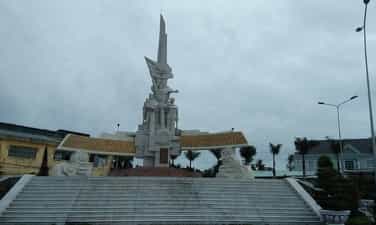
Historical relic site of Victory Branch, Nga Nam Area
The victory of Nga Nam Branch has great significance, affirming the maturity of the Party Committee, army and people of Thanh Tri - Nga Nam in the resistance war against the US to save the country, reducing the morale and prestige of the enemy, causing increase the morale of our army and people. During the war against the US, because Nga Nam had a very important strategic position both militarily and economically, the US and puppet established a military zone here. Nga Nam sub-area belongs to Ba Xuyen sub-area, tactical area 4, located on the land at the beginning of a river with five branches. During Ngo Dinh Diem's time, Nga Nam had many evil puppets gathered here. Among them, Muoi Hung is famous for his wickedness. They once commanded the militia and security forces to drag into the areas around the town, penetrate deep into the countryside, raid, raid, arrest, shoot, kill, imprison... causing pain and suffering to countless civilians. innocent. In early May 1962, the Provincial Party Standing Committee and the Provincial Command Committee directed the provincial armed forces to determine to destroy Nga Nam Branch. With careful preparation, we attacked and completely destroyed the branch, capturing many weapons, military equipment and supplies. Although Nga Nam Branch was destroyed by us many times, the US and puppet tried every way to recapture it, trying to consolidate and build this branch into a solid military base and rearrange the defense system. rigid. Among the attacks that surrounded Nga Nam Branch, the war in 1968 was the longest and fiercest siege. In the early days of the siege, we only used artillery and sniper fire to overwhelm the morale of the enemy soldiers, creating conditions for civil forces to focus on building two fortresses, establishing a siege and attacking more effectively. next steps. The battle to encircle Nga Nam Branch became more and more intense as time went on. When the fortresses were completed, the frightened enemy still tried to risk their lives to attack, but each counterattack was broken. After nearly a month of siege, we defeated the enemy 21 times who risked their lives to send soldiers out to counterattack. Our troops destroyed and injured more than 60 enemies, including many commanders of security forces, military security, reconnaissance and evil puppets. As a result, after 52 days and nights of the siege and invasion campaign, Thanh Tri's army and people received strong support from a part of the provincial forces, and we completely liberated Nga Nam Sub-region. The victory of Nga Nam Sub-region has an extremely great historical significance, it was the first time in the Southwest battlefield, using the siege and invasion tactics of guerrillas and local district-level soldiers (combined with a small part of the province) has completely destroyed a military zone that was among the second most solidly defended in the Mekong Delta. The victory of Nga Nam Branch was the result of determined direction, knowing how to promote the combined strength of many types of troops, in building the people's war posture; persistently cling to the people, build a solid base, be creative, and courageously continuously attack. With nearly 200 enemy soldiers killed, injured, and at the same time disarmed by nearly 100 others during the campaign, it shows that the fighting style of the people's war is correct and that the locality knows how to apply it. The winning site of Nga Nam Branch is located in Ward 1, Nga Nam town, Soc Trang province, ranked by the Ministry of Culture and Information as a National Historical - Cultural Relic, on August 23, 2004. . Source: Soc Trang Online Newspaper
Can Tho
7144 view
Rating : National monument
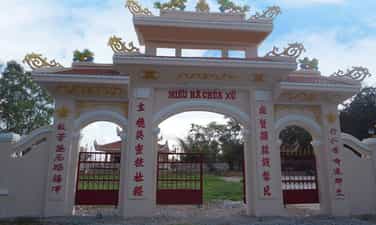
Temple of the Lady of My Dong hamlet
My Dong Ba Chua Xu Temple is located in My Dong hamlet, My Quoi commune, Nga Nam town (Soc Trang). This place is associated with many important historical events of a heroic revolutionary land. Going back in history, My Dong hamlet, My Quoi commune was once a vast, empty land, crisscrossed with rivers and very deserted. At that time, My Dong Ba Chua Xu Temple was built on a foundation about 40cm high, with an area of 2,400m2. The temple is built of bricks, roofed with tiles, divided into 2 compartments, the first compartment worships Ba Chua Xu and her predecessors and descendants, the back compartment is used as a kitchen to prepare worshiping ceremonies. Before 1930, the uprising movement against the oppression and exploitation of the French colonialists and the henchmen of the American Quoi people continued but was not strong. In early 1930, comrade Quan Trong Hoang, a party member, returned to My Quoi village to organize propaganda and foster revolutionary theory for elite youth. From that human resource, in June 1930, the first Vietnamese Communist Party cell of Soc Trang province was established at My Quoi market with comrade Chau Van Phat as secretary. In a short period of time, comrade Chau Van Phat divided his thoughts, prayed for peace, was not steadfast in his stance, forgot his duties, and was disciplined. After that, the superior party organization nominated comrade Tran Van Bay as Secretary of the Party Cell and took My Dong Ba Chua Xu Temple as the location for cell cell activities. In the form of public activities such as organizing martial arts classes, teaching ancient music, teaching the national language... many secret training classes are continuously opened by the Party cell, secretly propagating the revolutionary line, recruiting many members. elite youth joined the Party, thereby promoting the growing development of the local revolutionary movement. After the uprising on November 23, 1940 throughout the provinces of Cochinchina, the French colonialists frantically launched large-scale raids to take revenge on the patriotic revolutionaries. The Temple of Ba Chua Xu in My Dong was also destroyed and leveled by them... It can be said that My Dong hamlet, My Quoi commune is not only the cradle of revolution, where the first Communist Party cell of Soc Trang province was established, but also the revolutionary base of agencies such as: District Party Committee and other organizations. Departments of Thanh Tri district, the Provincial Party Committee's Propaganda Department, the Department of Military Affairs, Communications, Kinh Tai, Civil Military Medicine, the Music and Dance troupe of Soc Trang province and a number of departments of the Bac Lieu Town Party Committee. During the resistance war, many times the French colonialists and then the American imperialists poured bombs and bullets to wipe out the revolutionary forces but still could not shake the iron spirit of the soldiers and people of this heroic countryside. The revolutionary base here was still maintained until April 30, 1975. According to the uncles at the Veterans Association of My Quoi commune, through the two resistance wars against the French colonialists and the American imperialists, many outstanding children of My Quoi's homeland were awarded and posthumously awarded the title of Hero of Strength by the State. People's Armed Forces, with more than 100 heroic Vietnamese Mothers. Through the rain of bombs and bullets during the war years, after the country was at peace, people in My Dong hamlet together rebuilt a temple made of bamboo, wood and thatched with leaves to worship and pray for their homeland. With favorable weather and wind, everyone has a peaceful and prosperous life. In 1997, the province invested funds to build a memorial stele where the first Vietnamese Communist Party cell of Soc Trang province was established. Every year, My Quoi people organize the Ba festival on the 16th day of the second lunar month. On November 27, 2003, Ba Chua Xu Temple in My Dong was ranked by the Ministry of Culture and Information as a National Historical-Cultural Monument. Source: Soc Trang Online Newspaper
Can Tho
8516 view
Rating : National monument

Temple of President Ho Chi Minh
Uncle Ho's temple is located in Temple hamlet, An Thanh Dong commune, Cu Lao Dung, Soc Trang. On December 28, 2001, Uncle Ho's Temple was recognized as a national historical and cultural relic by the Ministry of Culture and Information. While our people's resistance war against America to save the country was at its fiercest and most difficult, sad news came: our beloved Uncle Ho fell ill and passed away. This is an indescribably great pain for the people of the country in general and for the military and people of the river and island region in particular. The district Party Committee, the National Liberation Front of Long Phu district and the island's army and people (at this time Cu Lao Dung was divided into 4 communes under Long Phu district) organized a memorial service for President Ho Chi Minh and his funeral. At the ceremony, the leader of the Long Phu District Party Committee read a eulogy about Uncle Ho's great gratitude to the country and people, and called on all compatriots, officers and soldiers to endure their pain and suffering. turned into a force of solidarity through concrete revolutionary actions to carry out his will to liberate the South and unify the Fatherland. "There is nothing more precious than independence and freedom." After that oath and determination, there were hundreds of opinions from soldiers and people requesting to build a temple on the island to remember and worship Uncle Ho day and night. With great determination, the Party Committee of Long Phu district and the army and people of the island communes actively mobilized to donate human and material resources so that on February 3, 1970, on the anniversary of the Party's founding, the project was completed. Uncle Ho's temple was started. During the construction of Uncle Ho's temple, many difficulties were encountered due to enemy raids and raids. Despite the difficulties and dangers, the workers worked quickly in the evening and at night. The project also takes advantage of wood and trusses left behind by a landlord's house and uses mangroves, melaleuca, bamboo, and leaves that are cut, trimmed, and packed at home for quick assembly while avoiding crowds. . When the construction of the temple was basically completed, an additional difficulty was that there was no image of Uncle Ho to worship. Fortunately, at that time, people found Uncle Ho's photo printed in the province's Fighting Newspaper (the predecessor of today's Soc Trang Newspaper). They cut it out and put it in a frame. It still looks beautiful, even though the size is a bit small. . After nearly 3 months, the project was completed. On May 19, 1970, on the 80th anniversary of Uncle Ho's birth, which was also the day the Uncle Ho Temple was completed, officials and thousands of people eagerly gathered to attend the ceremony, despite the danger from bombs and bullets. enemy artillery. The temple was completed with contributions from the people of the island communes and money donated by the people of the communes and towns in the mainland of Long Phu district. After many times of repair, restoration and embellishment, in 2010, Soc Trang started construction of the project "Renovate and embellish Uncle Ho's Temple Historical Relic Area" with items such as: memorial house , exhibition house, meeting house, ceremony yard, lotus pond, fence, internal roads, trees... on an area of 2.2 hectares. After nearly 3 years of construction, Uncle Ho's Temple was completed and put into use, meeting the expectations and being the pride of the people of Soc Trang. Uncle Ho's temple is a red address, where many local people, tourists inside and outside the province, especially union members and young people, often come here to visit and burn incense to commemorate their beloved Uncle Ho. Source: Soc Trang Online Newspaper
Can Tho
5878 view
Rating : National monument

Bat Pagoda historical site
Bat Pagoda's name is Wathseraytêchô - Mahatup (transliterated from Khmer). Later, the Kinh and Chinese people read the word Mahatup as "Ma Toc". That's why many people call it: "Ma Toc Pagoda". In addition, people also call it Bat Pagoda because there are many bats in this pagoda. The word "Ma Toc" is also the place name (from the road junction to the turn to Chua Bat Pagoda) as a small village. The population here has 3 ethnic groups (Kinh, Chinese, Khmer) living together. Bat Pagoda is an architectural complex including: The main hall, the Sala (assembly house of monks and followers), the monk's house and the abbot, the towers for storing ashes of the dead, the living room... All the works Located in a large campus with many ancient trees, an area of about 4 hectares. Bat Pagoda is located in Soc Trang city, cluster 9, ward 3, Soc Trang city. According to Khmer people, Mahatup is a big battle (Tup: battle; Maha: big). This was where a fierce battle of the peasant uprising against the feudal lords of the past took place. After that battle, the displaced people returned to live. They thought that this land had good omens (good land) so they built a temple to worship Buddha. As if there was a supreme being to protect them (because the battles of the peasant movement in other places were failed, but here the battle was fierce and won). According to the ancient bibliography left behind by the Pagoda, it is recorded: The pagoda was started construction in 1569 of the solar calendar. Bat Pagoda architecture is similar to other Khmer Pagoda architecture in the Mekong Delta. Decorative motifs, sculptures, and paintings have Khmer cultural nuances. From the almost mystical phenomena of the bats at "Bat Pagoda", rumors spread far and wide, and visitors from all over wanted to visit to see for themselves. Since the anti-American war, "Bat Pagoda" has been famous for its mysteries, so the Pagoda's campus at that time was very strange to outside society. Therefore, our cadres often go to revolutionary activities. To this day, Bat Pagoda is very famous, because of its charming landscape, closeness to nature, the official religious architectural complex of the Khmer people and the mysterious bat colony (according to the beliefs of each ethnic group). ) has inspired more and more visitors to visit the pagoda. Currently, the artifacts in the bat pagoda are mainly statues of Buddhas such as: the 2m high statue of Shakyamuni Buddha sitting in meditation made of cement and many other small statues made of cement and other materials offered by Buddhists. pagoda. There is also a hammock door frame made of wood lacquered with gold and carved with images of birds, flowers, and especially with motifs of bats; a bed carved with delicate flowers and leaves, painted in red and gold; Two large cabinets have carved patterns following traditional Khmer motifs. Most especially, in the abbot's hall and living room, there is also a statue of a deceased monk, the same size as a real person in a meditating position made of cement that was made for the room. Cozy, lively and attractive. On February 12, 1999, the Ministry of Culture and Information recognized Bat Pagoda as a national monument. Source: Department of Culture, Sports and Tourism of Soc Trang province
Can Tho
6190 view
Rating : National monument

Dinh Hoa Tu
Hoa Tu communal house is in Hoa Tu 1 commune, My Xuyen district (Soc Trang). Hoa Tu Communal House, is an artistic architectural work with traditional characteristics of Vietnamese national culture associated with many heroic historical periods, especially the people's uprising on November 23. /1940. According to local elders, in the past, Hoa Tu village was very prosperous, the villagers were harmonious, and business was peaceful. King Tu Duc praised and ordained the village on November 29, 1852. From then on, the villagers contributed to building a beautiful, spacious and spacious communal house to invite people to worship. The first communal house has a very large area, more than 360 square meters, including 3 parallel rooms, arranged in the Northeast and Southwest directions, the gate faces the Northeast, the roof is covered with yin and yang tiles, and the pillars are made of solid wood. . In the communal house, the pillars, tablets, altars, and tureens are all skillfully carved. The first room is a martial arts house, the middle room is a guest house, the second room is a shrine to worship gods and the founding fathers... In 1938, comrade Pham Hong Tham and comrade Tu Boi returned to Hoa Tu to build the Party base, then Hoa Tu Cell was established with 3 party members. Under the leadership of Hoa Tu Party Cell, anti-imperial organizations of farmers, youth, women... Hoa Tu village was born and developed rapidly. On November 23, 1940, the uprising order from the Party Committee was received by Hoa Tu Cell, full of people from hamlets in the village with rudimentary weapons clutched in their hands: sticks, spears, spears, spears, hammers... gathered in front of the communal house to prepare for the uprising. At 2 a.m. on November 24, 1940, the uprising of Hoa Tu village was successful, for the first time the red flag with yellow star appeared flying in Hoa Tu village... Throughout history, although affected and devastated by war, the soul of Hoa Tu communal house is still cared for and preserved by local people. Before 1945, the communal house was renovated and the plank walls were replaced with brick walls plastered with lime. In 1946, when the French enemy returned, determined not to let the enemy have a place to camp, the people were forced to dismantle the communal house. By 1957, the communal house was rebuilt, however, due to damaged columns and lost altar items, the communal house was no longer as intact as before. After the complete liberation of the South and unification of the country (April 30, 1975), the communal house was restored many times, most recently in 2010. The current status of the communal house is that the foundation is 112m2 wide, with two rooms. The front is a martial arts hall, the back is a shrine. In the temple, there is an altar to the God in the middle of the hall built of bricks plastered with cement. On the wall in the middle of the pedestal there is a red background with the word God in gold painted wood. The altar is a set of three monks including 1 ceramic vase with incense in the middle and 2 Wooden candlesticks on both sides depict a pair of cranes standing on the backs of turtles painted with oil paint. On the left of the shrine is the altar of comrade Van Ngoc Chinh and the martyrs who died in the Cochinchina uprising in Hoa Tu in 1940; The pedestal on the right corner worships the martyrs and Hoa Tu people who sacrificed their lives in the resistance war against the French colonialists and American imperialists. 14m from the communal house gate, there is a memorial stele erected. The front of the stone-washed stele is decorated with a red flag with a yellow star in an embossed circle. Under the flag is a concave square temporarily attached to a tin board with the words "Hoa Tu Tradition November 23, 1940". Currently, the communal house still preserves many precious items such as 2 wooden turtle shells, 2 wooden crane backs engraved with Han Nom texts, rectangular wooden tablet feet with carved patterns around the edges, 1 A piece of wood carved with the image of a dragon gliding in the clouds and a piece of wood carved with the image of a dragon's face spraying water, ordained as a deity of Hoa Tu village by King Tu Duc, a double-barreled gun is a relic of the Cochinchina Uprising in Hoa Tu village in 1999. 1940. As usual, on the full moon day of the second lunar month each year, Hoa Tu communal house will hold a worshiping ceremony to worship the gods, attracting a large number of people to visit and worship. Hoa Tu communal house was recognized as a national historical relic on June 16, 1992. Source: Soc Trang Online Newspaper
Can Tho
5704 view
Rating : National monument

TaBerd School historical site
Taberd Soc Trang School's historical and cultural relic site is today located on the campus of Ischool High School located at 19, Ton Duc Thang, Ward 6, Soc Trang city, Soc Trang province. The reason the relic is called Taberd School is because in the past this was a boarding elementary school of a French Catholic organization, built in 1912. The school has a campus of 11,128 square meters, accommodating several thousand people. . This place marked an important revolutionary event, recognizing the great contributions of the Party Committee, army and people of Soc Trang in the resistance war against the French. After the victory of the August Revolution in 1945, our Party quickly consolidated and built the revolutionary government, stabilized society, and took care of the people's lives. At the same time, deal with the French colonialists' plot to return to invasion. In the South, the Nam Ky Provincial Party Committee assigned the Soc Trang Provincial Party Committee an important and urgent task, which is to organize the reception of officers and soldiers returning from Con Dao. At 7:00 pm on September 23, 1945, a boat carrying about 2,300 people, including more than 1,800 political prisoners from Con Dao, arrived in Soc Trang and arrived at Cau Noi wharf, also Cau Tau port in six provinces. And Taberd School with its spacious campus and next to Noi Bridge was chosen as a place to stop and rest for Con Dao political prisoners from September 23 to September 30, 1945. Here, Con Dao political prisoners were enthusiastically welcomed by thousands of Soc Trang compatriots amid a forest of torches, flags and banners. Tens of tons of rice, salt sugar, hundreds of pigs, chickens, ducks and thousands of clothes, blankets, mats, mosquito nets, boards... were donated by the people to prepare to welcome the group, a service team consisting of hundreds of men. The young woman was in a ready position to serve. After September 30, 1945, the group of Con Dao political prisoners departed for Can Tho to receive new tasks. By welcoming and taking care of Con Dao political prisoners, the Party Committee and people of Soc Trang have successfully completed an important and meaningful task, contributing to building and firmly protecting the achievements of the revolution, bringing The Vietnamese revolution went from victory to victory. With the meaning and importance of the event, on June 11, 1992, the Ministry of Culture and Information decided to recognize Taberd School in Soc Trang as a national historical relic, a type of revolutionary historical relic. . The showroom is arranged with 6 major contents: The first content is "Con Dao Prison - Hell on Earth": includes a number of images of Con Dao prison and prisoners taken, showing a part of the torture and brutal torture of political prisoners. treatment in colonial prisons. The second content is the successful August Revolution of 1945: The third content is: The event of welcoming a group of Political prisoners from Con Dao to the mainland. The fourth content is: The 7-day process of taking care of officers and soldiers at Taberd School. The fifth content is: Typical characters. Source: Electronic information portal of Soc Trang City People's Committee
Can Tho
6353 view
Rating : National monument

Historical relic of Soc Trang Provincial Party Committee Base
Soc Trang Provincial Party Committee Base Relic has an area of 281 hectares, located in My Phuoc Melaleuca forest, in My Phuoc commune, My Tu District, Soc Trang province. The center of the relic site is the Hall, where thousands of meetings of the Party Committee and the Executive Committee of the Soc Trang Provincial Party Committee took place during the resistance war. Previously, the Hall was temporarily built with materials available in the forest such as: Melaleuca, nipa palm leaves, etc. After the year Mau Than 1968, to adapt to the new situation, and at the same time build a solid base to hold on. Long-term resistance pillar, the Hall was rebuilt with square oilwood, split-leaf roof, 4.7m high, 20m long, 4m wide and divided into 5 equal compartments. On both sides of the Hall, there are 4 concrete bunkers, used to hide when enemy aircraft or artillery bombard them. There are 2 floating bunkers, 1 can hold 10 to 15 people and 2 submerged bunkers, 1 can hold 20 to 25 people. In particular, to ensure the safety of the core leadership force, the Base is also equipped with 2 additional secret bunkers about 300m away from the Conference Hall, in which reserve food and necessary items are prepared, each day. The bunker holds about 10 to 13 people. In addition, the Base Area also has the Secretary's office and many camps of affiliated agencies built in field form. The Soc Trang Provincial Party Committee base area was also called My Phuoc Base by the people during the war because this base was formed and built in the cajuput forest in My Phuoc commune. Previously, this area was just a desolate field full of weeds, tens of thousands of acres wide, then people came here to explore, settle and establish hamlets. In the early 20th century, after occupying 6 Southern provinces including Bien Hoa, Gia Dinh, Dinh Tuong, Vinh Long, An Giang, Ha Tien - Soc Trang area in An Giang province, France promoted resource exploitation and land occupation. agricultural products, forcing people to dig canals and grow melaleuca. At that time (1926), Soc Trang province had 4 districts: Chau Thanh, Ke Sach, Long Phu and Phu Loc. At that time, My Phuoc belonged to Chau Thanh district. By August 25, 1945, after the people of Soc Trang successfully seized power, this Melaleuca forest was the property of the people. After the success of the August Revolution, the whole country urgently built and strengthened its forces to prepare resistance plans to continue fighting against the French colonialists. The Soc Trang Provincial Party Committee advocated expanding the workshop to manufacturing weapons to equip the armed forces and serve the resistance war, so in April 1946 the Soc Trang engineering factory was born in the Melaleuca forest. To contribute to the failure of the French strategy of "fighting quickly, winning quickly" and preserving long-term resistance forces, in September 1947 the Soc Trang Provincial Party Committee decided to move the Base from Cu Lao Dung (at that time in Long district). Phu) to My Phuoc cajuput forest. Here, the Provincial Party Executive Committee implemented the Resolution of the Party Central Committee, directly directing combat strategies for the army and people of Soc Trang on all fronts from armed to political. It can be said that My Phuoc Base at that time was the guiding headquarters of the Soc Trang Provincial Party Committee, making an important contribution to the country's common resistance war to defeat French colonialism. After 1954, when the US pushed France to occupy Indochina, under the puppet government of Ngo Dinh Diem, on October 20, 1956, Soc Trang province was renamed Ba Xuyen province. With the policy of "denounce the public, destroy the communists", the puppet government brutally murdered communists. Faced with that situation, thoroughly grasping the ideology in Resolution 15 of the Party Central Committee (1959), from the My Phuoc Melaleuca Forest Base, the Soc Trang Provincial Party Committee launched a co-insurgency movement throughout the province, starting the revolutionary path. violence against US imperialism and its henchmen. From here, the Soc Trang Provincial Party Committee continued to bring the struggle movement of the army and people from victory to victory until the day Soc Trang province was completely liberated (May 1, 1975). With those values and meanings, on June 16, 1992, the Ministry of Culture and Information recognized the Provincial Party Committee Base as a national-level Revolutionary Historical Relic. Source: Soc Trang Tourism Promotion Center
Can Tho
5943 view
Rating : National monument