Relic point Vietnam
Việt Nam
Lai Pagoda (also known as Linh Ngai Tu)
Lai Pagoda (also known as Linh Ngai Tu) is a pagoda located in Vi Khe village - Lien Vi commune, Quang Yen town, Quang Ninh province, administratively located in Phong Coc ward. Lai Pagoda's literal name is Linh Ngai Tu (Linh Ngai Pagoda), Ngai is the throne hand position. The two words Linh Ngai are explained by the fact that the Van River radiates into two branches of the Cai Dong River and the Vi Khe River, forming a position of arms embracing this land, also known as Linh Ngai land. The name of the temple comes from the name of the village. Lai village was formerly a mudflat at the mouth of Bach Dang river. People here live year-round by fishing, and at night they rest on their boats. Around the time of King Le - Hong Duc era, Pham Thanh Lanh, a native of Quang Lang, gathered fishermen in the area to build dikes, encroach on the sea, build houses and gates on the shore, and establish a village called Lai village. When life was crowded, they built a pagoda to meet their religious needs and took the name of the village as the common name for the pagoda. The two words "Lai Pagoda" have not changed until now and have been deeply ingrained in the minds of the people here. Lai Pagoda was built quite early, from the mid-sixteenth century. Initially made of bamboo paintings and clay walls to worship Buddha. In the 2nd year of Hung Tri (1589), the pagoda was restored, created Buddha statues, and rebuilt more spaciously by the associations of monks, nuns, and donors in Vi Duong and Vi Khe communes. The pagoda is located on a plot of land with a total area of 5,767 m², surrounded by fertile rice fields. The stele "Linh Ngai's inscription" engraved in 1589 reads: "Linh Ngai Pagoda is located on the land." Linh Ngai, Vi Khe village, Vi Duong commune, Yen Hung district, surrounded by Buddha fields. In the past, ancient people built pagodas and planted fields, and saw a bamboo castle growing lushly like a path leading to Prajnaparamita. , is the country's steadfast wealth, the number one scenic spot of Hai Dong... After being rebuilt, Linh Ngai Pagoda is magnificent, the Buddha statue is revered, and people worship it. This is a vast land located in the Western town, is a scenic spot of the Southern country...". The good news spread far and wide, after Lai Pagoda was completed, this place became more and more crowded, bustling, sacred, Buddhists took refuge, monks and nuns, all directed their good hearts to the Buddha realm, contributing and making contributions. of hoping for eternal happiness for children and grandchildren. The pagoda has been restored and repaired many times in the following years: Vinh Huu the 2nd (1716), Thanh Thai the 19th (1907), Khai Dinh the 3rd (1918), Khai Dinh the 10th (1925), Bao Dai the 3rd. (1928). Lai Pagoda has been the abbot seven times, and the monks are all devout. There are monks who also participated in revolutionary activities and were awarded Orders and Medals by the State during the resistance war against the French colonialists. Up to now, although time has changed the old pagoda's scenery a lot, overall Lai Pagoda still retains the ancient features of the ancient pagoda: five main pagoda compartments, five ancestral house compartments, gardens, and towers are arranged. The department follows the style of pre-Buddha and post-Patriarchs. The pagoda faces northwest, although not in the direction of the usual Vietnamese pagodas, but it is a very beautiful position, with the Van river dividing into two branches, Cai Dong and Vi Khe, hugging the whole land like the arms of a sturdy throne. These two river branches curve softly as if two dragons were playing with water around the pagoda (two dragons playing with water). On the other hand, when the tide rises, the water in the sea through the Cai Dong and Vi Khe rivers converge and meet at the Van River (in front of the pagoda door). At low tide, the water in the Van River radiates out into the Cai Dong and Vi Khe rivers to flow into the sea. Day after day, it radiates and then gathers into the mouth of the water according to the operation of the earth like the Buddhist wheel of reincarnation. Lai Pagoda still retains 125 intact artifacts, including 6 wooden statues carved during the Mac Dynasty (3 Tam The statues, 1 A di Da statue, 1 Quan Am Bodhisattva statue, 1 Sakyamuni statue. ), 1 stone stele of the Mac dynasty made in the 2nd year of Hung Tri (1589), 1 stone incense stick in the 12th year of Vinh Thinh (1716), 28 statues carved in the Nguyen dynasty (2 Avalokiteśvara statues, 4 statues Thien Vuong, 1 statue of Maitreya, 2 statues of Tuyet Son, 1 statue of newborn Shakyamuni, 1 statue of Duc Ong, 2 statues of the Monsignor's assistant, 1 statue of Mother Goddess, 7 statues of Co, Uncle..., 6 panels stone stele, a bronze Nine-Dragon tower) and a large bronze bell cast in the 19th year of Thanh Thai (1907) by the Nguyen Dynasty, along with many valuable worship objects of the Le and Nguyen dynasties. Legend has it that inside the temple grounds there is an underground tunnel to hide many letters, weapons and hiding places of revolutionary cadres during the years of resistance against the French. With its historical and cultural values, Lai Pagoda has been recognized by the People's Committee of Quang Ninh province as an architectural and artistic relic according to Decision No. 1870/QD-UBND, dated July 27, 2000. Source Quang Ninh province electronic information portal.
Quang Ninh
4859 view
Rating : Provincial level relics

Yen My Pagoda - Phuc Khanh Tu
Yen My Pagoda, also known as Phuc Khanh Pagoda, is located deep in Tu Xa village, now Tan Tien village (Le Loi commune, Ha Long city). This is considered one of the ancient temples that still retains many unique features to this day. According to relic records, the pagoda was built around the late 18th and early 19th centuries. In the 8th year of Tu Duc (1854), the deputy warden of Huong Ly Dich together with the abbot of the pagoda had the harem repaired. Ms. Dong Thi Dieu, a villager, advanced 30 francs of money plus 3 acres of her family's fields to fund the repair of the pagoda. From then on, the pagoda went through many more renovations, once in the 16th Thanh Thai period, once in the 6th Bao Dai period... Yen My Pagoda is located on a high land with an extremely favorable terrain, converging the aura of heaven and earth. The pagoda faces south, facing the Dharma. "The male saint faces the world" meaning that the saint turns his face to the south and listens to the world's words. In front are two flanking mountains and a river in the middle flowing into Cua Luc River. The North and East are adjacent to residential areas, and the West is adjacent to fields. According to feng shui, this terrain has water gathering in front, behind it has occiput, on the right side there is left and right, it is an ideal land position that not every temple has. The pagoda is designed in the shape of a nail (like the letter T), the front hall consists of 3 compartments, behind is the harem with 2 vertical compartments. Previously, the pagoda had a system of post-Buddhist houses, monk houses and other architectural works that were relatively grand and large-scale. Through time and war, the pagoda now only has a front hall and a harem. The pagoda has now been rebuilt but still retains the traditional architecture on the old structure. After nearly 2 centuries, Yen My Pagoda still retains a relatively complete system of Buddha statues and worship objects, including 23 wooden statues, 1 plaster statue and 1 stone statue. The statues are intricately carved in the shallow carving style of the Nguyen Dynasty. The statues of Tam The, newborn Shakyamuni, the statues of Jade Emperor, Nam Tao, Bac Dau, statues of Ananda, Ca Diep, Thai Thuong Lao Quan, Bodhisattva Avalokiteśvara... each statue has a different appearance and style. own way. In addition to the main hall worshiping Buddha, currently Yen My Pagoda also has a place to worship the Mother Goddess with an architecture similar to the place to worship the Three Jewels. The temple grounds were also expanded with a total area of about 1000m² including gardens and other auxiliary works. Yen My Pagoda was recognized by the Provincial People's Committee as a provincial-level historical and cultural relic in 1999 and is a spiritual destination chosen by many tourists when coming to Le Loi commune, Ha Long city. Source Quang Ninh province electronic information portal.
Quang Ninh
5253 view
Rating : Provincial level relics
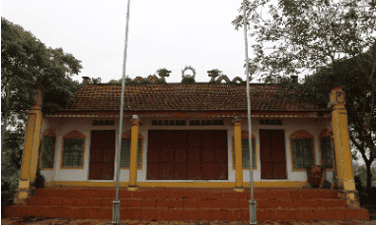
Hoang Xa pagoda communal house
Hoang Xa pagoda communal house is also known as Nhi communal house. Previously, Hoang Xa commune had two communal houses, the communal house in the lower hamlet was called Ha communal house or Nhi communal house, to the left of the communal house there was a pagoda called Hoang Hoa Tu. During the resistance war against the French colonialists, Hoang Xa pagoda was a revolutionary base, where fierce battles took place between us and the enemy. In 1954, the last enemy unit withdrew from Dong Trieu land. To commemorate the heroic martyrs in the two resistance wars against the French and the Americans, the government built a great memorial here. Currently, Hoang Xa communal house worships the Five Great Kings of Cao Son who have been ordained as tutelary gods of the village through the dynasties: Duong Canh Ngu Loi Noi Dai Vuong; On the scene of the Great King's Court; In the presence of the great king of the divine emperor; Great King Hong Lay; Luong Hong Chau Ngoc Thi Nuong. Hoang Xa pagoda relic cluster includes works: three gates; family; pagodas and martyrs' memorials. Currently, Hoang Xa pagoda is in the process of preservation and renovation. After many restorations, in 2001 the communal house was rebuilt on the old foundation, with a nail-shaped (J) architecture consisting of three front rooms and one back room, roofed with western tiles. The pagoda was renovated in 1997 and also has a nail-shaped (J) architecture, three front rooms and one back room. The martyrs' memorial was built in 1997 between the communal house and the pagoda. Through time and war, Buddha statues and worship objects in temples and pagodas were damaged and many were lost. Currently, there are a total of 15 stone steles, including 4 steles bearing the Canh Hung era, the reign of King Le Hien Tong (1740-1786), 11 steles bearing the era names of the Nguyen dynasty kings. Due to being cleaned outdoors, the above steles are worn, the letters are faded, difficult to read and there are still many stones that stand at the base of the pillars that are intact or many that have been broken. These are evidence confirming the cultural imprint of the ancient communal house and pagoda in Hoang Xa. Hoang Xa village temple festival is held on January 9-10 every year. In addition, there are Upper Dien and Lower Dien days, full moon weeks, first days, Buddhist holidays... all of which the villagers offer offerings to. At the festival, folk games and sports activities such as tug of war and football competitions also take place, attracting a large number of people and tourists to attend. With the value of the Hoang Xa communal house and pagoda relic complex, on December 28, 2016, the People's Committee of Quang Ninh province issued Decision No. 4423/QD-UBND, classifying the Hoang Xa communal house and pagoda as a historical relic. Provincial level. Currently, Hoang Xa pagoda is in the process of being preserved and embellished. It is in great need of the attention and merit of Buddhists from near and far and benefactors to make this cluster of relics spacious and prosperous. Source Quang Ninh province electronic information portal.
Quang Ninh
5269 view
Rating : Provincial level relics

Nhue Ho Pagoda (Quang Phuc Pagoda)
Nhue Ho Pagoda has a history of about 400 years. As the preserved system of restored stone stele of the pagoda shows, on February 20, the 17th year of Chinh Hoa (1696), the pagoda was restored and repaired. So at least the temple must have existed before this time. According to old people, although it is a village pagoda, Nhue Ho Pagoda has always been cared for and repaired by village officials. The merit stele also records that at the end of the 17th century, many people offered money and land to donate merit to the temple. In 1786, mandarin Nhue Ho contributed to renewing the old temple, planting many trees to make the pagoda more airy. Master Hai Nha, from Quynh Coi, Thai Binh, donated 7 acres of fields to make incense and fire fields. On December 15, the 14th year of Minh Menh (1833), the elders, people of Nhue Ho and the abbot put in 15 strings of green money to cover the Buddha statue... Therefore, in the history of Nhue Ho pagoda, there was once a large scale. Large and spacious, including the worship house, ancestral house, model house, monk's house, ceremony house, kitchen, tower garden, beer garden, three gates, pagoda yard, pagoda fields, and orchard of the pagoda. ... The pagoda is located on a large area of land, surrounded by rice fields that radiate the fragrance of rice all year round. Every day, the temple never misses the sound of bells ringing, making the temple scene solemn and cozy. However, through many ups and downs of history, for a time the pagoda was much damaged. With faith and respect for the village's sacred pagoda, in 1995 Buddhists from near and far made merits and rebuilt the pagoda according to the old pagoda model. Up to now, the pagoda still retains the ancient and quiet features of an ancient pagoda with an architecture including a worship hall in the shape of the letter T, 5 front halls, a back hall, a kitchen, a beer garden, a tower and a communal house. The new village tutelary god was built in the style of pre-Buddha and post-god gods. Currently, Nhue Ho Pagoda still preserves 98 ancient artifacts. The most precious of these is the unique Buddha statue system, including 15 statues made of terracotta material from the Le Dynasty. According to the head monk of the pagoda, Thich Thanh Hai, this is a rare set of intact terracotta statues in the system of terracotta Buddha statues at Quang Ninh pagodas. The statues are meticulously carved with all different postures, shapes, facial expressions, and inner expressions. 3 statues of Tam The, 1 statue of Amitabha 145cm high, shoulder width 60cm. Although the head and right shoulder are damaged, this is still considered the largest statue among the Adi Da statues in Quang Ninh. 4 statues of the Four Heavenly Kings, 1 statue of Avalokiteshvara, 1 statue of Tuyet Son, 2 statues of Bodhisattva Avalokiteśvara, 1 statue of newborn Sakyamuni, 1 statue of Dharma Protector. The other 4 statues were made in the Tay Son dynasty, 2 statues were made in the early Nguyen dynasty. In addition, Nhue Ho Pagoda also has a system of valuable stone stele arranged in the right position along with many ancient worship objects, making the pagoda even more ancient. Among them, the oldest stone stele is made in the 14th year of Minh Menh (1833) and 1 stone stele is made in the 20th year of Minh Menh (1839). Nhue Ho Pagoda opens its festival from January 20 to 23 every year. On the festival day, many folk games take place here, and many worship groups from all over come to make offerings and offer incense. In recent years, Nhue Ho Pagoda has attracted a large number of tourists from all over to offer incense, visit the pagoda's landscape and participate in festival activities. Source Quang Ninh province electronic information portal.
Quang Ninh
5030 view
Rating : Provincial level relics
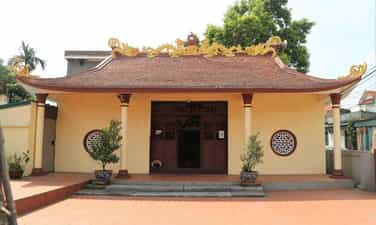
My Cu Communal House
The historical relic of My Cu Communal House is located in My Cu 1 Area, Hung Dao Ward, Dong Trieu Town, Quang Ninh Province. According to the Divine Legend of My Cu village, Me Son district, Dong Trieu district, My Cu village communal house worships eight village Thanh Hoangs: (1).Tam Giang Khuoc Dich (full name Truong Hat), (2). Kiem Tri Ton Dao, (3). Cao Son Cay Met, (4). Layman Venerable God, (5). Cao Son Dong Giac, (6). The god of Minh Man, (7). Cao Son Cay Vy, (8). Princess Ngoc Trinh. Also according to the divine legend, My Cu communal house has 14 ordinations of kings conferring on tutelary deities to be worshiped at the communal house, specifically three village gods: Cao Son Cay Met, Cao Son Dong Giac, Cao Son Cay. Vy are local Gods (nature gods), worshiped with the concept of "All things are polytheistic", and are not ordained. The honoring and worshiping of tutelary gods who are both human and natural gods at My Cu communal house has created a distinct feature between My Cu village and other localities in the province. My Cu Communal House faces West, has the Dinh script architecture and was built according to the traditional architecture of Vietnamese village communal houses including Bai Duong and Hau Palace. The courtyard is paved with red bricks. From the yard to the main hall, you have to go through two green stone steps (also the steps of the previous communal house) and a large veranda also paved with red tiles. The communal house still has relics of the My Cu village's Divine Relics, bowl palanquins, dragon communal palanquins, tablets, ordination boxes... which are important scientific bases showing the appearance and existence of the communal house. American Instruments in history. These relics not only show the scale and importance of the relic, and the interest of Vietnamese feudal dynasties in the Tutelary God worshiped at the relic, but also contain information about the past. The process of formation and development of relics and relics as well as the economic and social conditions in a certain period of local development. The tablets still remaining at My Cu Communal House are precious relics, unique and unique, typical of the Nguyen Dynasty's visual art, the carved lines are highly aesthetic like few other relics in the world. available in the entire province. According to My Con Village's Divine Legend: Every year, My Con communal house holds ceremonies on the 10th day of the first lunar month and the 1st day of the fourth month (lunar calendar). Currently, the people of My Cu village only maintain the My Cu communal house festival on the 9th day of the first lunar month (lunar calendar) every year. The communal house festival is organized including a ceremony and a festival. My Cu communal house festival is a cultural beauty with many lively rituals and games of the people. Each festival is an opportunity for people to participate in creating and enjoying culture, reviewing and promoting traditional cultural values in contemporary life. With those values, the historical relic of My Cu communal house, Hung Dao commune, Dong Trieu town has been ranked as a provincial-level relic in Decision No. 606/QD-UBND dated March 9, 2023 of the Chairman of the Committee. People of Quang Ninh province. The provincial-level relic ranking of My Cu Communal House relics creates an additional legal basis for the management, conservation, restoration and promotion of the relic's value, contributing to the preservation of cultural values and customs. of the people, protecting historical values during the formation and development of the monument, contributing to educating the tradition of "when drinking water, remember its source". Source Department of Culture and Sports of Quang Ninh province.
Quang Ninh
4818 view
Rating : Provincial level relics

Binh Luc communal house
Binh Luc communal house is located in Binh Luc Ha area, Hong Phong ward, worshiping Kham Minh Thanh Vu Hien Dao An Sinh king Tran Lieu, father of Hung Dao king Tran Quoc Tuan. The stele in the relic grounds are all post-god stele, of which the earliest date is the 17th Chinh Hoa year of the Le Dynasty (1696), showing that the communal house was built before this year. Binh Luc communal house is one of the earliest communal houses built in the Northeast region, bearing the architectural style of village communal houses during the Le Trung Hung period. Architectural traces and relics show that the communal house was restored during the Nguyen Dynasty. According to the elders, by the mid-twentieth century, the communal house had seriously degraded, but due to difficult economic conditions, it could not be restored. In the 70s and 80s of the twentieth century, the communal house burned and completely collapsed. In 1995, the people built a small communal house with simple architecture on the ancient royal palace grounds to worship and serve the spiritual and religious needs of the community. This small communal house exists to this day. Source Quang Ninh province electronic information portal.
Quang Ninh
4900 view
Rating : Provincial level relics

Temple of Saint Hang Son
Hang Son Holy Temple belongs to a complex of historical, cultural, and revolutionary relics of outstanding value in Yen Duc commune such as Dong Thuy mountain, Con Chuot mountain, Con Meo mountain, Canh mountain, Hang 73, Canh Huong Pagoda, Thien Long Uyen... The above relics have been put into management and ranked as relics at all levels. According to legends and historical records of the formation of the Hang Son Holy Temple, it is said that there was a young man named Pham Chau, handsome and extremely intelligent, who rained to help the people, then transformed into a man named Pham Chau. turned into a carp and floated down the Ma River to Hang Son cave, dreaming for dignitaries of Yen Khanh and Quy Khe villages (Quang Yen) to come and find Hang Son. To commemorate their gratitude, the people of the two villages worshiped the Saint in Hang Son and called him the Saint of Hang Son. The temple is located in a correlation with the Hang Son cluster of historical, cultural and scenic relics in Phuong Nam ward, Uong Bi city. The temple was built during the Tran Dynasty. Here, Buddha and Mother Goddesses are also worshiped. This is a combination of Buddhism and the sacredness of the Vietnamese people's belief in God worship and Mother Goddess worship. The temple is built on a mound higher than the surrounding buildings. To the west is Thung mountain, to the east is Canh mountain, in front of the Temple is a large rice field. The original artifacts of the current temple include the stone incense bowl of King Le Hien Tong in the Canh Hung era in 1772; The 5 restored titles of the Nguyen dynasties include Tu Duc, Dong Khanh and Duy Tan for four village tutelary gods, including the third one, Duc Thanh Hang Son. In addition, there are also records of the village's legends, wishes and stone structures in the yard, steps and foundations... These artifacts, relics and documents have proven the past. The history of the temple's existence shows the scale and attention of previous feudal dynasties. Through time, the harshness of nature, and the destruction of war...only ruins remained of the temple. In 1992, people in the commune together donated and rebuilt the temple on the old foundation. Later, the temple continued to be renovated, embellished and maintained in its original state until today. With the outstanding values of the relic, on March 9, 2023, the People's Committee of Quang Ninh province issued a Decision on ranking the provincial relic for the Temple of Saint Hang Son. The fact that the Temple of Saint Hang Son is ranked as a provincial relic is the honor and pride of the Party Committee, government and people of Yen Duc commune, and thereby contributes to propaganda and mobilization of local people. Raise awareness of protecting and participating in preserving and promoting the value of the Temple in particular and other scenic relic clusters in the area in general, making the relic complex worthy of the status of a heritage land culture. Source Quang Ninh province electronic information portal.
Quang Ninh
5248 view
Rating : Provincial level relics
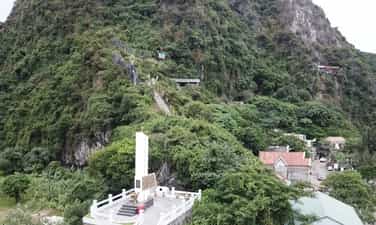
Vung Duc historical and scenic relic cluster
Vung Duc relics and scenic area in Cam Dong ward (Cam Pha city), about 10,000 square meters wide, is a complex of temples, monuments, and caves, gathered at Ban Co mountain, located on the banks of Bai Tu Long bay. dream. This is a place to remember the gratitude of revolutionary soldiers who fell for the cause of liberating the Mining Region, a place to educate patriotism and the heroic fighting spirit of our ancestors. People here recount that the reason this relic and scenic area is called Vung Duc is because in the past, this was an area with many deep pools and whirlpools, a gathering place for thousands of people. marine species and a special thing is that there are a lot of fish here. Perhaps that's why the ancient fishermen named this area Vung Duc. During the years 1948-1949, the French colonialists arrested hundreds of trade union members, national salvation youth and patriotic mine workers. They put them in sacks, took boats to Vung Duc and drowned them. live them into the sea. Among them, some are core leaders, some are patriotic masses, some are very young, some are still in their twenties and full of life. To commemorate and acknowledge the courage of the elite mine workers who endured brutal torture and accepted death to protect the Party organization, the revolutionary movement, the Party and the people. Cam Pha City built a memorial right at the foot of Ban Co Mountain, next to the place where the French colonialists drowned soldiers into the sea. The memorial is built quite high, covered with granite, and has bas-reliefs on the surface. Standing on the Vung Duc memorial, visitors can see the beautiful Bai Tu Long Bay, ships bustling in and out of Vung Duc wharf. Right next to the memorial, visitors will visit the Vung Duc temple planned in the area close to the Vung Duc Monument. The temple was built quite spaciously and on a large scale, with an area of about 3,000 square meters on a campus of 11.5 hectares, including 3 compartments and 2 wings with a nail-shaped design, wooden frame and brick walls, three-entrance gate, and 2 wings. The symmetrical houses on both sides, Ta Vu and Huu Vu, are reserved for ceremonies, and 2 stele houses to record events and contributions of individuals and organizations who contributed to building the temple. The Vung Duc Martyrs' Temple is a place to gather the souls of martyrs who fell for the cause of liberating the Mining Region, a place to remember the gratitude of revolutionary soldiers and a place to educate patriotism of the soldiers. generation of citizens of Cam Pha City about the heroic fighting spirit of their ancestors. At the same time, the temple also reminds of a time of heroic and glorious resistance by generations of soldiers and resilient people in the Mining Region. Along with historical significance, Vung Duc area is also blessed by nature with a natural beauty that is rare to find anywhere else. Coming here, visitors can also admire the unique natural beauty. That is the Vung Duc cave system located right next to the Vung Duc temple and memorial area. The Vung Duc cave system is linked by 5 majestic and magnificent caves with names such as: Thien Dang Cave - Long Van - Ngo Ngang - Kim Quy Cave - Bat Cave. To get to the caves, visitors can go along the mountainside. Going deep into these caves are soft, curving stone curtains, especially a thick layer of silvery stalactites, creating quite interesting shapes according to people's rich imagination such as: Swans, elephants, lotus flowers... When the light streams in from the outside, it enhances the shimmering beauty of the cave. During the journey of discovery, one of the caves that tourists should not miss is Thien Dang cave, located at an altitude of over 46m above sea level, the cave has an area of about 300m2. From Thien Dang cave, visitors can admire the beauty of Bai Tu Long Bay, in the distance are rocky islands undulating on the water, ships entering and leaving Vung Duc wharf. One thing that is quite convenient for tourists when coming to Vung Duc relic site is that right next to the relic site is Vung Duc pier. From here, visitors can board a boat to visit some tourist island routes on Bai Tu Long Bay... Vung Duc relics and landscapes were ranked as provincial historical relics in 1999. Source Quang Ninh province electronic information portal.
Quang Ninh
5384 view
Rating : Provincial level relics
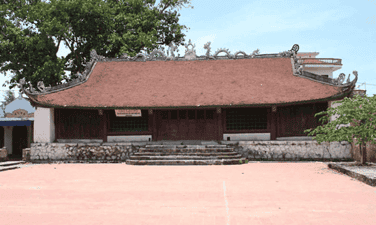
Dinh Hung Hoc
Hung Hoc Communal House is a historical relic commemorating the famous Duke Vu Hoang Dao, who had meritorious services to the commune, the god who eliminated pestilence and helped the people. He was one of the pioneers who passed the exam in the Later Le Dynasty, and was credited with constructing sea dikes, establishing farming and establishing hamlets, forming Quang Yen town in particular and Quang Ninh province in general. In addition, he also had merit in protecting villages against bandits and was talented in water management. According to oral tradition of Hung Hoc villagers: Mr. Vu Hoang Dao (武 皇 燾) is the fifth generation ancestor of the Vu family in Hung Hoc. According to the genealogy, the Vu family has a tradition of academics. He studied highly and passed the Cong Cong exam. On the glorious day of worshiping ancestors, he fell in the Rut River and manifested into Dong Hai God - a sea god who blesses Hung Hoc villagers who go to the river and sea safely. He also has the ability to eliminate pestilence and save people. Hung Hoc villagers carved a statue and built a shrine near the place where he fell (still there today, called Chinh Phu Temple). He was appointed by King Khai Dinh as the God of Dong Hai, the God of the Earth, the Central God, the Intelligent Appearance, and the god of eliminating pestilence and saving the people. Hung Hoc people worship God as Thanh Hoang. Every time they go to the river, sea to fish or take a transport boat, the villagers go to the Government Temple to burn incense and pray. When the villagers were sick with an epidemic, they all held prayers to pray for the Third Thanh Hoang Duc Dong Hai to pass by and be cured, very effective. When Hung Hoc villagers organize the annual Dai Ky Phuc festival at Hung Hoc communal house, they all make offerings to Than Vu Hoang Dao. Currently, at Hung Hoc Communal House, there is also a worship of King Khai Dinh's ordination in the second year of conferring Duc Dong Hai Vu Hoang Dao as the tutelary god of Hung Hoc village. With its construction history and cultural heritage being preserved, the communal house helps researchers learn about the history of formation and development of Hung Hoc village and Nam Hoa ward, Quang Yen town, Quang Ninh province in the 20th century. 15th century. The communal house also worships the famous Patriarch Huyen Quang, the third Patriarch of the Truc Lam Yen Tu Zen sect. He is a talented and virtuous person who passed high scores (at the age of 20, he passed the Huong exam, and at the age of 21, he ranked first in the Faculty of Great Sisters). He was not only a great poet with many poems still preserved, but also an eminent monk, a great poet of the nation during the Tran Dynasty, and a famous man of the country. Hung Hoc Communal House with the belief of worshiping the tutelary god Patriarch Huyen Quang, local tutelary god Vu Hoang Dao (local deity), at the same time through worship artifacts, worship statues, ordination and worshiping rituals, festivals The famous summer at Hung Hoc communal house relic helps us learn about the folk beliefs and tutelary god worship of Hung Hoc village in particular and Vietnamese villages in general. In particular, the custom of worshiping and receiving the god Pham Nhan - a defeated enemy general - to Hung Hoc village communal house to worship on the occasion of Dai Ky Phuoc festival is a unique cultural feature of the people of Hung Hoc village that has been studied by many cultural researchers. and science highly appreciates the humanity of the Vietnamese people: even though they are enemies, when they fail, they are still given food, water, and sent home; That is the democracy in Vietnamese worship (when worshiping a god, the god must bless the worshiper). The custom of worshiping a defeated enemy in the glorious Bach Dang Victory of 1288 took place right in his hometown of Quang Yen, Quang Ninh province. The custom of procession and worshiping the Gods at Hung Hoc Communal House also shows the Vietnamese people's concern for human life and spirituality: the way the Third Patriarch Huyen Quang uses Buddhism to teach and transform the God Pham Nhan to protect sentient beings; The custom of worshiping the gods Pham Ba Linh and Vu Hoang Dao: one god causes pestilence, one god eliminates pestilence is a very unique cultural feature of the residents of Bach Dang river area. Through the architecture of the trusses and sculptures on the communal house's structures, it can be seen that: Hung Hoc village communal house was built around the 18th century - early 19th century, consisting of three rooms, two wings, and four trusses. The structure of the truss is made of ironwood in the style of high-autumn-summer with the main column, military column, first sentence, pork belly gong stand, extra end, cross-shaped line, and trap end to support the roof. This is a special architectural style. Typical of Vietnamese village communal houses in the 18th - early 19th centuries. The components of Hung Hoc communal house such as the pillars, the remaining heads, the trap heads, the husband's children, and the horizontal supporting bowls are all very artistically carved and delicately embossed with the themes of the four traditional sacred animals, enriching the art. Village communal house sculpture in the 18th - early 19th centuries of Vietnam. The communal house still preserves many artifacts, especially 31 antiques that are valuable worship objects that help researchers of ancient Vietnamese fine arts. With the above values, Hung Hoc Communal House, Nam Hoa Ward, Quang Yen Town, Quang Ninh Province was ranked by the Minister of Culture, Sports and Tourism as a National Historical Site in Decision No. 1985/ Decision-BVHTTDL dated June 29, 2021./. Source Department of Cultural Heritage.
Quang Ninh
4826 view
Rating : National monument

Dinh Luu Khe
The name Luu Khe communal house comes from the name of Luu Khe village. The communal house was built to worship two Tien Cong, Mr. Do Do and Mr. Dao Ba Le. The two men were instrumental in gathering people to the alluvial plain at the mouth of the Bach Dang river to build a sea dyke in 1434, establishing today's Luu Khe village. During the Le dynasty, it was called Luong Qui commune, and in the Nguyen dynasty, it was changed to Luu Khe. Based on the existing documents of the communal house on Ha Nam island, through the words of the village elders and the sculptural patterns in the communal house, we can see that Luu Khe communal house was built in the year of Nham Ngo, April 1822. Up to now, Luu Khe communal house has undergone many restorations, renovations, and embellishments. The major renovation in 1942 re-roofed the communal house with western tiles, built a surrounding stone wall, placed a dragon relief on the gable and built two lantern pillars in front of the communal house. Most recently, in 2006, Luu Khe communal house was restored and embellished a number of items of the Dai Bai house such as connecting and reinforcing the mortises, treating the center of some termite-damaged wooden columns, replacing the roof diaphragm with a flat roof. round wood, re-roofed with new tiles (screen tiles and nose tiles); Rebuilding the walls of the Dai Bai Dynasty, re-paving the floor with Bat bricks (in the shape of the letter Cong), adding lost foundation stones; Restore the two wings of Dai Bai house... the current communal house is much more spacious and beautiful than when it was first built! The communal house is both a place to worship the two Tien Cong Do Do and Dao Ba Le who publicly destroyed the fields, and also a place of worship related to the village's temple of Tran Hung Dao, about 800 meters from Luu Khe communal house. Although the communal house has undergone many restorations and repairs, the structure of the trusses and sculptures still retain their original state. The sculptural style of the communal house bears bold features of the folk sculpture of the village's communal house in the late 17th and 18th centuries. On the pillars of the two naves and on the trapezoid heads are all embossed with sophisticated, sharp channel shapes. dragon, rattan, shrimp, fish, lily, phoenix. The rafters on both sides are embossed with dragon and cloud shaped channels. On the first sentence is a closely-matched pattern carved with delicate channels in the shape of a dragon and island dance. In particular, on the armpit beam connecting the main column with the military column of the two rafters in the middle of the hall are two pillars embossed with sophisticated bubbles shaped like dragons and dances, shrimps, fish, lotus flowers... The carved paintings are elaborate. elaborate, meticulous, with high artistic value. The communal house was ranked by the Ministry of Culture and Information with National Ranking Decision No. 65/QD-BT, dated January 16, 1995 because of its typical historical and artistic value. Source Quang Ninh province electronic information portal.
Quang Ninh
4691 view
Rating : National monument