
 vn
vn en
en ja
ja ko
ko zh
zh


Thanh Hoa's Top 27 Famous Historical Sites You Can't Miss

The historical sites in Thanh Hóa do more than just showcase a unique cultural identity; they are a profound source of pride for this land and its people. Each relic tells a vivid story from the past, promising travelers unforgettable experiences as they delve into this deeply traditional region. Ready to explore? Let's take a closer look at some of its most remarkable landmarks!
Thanh Hóa is a sacred land of outstanding people, the birthplace of countless heroes and preserving many glorious historical imprints. This place is not only the cradle of the Lam Son Uprising but also the sacred land of the Later Lê Dynasty, holding precious cultural and traditional values. A journey to explore 27 historical sites in Thanh Hóa with63Stravelwill offer visitors meaningful and unforgettable experiences.
Top 27 Must-Visit Historical Sites in Thanh Hóa
Save this list of historical sites in Thanh Hóa for an ideal journey to discover destinations that hold our nation's cultural and historical values.
Đền Đồng Cổ Temple
Dong Co Templeis one of the oldest and most sacred relics in Thanh Hóa, associated with many legends and historical milestones of the nation. Legend has it, the temple was built in 2569 BC and is dedicated to the Đồng Cổ deity, a deity credited with great contributions in assisting kings, helping the country, and protecting its borders.
Throughout various dynasties such as the Early Lê, Lý, Trần – Hồ, and Later Lê, the Đồng Cổ deity was honored for numerous divine manifestations and prophetic dreams, aiding in quelling rebellions and protecting the country. Notably, during the Lý Dynasty, after the deity appeared in a dream to help Lý Phật Mã defeat invaders and suppress the Rebellion of the Three Princes, King Lý Thái Tông had the deity brought to Thăng Long to establish a temple.
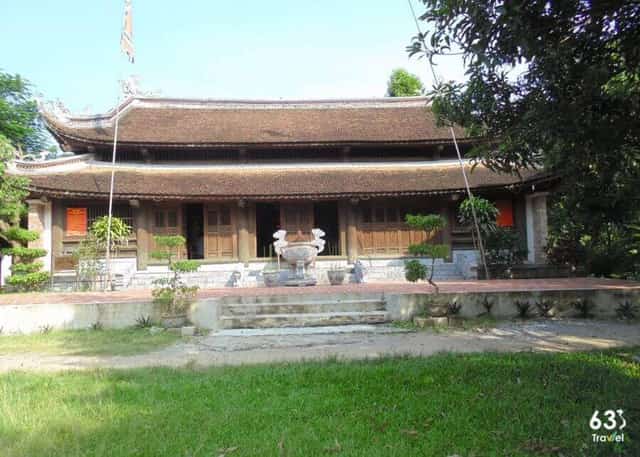
Đền Đồng Cổ Temple - A Spiritual Destination in Thanh Hóa Province
Đền Đồng Cổ also hosted many important court rituals, and today still preserves valuable royal decrees and divine legends. The temple's architecture exudes ancient charm, with its front hall (tiền đường), middle hall (trung đường), and sanctuary (hậu cung) built against the mountainside.
Notably, bronze drums – the sacred symbols of the temple – are prominently placed in various locations. In front of the temple lies the serene, crescent-shaped Bán Nguyệt Lake, surrounded by three mountains and with the Mã River flowing behind, creating a harmonious and sacred landscape.
Besides the main temple in Đan Nê, there are three other Đồng Cổ temples in Hanoi and Thanh Hóa. The Đồng Cổ Temple Festival is still held annually on the 15th day of the 3rd lunar month, preserving rich traditions and attracting a large number of locals.
Nguyễn Phục Temple
Mỹ Lộc Communal House, also known asNguyen Phuc Temple, is a site of profound spiritual significance for the people of Mỹ Lộc village, Định Tiến commune, Thanh Hóa. According to the village's customs established in 1847, the villagers brought incense ashes from the temple of Đông Hải Đại Vương Nguyễn Phục in Quảng Xương to worship him as the village's tutelary god (Thành hoàng).
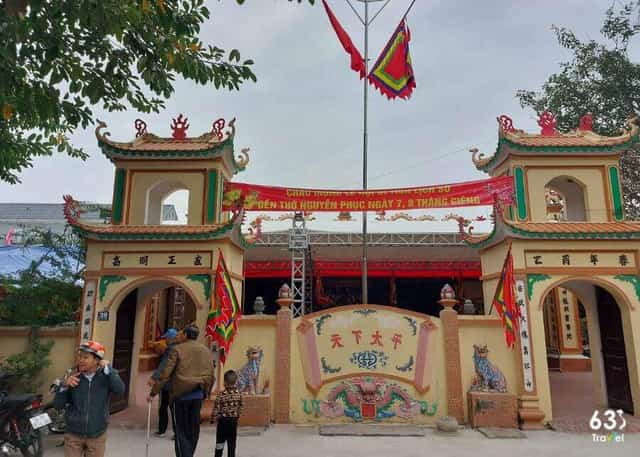
Nguyễn Phục Temple Historical Site
Nguyễn Phục was a talented official from Hải Dương, who passed the Hoàng giáp examination during the Lê Nhân Tông dynasty and held many important positions. Despite his significant contributions in fighting invaders and guarding the sea gates, he was unjustly executed for delaying the transport of provisions during the 1470 campaign.
After his death, King Lê Thánh Tông posthumously bestowed royal decrees upon him, and many temples were built in his memory. Nguyễn Phục Temple not only honors the hero's loyalty and integrity but also educates younger generations about ethics and talent. In 1999, the temple was recognized as a provincial-level historical site, becoming a spiritual anchor and a source of pride for the people of Mỹ Lộc.
Hoàng Minh Tự Temple (Đệ Tam Temple)
Located at the foot of Trường Lệ Mountain, Trường Sơn Ward, Sầm Sơn, Thanh Hóa,Hoang Minh Tu Temple (Third Temple)(also known as Hạ Temple or Đệ Tam Temple) is dedicated to the deity Hoàng Minh Tự – a symbol of loyalty and solidarity. The deity was originally a Bách Việt person who migrated from the southern Yellow River, China, to settle in Thanh Hóa. During the Trần Dynasty (1373-1377), when Champa invaded, he followed King Trần into battle, took charge of transporting provisions, and was bestowed the title “Minh Tự” after the victory.
Hoàng Minh Tự Temple features a 'chuôi vồ' architectural style, comprising three main sections: the front hall (tiền đường), middle hall (trung đường), and sanctuary (hậu cung). Although many ancient artifacts have been lost, the temple still preserves treasures such as royal decrees, a 'song loan' palanquin, ceremonial robes, and the large calligraphic inscription “Tối linh từ” (meaning “Very Sacred Temple”). These artifacts are currently being preserved at Độc Cước Temple, awaiting their return.
Having undergone numerous renovations, most recently in 1928, the temple became the main place of worship among the six temples dedicated to the deity Hoàng Minh Tự in Thanh Hóa. With its profound historical and spiritual value, the temple symbolizes sacrifice, solidarity, and compassion. Locals are always proud of this heritage, considering it a source of inspiration to live well and build a peaceful and sustainable life for future generations.
>> See more:Top 9+ Traditional Craft Villages in Thanh Hoa: Where the Flame of Tradition Lives On
Hòn Trống Mái Sầm Sơn (Rooster and Hen Islet)
On the way from Độc Cước Temple to Cô Tiên Temple, visitors will encounter two large rocks stacked precariously, yet remarkably, they have endured through the ages. Located on Trường Lệ Mountain, Hòn Trống Mái (Rooster and Hen Islet) is famous not only for its unique formation resembling a pair of roosters and hens leaning their heads together, but also for the symbolic love story hidden behind it.
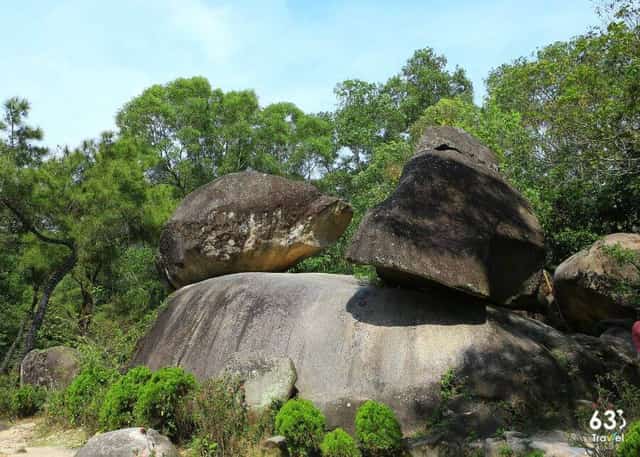
Hòn Trống Mái Sầm Sơn - A Legend of Eternal Love
With its prime location – a bustling beach in front and a peaceful city behind – this landmark attracts visitors for photos and admiration.
Since 1962, Hòn Trống Mái has been recognized as a National Heritage Site, and the annual Love Festival further enhances its appeal. Amidst the poetic scenery, the image of three precarious yet stable rock formations creates a sense of both grandeur and romance, making it an unmissable stop on any journey to explore Sầm Sơn.
Sùng Nghiêm Diên Thánh Pagoda
Sung Nghiem Dien Thanh Pagoda(also known as Duy Tinh Pagoda) was rebuilt on the foundation of an ancient pagoda after King Lý Nhân Tông returned to the capital. To express gratitude to the king and wish for national prosperity, the Inspector Chu organized the pagoda's construction with financial and labor contributions from local people. District Chief Lê Chiếu was assigned direct supervision of this project.
Over more than eight centuries, the pagoda's original architecture has been altered after numerous renovations. However, some precious artifacts are still preserved, including three stone lotus pedestals and a Lý Dynasty stele erected in 1118 – an invaluable historical testament despite war damage. Currently, the pagoda features four chambers in the sanctuary dedicated to Buddha, five chambers in the front hall dedicated to Lý Thường Kiệt, along with many wooden statues and Lý-Trần era interior artifacts that are relatively well-preserved.
Thanks to the government's attention and public contributions since 1990, the pagoda is gradually restoring its pristine beauty and becoming an attractive destination for domestic tourists. With its historical value and unique architecture, Sùng Nghiêm Diên Thánh Pagoda deserves to be a highlight on the Thanh Hóa City to Hậu Lộc tourist route, offering visitors experiences that are both sacred and culturally rich.
Khải Nam Pagoda
Khai Nam Pagoda(also known as Ải Pagoda or Dặc Pagoda) is located in Quảng Tiến Ward, Sầm Sơn Town, Thanh Hóa Province. The pagoda was rebuilt during the Trần Dynasty, on a beautiful feng shui land where the Lạch Trào River meets the sea.
Initially, the pagoda was simply constructed with thatched roofs, bamboo walls, and rudimentary clay statues. However, it has undergone numerous renovations, with the most significant one in 1869 adopting the Lê Dynasty architectural style.
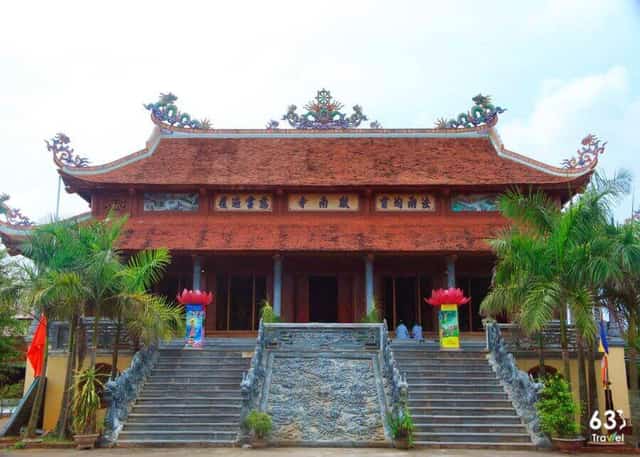
Discover Khải Nam Pagoda, Thanh Hóa's Most Unique Temple
During wartime, the pagoda was dismantled, and many artifacts were lost; only a 300-year-old banyan tree remained, cared for by villagers as a treasure. By 1994, the pagoda was restored with contributions from the community and Buddhists. The pagoda is currently located within the Cá Lập Temple complex, but its scale still does not meet local religious needs.
Khải Nam Pagoda was recognized as a provincial-level Historical-Cultural Site in 1999, and since 2007, Venerable Thích Nguyên Thanh has been appointed abbot. Local authorities are planning to rebuild the pagoda in a new, more spacious location. The Cá Lập Temple Festival, along with other festivals in Sầm Sơn, also contributes to the unique cultural identity of this tourist region.
An Dương Vương Temple
An Duong Vuong Temple(also known as Cổ Loa Temple or Thượng Temple) is located in the center of Cổ Loa Citadel, Cổ Loa commune, Đông Anh district, Hanoi. This is where King An Dương Vương, the founder of Âu Lạc – the second state in Vietnamese history – is worshipped. Built in 1687 during the Lê Dynasty and renovated in 1893, the temple holds profound historical and cultural significance and was recognized as a Special National Relic in 2012.
Cổ Loa Temple attracts visitors not only for its spiritual value but also for its ancient and unique architecture. Built on high ground, the main structure comprises a front hall (tiền đường), an upper sanctuary (thượng điện), and a rear sanctuary (hậu cung), where a 255kg bronze statue of King An Dương Vương is placed. Architectural highlights also include a grand triple-arched gate (tam quan) and an elegant eight-roofed stele house (nhà bia phương đình).
With its important position in cultural heritage, Cổ Loa Temple not only honors the contributions of our ancestors in nation-building and defense but also plays an educational role for younger generations regarding the responsibility of preserving national traditions. It is also an attractive destination for visitors to explore Hanoi's historical culture.
Cá Lập Temple
When visiting Sầm Sơn, travelers cannot missCa Lap Temple(Quảng Tiến Ward), dedicated to Tây Phương General Trần Đức, a hero who made significant contributions to the resistance against the Mongol invaders in the 13th century. According to historical documents, while the people of Đại Việt lived in peace, enemies advanced from the North, causing devastation.
Thanh Hóa became an important battlefield, and at Cửa Hới, Tây Phương General demonstrated his bravery and talent in a fierce battle to protect the army and the Trần Dynasty. To honor his contributions, the Trần court bestowed royal decrees upon him and entrusted the people of Cá Lập village to build a temple for his worship.
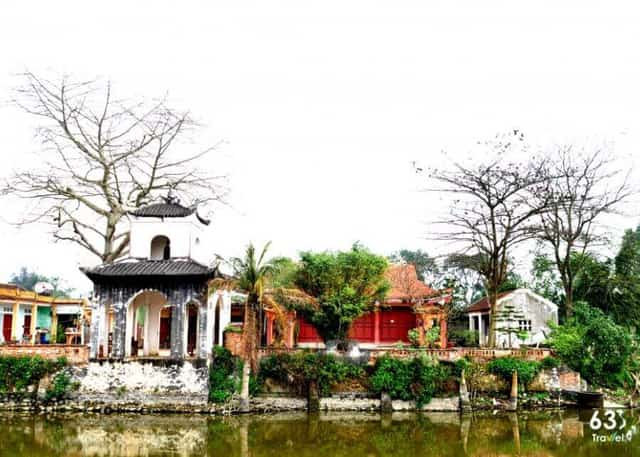
Cá Lập Temple – Temple of Tây Phương General Trần Đức
By the time of Trần Thánh Tông, he was bestowed the title of Tây Phương Grand General, along with many other honorary royal decrees. Despite the passage of time and various events, the temple still preserves 9 royal decrees and many valuable artifacts.
With its sacred atmosphere, prime coastal location, and long history, Cá Lập Temple has become an attractive destination for visitors to Sầm Sơn. It is a place not only to commemorate the hero but also to enjoy the natural beauty of the coastal area.
Xương Giang Citadel Special National Relic
Bắc Giang is a sacred land, the birthplace of many heroes and talented figures in the nation's history of resistance against foreign invaders. Prominent among its historical landmarks is Xương Giang Citadel – a Special National Historical Site, marking the glorious battles fought by our army and people during the resistance against the Ming invaders in the 15th century.
The ancient Xương Giang Citadel, built in 1407, features a unique rectangular architecture, measuring 600m long and 450m wide, surrounded by a wide moat, symbolizing the patriotism and resilience of the people. Xương Giang Citadel witnessed the glorious victory of the Lam Sơn insurgents led by Trần Nguyên Hãn, as they crushed the invasion plot of 100,000 Ming troops, contributing to the nation's independence in the 15th century.
Today, Xương Giang is not only an important historical site but also an attractive tourist destination for those who love exploring history. Here, visitors will have the opportunity to admire ancient architectural works such as Phủ Well, Nghi Môn gate, and also feel the intense patriotism of our ancestors.
Kênh Pagoda (Hưng Phúc Pagoda)
Kenh Pagoda (Hung Phuc Pagoda) (also known as Kênh Pagoda) is located in Quảng Hùng commune, Sầm Sơn City, and is a historical site of profound cultural value. Built in 1324 during the reign of King Trần Minh Tông, the pagoda is dedicated to Buddha and General Lê An – who made significant contributions to the resistance against the Yuan-Mongol invaders.
This place is notable for its unique ancient stele, which records a 'hương' (local administrative unit) that fought during the Trần Dynasty, marking the victory of the Đại Việt army and people led by General Lê Mạnh. The 1.5m tall stele, exquisitely carved with winding dragons and classical patterns, was recognized as a National Relic in 1995.
The destruction by the Ming army could not erase the historical value of this place; on the contrary, Kênh Pagoda continues to attract visitors eager to learn about a glorious period of the nation, inspiring pride and faith in the strength of the Vietnamese spirit. Kênh Pagoda is not only a place to commemorate the contributions of heroes but also a symbol of solidarity and patriotism.
Đề Lĩnh Temple
Located on a high mound in Trung Village,De Linh Templeholds significant historical and cultural values. Legend has it, this is the burial place of Đề Lĩnh – a talented martial general during the reign of King Lê Tương Dực, who made great contributions to protecting the country from foreign invaders. The temple covers an area of 1100m², facing southwest, with lush green rice fields in front and the gentle Đơ River flowing towards the sea.
With his talent and virtue, Đề Lĩnh was once one of the four pillars of the court, but King Tương Dực, fearing his influence, sent him to guard a desolate sea gate region. Here, he reclaimed land, established camps, and trained villagers in martial arts, becoming the founder of the Lương Trung wrestling tradition.
Upon hearing of his achievements, the king ordered the digging of the Đơ River to isolate Đề Lĩnh, but this led to disaster for the country. In the war against the Ming invaders, Đề Lĩnh and his two daughters fought valiantly until their last breath, and were buried in the place he had established.
Đề Lĩnh Temple currently preserves 8 valuable royal decrees, along with steles, stone chimes, and a pair of Lê Dynasty dragons. Annually, on the 17th day of the first lunar month, the people hold a commemorative ceremony and a wrestling festival to honor his contributions. The temple was recognized as a national historical site in 1993, continuing to be a place where villagers express their reverence for the national hero and the founder of wrestling.
Tô Hiến Thành Temple
Nestled at the foot of Kiếm Lĩnh Mountain,To Hien Thanh Templeis not only a focal point of reverence but also a repository of cultural essence and over 800 years of historical imprints. The temple is also known as "Đệ Nhị Temple" or "Trung Temple," situated amidst the Trường Lệ Mountain scenic complex, alongside Độc Cước Temple, Cô Tiên Temple, and Hòn Trống Mái, all collectively creating a sacred and ancient space within majestic nature.
The temple faces the bustling Sầm Thôn village while its back rests against a rock face, symbolizing steadfastness against the currents of time. Stepping through the triple-arched gate (tam quan), pilgrims are greeted by an airy space, shaded by ancient banyan, fig, and century-old kapok trees. A sense of peace and tranquility envelops the area, making all worries seem to vanish before the simple beauty of the scenery.
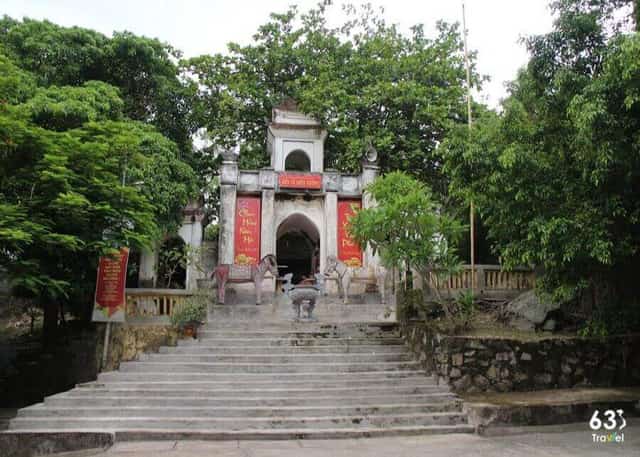
Tô Hiến Thành Temple - A Place Honoring Integrity and Uprightness
The temple is designed in a 'Đinh' shape, comprising three sections: the Ceremonial Hall (Bái đường), Middle Hall (Trung đường), and Sanctuary (Hậu cung). Each section holds a distinct role and ambiance, creating a deeply traditional spiritual space. Among them, the Middle Hall – where the statue of Tô Hiến Thành is placed – evokes the image of a talented general who dedicated his heart to the people and the nation. The interior of the temple, with its dim light and breezes wafting through arched doorways, creates an indescribably sacred feeling.
Despite many historical upheavals, the temple still preserves numerous precious artifacts such as ancient royal decrees, statues, bells, incense tables, and a set of ceremonial weapons (lỗ bộ) – testaments to the nation's golden eras. It is not only a place to pray for wealth and prosperity but also a place to entrust beliefs in integrity, academic success, and a peaceful life.
Since 1994, numerous renovations have helped the temple preserve its original Nguyễn Dynasty architectural value. However, compared to other relics like Độc Cước Temple and Cô Tiên Temple, Tô Hiến Thành Temple is less known. Sầm Sơn authorities are continuously promoting the temple so that this sacred site can become widely known and an attractive destination for those seeking to explore cultural roots and reflect on history.
Built on land shaped like an elephant, with a well resembling an elephant's eye and an entrance like its tusk, the temple impresses not only with its harmonious architecture but also with its intimate connection to the natural landscape. In front of the temple, the Hoàng Long River meanders, creating a poetic and tranquil scene, as if time here has stood still, leaving only echoes of the past and reminders of the merits of Grand Chancellor Tô Hiến Thành.
Tô Hiến Thành Temple is not merely a historical relic but also a symbol of loyalty and dedication to the nation. In every brick, horizontal lacquered board, or stone stele, one can still feel the presence of a bygone golden era – an unmissable destination on a journey to explore the cultural and spiritual values of the ancient Hoa Lư land.
Cô Tiên Temple
Located at the end of the Trường Lệ mountain range,Co Tien Templestands out with its airy position and picturesque scenery, attracting domestic and international visitors whenever they come to Sầm Sơn. The temple was built during the Lý Dynasty with characteristic ancient 'Đinh' shaped architecture, comprising three sections: the Front Hall (Tiền Đường), Middle Hall (Trung Đường), and Sanctuary (Hậu Cung).
Having endured many upheavals and the effects of time, the temple has been renovated multiple times but still retains its original ancient charm. The largest renovation in 2010 was carried out with contributions from the public and pilgrims from all directions, preserving the precious spiritual and cultural value of this place.
Beyond the main temple, the relic complex also includes Đền Trình - Quan Giám, the open-air shrine of Nam Hải Đại Vương, and Cô Chín Shrine, creating a space rich in legend. In the Sanctuary, the sacred altar of the Three Holy Mothers (Tam Tòa Thánh Mẫu) with the presence of Thánh mẫu Thượng Thiên (Mother of Heaven), Mẫu Thượng Ngàn (Mother of the Forest), and Thánh mẫu Thoải (Mother of Water) further enhances the spiritual allure of this special destination.
Cô Chín Temple
Đền Cô Chín (also known as Chín Giếng Temple) holds a captivating legend about the ninth daughter of the Jade Emperor – Cửu Thiên Huyền Vũ. She was not only intelligent and talented but also possessed the ability to discern thoughts and personalities through people's faces. Notably, Cô Chín had extraordinary fortune-telling abilities, accurately predicting all events. With deep empathy, she often used her magical powers to heal illnesses and help villagers, leading the people to revere her and establish a shrine in her honor at this sacred temple.
Built in the late 18th century, it has undergone numerous renovations, first in 1939 and most recently in 2004. Legend has it that during wartime, Princess Liễu Hạnh transformed into a dragon to escape danger at the residence of Cửu Thiên Công Chúa. Thanks to Cô Chín's magic, Liễu Hạnh escaped harm, and from then on, they became soulmates. Nine sacred wells appeared at this spot, and the locals built a temple right next to them to commemorate her merits.
Today, Đền Cô Chín is not only a sacred place but also a cultural site intimately connected with the spiritual life of Thanh Hóa residents. All important festivals and rituals in the region are held here, creating an atmosphere filled with faith and spiritual energy. Recognized as a National Historical Site by the Ministry of Culture and Information since 1993, Đền Cô Chín is an unmissable destination on a journey to explore the unique cultural and spiritual values of Thanh Hóa.
Độc Cước Temple
Doc Cuoc Templestands majestically on Cổ Giải Islet, associated with the legend of Thần Độc Cước – the one-legged deity with extraordinary power, revered by the people as “Độc Cước Sơn Tiêu” and “Độc Cước Chân Nhân Thượng Thượng Đẳng Thần” (the highest-ranking one-legged immortal). This temple faces Southwest to avoid sea storms, standing firm against the waves and winds, protecting the peace of the land and its people.
The path leading to the temple is paved with flagstones and features 49 steps, flanked by shrines dedicated to the Mountain God (Sơn Thần) and Earth God (Thổ Thần). The temple's architecture is in the 'Đinh' shape, showcasing distinct 17th-century artistry, with a spacious five-compartment front hall (tiền đường), exquisitely carved interiors featuring dragon, unicorn, tortoise, and phoenix motifs, and large calligraphic inscriptions like “Thánh cung vạn tuế” (Long live the sacred palace) honoring the deities.
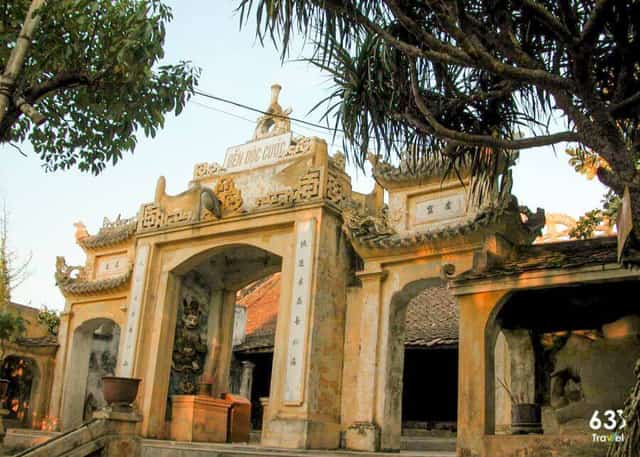
Độc Cước Temple – A Famous Spiritual Tourist Destination in Sầm Sơn
The sanctuary houses a bust of Thần Độc Cước – a black-painted wooden artwork depicting the deity's majestic appearance. It also preserves His sacred footprint, symbolizing the deity's incarnation to save the people. The temple space is further distinguished by an ancient Champa stone statue, depicting a kneeling figure with clasped hands, a wide, innocent smile, and an expression of complete submission.
From the temple, visitors can gaze out over the entire poetic Sầm Sơn beach, stretching to the Lạch Trào estuary. The temple courtyard is shaded by a century-old banyan tree, casting a peaceful shade. To the Southwest is Phủ Mẫu, a shrine dedicated to the Three Holy Mothers (Tam Tòa Thánh Mẫu), offering a profound spiritual space. Standing here, one can hear the waves crashing against the cliffs like the whispers of all beings, conveying messages to the sacred and immortal Độc Cước deity.
With its special position and historical value, Độc Cước Temple was classified as a Special National Relic in 2019, becoming an unmissable stop on a journey to explore the scenic wonders of Sầm Sơn.
Ba Đình War Zone
Ba Dinh war zonewas once a crucial military base during the uprising against French colonialists (1886 – 1887). Built in the area of three villages – Thượng Thọ, Mậu Thịnh, and Mỹ Khê – the name Ba Đình (Three Communal Houses) originated from the three large communal houses in each village. Located amidst a low-lying flooded rice field region, during the high water season, all three villages were completely isolated from the outside, making it a strategic location for the resistance.
Patriotic scholars like Đinh Công Tráng and Phạm Bành chose this place as their base, mobilizing villagers to build solid fortifications. Dense bamboo fences, a system of trenches and tunnels, and sturdy earthen walls were established to resist French firepower. The war zone was not only a battleground but also a production and logistics center, ensuring food and safety for the insurgents.
With its strategic location controlling North-South transportation, Ba Đình war zone played a crucial role in blocking enemy forces and supporting other resistance bases. The indomitable spirit and contributions of the war zone left a profound mark on national history, to the extent that Uncle Ho chose the name “Ba Đình” for the historic square in Hanoi.
Although recognized as a national historical-cultural site in 1992, Ba Đình war zone today retains only a few traces, located within the grounds of Ba Đình Secondary School. The area has not been adequately preserved, creating a desolate feeling, with only a stele inscribed with “Historical-Cultural Relic of Ba Đình Uprising Base” serving as a reminder of this land's glorious past.
Chu Văn Lương Temple
Located in Nam Ngạn Ward, Thanh Hóa City,Chu Van Luong Temple(also known as Nam Ngạn communal house) commemorates the contributions of Inspector of Education Chu Văn Lương – an eminent figure during the Trần Dynasty. He not only taught literacy and practiced medicine but also reclaimed land, establishing Nam Sơn hamlet and Nam Ngạn camp. He also organized the people to resist the Yuan-Mongol invaders, contributing to the defense of his homeland in the 13th century. After his death, King Trần bestowed upon him the title “Thượng đẳng Phúc thần” (Highest-ranking Benevolent Deity), entrusting the people of Nam Ngạn village to preserve his legacy, honor him as the village's tutelary god (Thành Hoàng), and hold annual rituals.
Initially, the temple was built outside the Mã River dike. In 1723, during the reign of King Lê Dụ Tông, the temple was moved to its current location, alongside Mật Đa Pagoda. Throughout various dynasties, the temple was continuously renovated, and the court bestowed additional royal decrees and honorary titles, demonstrating reverence for Chu Văn Lương. In 1989, the temple was recognized as a National Historical-Cultural Site.
The temple currently preserves many valuable artifacts such as royal decrees, altars, ancestral tablets, literary boards, and stone steles. Notably, the exquisitely carved panels, rich in Nguyễn Dynasty artistic style (19th century), remain perfectly preserved. Annually, the Chu Văn Lương Temple Festival takes place on his birth date (February 18) and death anniversary (12th day of the 9th lunar month), featuring many folk games and performances, attracting a large number of locals and tourists.
The temple grounds span 0.142 hectares, located with Đúc Tiền Alley to the north, Mật Đa Pagoda to the south, and residential areas to the east and west. It is not only a place for spiritual activities but also a space preserving the glorious memories of a hero who dedicated his entire life to his homeland and nation.
Mật Đa Pagoda
Mat Da Pagodais one of the national historical-cultural sites recognized in 1989. Initially, the pagoda was built in 1723 (during the Bảo Thái era of the Later Lê Dynasty) outside the Mã River dike, simply constructed with thatched roofs, earthen walls, and terracotta Buddha statues. The first abbot was Venerable Tuệ Minh, a renowned master from Đại Khánh Pagoda, Thanh Hóa.
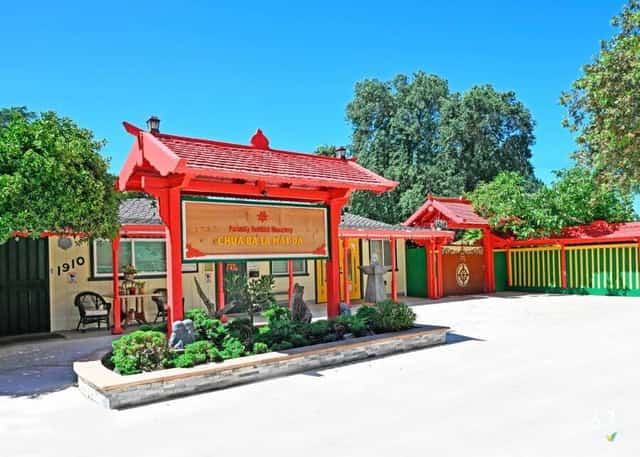
Mật Đa Pagoda - An Ancient Temple in Thanh Hóa
The pagoda features the distinctive 'Đinh' architectural style of the Northern Delta region, comprising 5 chambers in the front hall and 2 chambers in the sanctuary, where Buddha statues are placed and Buddhist iconography is fully arranged. Notably, two guardian statues, over 3m tall, symbolizing the spirit of promoting good and eradicating evil, are a unique feature of the pagoda. After numerous renovations, the architecture here has become a harmonious blend of Trần, Lê, and Nguyễn styles.
Beyond being a sacred place of worship, Mật Đa Pagoda also bears strong historical imprints from wartime. On May 26, 1965, during a fierce battle in the Hàm Rồng area, the pagoda's monks opened their doors to wounded soldiers and performed Buddhist funeral rites for fallen heroes. Venerable Thích Đàm Xuân and his disciples actively supported the military and civilians by dismantling houses to create shelters, using pagoda doors as stretchers for the wounded, and cutting coconuts for soldiers to quench their thirst. At that time, the pagoda became a command post, a gathering point for provisions, and a first-aid station for the forces defending Hàm Rồng Bridge.
Thái Miếu of the Later Lê Dynasty
Thai temple of the Later Le Dynastyis one of the most ancient and majestic structures in Thanh Hóa. Built in 1805 during the reign of King Gia Long, the temple was moved from Thăng Long to Bố Vệ after a fire. This structure spans over 4,200 m², featuring distinctive architecture with a Front Hall (Tiền điện) and a Rear Hall (Hậu điện), and 'mũi hài' tiled roofs adorned with "two dragons flanking the moon" motifs.
This place not only preserves the ancestral tablets of 27 Later Lê kings and empress dowagers but also honors meritorious officials Nguyễn Trãi and Lê Lai. Notably, the statue of King Lê Thái Tổ along with six statues of consorts from various ethnic groups and nationalities are precious works of art.
Annually, on the 21st-22nd days of the 8th lunar month, traditional festivals are held at Thái Miếu, Lam Kinh, and the Lê Lợi monument, expressing the gratitude and historical pride of the Thanh Hóa people.
Kim Sơn Scenic Area
Ticket price: 30,000 VND/ticket
Kim Sơn stands out with its poetic beauty, nestled amidst the majestic nature of Thanh Hóa. The scenery here is a perfect blend of towering limestone mountains and clear blue waters, creating a picture straight out of a legend.
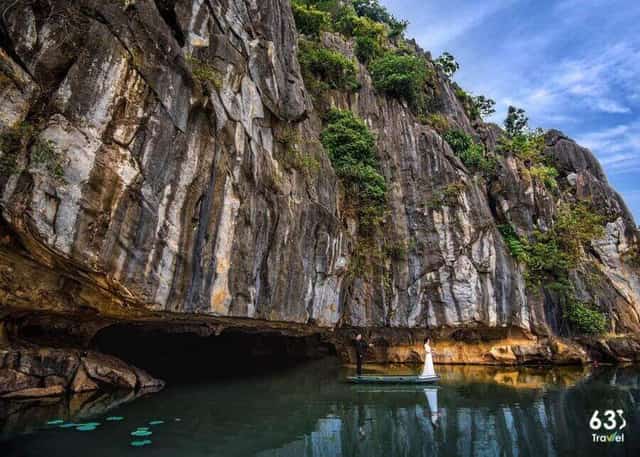
Kim Sơn Scenic Area - A Fairyland in Thanh Hóa
Cruising by boat, visitors will feel the tranquility permeating through each magnificent mountain range, enjoying moments of relaxation amidst heaven and earth. A highlight of the journey is Tiên Sơn Cave, where a solemn statue of Bodhisattva Quan Âm (Guan Yin) is present, bringing a sense of sacredness and peace.
>> Learn more:Thanh Hoa
Mai An Tiêm Temple
Located in Nga Phú commune, Nga Sơn district, about 5 km northeast of the center, thisMai An Tiem Temple small temple is nestled on the mountainside, holding the legend of Mai An Tiêm – a symbol of self-reliance and land reclamation. The temple is not only a sacred place but also preserves beautiful stories passed down through generations, honoring the merits of land development from the early days of nation-building.
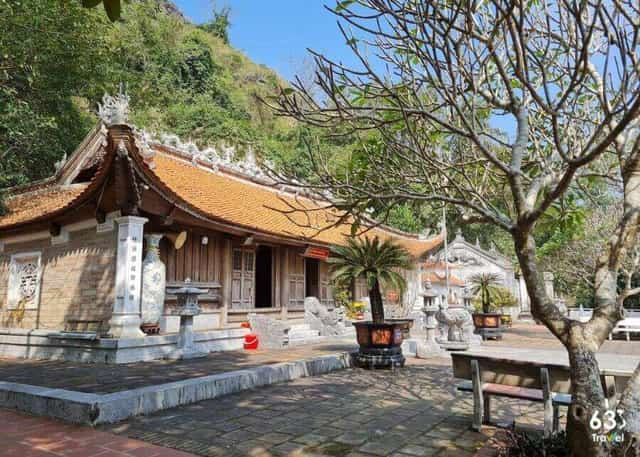
Mai An Tiêm Temple – A Spiritual Tourism Destination in Thanh Hóa
Nga Sơn region is also famous for its specialty Mai An Tiêm watermelon – a gift from legend that has become a source of pride for the locals. Annually, from the 12th to the 15th day of the 3rd lunar month, the Mai An Tiêm Festival takes place vibrantly, attracting pilgrims from all directions to participate, immerse themselves in the festive atmosphere, and connect with the unique cultural roots of this place.
Hàm Rồng Bridge
Located on the North-South railway line,Ham Rong Bridgespans the Mã River, about 5 km north of Thanh Hóa City center, within the territory of Tào Xuyên town, Hoằng Hóa district. This is an unmissable destination for those passionate about exploring the nation's history.
Hàm Rồng Bridge was built in 1903 during the French colonial period, featuring a unique steel arch design without central piers, similar to Long Biên Bridge in Hanoi. Initially, the bridge was equipped with one railway track and two lanes for automobiles, becoming one of the most modern bridges in Indochina at that time.
However, in 1946, the old bridge was destroyed in an effort to resist colonialists. In 1962, construction of the bridge was restarted with the assistance of Soviet and Chinese experts, and it was completed in 1973.
Hàm Rồng Bridge not only played a crucial role in strategic transportation in northern Thanh Hóa but also served as a witness to historical ups and downs, especially during the famous air battle of 1965. Amidst falling bombs and stray bullets, the bridge stood defiantly, its back against Hàm Rồng Mountain, casting its reflection upon the Mã River.
Today, Hàm Rồng Bridge is not only a cultural symbol and a testament to the resilient spirit of Thanh Hóa people, but also an attractive tourist attraction. From the bridge, visitors can admire the gentle beauty of the Mã River and the majestic Ngọc Mountain, creating a magnificent natural landscape bestowed upon the homeland.
Lê Hoàn Temple
Le Hoan Temple- the oldest temple in Thanh Hóa, with hundreds of years of history, is a symbol of reverence for the founding king of the Early Lê Dynasty. With architecture deeply rooted in traditional Vietnamese style, the temple is not only a historical site but also a repository of cultural values and ancient rituals.
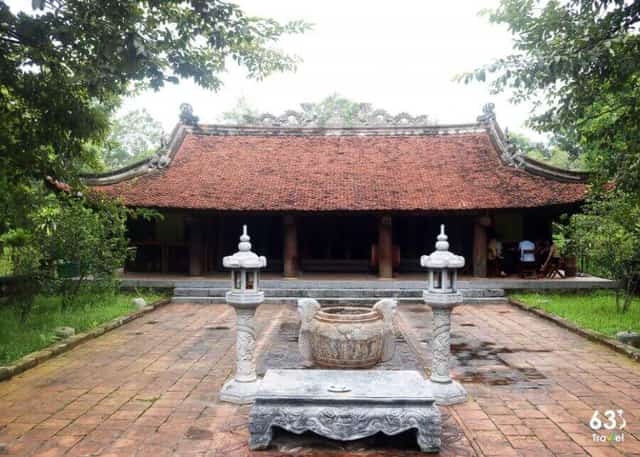
Lê Hoàn Temple - The Oldest Temple in Thanh Hóa
Despite enduring many ups and downs and the harshness of time, the temple remains steadfast, having been renovated and preserved by local authorities, becoming a spacious and solemn structure. Each year, it attracts a large number of tourists and locals who come to offer incense, express their reverence and gratitude to the national hero, affirming the temple's status as a sacred destination in the hearts of Thanh Hóa people.
Con Moong Cave Archaeological Site
Archaeological site of Hang Con Moonglocated in Thành Trung village, Thạch Thành district, at an elevation of 147m above sea level, is one of Vietnam's important archaeological sites. Situated within the Đồng Giao formation, dating back approximately 240 million years, this cave not only possesses the majestic beauty of limestone mountains but also stands as a historical witness to the development of human civilization.
Discovered in 1974, Con Moong Cave has undergone four excavation phases, confirming the continuous development of stone tool technologies from the Old Stone Age to the New Stone Age. Stone tools, traces of ancient hearths, and animal bones found here have left imprints of a rich and diverse culture.
Over tens of thousands of years, with changes in climate and living environment, humans developed and expanded their tool-making techniques, leaving many traces of their ancestors' lifestyles and activities. Con Moong Cave is not only a repository of past memories but also a source of inspiration for future generations in their journey to explore the nation's cultural and historical heritage.
Bà Triệu Relic Complex Historical and Architectural Art Site
Historical and architectural artistic relics of Ba Trieu relic arealocated on Gai Mountain in Phú Diễn village, Hậu Lộc, Thanh Hóa, is a prominent tourist destination, attracting a large number of visitors and locals for pilgrimage. This sacred temple worships the national heroine Triệu Thị Trinh, who bravely rose up against foreign invaders in the 3rd century AD, leaving a profound mark in the hearts of the Vietnamese people.
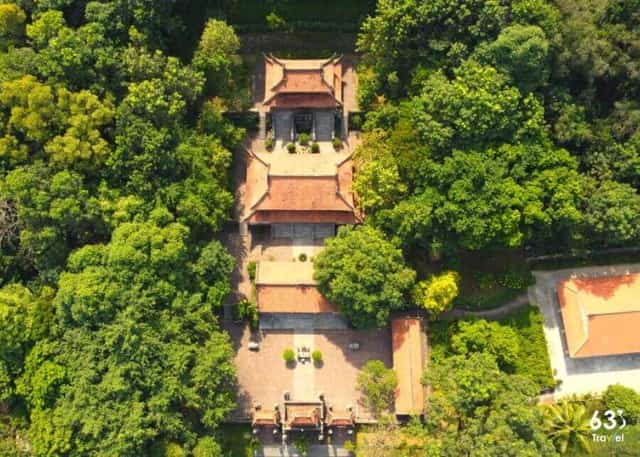
Panoramic View of Bà Triệu Temple in Thanh Hóa from Above
Featuring the characteristic traditional architecture of the Northern Delta, the Bà Triệu relic complex is thoughtfully arranged from the outer gate, pond, and screen to the inner gate and the front hall (tiền đường), middle hall (trung đường), and sanctuary (hậu cung). Despite its simple and rustic beauty, the temple exudes elegance and solemnity, creating a serene and sacred space.
Upon arriving here, you will not only feel the breath of history but also enjoy the harmonious beauty between nature and architecture, creating an ancient, natural, yet deeply sacred tableau. The Bà Triệu Relic Complex is not only a place to commemorate a national hero but also a spiritual destination, preserving the precious cultural and historical values of the Vietnamese people.
Lam Kinh Historical and Architectural Art Site
Spanning over 140 hectares,Lam Kinh historical and architectural artistic reliclocated in Thanh Hóa, is an attractive destination for enthusiasts of Vietnamese history. It is not only the birthplace of national hero Lê Lợi but also the center of the Lam Sơn Uprising against the Ming invaders, ushering in a prosperous era of nearly 360 years for the country.
Featuring classical architecture of the Later Lê Dynasty, Lam Kinh was built according to the principle of "leaning on mountains, facing water," nestled against Dầu Mountain and overlooking the Chu River, creating a stunning natural landscape. The relic complex is not only a sacred cultural heritage site but also a place to honor ancestors and the kings of the Lê Dynasty.
Here, visitors can explore unique architectural works such as the main palace, Thái Miếu (Royal Temple), and Vĩnh Lăng – the resting place of King Lê Thái Tổ, along with mysterious legends intertwined with history. Lam Kinh not only holds immense historical value but also serves as a cultural symbol of the nation, allowing every visitor to feel the breath of a glorious past.
Hồ Dynasty Citadel
Ticket price: 40,000 VND/ticket
Citadel of the Ho Dynastybuilt by Hồ Quý Ly in 1397, is an enduring historical and cultural symbol of Vietnam. After nearly 600 years of existence, its sturdy walls with four gates – East, West, South, and North – still retain their unique architectural beauty, reflecting the solidity and ingenuity of previous generations of builders.
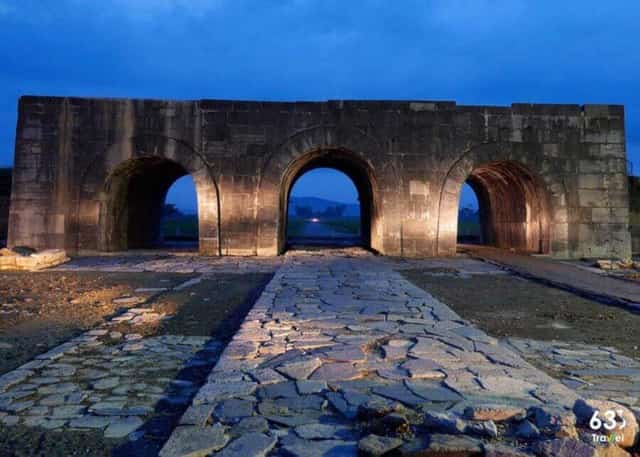
Hồ Dynasty Citadel - A World Cultural Heritage Site in Thanh Hóa
Notably, in 2011, UNESCO recognized Hồ Dynasty Citadel as a World Cultural Heritage site. This recognition affirms the humanitarian value and unique architectural artistry of this relic, attracting visitors to explore and learn about a glorious historical period of the nation.
Thus, the article above shares 27 famous historical sites in Thanh Hóa for readers to visit and explore. We hope this article will be useful and help you discover Vietnam's relics in this region.
Thanh Hoa 14695 view
Update day : 23/10/2024



Monuments close by
See all
Ham Rong Bridge
The historic Ham Rong Bridge is located on the North - South route of the "masterpiece" land of Thanh Hoa, charming mountains and water crossing the Ma River, with unique architecture, associated with the development history of the land. The heroic land of Thanh Hoa, the strong will of Thanh Hoa people. Ham Rong Bridge is the first bridge to cross the Ma River in Thanh Hoa, nearly 5km north of Thanh Hoa City center... This is also the only railway bridge to cross the Ma River by France. Built in 1904 in the style of a steel arch bridge without pillars, the most modern in Indochina at that time. In 1946, the bridge was destroyed according to the scorched earth resistance policy of the Viet Minh to stop the advance of the invaders. In 1963, the bridge was restored by Soviet and Chinese experts helping to design and construct it, becoming the current pier bridge, with a width of 17 meters, consisting of 2 steel girder spans, with a railway in the middle. , on both sides are car roads and pedestrian roads. During the escalating war against the North of our country, the US Air Force focused on raiding Ham Rong Bridge to cut off important traffic arteries and prevent support from the Northern rear to the major battlefield in the South. The destruction of Ham Rong was chosen by the White House and the Pentagon as the most important goal in the first war of sabotage in the North. With a plot to cut off North-South support, isolate Ham Rong and focus on completely defeating Ham Rong, at 8:45 a.m. on April 3, 1965, the first 16 American planes bombed the area. Thanh Hoa with a series of raiding locations such as Do Len bridge (Ha Trung), Cun bridge (Nong Cong), Van Trai station (Tinh Gia)... In just two days, April 3 and 4, 1965, the US military used 174 groups and 454 aircraft; threw 627 explosive bombs, 58 slow-explosive bombs (including types from 500 to 1,000kg), and hundreds of missiles and rockets into key areas of Thanh Hoa. In the Ham Rong - Nam Ngan - Yen Vuc area alone, the enemy dived 85 times, bombed and bombarded 80 times, threw 350 bombs, and fired 149 rocket shells. To protect Ham Rong Bridge, on our side, in a working session with the Standing Committee of the Thanh Hoa Provincial Party Committee in December 1967, comrade Le Duan affirmed: "If Military Region IV is important, then Thanh Hoa is important." especially because Thanh Hoa is the direct rear of the Binh - Tri - Thien and Laos fronts. Thanh Hoa Provincial Party Committee commented: "The key point of attacking the military zone at this time is Thanh Hoa, the key point of Thanh Hoa is Ham Rong, protecting Ham Rong bridge is to contribute to protecting smooth traffic." Due to the particularly important location of Ham Rong Bridge, at the North and South ends of the bridge there are two mountains, Ngoc Mountain and Dragon Mountain, which can block most falling bombs. After 2 days of stubborn fighting, Thanh Hoa shot down 47 American enemy planes, captured many enemy pilots, and protected the safety of Ham Rong Bridge. This has proven that the Party's people's war policy, the Party's military art and our people's revolutionary heroism have gone down in history as a legend that has stirred up American public opinion and made our friends love us. justice and peace around the world admired. Years passed. Ham Rong Bridge with the two words "Quyet Thang" majestically carved into the mountainside is a shining symbol of patriotism and revolutionary heroism of the Vietnamese people. For every child of Thanh Hoa, Ham Rong - Ma River is also the embodiment of the homeland, both close and familiar, very sacred and proud. Source: Thanh Hoa School of Politics
Thanh Hoa
9853 view
Rating : National monument

Lam Kinh historical and architectural artistic relic
Lam Kinh historical and architectural artistic relic is located in Lam Son town and Xuan Lam commune (Tho Xuan district), Kien Tho commune (Ngoc Lac district), with a total conservation planning area of 200 hectares. Lam Kinh was originally Lam Son land, hometown of hero Le Loi, who had the merit of recruiting talented people and gathering people to expel the Ming invaders (1418 - 1427). In 1428, Le Loi ascended the throne (Le Thai To), establishing the Later Le dynasty, with the capital in Thang Long, opening a new period of development for the Dai Viet nation. In 1430, Le Thai To changed the name of Lam Son land to Lam Kinh. Since then, electrical structures, temples... also began to be built here, associated with two main functions: - A resting place for the Le kings when returning to worship their ancestors, and at the same time, also the residence of mandarins and permanent soldiers to look after Lam Kinh; - The gathering area for the tombs of ancestors, kings, queen mothers of the Le Dynasty and some mandarins in the royal family. Regarding the architectural appearance of the current monument, we can point out some typical works such as: Lam Kinh main palace: according to historical and archaeological documents, Lam Kinh main palace was built immediately after the death of King Le Thai To (1433). The layout of this architecture has a "cong" shape, with a total area of 1,645.04 m2, including 3 main palaces: Quang Duc, Sung Hieu and Dien Khanh. Currently, in this area only traces of the foundation remain, with 127 column footrests, paving slabs, sidewalks and a number of other artifacts. Thai Temple: is a place to worship ancestors, kings and queen mothers of the Le Dynasty. According to archaeological excavation results, this area includes 9 architectural buildings. Currently, 5 buildings have been renovated and restored (buildings 3, 4, 5, 6, 7). Dragon yard: is one of the largest architectural structures in the central area of Lam Kinh palace, located behind the Ngo gate, in the middle there are 3 paths leading to the main hall along the dragon steps. Dong Tru: located in the Southeast of the main hall, is considered a logistics and kitchen area to serve the entire central area of Lam Kinh. Left vu, Huu vu: located on both sides of the dragon yard, only the foundation and some pillar bases and some other artifacts remain. West Interior: located on a small mound to the west of the Main Palace, outside the inner citadel. Currently, this area is just architectural ruins. Bach Bridge: newly restored, 17m long, 5.50m wide, spanning the Ngoc River, located on the main road leading to the central area of Lam Kinh main palace. City wall system: includes 3 citadel rings (La citadel, Inner citadel and Outer citadel). In 2008, some sections of La Thanh east and west of Bach bridge were restored (with a total length of 21m). Nhu Ang Lake, Le Dynasty Dam Water Canal, West Lake: In the past, this area was low-lying land, surrounded by many small streams. Taking advantage of the natural terrain, the Le Dynasty dug a canal to bring water to West Lake to supply the entire Lam Kinh area. Dau Mountain: about 500m from King Le Thai To's mausoleum. On the mountain there is a temple to Ba Hang Dau, associated with the legend of the Lam Son uprising. Tomb of Le Thai To and Vinh Lang stele: Vinh Lang was built on a flat strip of land, south of the foot of Dau Mountain. In 1995, Vinh Lang was restored and rebuilt with bricks, the outside was covered with rough chiseled stone, in front of the mausoleum there were 2 statues of mandarins and 4 pairs of stone statues, standing in front of the "shrine" path of the mausoleum. Vinh Lang stele is made of monolithic sedimentary stone, 2 meters 79 meters high, 1 meter 94 meters wide, placed on the back of a stone turtle. The content of the stele records the life and career of Le Thai To. This is a stone sculpture with artistic value and is also a valuable document in researching the history of the Early Le period. Le Thai Tong Tomb and Huu Lang Stele: located on the peak of Phu Lam forest, in Xuan Lam commune, 800 meters from Vinh Lang. Huu Lang stele was built about 20m away from the mausoleum. Currently, the stele has been lost, only the stone turtle remains in its original position. Tomb of Queen Mother Ngo Thi Ngoc Dao and Khon Nguyen Chi Duc stele: located on a low area of land, called Xa Dam (Snake lagoon), 700 meters east of Vinh Lang. In 1998, the mausoleum was restored with bricks, the exterior was plastered with cement, and stone statues of people and animals were carved on both sides. Khon Nguyen Chi Duc stele was built in the year Mau Ngo (1498), made of monolithic green stone, 2 meters 76 meters high, 1 meter 90 meters wide. The stele's forehead and border are decorated with 5-claw dragons and stylized flowers. . Le Thanh Tong's tomb and Chieu Lang stele: located next to Dinh mound (Xuan Lam commune). The stele was erected in the spring of Mau Ngo year, Canh Thong era (1498). Tomb of King Le Hien Tong and Du Lang Stele: located on the right side of Vinh Lang, adjacent to West Lake. Du Lang stele is located about 30 meters from the tomb, made of monolithic stone, 2 meters 78 meters high, 1 meter 98 meters wide. Le Tuc Tong Tomb and Kinh Lang Stele: built on top of "Ho Xu Ngoc Giang Lamp" mountain, located in Kien Tho commune, Ngoc Lac district. Kinh Lang stele was erected in March of the first year of Doan Khanh (1505), the stele's content records the life and career of King Le Tuc Tong. Temple of King Le Thai To: located in the southeast of Lam Kinh relic area. In 1996, this temple was renovated, with an ironwood frame structure, following the model of traditional architecture, including items : front hall, toilet (beach tube), middle hall and back palace. In addition to the above-mentioned structures, in the Lam Kinh area there is also a system of auxiliary works and many other relics and antiques of historical, cultural and scientific value. At the relic site, on the occasion of the 8th month (lunar calendar) every year, on the 21st (Le Lai's death anniversary) and the 22nd (Le Loi's death anniversary), people in the area solemnly organize festivals to commemorate the merits of Le Lai. heroes who liberated the nation, and at the same time expressed their desire to pray for good weather and a prosperous and happy life... With the special historical, cultural and scientific values of the monument, on September 27, 2012, the Prime Minister decided to classify Lam Kinh Historical and Architectural Artistic Monument as a National Monument. special. Source: Department of Cultural Heritage
Thanh Hoa
8617 view
Rating : Special national monument
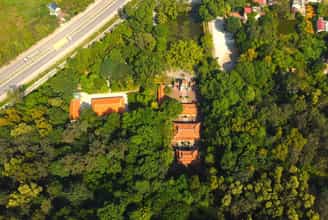
Historical and architectural artistic relics of Ba Trieu relic area
Mrs. Trieu (named Trieu Thi Trinh, also known as Trinh Nuong, or Trieu Au), was born in 226, from Quan Yen district (Quan Yen), Cuu Chan district. She has an outstanding appearance, is highly skilled in martial arts, loves to make friends, and has great ambitions expressed through her famous quote: "I want to ride strong winds, step on fierce waves, and kill giant whales in the East Sea." , expel the Ngo army, reclaim the country, take off the yoke of slavery, and refuse to bend down to be a concubine for others!" In 248, Ba Trieu and her brother Trieu Quoc Dat gathered young men in the area to rally against the Ngo Dynasty's domination. A short time later, Trieu Quoc Dat fell ill and passed away. She was honored by the generals as General. Faced with the strength of our army, the Wu army's hamlets in Cuu Chan were defeated one by one. The uprising developed and spread to Giao Chi areas, extending into Nhat Nam. Faced with that situation, Ngo King Ton Quyen had to appoint General Luc Dan as Governor to bring troops to suppress. After many fierce battles, the insurgents could not withstand the strong enemy. Ms. Trieu committed suicide on Mount Tung (now in Trieu Loc commune, Hau Loc, Thanh Hoa) on August 22, the year of Mau Thin (248), when she was just 23 years old. To commemorate the kindness of Ba Trieu and her generals, the people built a temple right at the place where she and her insurgents fought and sacrificed their lives heroically. Through the events of time and history, Ba Trieu temple at Tung Mountain is still preserved by the people and is a place to organize cultural and religious activities. Ba Trieu relic area was built, restored and embellished over many different periods, including locations: Ba Trieu temple and mausoleum, tombs of three generals of the Ly family, Ban swear temple, Phu Dien communal house, Fourth Temple. 1. Ba Trieu Temple: located to the North, including: Outer ritual gate, rectangular lotus pond, screen, middle ritual gate, lower courtyard, inner ritual gate, upper courtyard (both sides have left/right curtain), front yard. Street, terrace, Middle street, Thien province yard, Harem. 2. Ba Trieu's tomb area Ba Trieu's Tomb: located on the top of Tung Mountain, vertical cylinder (quadrilateral) gradually smaller towards the top, including 2 roof floors: with a height from the ground to the top of 5.8m. The mausoleum's roof is made in the style of a dragon's palanquin, and the top of the mausoleum is shaped like a wine bottle. The entire Mausoleum is crafted from monolithic green stone, inside is an incense bowl, the main side of the Mausoleum is a stone altar. Grave: built 0.50m higher than the foundation. The four-sided square tomb structure is 1.5m in size and 2.3m in height. The tomb has an arched door opening on all four sides, the roof is curved at the corners, and the top of the tomb is mounted with a round ball. Lord's Tower: four-sided square cylindrical structure made of monolithic stone, 1.45m high, tower base 0.5m high, four-sided square. 3. Tombs of three generals of the Ly family: located at the foot of Tung mountain, the three tombs are all 3m in size. Behind the tomb is a rectangular brick altar used as a place to place offerings. In addition to the grave, there is also a stone stele with the inscription "Commemorative stele" on the forehead. 4. Ban Oath Temple: Legend has it that this is where the three Ly brothers held an oath to follow Ba Trieu's insurgent army, in Dong Bang field, Phu Dien village. The current status of the temple is just an altar built of bricks, 2.04m long, 1.48m wide, 1.38m high. 5. Phu Dien communal house: built during the reign of the 33rd King Canh Hung (1772), located to the southwest, overlooking Tung mountain, including the following items: Ritual gate: four-pillar style, made of monolithic green stone, with 3 doors. The column has four large pillars, the base is made of kneeling style, the four sides are carved with four sacred animals, and the top of the column is mounted with a statue of a phoenix bird with flipped leaves. Dai Dinh Building: Dinh-shaped architecture, 18.40m long, 14.37m wide, the front has a 1.9m wide porch, table-style door. Front hall: has beautiful, harmonious architecture, the rafters are intricately carved in the style of filigree, embossed, embossed, and sunk with traditional decorative themes such as four sacred animals, carp turning into dragons, and lotus flowers. , apricot flowers, starlings, deer, roosters, especially the image of women and folk scenes. Harem: 3 rooms, 2 wings, trusses in the style of "gong rack stacked on beam, seven beams" with 4 rows of pillars, 4 wooden trusses. The harem has 3 doors, table-style doors, and round wooden frames on all components. The carvings are concentrated on the wooden dragon cot wall, on the spring flower system and the porch walls. 6. Fourth Temple: located near Eo mountain area, Phu Dien village, so people also call it Nghe Eo. At the relic, there are still 3 ordinations, including 1 copy of Canh Thinh's 5th year (1797). The temple consists of 2 vertical compartments, 6.12m long, 2.88m average width, 3.85m high, including the Rear Hall and Front Hall, built in a domed style, with ancient red tiled floors. Ba Trieu Temple, has 297 relics and antiques of many types and diverse materials such as paper, wood, copper, ceramic,... dating from the late 17th century to the early 20th century. These documents, Artifacts still preserved in relics have historical and cultural value, helping us learn about the origin, existence of the relic and local cultural traditions, beliefs and customs. The relic is where the people of Phu Dien village organize cultural and religious activities according to traditional customs (holidays, traditional New Year, death days of historical figures). Ba Trieu Temple Festival takes place for 3 days (from February 19 to 22 of the lunar calendar) including sacrificial ceremonies, palanquin processions, and folk performances with the large participation of the community in the region and attracting tens of thousands of tourists. Come visit and celebrate. With particularly typical values, historical relics and artistic architecture, Ba Trieu relic site (Hau Loc district, Thanh Hoa province) was ranked as a special national monument on December 31, 2014. Source: Department of Cultural Heritage
Thanh Hoa
8542 view
Rating : Special national monument
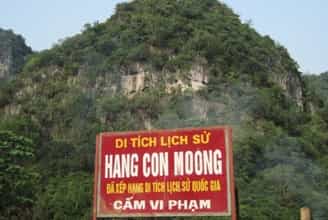
Archaeological site of Hang Con Moong
Con Moong Cave relic and surrounding relics in Thach Thanh district, Thanh Hoa province, have a total area of 4,999,180 m2, first excavated in 1976. In 2008 - 2009, Con Moong cave was inspected by the team. Overall research and survey of nearby relics. During the excavation of Con Moong cave (2010 - 2015), the Vietnamese - Russian archaeological team discovered additional relics such as Ly Chun cave, Bo Giao cave, Dau Voi mountain mound relics, Mang Chieng cave, Bo Giao cave. Diem, at the same time excavating 4 surrounding relics: Lai Cave (2010), Ly Chun Cave (2010), Mang Chieng Cave (2011 - 2012) and Diem Cave (2013 - 2014). Specifically: 1. Con Moong Cave: located in Upper Triassic limestone mountains of Dong Giao formation (Tađg), about 240 million years old. Con Moong Cave has an average strata thickness of 9.5m - including 10 layers with different structures. From layer 1 to layer 6 (depth from 1m - 6m), many working tools, animal bones, and mollusk shells were found. Grades 7 to 10 did not encounter any remains of flora or fauna, but there were many thin tools made of quartz, most concentrated in grade 10. According to initial research, Con Moong cave went through 4 stages of development. cultural development. Results of radiocarbon (C14) research on the upper layers, magnetic susceptibility, sedimentary set at Con Moong and cultural compatibility comparison with other archaeological sites show that the earliest age of Con Moong is expected. Guess 40,000 to 60,000 years ago. From the results of archaeological excavations, Con Moong cave is one of the very few archaeological sites with the thickest and best-preserved strata today in Vietnam and Southeast Asia. 2. Nearby monuments: - Hang Lai relic: located in the limestone mountain range in Thanh Trung village, Thanh Yen commune, Thach Thanh district. The cave is frog-shaped. - Ly Chun Cave Relics: The cave's interior is like a small stone roof, the door faces West - Southwest, the dome is 2m high and not flat with many frills and stalactites hanging down, the length is over 2m deep, the cave walls have stone seams spreading to the door. , there are many sedimentary blocks containing fossil animal bones and teeth. - Bo Giao Cave Relic: located in Yen Son 2 village, Thanh Yen commune, Thach Thanh district, Thanh Hoa province. The cave has two chambers, separated by large stalactite columns. - Dau Voi Mountain Earthen Monument (also known as Dau Voi Mountain's moat system, Dau Voi Mountain's earthen citadel, Ly Chun Citadel, Elephant Dau Fortress, Ly Chun Military Fort) is located close to (surrounding three sides) the mountain Elephant Head, in the buffer zone of Cuc Phuong National Park. - Diem Cave Relic: located in the buffer zone of Cuc Phuong National Park. The cave has a tubular shape over 50 meters long and an average width of 10 meters. - Mang Chieng Cave Relic (also known as Vang Chieng): located in the area of Cuc Phuong National Park, in front of the cave there are two large Vong trees so people also call it Cay Vong Cave. - Moc Long Cave and Moc Long Stone Roof Relics: located on one side of Chua Mountain in Thanh Minh commune. After the process of researching and excavating Con Moong cave and surrounding relics, scientists initially commented and evaluated the outstanding values: - The stratigraphic structure and cultural layer of Con Moong cave relic and surrounding relics show that this is a relic of residence and burial of residents of many periods. Con Moong Cave is one of the very rare archaeological sites, with the thickest and best-preserved stratigraphy today in Vietnam and Southeast Asia. - The relics excavated in Con Moong cave are authentic evidence of the tradition of residing in the cave, making and using stone tools with changes in the type and technique of making tools, thereby , it is possible to study the changes in behavior and behavior of ancient people in response to changes in paleoclimate and natural environment... - The outstanding historical and cultural value in Con Moong cave is the adaptation of humans to the environment for tens of thousands of years, from gathering and hunting, gradually moving to farming, animal husbandry... Excavation results shows that humans were present in Con Moong cave about 60,000 years ago, but not regularly. From about 25,000 - 20,000 years ago, the climate gradually warmed, with alternating warm and cold periods, and people lived in caves more often. After 20,000 years, there was a period of hot, humid and rainy weather, causing snails and mollusks to multiply, becoming a regular food source for humans, as evidenced by mollusc shells filling up the cave entrance, in some places up to 4m thick. From 11,400 years to 8,000 years was a period of heavy rain, and Prehistoric people continuously resided at the entrance of Con Moong cave. In this area, a very thick layer of snail shells and hundreds of working tools made of stone, bones, horns, mollusc shells, etc. were found in the strata, with the tool making industry developing from the Son Vi culture to the Son Vi culture. Hoa Binh - Bac Son. From 7,000 years ago today, when the sea receded and there was little rain, people began to leave the caves and gradually occupied the plains and coastal areas, establishing the first marine cultures in the Prehistoric period. Remains of the top cultural layer at Con Moong include ground axes and rudimentary hammered ceramics compatible with the earliest layer of the Da But culture, showing that the migration of Con Moong cave residents gradually moved down to the plain. along the coast, establishing the Da But culture. - In parallel with completing the excavation of Con Moong cave, scientists have surveyed, excavated and researched caves around the Con Moong cave area. This shows that Con Moong is the most ancient relic, with a certain relationship with surrounding relics at different levels. From Con Moong, over tens of thousands of years, due to changes in climate and weather leading to expanded living environments, and the increasingly advanced industry of making tools for work and living, primitive people have separated from each other. out in groups, moving to Mang Chieng cave, Diem cave, Lai cave, Moc Long cave, Moc Long rock roof, Bitter Cave (Ancient Man Cave), Bo Giao cave... These research results have contributed to Enhance the historical - cultural value of the relic - cave complex in the Con Moong cave area. With typical value, the archaeological relics of Con Moong cave and surrounding relics (Thach Thanh district, Thanh Hoa province) were ranked by the Prime Minister as special national relics on December 23, 2015. Source: Department of Cultural Heritage
Thanh Hoa
8482 view
Rating : Special national monument

Citadel of the Ho Dynasty
Ho Dynasty Citadel is a historical architectural work in Vinh Long commune, Vinh Loc district, Thanh Hoa province, about 140km from the center of Hanoi. The Ho Dynasty Citadel was built in the late 14th century and has existed for more than 600 years. In 1962, the Ho Dynasty Citadel officially became a national monument. In 2011, this historical site was recognized by UNESCO as a world cultural heritage. The citadel was built by Ho Quy Ly in 1397. The heritage includes: Inner citadel, La citadel, Nam Giao altar, 155.5 hectares wide and surrounded by a buffer zone with an area of 5078.5 hectares. Thanh's location was chosen according to feng shui principles in the beautiful natural landscape between the Ma and Buoi rivers in Vinh Loc district, Thanh Hoa province. Today, the citadel still retains 4 city gates. The city gates are built of large stone blocks, many weighing from 10 to 26 tons. The citadel wall has a circumference of more than 3.5km with many sections of the wall almost intact and many artifacts marking what was once considered the capital, political, cultural, and social center, and at the same time, a construction project. The largest military defense of the Ho Dynasty. Visiting the Ho Dynasty Citadel, visitors cannot help but be amazed at the huge volume of stone and the way the stones were assembled to build massive and sturdy walls and gates. Tourists are even more surprised and impressed when they learn that: in a time more than 600 years ago, this huge stone citadel was built in just 3 months. The outstanding value of the citadel is the stone blocks weighing tens of tons that were hand-carved but achieved maximum functionality and efficiency, unique and unique in East Asia in the late 14th and early 19th centuries. 15th century. This is an "unprecedented" miracle that has not yet been scientifically explained. Archaeological excavations have revealed architectural traces and many artifacts that once contributed to creating a magnificent and majestic Tay Do. All have proven that: Ho Dynasty Citadel is an ancient capital that was completely built with full palaces, temples, shrines inside and was used continuously throughout the historical process of civilization. Dai Viet. The heritage becomes even more attractive, when in the inner city area and the ancient village area surrounding the citadel, there are many cultural - historical relics and even legendary stories related to this special citadel. Today, the Ho Dynasty Citadel has become a historical witness and its own values have naturally reached world-class status when officially inscribing its name in the "temple" of human cultural heritage. The World Cultural Heritage of Ho Dynasty Citadel plays an important role and is an infinite resource for exploitation and tourism development. Source: Ho Dynasty Citadel website
Thanh Hoa
8388 view
Rating : National monument
Nearby tourist attractions
See all
Sam Son
Located on the land of Thanh Hoa, a "masterpiece" with beautiful landscapes of mountains and water, Sam Son beach is one of the outstanding destinations and attracts tourists because of its clear, vast, majestic blue sea; endless stretches of sand and fresh, airy air that is reassuring. Sam Son, a name that is no longer unfamiliar to everyone, will definitely bring you an extremely perfect and unique resort travel experience. Thanh Hoa's yearly weather is characterized by two distinct seasons. The hot season lasts from May to October with rain and high temperatures. The cold season comes from November to April next year, with little rain and quite cold weather. For those who want to experience beach tourism in the summer to escape the heat, the most suitable time for your trip to Sam Son is May to July, but around this time, Sam Son is often crowded with tourists coming here to relax, so it can sometimes affect the enjoyment of the vast natural beauty here. A quieter time for those who want to travel to Sam Son is around February to April. At this time the weather is still a bit chilly, so many people are afraid to swim, but in return the beach is less crowded, more spacious and you can completely embrace the whole majestic nature in your sight. Coming to Sam Son beach is a charming picture of nature, where there is interference between the sky and the ground, between the mountains and forests and the sea. Tourists coming here enjoy the long beach with cool, clear blue water, the long stretch of white sand embellished with coconut and casuarina trees whispering in the wind. Sam Son at each time of day has a unique beauty. Try to get up a little early so you don't miss the sunrise over the sea. From the pitch black night, the pink sun shines bright red on the surface of the ocean, creating a majestic natural scene. The afternoon is the time when everyone goes to the beach to relax and rest. Sam Son beach is especially crowded in the summer, when everyone wants to go to the beach and immerse themselves in the vast space to dispel all fatigue and worries. When night falls on Sam Son beach, when the street lights are on, the sea seems to shrink, pitch black, only the murmur of the waves and the sound of the coconut trees swaying in the wind can be heard. Sam Son is not only a resort with an ideal beautiful natural space, but also a place where you can enjoy extremely fresh seafood dishes on boats filled with fish and shrimp of newly arrived fishermen. When coming to Sam Son, you can visit some nearby historical sites such as Truong Le Mountain, Doc Cuoc Temple,... With beautiful scenery and standard travel services, Sam Son promises to be an ideal destination for your trip. You can admire the majestic natural scenery and experience the coastal culinary culture with the freshest and most unique dishes. It is these points that have made Sam Son famous, making Sam Son a top choice for summer travel trips.
Thanh Hoa
7827 view
May to October

Hai Tien Beach
Hai Tien tourist area is a marine eco-tourism destination, located in 4 eastern communes of Hoang Hoa district (Thanh Hoa province), namely Hoang Hai, Hoang Truong, Hoang Thanh and Hoang Tien. Hai Tien Beach is about 155 km from Hanoi Capital, still maintaining its natural ecological environment. The coast is gentle with highly stable sand, moderate currents and no dangerous eddies. The beach slope and wave level are also safe for tourists' swimming activities. The biggest advantage of this tourist area is that it is located near historical and cultural relics of Thanh Hoa. From the beach, visitors can go to Sam Son beach, Lach Hoi, cork forest reserve, Con Truong tiger parrot reserve by yacht. With the above strengths, Hai Tien tourist area is an attractive destination in Thanh Hoa tours. In addition to relaxing and swimming, visitors here also have the opportunity to participate in interesting fun activities and enjoy local cuisine. From April to August every year is the appropriate time for trips to the Northern sea in general and Hai Tien sea in particular. After this time, the weather will gradually change to autumn, and the temperature will also begin to decrease. However, the summer months also coincide with the rainy and storm season in the North, where there can be storms or tropical depressions. Therefore, before going to Hai Tien Thanh Hoa tourist area, visitors should still check the weather forecast first. There are two popular forms of accommodation in Hai Tien tourist area: beach front hotels and sea view hotels. Beach hotels have quite high prices, from 600,000 - 2,500,000 VND/night. In return, they are located very close to the sea, only about 30 - 100 m from the sea. Sea view hotels are more affordable, only from 400,000 - 1,500,000 VND/night. Possessing a beautiful beach and prime location - near famous tourist attractions, Hai Tien is the most popular destination in recent times. Coming here, visitors will have wonderful, unforgettable entertainment and relaxation experiences. The biggest highlight of Hai Tien tourist area is definitely the dreamy Hai Tien beach. The beach still retains its original pristine features, near the seaport but has alluvial deposits so it is very clean, less sandy and smooth. Along the coast are rows of green casuarina trees, the space is quiet and extremely poetic. In particular, the beach is extremely safe, the coast is gentle so you can swim quite far. Visitors coming here can freely dive in the clear blue water, walk on the beach and admire the peaceful scenery every afternoon. In addition, don't forget to enjoy fresh seafood - products bestowed by nature and the sea.
Thanh Hoa
7634 view
March to August

Ben En National Park
Ben En eco-tourism area is one of the famous landscapes with an extremely rich and diverse biological ecosystem, an eco-tourism complex, pearl farming combined with the conservation of Ben En national park - a place known as "Ha Long on land of Thanh Hoa". Ben En tourist area is located between Nhu Thanh and Nhu Xuan districts, about 45km southwest of Thanh Hoa city center. Established in 1992 with an area of about 15,000 hectares, Ben En National Park is a primeval forest with an extremely diverse and rich flora and fauna ecosystem. This place is also surrounded by Song Muc Lake, which is more than 4,000 hectares wide. The lake surface is quiet and blue all year round like a pair of large natural hands embracing the heart of Ben En National Park. Located on the arid central region, Ben En eco-tourism area is an ideal destination chosen by many people because of the wild and unique beauty of the majestic mountains and forests. Because it is located in Thanh Hoa province, Ben En National Park is located in the tropical monsoon climate: hot in the summer and cold in the winter. However, thanks to being covered by green primeval forests, Ben En's weather is extremely cool. At each time, Ben En National Park has different beauty, so no matter what time of year you go, you will have memorable experiences. However, the most ideal time to visit Ben En eco-tourism area is in the summer. This is the time when this place attracts the most tourists of the year because at this time, Ben En eco-tourism area puts on a lush green carpet in the bright sunshine, creating beautiful pictures between the mountains. Ben En National Park has an extremely rich and diverse flora and fauna system with more than 462 tree species and about 125 plant families. Among them, the famous green lim tree in Vietnam stands out, which is up to several hundred years old with a trunk diameter of nearly 3 meters. There are also many other rare plants and medicinal herbs preserved here such as cho chi, incense sticks, yellow hearts, honey worms, flower slices, ironwood, cymbidium, oysters,... In particular, this place has an area of about 4000 hectares of Song Muc Lake, the water level is very deep and clear, creating a very gentle and poetic scene. Coming to Ben En National Park, do not miss the dishes with bold flavors of this place such as dishes made from silver carp caught in Song Muc Lake. In addition, you can enjoy famous dishes of indigenous people such as chicken soup and bitter soup. In particular, when coming to Van village - a place imbued with the traditions of ancient Thai people, remember to enjoy the specialty wine can. This special flavor will leave an indelible mark in your heart.
Thanh Hoa
7681 view
March to August

Cloud Falls
Thanh Hoa Cloud Waterfall is considered the most beautiful waterfall associated with the legend of 9 levels of love. May Waterfall is located on Lang Su stream, Thach Lam commune, Thach Thanh district. May Waterfall is only about 50 km from Thanh Hoa city center, so it is considered an attractive destination for your trip to Thanh Hoa. May Waterfall is about 100m long and includes 9 large and small waterfalls created by the limestone mountain system in the north of Truong Son. The water flows down from a height of about 400m, creating a surprisingly majestic, wild and magical natural landscape. Not only that, the beautiful scenery here with clear water, mixed with charming natural scenery also attracts many tourists. This waterfall is also known as the "nine steps of love" waterfall. According to legend, while traveling to the underworld, 9 fairies accidentally passed by a beautiful waterfall. Because they could not resist the beauty of nature here, 9 fairies came down to bathe. According to experience traveling to May waterfall in Thanh Hoa, the most ideal time to go to May waterfall is in the summer. When the waterfall falls, it will form a cool stream, allowing you to enjoy the feeling of bathing in the waterfall to the fullest. People compare the gentle May waterfall to a Muong girl, muttering to herself day and night, throwing white foam into the sky. May Waterfall has water all year round but is probably most beautiful in the months of June, July, August. On beautiful sunny days, the lake feels as cool as crystal. For that reason, tourists often flock to visit May Waterfall at this time. On the way to Thac May, you will pass a wooden bridge made of wild tree branches spanning the Ngang River. May Waterfall has 9 high and low waterfall steps overlapping each other like eye-catching terraced fields. Looking down from above, the beautiful composition is like a beautiful white silk strip. Muong people here often tell legends about this gentle waterfall. According to legend, 9 fairies flew over the waterfall and bathed here. When flying back to heaven, 9 fairies left 9 footprints, forming 9 steps of the waterfall as it is today. It is believed that if couples go down the waterfall together, they will become husband and wife. Therefore, this poetic waterfall is also called "nine levels of love". Thac May is located in the buffer zone of Cuc Phuong national forest so you can explore the rich flora and fauna here. The ecosystem of Cuc Phuong National Forest is very diverse, so you can freely explore rare birds and animals. Covering an area of 25,000 hectares, Cuc Phuong National Park is also Vietnam's first national forest. Cuc Phuong is characterized by a lush tropical rain forest all year round, with an extremely rich and diverse flora and fauna. Many endangered species of animals and plants are found and preserved here, of which the black-and-white langur is considered the symbol of Cuc Phuong forest. According to experience traveling to May Waterfall in Thanh Hoa, tourism services here are not yet developed, so eating places are relatively limited. Therefore, for convenience and savings, visitors can prepare food when coming here. If visitors from far away want to enjoy Thanh Hoa specialties, they can rent a stilt house to have lunch (no overnight stay). Here, you will enjoy typical Thanh dishes such as: grilled sticky rice, vegetables cooked in soup, stir-fried stone snails, grilled buffalo meat with bamboo leaves, grilled hill chicken,... All ingredients are fresh and delicious. and meticulously processed, with an irresistible delicious flavor.
Thanh Hoa
7764 view
June to August
Kho Muong
Kho Muong village is located in Hua Muong valley, in the buffer zone of Pu Luong Nature Reserve, with 60 households, 225 people, 13 households doing community tourism business, the village still retains the traditional stilt houses, located in a valley with a cool climate all year round; The unique and pristine natural landscape of primeval forests and the imbued daily life of the Thai people make people feel like this place is like a peaceful, pure and poetic land. The local people are rustic, friendly, and honest. The road to Kho Muong is winding and winding, on one side is a cliff, on the other is a deep abyss with green terraced fields and endless forests. This is a road with beautiful natural scenery but can easily make many people "falter" because of its difficulty and danger. However, it is very attractive to "travelers" who love to explore. Kho Muong village also has an attractive destination, Bat Cave, located in a cave complex discovered in Pu Luong Nature Reserve, which has become one of the attractive destinations for domestic and foreign tourists. Love nature, passionate about exploring nature. Bat Cave has an attractive beauty with the limestone blocks that make up this cave, discovered through the process about 250 million years ago. The cave is connected to an underground river system with a length of about 2.5km to the north and carries water from Kho Muong through Pon village in Lung Cao commune. The system of rivers and streams flowing inside the cave is a common known feature. Through the Kart rocky areas, it creates connections between valleys, mouths and streams. Bat Cave, Kho Muong village is also home to many species of Bats. At least 4 species of Bats reside in Bat Cave, Kho Muong village at different times of the year. Including insect-eating bats and many fruit-eating species, they are the most important species for breeding and controlling insect pests. Currently, the road to Bat cave and Kho Muong village is invested and upgraded from tourism development capital of Thanh Hoa province. Every year it attracts many domestic and foreign tourists to visit. Dining in Kho Muong village is rich and diverse, elaborately prepared from ingredients available from the local mountains, forests, and streams. Depending on the time and season of the year, there are different dishes. Some delicious dishes that Thai people often prepare include: Grilled fish, bamboo-tube rice, steamed pork, grilled chicken, rock snails, purple sticky rice... The most popular and favorite dish is five-color sticky rice from upland sticky rice, Lam rice... In particular, this place is famous for dishes made from Co Lung duck - a duck variety that has become a famous brand, known to many people. Ducks with short necks and low legs are released in streams and fields, so the meat is firm and fragrant, the eggs have lots of yolks... a specialty dish that many tourists have known and want to enjoy when traveling to Vietnam. Ba Thuoc. Tourists coming to Kho Muong village will have nights of burning campfires, drinking wine, and cultural exchanges with Thai Xoe dance, all over Thailand, folk singing and dancing, folk dance imbued with national identity with beautiful young women. beautiful in national costumes, the sound of traditional musical instruments captivates tourists; There is a local tour guide to lead the way, introduce Kho Muong village, and take you to visit other neighboring villages in Pu Luong Nature Reserve if visitors want to explore the rich ecosystem of Pu Luong forest or take part in a tour. Visit Kho Muong specialty orange and tangerine gardens, participate in experiencing productive labor activities as well as daily life with indigenous people.
Thanh Hoa
7655 view
May to August
 AI Travelviet