
 vn
vn en
en ja
ja ko
ko zh
zh


Top 14 Historical Sites in Ninh Binh That Captivate Travelers

Ninh Bình isn't merely the birthplace of exceptional heroes like Emperor Đinh Tiên Hoàng and the renowned scholar Trương Hán Siêu. This region is also profoundly connected to pivotal historical moments, including Emperor Lý Công Uẩn's significant relocation of the capital and Emperor Quang Trung's celebrated victory over the Qing dynasty forces. Every historical relic scattered across Ninh Bình serves as a living, breathing testament to the Vietnamese people's enduring journey of nation-building and defense.
Boasting thousands of years of history, Ninh Binh proudly preserves 1,821 relics, including 95 national-level and 405 provincial-level sites. These structures not only mark significant historical events but also reflect the unique cultural beauty of this heroic land. Join63Stravelas we explore 14 prominent historical sites in Ninh Binh that have shaped its reputation, on a journey back to its historical roots!
Top 14 Historical Sites in Ninh Binh Attracting Visitors
Follow 63Stravel as we highlight 11 famous historical sites in Ninh Binh that draw many visitors. Let's dive in!
Truong Han Sieu Temple
Temple of Truong Han Sieuis peacefully nestled southwest of Duc Thuy Mountain (Non Nuoc), firmly backed by the mountain and overlooking the Day River, which gracefully winds like a blue silk ribbon embracing the temple. The scenery here harmonizes nature with ancient architecture, creating a picturesque landscape that is both charming and majestic.
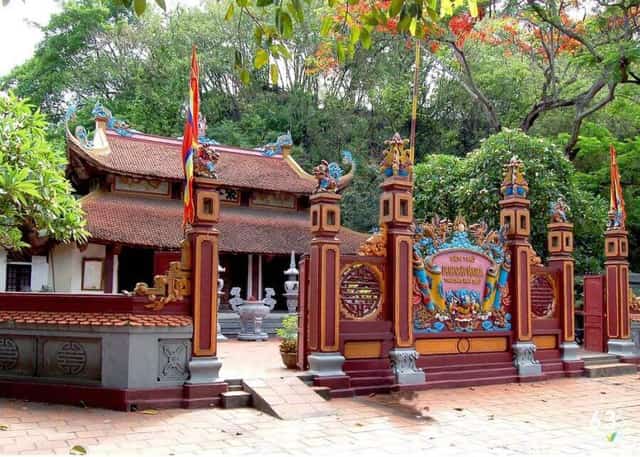
Visiting Truong Han Sieu Temple, a Cultural Figure in Ninh Binh
The temple is not only a place to commemorate the esteemed cultural figure Truong Han Sieu – a brilliant scholar, advisor to Tran Hung Dao, and author of “Bach Dang Giang Phu” – but also a spiritual destination for visitors from all corners seeking success in their careers and studies. With its unique D-shaped architecture, gracefully curved tiled roofs resembling a dragon boat, and a 1:1 bronze statue of Truong Han Sieu, the temple honors the cultural and historical values from the Tran Dynasty.
More than just a place of worship, the temple and Duc Thuy Mountain also bear a strong literary imprint with over 100 poems by renowned figures like Truong Han Sieu and Le Thanh Tong, making it a national historical site since 1962. With its natural beauty intertwined with history and spirituality, Truong Han Sieu Temple is an unmissable destination when visiting Ninh Binh.
Am Tien Cave
Approximately 10km from Ninh Binh city center,Am Tien Caveis a hidden gem within the Hoa Lu Ancient Capital Scenic Complex, boasting a beauty that is both poetic and charming, with a touch of mystery. Nestled amidst towering cliffs and surrounded by a crystal-clear, emerald-green lake, it's often likened to "Tuyet Tinh Coc" (Valley of Love) – a tranquil haven separated from the outside world.
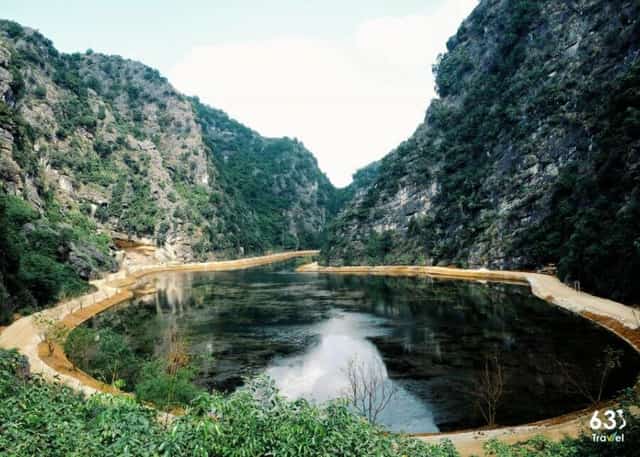
Am Tien Cave - Ninh Binh's 'Valley of Love' Attracts Young Travelers
The highlight of Am Tien Cave is its serene lake, reflecting the clear blue sky and majestic rock formations, creating a scene that is both contemplative and mystical. The year-round cool air at an altitude of 500m allows visitors to comfortably enjoy the surroundings and capture dreamlike photos.
To explore the cave, you'll ascend 205 stone steps leading to its dragon-mouth-shaped entrance, where traces from the Dinh and Le Dynasties are still preserved. The interior is magnificent, featuring diverse stalactite formations and caves that once served as storage for food and treasures. In ancient times, Am Tien Pagoda was built to resolve the grievances of death row prisoners, transforming this area from an execution ground into the peaceful and serene sanctuary it is today.
Tam Diep Defense Line
Located on the Tam Diep mountain range,Tam Diep lineis a famous historical site, marking the fierce battle between the Qing army and the Tay Son rebels. With its rugged terrain and strategic location, it once served as a crucial defensive outpost, forming a natural boundary between the North and Central regions.
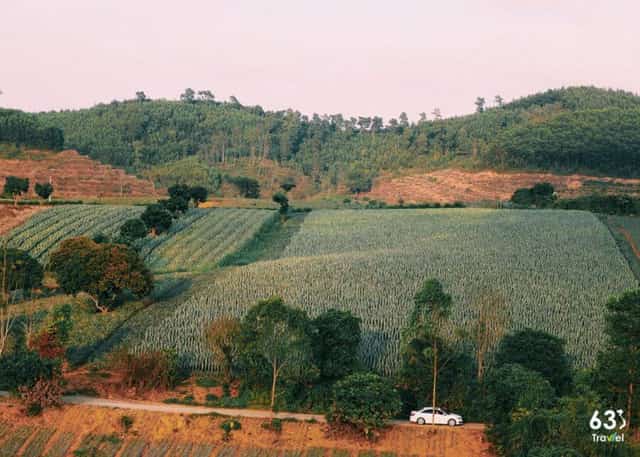
Exploring the Tam Diep Defense Line in Ninh Binh
In 1788, when the Qing army invaded, Ngo Thi Nham chose Tam Diep as a base to halt the enemy's advance. It was here that Nguyen Hue planned and launched the renowned battle, leading to a resounding victory in early spring of the Ky Dau year (1789). Tam Diep was not only a military base but also where King Quang Trung gathered his forces and received invaluable support from the local people.
Today, the historical complex includes many landmarks such as Ba Doi Pass, Quan Chao Temple, Hau Vua Hill, and Dau Pagoda – all witnesses to a heroic historical period. Designated a national historical site in 1998, the Tam Diep Defense Line remains a symbol of patriotism and the indomitable spirit against foreign invaders.
>> You should read:October in Vietnam: Where to Find the Most Beautiful and Exciting Destinations?
Phat Diem Stone Cathedral
Phat Diem Cathedral, located in Phat Diem town, Kim Son district, Ninh Binh, is a vast 22-hectare Catholic architectural complex renowned for its unique blend of church and traditional Vietnamese pagoda-temple architecture. Built between 1875 and 1898 under the guidance of Father Pero Tran Luc (also known as Father Sau), this structure has become a symbol of the harmonious fusion between Buddhist and Catholic essence.
A distinctive feature of Phat Diem Cathedral is its primary use of stone and ironwood, with some stone slabs weighing up to 20 tons and large wooden columns transported from afar by both land and water. Phuong Dinh – a masterpiece within the complex – is assembled from monolithic blue stone slabs, stands three stories high, and houses a 2-ton bell whose chime can be heard over 10km away.
Beyond its unique architecture, the Church of the Sacred Heart of Mary, built in 1883, impresses with its exquisitely carved bas-reliefs, depicting the beauty of the four seasons through pine, apricot, chrysanthemum, and bamboo. All these elements create an ancient and serene atmosphere, attracting visitors and devotees from all over to admire its beauty.
With over 100 years of existence, Phat Diem Cathedral is not only a special architectural heritage site but also dubbed the "Catholic capital" of Vietnam, making it an ideal destination for those wishing to explore cultural beauty and capture stunning moments in the heart of Ninh Binh.
Hoa Lu Ancient Capital
Hoa Lu Ancient Capital is one of the four core areas of the Trang An Scenic Landscape Complex, preserving the full essence of national culture and history. For over 1000 years, it has stood majestically with a solemn and imposing beauty, marking a glorious era when Hoa Lu served as the first imperial capital of Dai Co Viet.
Spanning over 300 hectares, the complex encompasses numerous structures such as temples, pagodas, caves, and tombs, creating a picturesque landscape rich in traditional culture. Hoa Lu was once a vital political and military center, fortified by a range of limestone mountains and the Hoang Long River, acting as a sturdy natural screen.
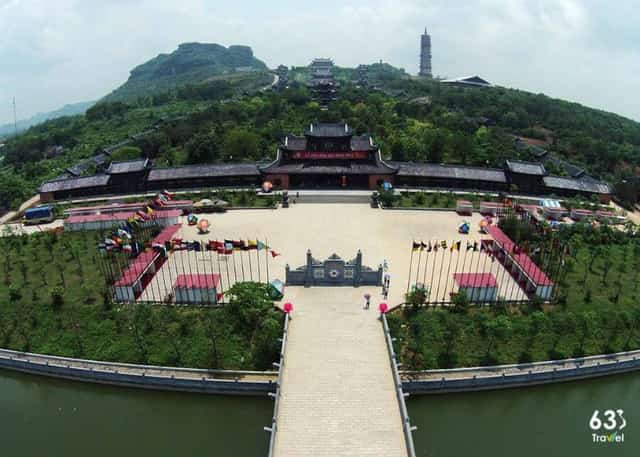
Immerse Yourself in the Picturesque and Magnificent Scenery of Hoa Lu Ancient Capital
In 968, Dinh Bo Linh quelled the rebellion of the 12 Warlords, established the Dai Co Viet nation, and chose Hoa Lu as its capital. The Dinh – Early Le Dynasties lasted for 42 years, before King Ly Thai To decided to move the capital to Thang Long in 1010 to expand the country.
Although no longer the capital, Hoa Lu is still preserved with many famous architectural works. Historical sites such as King Dinh Tien Hoang Temple, King Le Dai Hanh Temple, Nhat Tru Pagoda, and the Sao Khe River still bear strong historical imprints. Additionally, scenic spots in the buffer zone like Am Tien Cave, Yen Trach Communal House, and the ancient Bai Dinh Pagoda further enhance the nostalgic beauty of this land.
Hoa Lu Ancient Capital not only holds immense cultural and historical value but was also recognized by UNESCO as a World Cultural and Natural Heritage site in 2014, contributing to Ninh Binh's appeal as a tourist destination. Every structure and relic here subtly evokes the heroic spirit of an ancient imperial capital, leaving visitors awestruck and enchanted.
Luoc Communal House
Peacefully nestled amidst the lush green landscapes characteristic of Northern Vietnamese villages,Dinh Luoclocated in Luoc Hamlet, Son Lai Commune, Nho Quan District, is a long-standing cultural symbol. Built in the "Nhat" (一) architectural style with three traditional bays, tiled roofs, and a sturdy wooden column system, the communal house features Nguyen Dynasty-era patterns, creating an ancient and solemn appearance. Surrounding the communal house are centuries-old persimmon trees, silent witnesses to many historical ups and downs.
The communal house worships the deities Nam Quoc Do Dai Tran Bac Dai Vuong and Chan Vuong Princess, who made significant contributions to building communal houses, pagodas, and developing education for the villagers. It also preserves many royal decrees, altars, and precious artifacts from the Nguyen Dynasties, showcasing profound cultural and historical value.
During the resistance war, Luoc Communal House served as a secret base for revolutionary forces, and today it is a center for community activities and spiritual life for the villagers. Annually, festivals such as the khai ha (start of farming season) ceremony, thuong dien (first rice planting) ceremony, and Lunar New Year attract people from near and far to return, commemorate their ancestors' merits, and preserve their homeland's traditions.
Kha Luong Pagoda
Located in Kha Luong Village, Ninh Thang Commune, Hoa Lu District, Ninh Binh, the temple andKha Luong Pagodaare impressive not only for their serene landscape but also for their unique architecture. Thang Lam Pagoda and the temple are arranged in the "Front Deity, Rear Buddha" style, with the temple dedicated to Ho Sinh Dai Vuong – a figure who once helped the villagers and was honored as the Village Guardian Deity. Kha Luong Pagoda worships Buddhas and Holy Monks, along with folk beliefs, expressing wishes for peace for the villagers.
Architecturally, the temple is shaped like the Chinese character "Dinh" (丁), featuring ironwood columns, scale-tiled roofs, and exquisitely carved Four Sacred Animals. The pagoda is built in the "Nhi" (二) style, with blue stone columns and two stone dragons from the Ly Dynasty. The entire complex is shaded by green trees year-round, creating an ancient and solemn appearance.
During the resistance war, the pagoda served as a treatment center for wounded soldiers and an evacuation point for Ninh Thang commune's secondary school. Today, both the pagoda and temple still preserve many precious artifacts such as stone steles, ancient bells, royal decrees, and royal thrones.
Annually, the site hosts numerous cultural and religious festivals, attracting people to offer incense and pray for blessings. With its profound cultural and historical values, the relic has been classified as a provincial-level historical and cultural site, becoming a source of pride for the local community.
Dau Temple
Located approximately 110km from Hanoi,Dau Templeis one of the prominent destinations within the Trang An Scenic Landscape Complex. Built in 1580 to worship Princess Lieu Hanh, who transformed into a porridge seller, helping locals cultivate mulberries and raise silkworms, and contributing to the resistance against the Manchu Qing invaders. The temple not only worships Lieu Hanh but also honors Saint Tran Hung Dao along with various royal aunts and uncles.
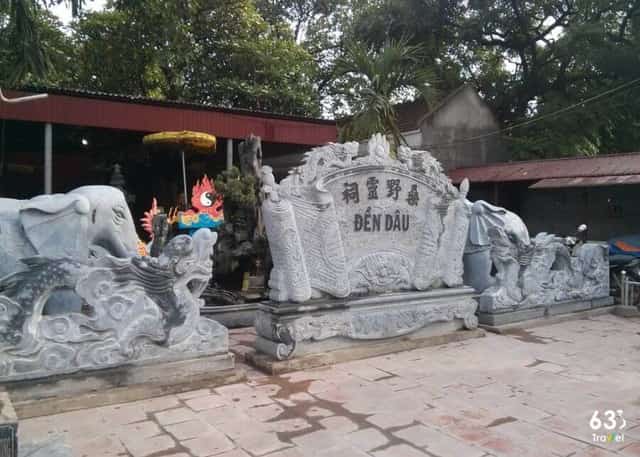
Dau Temple - A Cultural and Religious Site for Mother Goddess Worship in Ninh Binh
Dau Temple is situated in a favorable feng shui location, surrounded by the Hong Ngoc, Chong Den, Ngang (Hoanh Son), and Beo mountain ranges, creating a picturesque landscape. The temple's architecture bears a strong ancient imprint with its "Nhi" (二) shape and numerous exquisite sculptures reflecting the Northern Vietnamese style. Prominent features include the large calligraphic panels "Tang Da Linh Tu" and carved motifs of bodhi leaves and dragons, contributing to its solemn and majestic beauty.
Inside the temple, the third sanctuary worships the Five Immortal Elders, while the second sanctuary is dedicated to the Council of Four Palaces, featuring blue stone columns engraved with couplets praising the merits of the Holy Mother. Finally, the first sanctuary venerates the Three Holy Mothers with statues of Lieu Hanh and two other Mothers, symbolizing "Three births, three transformations." Dau Temple is not only a place of worship but also a precious cultural heritage, expressing the gratitude of the people towards the revered figures who have blessed their homeland.
>> See also: Top 9+ Traditional Craft Villages in Thanh Hoa: Where the Flame of Tradition Lives On
Trang An Scenic Landscape Complex
The Trang An Scenic Landscape Complex is a mixed heritage site and also the first and only dual World Heritage site in Southeast Asia. Spanning an area of up to 6,172 hectares, this region stands out with its stunning natural beauty, including limestone mountains, magnificent caves, and a rich ecosystem of flora and fauna.
Trang An was recognized by UNESCO as a World Heritage site in 2014 and is also classified as a particularly important national relic, affirming its status as an attractive international destination. This scenic complex is not only remarkable for its pristine beauty but also holds profound historical and cultural value, including the Hoa Lu Ancient Capital relic associated with the Dinh Tien Hoang Dynasty and architectural works such as Trinh Temple, Tu Tru Temple, along with a system of 31 lagoons and lakes connected to 48 caves.
Trang An is also known as an ink wash painting with unique caves like Bright Cave, Dark Cave, and rich cultural relics. If you have the chance to visit from the 17th to the 19th day of the third lunar month, visitors can participate in the Trang An Festival, honoring the deity Cao Son and experiencing many exciting folk games. Trang An is truly a place where nature and culture intertwine, leaving every visitor awestruck by its beauty and wonder.
Princess Phat Kim Temple
Temple of Princess Phat Kimis located within the Hoa Lu Ancient Capital relic complex, 150m north of King Le Dai Hanh Temple, precisely on the foundation of Vong Nguyet Palace, where the princess once lived. As the third daughter of King Dinh Tien Hoang, the Princess sacrificed her personal happiness to marry Ngo Nhat Khanh, a warlord leader. However, when her husband betrayed her and her father and brother were assassinated, the princess tragically took her own life by jumping into a well at Vong Nguyet Pavilion.
The temple, also known as Thuc Tiet Princess Temple, was built during the Dinh Dynasty to honor the princess's loyalty, filial piety, and courage. The temple's architecture covers an area of approximately 500 m², comprising three structures: the main temple, the left wing (ta vu), and the right wing (huu vu). In front of the courtyard is a screen featuring the character "Tho" (Longevity) and the large inscription "Cac trung tu de." The octagonal Ngoc Well, lined with stone, leads into the main temple.
The temple features unique architecture, shaped like the Chinese character "Dinh" (丁), comprising two main halls: Tien Bai (Front Hall) and Hau Cung (Rear Sanctuary), with the roof ridge adorned with "two dragons adoring the moon" motifs. Inside, a statue of the princess sits in the altar, hands in a mudra, flanked by two maidservants in red robes, with patterns reflecting Nguyen Dynasty art. In front is the ancestral tablet "Thuc Tiet Cong Chua Than Vi." All these details highlight the solemnity and cultural value of the temple.
Quy Minh Dai Vuong Temple
Located at the foot of Ham Rong Mountain, northeast of Binh Khe Hamlet, Ninh Nhat Commune, Ninh Binh City,Temple of Quy Minh Dai Vuongalso known as Thanh Quy Temple, along with Den Cave (or Nha Kho Cave), has been recognized as a provincial-level historical and cultural site since 2006. This is where Saint Quy Minh Dai Vuong is worshipped, a talented general during the 18th Hung King's reign, who rendered great service in defending Son Nam Pass and is revered by the people as a "Supreme Deity."
The temple is built in the "Dinh" (丁) architectural style, comprising a Front Hall (Tien Duong) and a Rear Sanctuary (Hau Cung). The Front Hall has three bays, where rituals take place, and was renovated in 2015. Meanwhile, the Rear Sanctuary remains well-preserved, featuring intricate patterns on the trusses and unique carvings such as "Cao Son Tu" and images of dragons and phoenixes. All these elements create a solemn, deeply spiritual space.
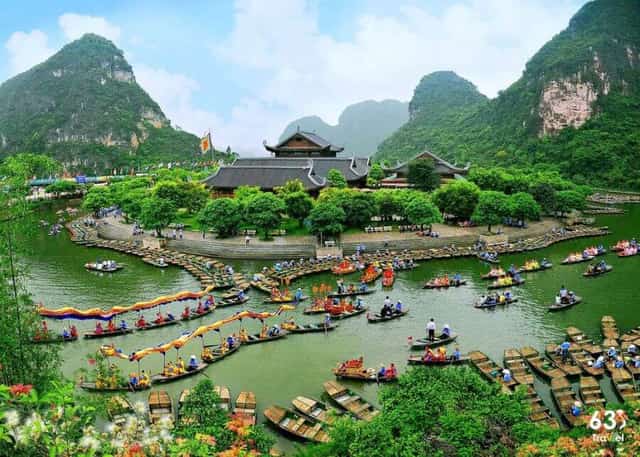
Quy Minh Dai Vuong Temple
Outside the temple, there are altars for mandarins, while the altar for Saint Quy is prominently placed in the center of the temple. On either side are altars for Quan Sat and Sac Nga Princess, with a crescent-shaped pond in front, symbolizing the gathering of water and blessings.
Den Cave is located directly behind the temple, with an entrance 10m wide and approximately 50m deep. Here, a small well known as the "path to the underworld" captures visitors' attention. Legend has it that to the left of the cave lies the grave of a lost precious warhorse, adding to the mysterious atmosphere.
Historically, the temple served as the headquarters for various agencies during the resistance war, a place for storing weapons and printing documents, demonstrating its value not only culturally but also in the nation's struggle for independence. Annually, on the 14th and 15th days of the tenth lunar month, villagers hold a ritual to honor the Saint, along with other full moon days throughout the year, to commemorate and express gratitude for his contributions.
Ly Thai To Stele House
Ly Thai To beer houseis situated by the Sao Khe River, in front of the temples dedicated to King Dinh and King Le, and is believed to be one of the 10th-century Hoa Lu capital's boat docks, marking the starting point of King Ly Thai To's relocation of the capital. The architectural structure is a "phuong dinh" (square pavilion) with an 11.2m square footprint, featuring a column system of 4 main columns and 12 auxiliary columns, all crafted from reinforced concrete disguised as wood, mimicking traditional chồng diêm (layered roof) architecture.
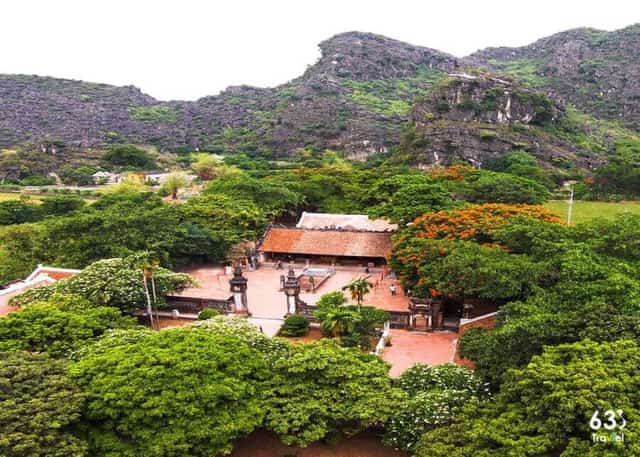
Ly Thai To Memorial Stele House in Ninh Binh
The roof is exquisitely designed with two tiers, each featuring four curved "slipper-nose" tiled roofs and traditional sword-like finials. Notably, the column bases are clad in stone carved with lotus petal motifs, while the balustrades feature intricate cultural patterns such as pine, apricot, bamboo, and chrysanthemum.
The centerpiece of the stele house is a stone stele, 1.99m high and 1.38m wide, with its forehead carved with a moon face and chrysanthemum vine motifs, creating an eternal symbol of gratitude for the efforts in building the nation's independence. Additionally, this area preserves many other important relics such as Ly Thai To Temple and Tran Hung Dao Temple, further enriching Ninh Binh's cultural and historical value.
King Le Dai Hanh Temple
Located in Truong Yen Ha Hamlet,Temple of King Le Dai Hanhalso known as Ha Temple, is an indispensable part of the special relic complex of Hoa Lu Ancient Capital, Ninh Binh. This ancient temple, over 100 years old, still preserves the unique architectural features of the 17th century, located just about 300m north of King Dinh Tien Hoang Temple.
King Le Temple was built concurrently with King Dinh Tien Hoang Temple, sharing similarities in architecture and sculpture from the Later Le Dynasty. Featuring an "internal công, external quốc" layout, the main difference lies in the eastern entrance, which has an additional side hall (tu vu) and lacks the high stone thresholds found at King Dinh Temple.
According to legend, the temple was built on the former site of the royal palace in Hoa Lu Ancient Capital, a fact confirmed by archaeological excavations in 1998. This is an ideal spot for those who love to delve into history and appreciate ancient architectural art.
The temple consists of three main halls: Bai Duong (Front Ceremonial Hall), Thieu Huong (Incense Burning Hall), and Chinh Cung (Main Sanctuary). The Bai Duong has five bays with three large vermilion and gold-gilded plaques, the most prominent being "Truong Xuan Linh Tich." The Thieu Huong Hall, built in the "ong muong" (tube-shaped) architectural style, worships the Four Pillars of the Early Le Dynasty. Finally, the Chinh Cung is where the majestic statue of King Le Dai Hanh sits on his throne, alongside statues of Empress Duong Van Nga and Le Long Dinh.
A highlight of King Le Temple is the clean main path leading into the temple. To the left is a majestic phoenix-shaped rockery, and to the right is the front hall with another rockery and a centuries-old duoi tree. Inside the complex, there are two symmetrical flower gardens and rows of viewing houses, along with dragon and phoenix-shaped rockeries. All these elements create a serene and solemn space, reflecting the distinctive architectural and carving art of the 17th century.
King Dinh Tien Hoang Temple
Temple of King Dinh Tien Hoangis an ancient temple over 100 years old, located within the Hoa Lu Ancient Capital relic complex. It is the only place in Vietnam that worships King Dinh Tien Hoang along with his parents, sons, and generals of the Dinh Dynasty. This is not only a typical architectural marvel but also a symbol of gratitude for the hero Dinh Bo Linh. In 2014, the temple was recognized by UNESCO as a World Heritage site within the Trang An Scenic Landscape Complex.
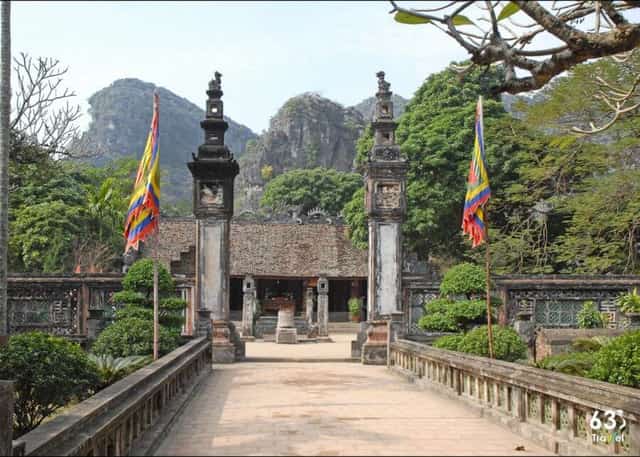
King Dinh Tien Hoang Temple: A 100-Year-Old Cultural Architectural Gem in Ninh Binh
Built in the 17th century, King Dinh Temple has witnessed centuries of history. According to legend, King Dinh and his son Dinh Lien were assassinated in 979, and the temple was erected in their memory. The temple's architectural style bears the influence of the Nguyen Dynasty, featuring a "cong" (工) shape, encompassing the incense burning hall and the main sanctuary.
Upon entering the temple, you will pass through Ngo Mon Quan gate, inscribed with four Han characters "Bac mon toa thuoc duoc." In front of the temple is a crescent-shaped pond shimmering with water lilies, creating a peaceful scene. The temple is divided into three main halls: Bai Duong (Front Ceremonial Hall), Thieu Huong (Incense Burning Hall), and Chinh Cung (Main Sanctuary). In the Bai Duong, a meticulously carved royal bed (long sang) stands out, showcasing the artistic talent of Dinh Dynasty figures. In the Chinh Cung, a majestic statue of King Dinh Tien Hoang sits on his throne, flanked by statues of his sons, creating a solemn and profound atmosphere.
Thus, through this article, everyone has explored 14 famous historical sites in Ninh Binh, places recognized as national-level historical relics. The rich cultural and historical values here will undoubtedly make you feel closer to the people and this land. Don't forget to follow 63Stravel to discover more interesting and useful articles!
Ninh Binh 8471 view
Update day : 16/10/2024

Monuments close by
See all
Temple of King Dinh Tien Hoang
The temple worshiping King Dinh Tien Hoang, also known as Dinh Bo Linh temple, Van Bong temple or Dai Huu temple (named after the place where the temple is located), currently belongs to Van Bong village, Gia Phuong commune, Gia Vien district, Ninh province. Jar. Legend has it that this is the place associated with the birth of Dinh Bo Linh, a national hero who was instrumental in suppressing the rebellion of 12 warlords, unifying the country, establishing the state of Dai Co Viet in 968. Here, also There are tablets worshiping loyal mandarins who are the four pillars of the Dinh dynasty including Dinh Dien, Nguyen Bac, Trinh Tu, and Luu Co. Legend has it that King Dinh Tien Hoang and his son Dinh Lien were murdered by Do Thich in the year 979. According to court rituals, the royal family conferred the title, beautiful letters, and established a temple to worship in their hometown. Thus, the temple was established long ago. Currently, the rest of the monument has the architectural style of the Nguyen Dynasty. There are many sources of information about King Dinh Tien Hoang, recorded in history and folk legends, and the general tone is to praise his talent and great contributions to the cause of unifying the country and opening up the economy. our country's orthodoxy after thousands of years of slavery. In his homeland today, there are still many legends and places related to the childhood of Dinh Tien Hoang as well as Nguyen Bac, Dinh Dien, famous generals from the same hometown as Dai Huu with King Dinh. Ky Lan Mountain is located at the beginning of Gia Phuong commune, nearly 3km from the temple, with King Dinh's mausoleum, Dai Huu cave, Nguyen Bac's mausoleum. To the southwest of the mountain there is a winding space that looks like a throne, halfway up there is a large, relatively flat area. Legend has it that Mr. Dinh Cong Tru, Dinh Tien Hoang's father, saw the beautiful scene and brought the king's grandfather's grave to this throne, building a mausoleum, called Lang Phat Tich, which has now been renovated. Next to Lang Phat Tich is Dai Huu cave halfway up the mountain. In the cave there are many beautiful shapes formed by stalactites, in some places there are shapes like Ky Lan, so it is also called Ky Lan cave. Previously, according to tradition, the cave had a temple to Son Than, which was the refuge of Mrs. Dam Thi and Dinh Bo Linh when Mr. Dinh Cong Tru passed away, as many books have written. To the southeast of King Dinh's mausoleum, there is also Nguyen Bac's mausoleum. The mausoleum is located next to the foot of the mountain. Right in front of the temple, about 200m away, is Bo De Mound, a tall, square, ancient land area of nearly 200m2 at the beginning of Van Bong hamlet. Legend has it that this is the old house foundation of Dinh Bo Linh. In the middle of the fields of Van Bong village, near the temple of King Dinh Tien Hoang, there is a relatively high area of land, thousands of square meters wide, with the ancient name Dao Ao (also known as Dao Ao land). Legend has it that this place was where Dinh Bo Linh's army gathered for military exercises. In general, the area around the relic today still retains many places and legends related to King Dinh Tien Hoang. These are valuable historical sources to clarify his background and career. Especially from his hometown in Gia Phuong commune today, up to Gia Hung (Gia Vien), to Truong Yen (Hoa Lu), the entire length and width of dozens of kilometers, every land has its own famous places and traditions. theory related to King Dinh Tien Hoang. The temple has been extensively renovated in recent years, but still preserves the ancient Nguyen Dynasty architecture. Facing west, there are three buildings, the architecture is in the style of "first, last". In front of the temple is a semicircular lake. Inside the lake, in the middle of the yard, two bronze pillars were built to form the exit and entrance to the relic. The temple area consists of 3 buildings: Tien Pagoda, Middle Hall and Chinh Tam. The front hall consists of 5 rooms, the architecture is in the style of stacking ironwood beams, and the gable walls are closed. All of the trap heads are carved with leaf patterns, especially the middle part of the trap head is carved with a dragon. The rafters in the truss system are all carved with leaf patterns. The roof of Tien Bai is shaped like two dragons flanking the moon. The middle street is adjacent to Tien Bai, consisting of 3 compartments, architectural style (the entire diaphragm system is located on the rafters), in front there is a door system, all the traps are carved with leaf patterns. In particular, the rafters on both sides of the porch door have quite sophisticated carvings of four sacred animals. The main building consists of 2 main rooms and 1 back room. The architecture is in the style of upper and lower floors. The relic still retains a number of precious artifacts such as worship statues, thrones, altars, and ordinations of dynasties... Every year, on the occasion of the festival of the ancient capital of Hoa Lu, people of Van Bong village and Gia Phuong commune also open Temple festival and participating in the fire palanquin procession from the king's homeland to the ancient capital of Hoa Lu. With outstanding historical and cultural values, the temple of King Dinh Tien Hoang was ranked by the Ministry of Culture and Information as a national historical and cultural relic in 1993. Source: Department of Culture and Sports of Ninh Binh province
Ninh Binh
9163 view
Rating : National monument
Tran Nam Dinh Temple
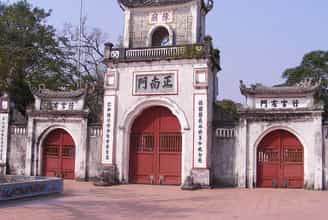
Nam Dinh Tran Temple relic area is a temple worshiping 14 Tran Dynasty kings, their families and mandarins with meritorious service. This place is also famous for the incense offering ceremony to open the Tran Temple seal in early spring and the Tran Temple Festival in the eighth lunar month every year. The Tran Temple - Nam Dinh relic area includes 3 main architectural works: Thien Truong Temple, Co Trach Temple and Trung Hoa Temple, with a common design and equal scale. In front there is a five-door gate. Through the gate is a rectangular lake. In the middle behind the lake is Thien Truong Temple. Thien Truong Temple, often called Thuong Temple, is located in the center of the Tran Nam Dinh Temple relic area. The temple was built on the foundation of Thai Mieu and Trung Quang Palace of the Tran Dynasty, which was formerly the family temple of the Tran family. Trung Quang Palace is where the Tran Dynasty emperors lived and worked. The current architecture of Thien Truong Temple includes the front hall, middle hall, main altar, incense burner, 2 rows on the left and right, 2 rows on the left and right of the morning glory tube, 2 rows on the left and right of the bamboo tube, 2 rows of the East and West. There are a total of 9 buildings and 31 rooms. The temple frame is built of ironwood, the roof is tiled, and the floor is tiled. The front hall is the place for worshiping and altars of mandarins who had great meritorious service in the Tran Dynasty. In the middle of the hall are the tablets of the 14 Tran Dynasty emperors. The main temple worships the four ancestors of the Tran family, and their wives and royal concubines. The incense burning court (sutra altar) houses the altar and tablets of the Tran Dynasty's officials. Co Trach Temple, often called Ha Temple, is located on the east side of the Tran Nam Dinh Temple relic site. In the front of the hall are tablets of three trusted generals of Tran Hung Dao, Pham Ngo, Pham Ngu Lao and Nguyen Che Nghia. The middle hall worships tablets and statues of Tran Hung Dao, his four sons, Pham Ngu Lao and other generals. The main altar placed the tablets of his parents, Tran Hung Dao and his wife (Princess Thien Thanh), 4 sons and 4 daughters-in-law, daughter and son-in-law. Burn incense (sutras) and place the dragon's temple, inside there is a statue of Tran Hung Dao and 9 Buddha statues. The space left the tablets of Truong Han Sieu, Pham Thien Nhan and Tran Dynasty officials. Thieves placed the tablets of the Tran dynasty's martial gods, Tran Cong and relatives of the Tran family. Trung Hoa Temple is located on the west side of the Tran Temple relic area. The temple was newly built in 2000, on the foundation of the ancient Trung Hoa Palace - where the Tran Dynasty emperors came to consult with the emperors. In Trung Hoa Temple, there are 14 bronze statues of 14 Tran Dynasty emperors placed in the middle hall and main palace. The incense burning court places thrones and tablets to worship the council of mandarins. Fraudulently worshiping civil servants. Fraudsters worship military mandarins. Every year, at the Tran Temple relic site in Nam Dinh, two major festivals will take place, which are the Tran Temple Opening Ceremony in early spring and the Tran Temple Festival in August, attracting a large number of local people and tourists from all over to attend. , grateful for the merits of the 14 Tran kings and praying for good things. Tran Temple is a special and important historical and cultural relic site of Nam Dinh province, ranked by the state as a national historical relic in 2012. Source: Nam Dinh City Electronic Information Portal
Ninh Binh
9111 view
Rating : National monument
Bao Loc Temple
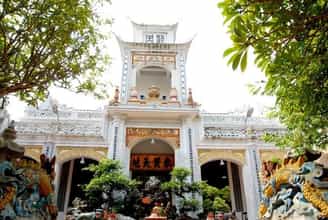
Bao Loc Temple, My Phuc commune (My Loc) was built on the "wooden ladder" land of An Sinh Vuong Tran Lieu, father of Hung Dao Vuong Tran Quoc Tuan and brother of Tran Thai Tong - the first king of Tran dynasty. During the Tran Dynasty, with the appearance of the Emperor's regime, in 1262, Tuc Mac village was changed to Thien Truong palace and was built on a scale like the second capital after Thang Long. Besides building palaces and magnificent houses for the emperors, the Tran Dynasty also conferred a series of fiefdoms on nobles, surrounding them like a protective belt of Thien Truong. At that time, An Lac hamlet was 2km north of Thien Truong center (as the crow flies). Legend has it that An Lac hamlet is the place where Tran Quoc Tuan was born and raised. With his great contributions in three resistance wars against foreign invaders, in April 1288 he was given the title "National Duke of Hung Dao Great King". When he died, the court re-titled him: "Grand Master, Supreme Patriarch Thuong Quoc Cong Nhan Vu, Hung Dao Great King". Bao Loc Temple was originally built along the Chau River, consisting of three ironwood rooms with tiled roofs. After the river bank eroded, the temple was moved to its current position. Existing on a small scale for a long time, in the early 20th century, Bao Loc temple was raised by people to upgrade it into a solid structure, quite large in size and height. The temple was built according to the design of Dong Phuong Bac Co, but was repaired to suit the traditional architecture of the nation. Construction began in 1928, it took 5 years for the project to be completed. The temple is located in the middle, facing east, on the left is the temple worshiping Buddha, on the right is the palace worshiping the Mother Goddess, behind the temple is Khai Thanh worshiping the king's father, mother, and wife. The entire relic is designed to be symmetrical and harmonious, with airy space creating a feeling of serenity during the holy ceremony. Bao Loc Temple is located in the middle, built in the style of a zigzag letter, including a front hall with 7 wide compartments, a long middle hall with 5 compartments, and a harem with 3 compartments. The architecture of the temple is simple, the columns are made of bricks, many beams are filled with durable and imposing reinforced cement. Although there are not many carvings, scattered in each part there are still themes: four sacred animals, water-rolling dragons, flowers and leaves, pine trees, chrysanthemums, bamboo, apricot trees... In particular, six sets of doors in the harem with plaques. Exquisite carvings bearing the artistic style of the Nguyen Dynasty. In the temple, in addition to the tablets, there are also two statues worshiping Tran Hung Dao (one made of bronze, one made of wood). The bronze statue in a sitting position weighs 4.8 tons, placed in the middle of the street. On both sides there are statues of Hung Vu Vuong Nhien and Pham Ngu Lao, his son and son-in-law. The agarwood statue is placed in the harem, on both sides are statues of literature teachers and martial arts teachers. Khai Thanh Temple is located in the back, the architecture is similar to the main temple but the foundation is 3 meters higher, worshiping Tran Hung Dao's father, mother, wife and two daughters. The worship arrangement here shows the spirit of respect for the teacher, integrity and filial piety of the Great King Hung Dao. Among the relics worshiping Tran Hung Dao, Bao Loc temple has special significance because this land is associated with his childhood. That's why people have the saying "Sinh Kiep Bac, Tran Thuong waterfall, Bao Loc's hometown". Every year, on his death day (August 20 of the lunar calendar), many visitors from all over have the opportunity to attend the traditional Tran Hung Dao festival. Source: Nam Dinh historical and cultural relics
Ninh Binh
9024 view
Rating : National monument

Temple of King Le Dai Hanh
King Le Dai Hanh's mausoleum is located at the foot of Ma Yen mountain to the south, on both sides there are two mountains that people call "Long chau, Ho phu", which are the arms of the throne, so the mountain is also called Hoan Y Son. In the outer citadel area of Hoa Lu Citadel today, it belongs to Yen Thuong Village, Truong Yen Commune, Hoa Lu District, Ninh Binh Province. King Le's mausoleum also has another name according to local people: Ma Quan. This name may come from folk beliefs about the role and position (servant) of Le Hoan during the reign of King Dinh Tien Hoang, however this name is ancient and not very popular. King Le's mausoleum is a type of burial relic, according to the nation's traditional traditions. According to ancient beliefs, the tombs of King Dinh and King Le were all placed in a place called "De Vuong's grave". King Le Dai Hanh, also known as Le Hoan, was formerly talented in martial arts, liberal, and had great ambition. Le Hoan joined the Hoa Lu insurgent army, followed Nam Viet King Dinh Lien to participate in battles, defeated the rebel warlords, and achieved many victories. He was respected by King Dinh Tien Hoang as a wise and brave man and became a Thap Dao general during the Dinh dynasty. Le Hoan led the army to expel the Tong invaders, defeated Champa, and consolidated the independent and unified feudal state apparatus. The government also took care to implement a number of positive measures for economic development. Le Hoan ascended the throne and changed his reign name to Thien Phuc. It can be said that under the reign of King Le Dai Hanh, Hoa Lu Capital and Dai Co Viet country had prosperity and stability. Politics, military, culture, and diplomacy tend to develop, marking important milestones. He deserves to be the person who quelled internal and external enemies, created the country's strength and showed authority to the northern Song Dynasty. In the year At Ty 1005, in March, King Le Dai Hanh passed away at Truong Xuan Palace. When King Le died, his officials buried him and built a mausoleum in the southwest of the foot of Ma Yen mountain. The size of the mausoleum is smaller than that of King Dinh Tien Hoang but still proves the majesty of the emperor. Behind is a stone stele, the main face of the stele has the words: "Le Dai Hanh Emperor's mausoleum" and the date of the stele: Minh Menh's 21st year (1840). According to folk tradition, in the land of Truong Yen, when building the Hoa Lu Capital, King Dinh and King Le both took Ma Yen Son as their criminal record, and took the Dai Van range as the rear of the capital. Ma Yen Mountain is also where the King often resides during every naval review. King Le Dai Hanh's mausoleum was restored in 2020 and is majestic and worthy of the Emperor's stature. The position of King Dinh's mausoleum and King Le's tomb is located in the Hoa Lu ancient capital relic area, attached to central relics such as: Temple of King Dinh - King Le and other nearby relics. In addition to its great historical and cultural value, a place that marks the nation's glory, this is also a place blessed with charming landscapes by nature, attracting tourists from near and far to visit and worship. , paying tribute to great men who have made great contributions to the country. Source: Management Board of Trang An Scenic Landscape Complex
Ninh Binh
8923 view
Rating : National monument
Van Chang communal house is a historical and architectural relic, traditional art and blacksmithing
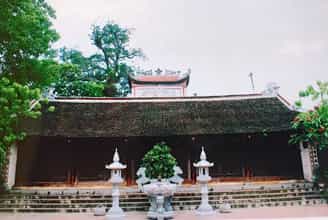
Van Chang communal house is located on the territory of residential group number 16, Van Chang village, Nam Giang town. Van Chang village communal house is a place of worship and gratitude to the local people for the Six Patriarchs of blacksmithing. The genealogy of Van Chang village communal house said that the six craft ancestors together with 15 ancestors from the following families: Doan, Tran, Vu, Nguyen, Do, Ngo... recruited people to explore the fields and develop production. and career expansion. In the Year of the Ox (1373), during the reign of King Tran Due Tong, the reign of Long Khanh 2, after teaching the profession to the people here, the six ancestors returned to their old hometown of Hoa Chang village (Ha Tinh) to continue teaching the profession. forging. To pay tribute to the merits of the ancestors of the profession, local people named the village Hoa Chang - the original hometown of the Patriarchs (during the Nguyen Dynasty, it was changed to Van Chang village); set up a temple to honor: Phuc Than - Six Patriarchs - Tutelary God and take the 15th day of the 11th lunar month, the day the six Patriarchs from Van Chang village returned to their old hometown, as a taboo day. Currently, Van Chang village communal house still retains 6 decrees conferred with the title Khai Dinh 9 (1924) affirming the merits of "Protecting the country", "Ty people" and conferring on the Six Patriarchs: Duc Bao Trung Hung Linh Phu Van Son Saint Ancestor. In addition to the ordinations, Van Chang communal house also preserves many parallel sentences praising the merits and careers of the Six Patriarchs. Currently, along with Van Chang village communal house, Nam Giang town, Nam Truc district, Nam Dinh province worshiping the Six Patriarchs, other localities such as Ha Tinh and Ho Chi Minh City all have places to worship the Patriarchs. forging. Blacksmithing in Van Chang village, Nam Giang town was formed at the end of the 14th century, nearly 7 centuries ago. Initially, blacksmithing was just a side job alongside agricultural production. Through many historical periods, blacksmithing has gradually developed, separating from agriculture to go deeper into specialized production, becoming a traditional handicraft. In 1426, when the Lam Son insurgent army advanced to the North, a young man from the Doan family gathered villagers to stand up to kill the enemy and was awarded the title of Brave General. Knowing that there was a blacksmithing profession here, King Le Loi of Binh Dinh assigned the villagers the task of forging weapons for the insurgent army. Since then, Van Chang forging profession has continuously existed and developed. Also during the period of fighting against the Ming invaders, a group of Van Chang workers came to the Lam Son insurgent army to use the method of forging iron cannon tubes. This type of artillery was a signal for the insurgents to rise up and destroy the enemy. Currently, at Van Chang communal house, two cannons cast in iron are still preserved. During the Nguyen Dynasty, Van Chang blacksmith joined the army, many people were given the title "Tuong Muc", some were given the title "Water Ministry of Water Affairs" as the leader of the soldiers repairing weapons for military barracks, including both the navy and the land army. When the French invaded the North, many Van Chang workers stood in the army and people's ranks against the French. More than 2,000 Can Vuong troops commanded by Dr. Vu Huu Loi (1836 - 1886) were stationed in Giao Cu village (Dong Son, Nam Truc, Nam Dinh), all weapons were produced by blacksmith Van Chang. Up to now, after nearly 7 centuries, the traditional craft of blacksmithing has developed and spread strongly, forming the Nam Giang mechanical industrial cluster. Van Chang blacksmithing and Nam Giang mechanical engineering have become a key local economy, contributing to creating jobs, improving living standards, and building the local economy - culture - society today. a development. With typical values of history and artistic architecture, Van Chang Communal House has been ranked as a National Historical and Architectural Monument in 2018. Source: Nam Truc District People's Committee
Ninh Binh
8819 view
Rating : National monument
Nearby tourist attractions
See all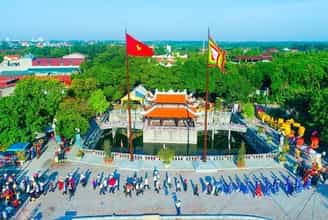
Lanh Giang Temple
Lanh Giang Temple - a famous spiritual destination in Ha Nam, also known by the familiar name Lanh Giang Linh Tu. Specifically, this temple is located in Yen Lac village, Moc Nam commune, Duy Tien district, Ha Nam province. This tourist destination is located right next to the foot of the dike connecting the old Ha Tay, on the right bank of the Red River. Opposite Lanh Giang temple is Hung Yen province. Therefore, visitors can easily get here by many different means, from road to waterway. Because of this location, many people still mistakenly believe that Lanh Giang temple is located in Hung Yen. Ha Nam is a province without an airport, so to get to Lanh Giang temple, visitors can hunt for plane tickets to Hanoi at Traveloka. Traveloka's Fare Notification, Reschedule and Refund features will provide you with maximum support during the booking process. Currently, flights to Hanoi's Noi Bai airport are operated regularly. Therefore, visitors can easily book flight tickets for any period of time. After landing safely at Noi Bai airport, you need to choose the next suitable means of transportation to Ha Nam province. Most tourists often choose bus 206 or some typical bus companies such as Phuc Loc Tho, Viet Trung, Thoi Dai, Man Tinh,... After arriving in Dong Van town, Duy Tien district, tourists who want to visit Lanh Giang temple need to move another 8km along Highway 38 to Hoa Mac town. From here, go another 3 or 4 kilometers and you can reach Yen Lenh bridge. Next, just turn left and follow the road right next to the Red River dyke and you can reach Lanh Giang temple, Ha Nam. According to records from documents, until now, people have not been able to determine the time when Lanh Giang temple was built. According to the inscriptions left on the roof of the second building, it is likely that Lanh Giang temple was restored in 1944. Through historical ups and downs, this temple still retains its original grand scale. Many legends have told that Lanh Giang temple is associated with the Three Famous Gods - the children of the noble lady Hoa Giam. Not only were they instrumental in helping King Hung fight against Thuc Phan's army, but they also supported Princess Tien Dung and her husband. Therefore, Lanh Giang Temple was established to recognize and commemorate the gods who helped King Hung defend the country. Every year, Lanh Giang Temple will have two major festivals to express remembrance to the water gods and pray for good weather all year round so that people can settle down and settle down. The first festival will take place in the 6th lunar month, lasting from the 2nd to the 5th. The second festival will continue to take place in the 8th lunar month, specifically August 20. The festival at Lanh Giang temple not only brings together many extremely sacred and solemn sacrificial rituals and holy processions, but also brings together many interesting and exciting games. Coming to Ha Nam on this occasion, visitors can not only admire the unique landscapes and spiritual architectural works here but can also learn more about the customs and unique culture of Ha Nam. this land. In 1996, Lanh Giang Temple was officially ranked as a national historical and cultural relic by the Ministry of Culture, Sports and Tourism. Since then, the temple has become one of the works that need to be preserved, protected and developed. Lanh Giang Temple consists of 3 buildings with 14 compartments along with a guest house and altar surrounded by solid walls. In the temple there are many valuable items, many precious antiques and statues worshiping the three gods of the Hung King period. Standing in front of Lanh Giang temple, visitors will surely be extremely impressed with the massive and majestic architecture. The Tam Quan gate is designed in the style of a stack of matches with eight roofs, creating a feeling of airiness. The tip of the sword is a beautiful dragon shape interwoven with extremely harmonious motifs. In front of the Tam Quan gate is a calm, blue semicircular lake adorned with colorful and fragrant water lilies. Following the bridge from the temple gate to the middle of the lake, visitors will encounter a tower hidden in the shadow of an old sycamore tree, both majestic, ancient but also extremely poetic.
Ninh Binh
8467 view
From January to December

Tran Thuong Temple
Tran Thuong Temple is currently a place to honor the national hero Tiet Trung Hung Dao Dai Vuong Tran Quoc Tuan and the generals who fought against the Mongol army in the 13th century. With more than a century of existence, the temple still retains its original beauty and is a symbol of history and pride of the people of Ha Nam. The land of Tran Thuong is known for the saying "Personal Dao, Rice of Tran Thuong" and the poem engraved on the motto at the temple: "The land of Tran Thuong is immense in welfare, bustling with fruits every spring." Previously, Tran Thuong was the center of 6 water canals. From here, you can go up the Red River to Thang Long or down to the sea to the East. Only about 3km from here is where the Tran family's tomb is located. Tran Thuong Temple is one of three major temples worshiping Hung Dao Dai Vuong nationwide. Legend has it that, on his journey against the Mongol army, Tran Hung Dao realized that the terrain here was very dangerous, so he set up 6 food warehouses to serve the war. This place today has become a place to preserve the historical spirit and pride of the people of Ha Nam. Tran Thuong Temple, a majestic and ancient architectural work located on sacred land in the style of "Four water turtles". The overall landscape of the temple includes the outer gate, the inner gate, 5 buildings, 15 compartments, divided into 3 palaces: first, second, third and two hai vu, 5 wells... The architecture and natural landscape of the temple Tran Thuong Temple is like immersing yourself in religion in a sacred cultural space. The value of the temple is reflected in its delicate decoration with unique motifs: two dragons flanking the moon, flying dragons, dancing phoenixes, water waves, clouds and sky... Creating a vivid, ancient picture containing folk philosophy. . The temple's collection of altar objects and ancient books is also very diverse, especially the statue of Saint Tran with a serious face but still a nurturing smile. With traditional historical value, Tran Thuong Temple shines with unique culture. Every year, the temple organizes two major festivals: the Saint Tran food distribution ceremony takes place on the night of January 14 and early morning of January 15; The death anniversary celebration from the 18th to 20th of the 8th lunar month attracts a large number of people and tourists. During the festival, many folk cultural activities are held, from the water procession, the river swimming competition to the "Dong Dong performance" - a traditional ritual, all emphasizing the moral "Remember when drinking water". source". Tran Thuong Temple is not only a place to organize festivals, but also a place to preserve memories of culture, history and beliefs. This is a symbol of respect for the saintly figures who saved the country, the pride of a nation with endless filial piety.
Ninh Binh
8178 view
From January to December

Truc Temple
Ha Nam Truc Temple is located in the Truc Temple - Ngu Dong Thi Son tourist area, in Quyen Son village, Thi Son commune, Kim Bang district, more than 7km from Phu Ly city along National Highway 21A. There are many stories about Ha Nam Truc Temple, but according to the old people who took care of the temple, in 1089, on the way to conquer the South through Quyen Son village, Ly Thuong Kiet's war fleet was caught by a sudden wind. blew the mast and swept the flag to the top of Cam Mountain. Feeling strange, he and his generals stopped, preparing to make offerings to heaven and earth, praying for the army's great victory. And that military victory was truly a great victory. Ly Thuong Kiet and his soldiers returned to pay their respects and allowed everyone to celebrate the victory. The festival lasts for months, the atmosphere is jubilant and bustling, and during that time he even taught the people here how to raise silkworms and weave cloth. Later, to commemorate the merits of Ly Thuong Kiet, the villagers built a temple right at the place where he held the festival, which is today's Truc Temple located deep inside the vast green bamboo forest. Truc Temple in Ha Nam is designed in the style of the letter "Dinh" including the temple gate, front hall and harem. The temple gate has 4 pillars: 2 central pillars over 6m high and 2 small pillars on both sides. Truc Temple's front hall is divided into 5 compartments and the harem has 3 compartments, all built in the traditional style of the 17th - 19th centuries: roofed with male tiles, built with interior bricks, exposed to the ceiling, and carved door system. following the themes of four sacred animals, four precious animals... with high artistic value. Not only can you admire the beautiful scenery and participate in the festival, coming to Truc Ha Nam Temple, visitors will also have the opportunity to see with their own eyes stone artifacts from the Ly Dynasty bearing the historical imprint of a heroic time. It is known that currently in Truc Temple, two unresearched antiques from the Ly Dynasty are kept: a pair of dragons and a stone aquarium. The pair of dragons are not very large, located symmetrically vertically, their heads facing the front hall but have different shapes. According to archaeologists who have been here, the dragon on the right, seen from the outside, is a Ly dynasty dragon with a soft, flexible shape; The dragon on the left is the dragon of the Tran Dynasty and has a bigger, stronger and fatter figure. The stone aquarium is made from monolithic stone, has a rectangular, square shape with sharp edges, the bottom of the tank is surrounded by a wave-shaped border, and the tank wall has a four-quarter pattern. Although the exact age of this ornamental tank is unknown, looking at the moss-covered details, one can tell that the tank dates back hundreds of years ago.
Ninh Binh
7788 view
From January to December
Zinc Drum
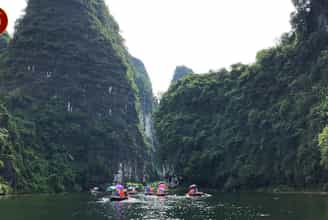
Kem Trong Ha Nam is one of the most beautiful natural landscapes in Northern Vietnam, featuring majestic limestone mountains and the gentle Day River. This is the ideal destination for those who love pristine nature and seek peace in the heart of nature. According to folk legend, during the Le Dynasty, the king was worried that the land of Kem Trong Ha Nam had prosperous feng shui that could affect the dynasty, so he ordered the Dao River to be dug to cut off the ley line of this area. This action not only has feng shui significance but also creates an amazing natural landscape, with a river winding between majestic limestone mountains. It is this thrilling story that has contributed to increasing the mystery and appeal of Kem Trong, attracting a large number of tourists to visit and explore. With a harmonious combination of rolling limestone mountains, the romantic winding Day River and pristine natural space, Kem Trong is an ideal place for visitors to freely create beautiful check-in photos. Each view here has its own beauty, from large rocks with strange shapes to green riverbank mudflats that create a poetic scene. Especially at dawn or dusk, when the sunlight shines on the water and rocky mountains, the scene becomes more magical and romantic than ever, making anyone want to preserve this memorable moment. Kem Trong Ninh Binh possesses many beautiful caves with splendid stalactite systems, formed over millions of years, creating a magical and mysterious space. Each cave here has its own unique characteristics, with stalactites with unique shapes such as curtains, pillars supporting the sky or interesting natural statues. When entering the caves, visitors will admire the light reflecting on the limestone blocks, creating a magical shimmering effect, giving the feeling of being lost in another world.
Ninh Binh
7161 view
From February to October

Bat scene paint
Eight scenes in the mountainous area of Tuong Linh commune (Kim Bang) were once the place where Lord Trinh Sam established his palace and were compared by the lord to eight famous beautiful scenes such as in Tieu Tuong (Yunnan, China). For a long time, the Bat Canh Son range (mountain range with 8 wings) has been considered a scenic spot of Son Nam town. According to Phan Huy Chu's Lich Trieu Chuong Chuong Loai Chi (Du Dia Chi section), in the 16th century, Trinh Doanh's Trinh Doanh came here to admire and likened Bat Canh Son to Tieu Tuong in China and established a palace to go there. about enjoyment. In the past, in Bat Canh Son, there were 8 pagodas and a temple worshiping the great earth spirit, arranged and built according to the theory of the eight trigrams and five elements. Attraction 1: Ong Chua Tien, also known as Ong Pagoda. Ong Chua Tien (Ong Pagoda) was built during the reign of King Tran Nhan Tong on Tuong mountain about 200m. The mountain is the first wall in the Bat Canh Son system in Ha Nam. The pagoda has an extremely sophisticated architectural style with eight battlements and four dragon corners, so this is the first and most important point in the Bat Canh Son landscape. Scenic spot 2: Ong Temple 2. This scenic spot has a large semicircular lake surrounded by rows of deep green trees. The lake has an area of up to 320 acres with green water all year round with an average depth of about 5m. According to legend, this is the lake left by the temple after a flood. Currently in the lake there are countless species of fish that can be exploited. Ong Temple was built in a triangular structure with hundreds of majestic and magnificent Buddha statues. Coming here, you will find your soul more quiet and peaceful. Scenic spot 4: Kieu Pagoda. Kieu Pagoda is located at an altitude of 150m on the mountain of the same name. Kieu Pagoda is located in the Southeast with a large area. The pagoda currently has 3 stele carved into the cliff, which is one of the important features of this place. Besides, the pagoda is also associated with legends about moonlight. Scenic spot 5: Ba pagoda. The pagoda became sacred when the village organized a procession to worship Phap Vu Buddha. Phap Vu Buddha belongs to the Four Dharma system at Dau Pagoda (Bac Ninh) including: Phap Van, Phap Vu, Phap Loi, Phap Dien. History also records the inspiration every time the Ly Dynasty kings came to Dau Pagoda to pray, from then on, pagodas from all over asked to receive the Four Dharmas to worship.
Ninh Binh
8141 view
From January to December
 AI Travelviet