
 vn
vn en
en ja
ja ko
ko zh
zh


Discover Ha Nam's 16 Historical Gems: Safeguarding Vietnam's Cultural Heritage

Prepare for some truly unique and exciting discoveries among the historical sites of Ha Nam! When you visit this fascinating province, be sure not to miss exploring these captivating historical locations. They beautifully preserve a rich tapestry of distinctive cultural values and tell the compelling stories of this very special region.
Ha Nam is a land rich in cultural and historical traditions, boasting many remarkable historical sites. Each site is not merely an architectural structure but also a vivid testament to historical events, reflecting the region's development and cultural identity. In this article,63Stravelwe will explore historical sites in Ha Nam that you can visit.
Top 16 Famous Historical Sites in Ha Nam You Shouldn't Miss
Save this list of historical sites in Ha Nam below to explore and experience the heroic cultural and historical values of the nation.
Long Doi Pagoda (Doi Son)
Long Doi Pagoda (Doi Son)is one of Ha Nam's prominent spiritual destinations, located just about 50km south of Hanoi. With a history spanning over 1,000 years, the pagoda sits atop Doi Mountain, resembling a majestic dragon facing the ancient capital of Thang Long. Also known as Dien Linh Tu or Long Doi Son Pagoda, it boasts a vast area, nestled against Diep Mountain and surrounded by three rivers.
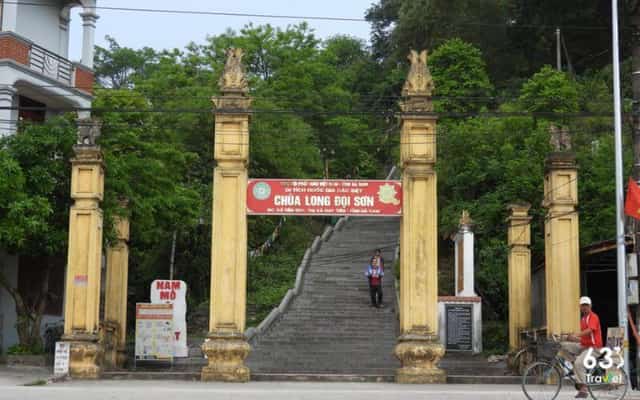
Long Doi Son – Discover the Beauty of a Nearly 1,000-Year-Old Ancient Pagoda in Ha Nam
To reach the pagoda, visitors must ascend nearly 400 stone steps, shaded by lush trees, creating a peaceful spiritual journey. The pagoda is not only a pilgrimage site but also hosts many unique cultural festivals, such as the Tich Dien Doi Son Festival, which has been recognized as a National Intangible Cultural Heritage.
Doi Son Pagoda's architecture is impressive, featuring structures like the main hall, Tam Quan gate, and a human chess board. Passing through the Tam Quan gate, you'll find the Sung Thien Dien Linh stele, which records King Ly Nhan Tong's contributions to the pagoda's construction. The sacred space of the pagoda is further adorned by the Tam Bao hall, dedicated to Buddhas and important historical figures.
Ba Danh Pagoda
Entrance fee: 30,000 VND per person
Ba Danh Pagoda, also known as Bao Son Tu, has long been the symbol of the proverb 'as deserted as Ba Danh Pagoda,' piquing the curiosity of many. This pagoda was built in the 7th century in Ha Nam and underwent a major renovation during the Le Thanh Tong dynasty, giving it its present grand appearance.
The pagoda worships Lady Man Nuong, a deity believed to bring favorable weather and bountiful harvests, along with many Buddhas and Bodhisattvas, reflecting the Mahayana tradition. Additionally, the pagoda houses statues related to Taoism, creating a diverse religious landscape.
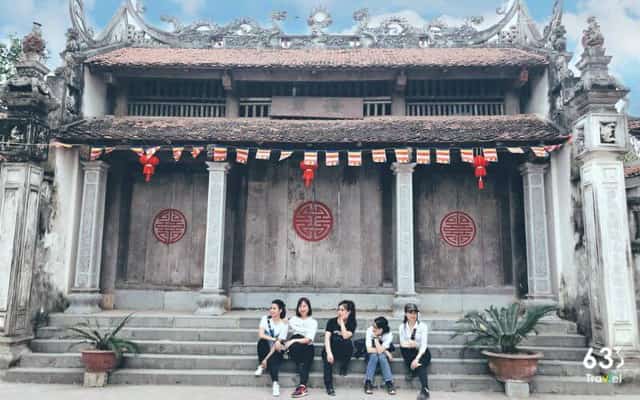
Ba Danh Pagoda – Ha Nam's Most Beautiful Ancient Architecture
Beyond its religious significance, Ba Danh Pagoda played a crucial role in revolutionary history, serving as a guerrilla base from 1946 to 1950. In 2004, the pagoda was recognized as a National Historical Site and was upgraded in 2007, becoming an attractive destination for tourists.
The pagoda spans an area of 10 hectares, featuring an impressive five-tiered Tam Quan gate and a three-compartment, two-story architectural style. Its spacious grounds, lush greenery, and the gentle Day River create a peaceful atmosphere for all who come to admire the scenery.
Cay Thi Pagoda
Cay Thi Pagoda, a precious gem in the heart of Ha Nam, has embraced a splendid beauty since 2020. Located in Che Trinh village, Thanh Tam commune, Thanh Liem district, this pagoda is not only a spiritual destination but also an ideal retreat to find peace amidst the hustle and bustle of life.
Just about 60km from Hanoi, you can easily reach Cay Thi Pagoda in just a 2-hour drive. Here, besides admiring its unique architectural beauty, you'll also have the opportunity to explore many other attractive tourist spots like Tam Chuc Pagoda, Ba Kien's House, and savor the famous braised fish dish.
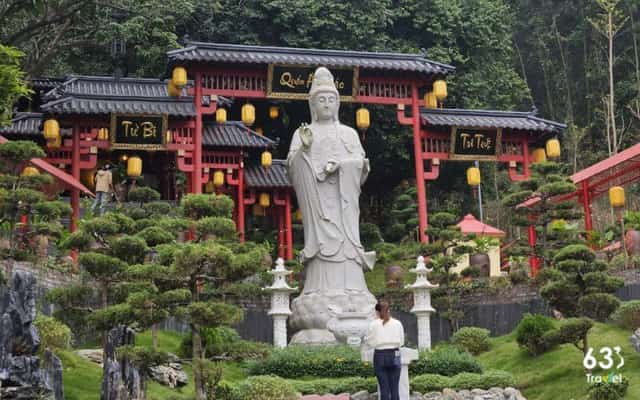
Cay Thi Pagoda – A Sacred Ancient Pagoda with a Peaceful Atmosphere
The pagoda is open free of charge all day, and especially in the early morning, you'll have the chance to witness monks practicing meditation, offering a profound spiritual experience. The name Cay Thi Pagoda comes from the centuries-old persimmon tree next to it, reminiscent of the beauty of Dia Tang Phi Lai Tu Pagoda.
The pagoda's architecture is a delicate blend of Japanese and Vietnamese styles, nestled amidst tranquil natural surroundings, next to the tomb of Minister Truong Cong Giai and the Martyrs' Temple of Nui Chua. The pagoda is surrounded by Japanese grass and pine trees, with a white gravel courtyard, creating a picturesque setting that helps you forget daily worries.
Cay Thi Pagoda is not only a spiritual destination but also an ideal place to rejuvenate your soul. Come and experience the wonderful tranquility here! Every detail at the pagoda is meticulously cared for, from the blue stone pathways to the exquisite bonsai trees, offering visitors a sense of serenity and contemplation.
Lung Xuyen Communal House
Lung Xuyen Communal House, also known as Dinh Gao, is located in Lung Xuyen village, Yen Bac commune, Duy Tien district, Ha Nam province. Situated on high ground at the village entrance, near an inter-commune road, the communal house faces south, with lush green rice fields stretching before it, creating an airy and open space.
The communal house is built in the 'Dinh' architectural style, featuring a five-compartment front hall and a three-compartment sanctuary, with a traditional tiled roof. The intricate carvings here are exquisite, depicting themes such as 'dragon coiling around water,' pine and deer, and 'dragon giving birth to offspring,' all rich in cultural value.
In 1927, the communal house hosted the meeting to establish the first branch of the Vietnamese Revolutionary Youth League in Ha Nam province. By November 1929, the Indochinese Communist Party branch was also founded here.
__TXT_32__
The memorial house for Comrade Nguyen Huu Tien, built on the site of his former home, now serves as a place of remembrance and welcomes visitors. Lung Xuyen Communal House, along with the memorial house, is not only a historical site but also a spiritual destination, contributing to educating younger generations about revolutionary traditions and serving as a meaningful tourist attraction for Duy Tien district and Ha Nam province.
Tran Thuong Temple
Tran Thuong Temple (also known as Tran Temple) is dedicated to Saint Tran Hung Dao, located on the land he once used as a food storage depot during the second resistance war against the Yuan-Mongol invaders. The temple stands on the banks of the Red River, amidst a peaceful setting with a jade well marking Tran Hung Dao's resting place.
With its pristine beauty, Tran Thuong Temple is a source of national pride, famous for the folk saying 'Nhan Dao fish, Tran Thuong rice'. This area was once the center of six waterways, connecting the Red River to the East Sea, and served as a crucial food storage location.
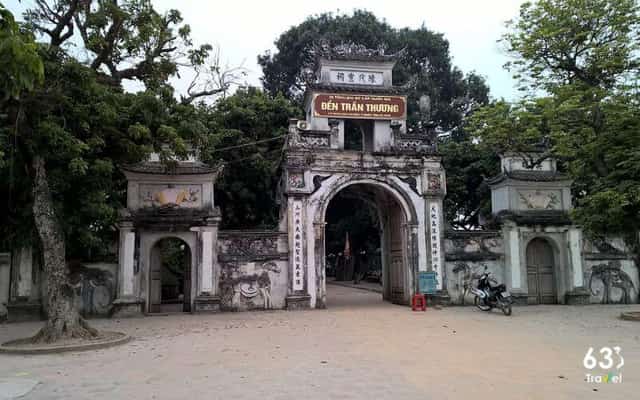
Tran Thuong Temple – A Sacred Temple Over Seven Centuries Old in Ha Nam
According to Dai Viet Su Ky Toan Thu (Complete Annals of Dai Viet), upon his death, Tran Hung Dao instructed his descendants to cremate and bury him secretly. Today, the temple not only worships him but also preserves many valuable artifacts, showcasing significant artistic and historical value.
Tran Thuong Temple boasts architecture as beautiful as a maiden by the river, with a 'human figure bowing to a phoenix' shape. From the Nghi Mon gate, visitors will walk past ancient trees on a beautifully paved stone path. The main temple comprises sections such as Co Lau, Tien Te, Trung Dien, and Hau Cung, forming an impressive complex with several wells.
The Ho Khau well, 6.39m wide and 2.9m deep, connects the Tien Te and Trung Dien, creating a mystical space for worship activities. The Hau Cung (sanctuary) is only open on holidays, while the Mother Goddess temple is separate, adding to the solemnity of this historical site. Tran Thuong Temple is not only a place of worship but also an important cultural destination for Duy Tien district and Ha Nam province.
>> See more:The Top 10 Most Ancient Historical Sites in Thai Binh
Lang Dau Communal House
Lang Dau Communal House, also known as My Doi Communal House, is located in Dau village, An My commune, Binh Luc district, Ha Nam province. It is dedicated to three village tutelary spirits: A Dao, Nguyen Que, and Nguyen Phuong – three sisters from the era of King Le Thai To, renowned for their feats in fighting invaders and saving the country. Additionally, the communal house also worships Bui Cong Bang and Bui Cong Minh, two Le dynasty scholars who dedicated themselves to helping the poor by acquiring and distributing land.
The communal house's architecture follows the 'Dinh' character shape, comprising a three-compartment front hall and a three-compartment sanctuary, exuding traditional and refined beauty. It also preserves many valuable artifacts such as altars, statues, and 19th-century bronze incense burners, testifying to its cultural and artistic significance.
Notably, My Doi Communal House is not only a historical site but also a significant revolutionary landmark. In 1930, the Communist Party branch of My Tho commune was established here, marking a turning point in local history. The communal house was recognized as a national historical and cultural relic by the State in 1998, affirming its place in the community's consciousness.
Lanh Giang Temple
Lanh Giang Temple, affectionately known as Lanh Temple, is a renowned spiritual destination with a rich history, dedicated to the three Phạm family deities from the 18th Hung King era, Quan Lon De Tam, along with Princess Tien Dung and Chu Dong Tu. These three revered figures were outstanding generals who made significant contributions to defeating the Thuc invaders and protecting the country, and were also children of Bat Hai Long Vuong (Dragon King of the Eight Seas) and Lady Quy. They not only assisted King Hung in resisting the Thuc Phan invaders but also aided Princess Tien Dung and her husband throughout their lives.
After the country achieved peace, these revered figures continued to dedicate themselves to developing production, bringing prosperity to the people. According to legend, Quan De Tam sacrificed himself in a fierce battle, and his body was divided, with one part drifting to Yen Lac village, where locals built Lanh Giang Temple to commemorate his contributions. Lanh Giang Temple is not only a magnificent and sacred architectural work but also preserves many valuable ancient artifacts used for worship, showcasing high artistic value. On November 5, 1996, the temple was recognized as a National Historical and Cultural Site by the Ministry of Culture and Information, affirming its status as an important cultural destination.
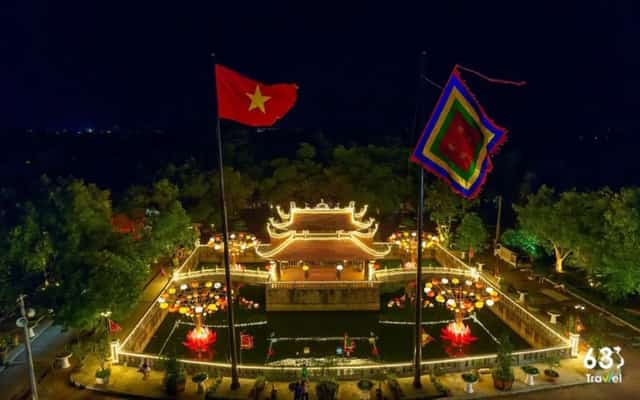
Lanh Giang Temple – Where Spiritual Legends Are Preserved
Lanh Giang Temple's architecture stands out with three main buildings, comprising 14 large and small compartments built in the 'Cong' character shape, creating a spacious area within its 3,000m² grounds. Although there are no hills or mountains, the area around the temple is enveloped by the lush green scenery of longan trees, lotus ponds, and a waterfront, evoking the strong image of a land blessed with spiritual energy and outstanding people.
Guest houses flank both sides of the temple, creating a harmonious symmetry with the surrounding landscape. The Trung Duong hall particularly draws attention with its two-tiered, eight-curved roof architecture.
The exquisite craftsmanship of ancient artisans is evident in every intricate carving on the columns and doors, featuring the four sacred creatures: Dragon, Unicorn, Turtle, and Phoenix, which are both solemn and ancient yet full of vitality. The temple's entrance faces the Nhi Ha River (Red River), offering expansive views of vast green rice fields to the west, creating a peaceful scene amidst the evening mist.
To the north of the temple is the shrine dedicated to Princess Ngoc Hoa, Tien Dung's younger sister, while to the south, it borders Nha Xa village and the temple dedicated to Tran Khanh Du. Although there are no documents confirming the exact construction date, the Chinese characters carved on the roof of the second building indicate that the temple was last renovated in 1944, during the 18th year of Emperor Bao Dai's reign.
Within the Lanh Giang Temple complex, there is also Cua Song Temple (also known as Co Temple), located about 50m to the east. This is a massive architectural work with a multi-tiered, curved roof and a facade facing the Red River, offering a poetic landscape amidst the charming waters.
Not far to the west, beyond the dike, lies King Le Temple, dedicated to Emperor Le Thai To Cao Hoang De. This temple was established to commemorate King Le's incognito visits to inspect local officials during the enforcement of court laws. To this day, King Le Temple preserves many unique relics such as the King's garden, the 'xoi' mound adorned with dragons bowing and phoenixes dancing, and other areas that bear witness to the wise king's travels.
Dia Tang Phi Lai Tu Pagoda
Dia Tang Phi Lai Tu Pagoda, also known as Dung Pagoda or Phi Lai Dia Tang Pagoda, boasts a history of over 1,000 years. Situated on a small hill in Ninh Trung village, the pagoda stands out with its 'Left Green Dragon, Right White Tiger' landscape and numerous valuable artifacts bearing the distinct mark of Vietnamese Buddhism.
The pagoda was once chosen by King Tran Nghe Tong as a place of retreat and visited by King Tu Duc to pray for offspring. After many historical ups and downs, in 2015, the pagoda was renovated and renamed by Venerable Thich Minh Quang to its current designation.
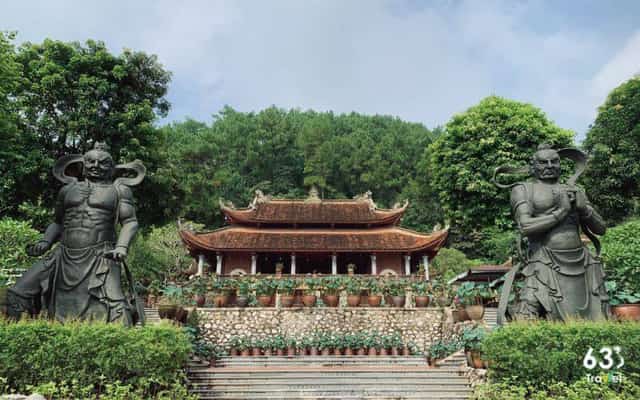
Dia Tang Phi Lai Tu Pagoda – A Peaceful and Meditative Sanctuary in Ha Nam
The pagoda's spacious grounds blend harmoniously with nature, featuring a lotus pond, gardens, and tranquil meditation areas. A special highlight is the 12 circles on the white gravel ground, symbolizing the 12 links of dependent origination and conveying a gentle message about human life.
The pagoda's architecture harmoniously integrates with nature, notably the Tam Bao hall with its majestic statue of Ksitigarbha Bodhisattva, the area dedicated to 42 ancestral monks, and the Pho Dong stupa on Phi Lai peak, where 40 generations of patriarchs rest. The pagoda is also an ideal place for those who enjoy reading and seek inner peace.
Ancestral Temple of Duke Tran Nhu Lan
The temple worships National Cong Tran Nhu Lan, located in Thuong Lang village, Ngoc Lu commune, Binh Luc district, Ha Nam. It was built in 1681 by descendants of the Tran Nhu family. The five-compartment house, made of ironwood, features grand architecture, ironwood doors, and a roof ridge adorned with a spearhead shape, symbolizing the martial prowess of the revered figure.
The site also preserves various worship artifacts, royal decrees from the Later Le dynasty, and steles and genealogies over 300 years old, which are valuable for historical research. Duke Tran Nhu Lan, born in 1563 into a poor family, rose to become a hero who supported the king, helped secure the nation, and made numerous contributions to his homeland, such as repairing communal houses, pagodas, markets, building roads, and constructing bridges.
He was revered as a village tutelary spirit even during his lifetime and, after his death, continued to be worshipped at the communal house. The Ancestral House of Duke Luong Quan Cong Tran Nhu Lan was recognized as a National Historical Site in 1995.
Co Vien Communal House and Pagoda
The historical complex ofCo Vien Communal House and Pagoda, located in Hung Cong commune, Binh Luc district, near Chau River and Binh My town. Co Vien Communal House is a large-scale architectural work, built in the 'noi dinh, ngoai quoc' style and strongly reflecting the artistic style of the 17th and 18th centuries.
Architectural details such as bowing dragons, dancing phoenixes, and dragon-transformed leaf motifs all showcase the exquisite carving techniques of the Later Le dynasty. Notably, the communal house also preserves many valuable worship artifacts, such as altars and thrones from the Later Le period, all elaborately carved and lavishly gilded.
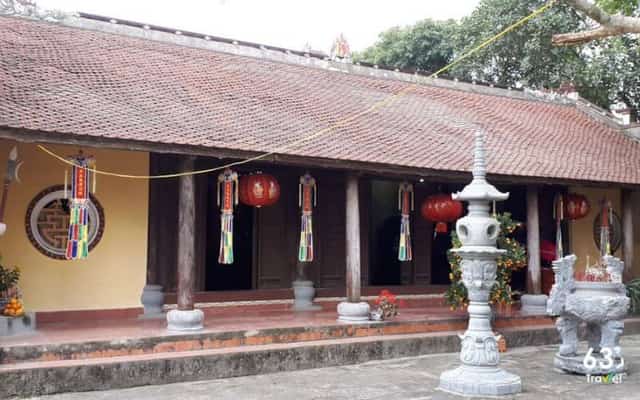
Co Vien Communal House and Pagoda Ranked as a National Historical Site
Co Vien Pagoda, formally known as 'Linh Quang Tu,' is located right next to the communal house, featuring a grand architectural complex with two main buildings and numerous shrines, embodying traditional style. According to legend, the pagoda dates back to the Ly dynasty. Beyond its role as a place of worship, Co Vien Communal House and Pagoda also served as an important revolutionary base, protecting cadres and hosting many meetings of the Ha Nam Provincial Party Committee during the resistance against the French, contributing to the struggle for national independence.
Ancestral House of Poet Nguyen Khuyen
From the street of poet Nguyen Khuyenis located in Vi Ha village, Trung Luong commune, Binh Luc district, Ha Nam, approximately 16km from the provincial center. The ancestral house complex is nestled amidst a poetic landscape with an autumn pond, bamboo alley, and Bui garden, creating a peaceful Northern Vietnamese countryside scene. It is dedicated to the poet Nguyen Khuyen – 'Tam Nguyen Yen Do' – and preserves many memorabilia such as his works, horizontal lacquered boards, and parallel couplets gifted by renowned scholars.
Nguyen Khuyen's house features distinct traditional architecture with seven compartments, an outer grand hall for ceremonies, and an inner sanctuary – a special architectural style reserved only for those deified by royal decree. The two longan trees in front of the entrance and one on the porch were planted by Nguyen Khuyen after receiving longan seeds from the royal palace, symbolizing his success in three imperial examinations.
Upon entering the main gate, visitors will encounter the 'Mon Tu Mon' couplet – a teaching on the ethics of being a student, emphasizing the importance of etiquette when visiting a teacher's home. The interior space is simple yet solemn, displaying inkstones, brushes, royal decrees, along with plaques reading 'An Tu Vinh Quy' (Royal Grant of Glorious Return) and 'Nhi Giap Tien Si' (Second-Rank Doctor) bestowed by King Tu Duc.
The ancestral house complex is built in the 'two dragons flanking the moon' style with nine steps; however, instead of placing them on the roof, Nguyen Khuyen arranged them on the ground – a gesture implying resistance against the Nguyen dynasty. It also preserves his court attire and a statue of Nguyen Khuyen leaning on a bamboo staff, symbolizing his wisdom and composed demeanor.
Nguyen Khuyen Ancestral House has been recognized as a National Historical and Cultural Site and is now a popular tourist attraction. It draws visitors not only for its historical value but also for its peaceful setting, closely associated with the poetic imagery in his works.
Phat Quang Pagoda
Phat Quang Pagoda, originally a small, nearly century-old temple located in Du Nhan village, was built to serve the worship and pilgrimage needs of local residents. Over time, the pagoda deteriorated, but thanks to Venerable Thich Thien An, it underwent renovation starting in 2015, expanding to an area of over 6,000 m². Many large architectural structures such as lecture halls, fish ponds, tea houses, ancestral halls, and the Tam Bao (Three Jewels) hall have been built, giving it the grand and stately appearance it has today.
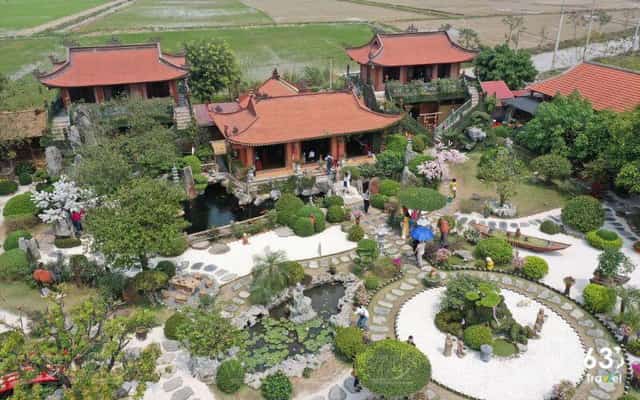
Phat Quang Pagoda Ha Nam – A Unique New Spiritual Tourist Destination
The restoration of the pagoda is not only the dedication of Abbot Thich Thien An but also involved the contributions of numerous monks, nuns, and Buddhists both domestically and internationally. The Venerable personally wrote calligraphy, painted, and decorated every small corner of the pagoda, creating its unique artistic flair. Visitors here will be impressed by the miniature rockeries, clear blue fish ponds, elaborate bonsai, and especially the exquisitely carved calligraphic stone slabs.
The pagoda's spacious and peaceful atmosphere offers a sense of lightness, helping visitors temporarily forget life's worries. Upon visiting, guests can sit and listen to the monks preach, enjoy tea, admire flowers, and feed the fish – all deeply relaxing experiences. Furthermore, the pagoda is an ideal place for commemorative photos with its harmonious and refined natural scenery.
>> See also:Top 9+ Must-Visit Attractions in Ha Nam: The Most Popular and Exciting Destinations for Travelers
Cong Dong An Thai Communal House
STRIKE OF AN THAI COMMUNITY, located in Tien Noi commune, Duy Tien district, Ha Nam province, is an important local historical and cultural site. The communal house was built during the Later Le dynasty, featuring distinct traditional architecture with intricate carvings and a harmonious layout.
It is a place of worship for the village's tutelary spirits, deities who protect the villagers, and also honors ancestors who contributed to nation-building. Over centuries, An Thai Communal House has maintained its solemn appearance, becoming a spiritual gathering point and a venue for traditional festivals, attracting numerous tourists and locals.
Trieu Hoi Communal House
Dinh Trieu Hoi, located in Bo De commune, Binh Luc district, Ha Nam, is dedicated to two village tutelary spirits: Cao Mang Ton Than – a talented general of the Tran dynasty, and Tran Xuan Vinh – a second-rank doctor during the Le Thanh Tong reign. Legend has it that after passing the imperial examination, Tran Xuan Vinh met with an accident on the river, and the villagers built a shrine for him, later worshipping him alongside Cao Mang.
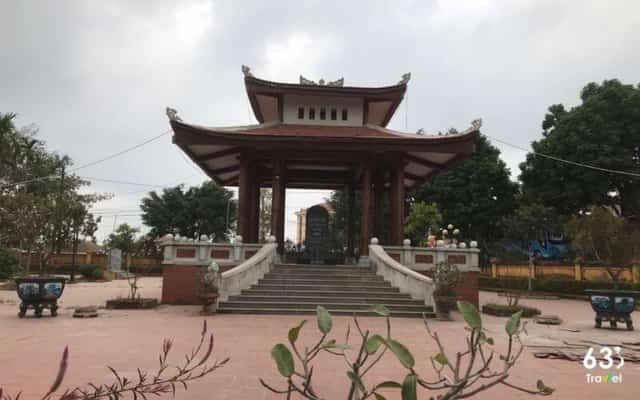
Trieu Hoi Communal House Ranked as a National Historical Site
The communal house's architecture follows the 'Tam' character shape, comprising a front hall, a second palace, and a main sanctuary, featuring distinctive characteristics of Vietnamese communal house architecture. The communal house has been renovated multiple times, featuring 'two dragons flanking the moon' motifs, ironwood door frames, and a brick-tiled floor, exuding an ancient beauty.
Trieu Hoi Communal House is not only architecturally significant but also the site of a major protest on October 20, 1930, when local farmers demonstrated against the feudal colonial regime, supporting the Nghe Tinh Soviet movement. This event left a strong mark on Ha Nam's revolutionary movement, contributing to the nationwide struggle.
Temple of Female General Le Chan
Temple to worship female general Le Chanis located in Hong Son village, Thanh Son commune, Kim Bang district, Ha Nam. The temple's main facade faces south, formerly opposite Ngan River – a branch of Day River, with Ong Tuong hill behind it. The temple's traditional festival, especially on the 13th day of the 7th lunar month, commemorating the death anniversary of Female General Le Chan, consistently attracts a large number of visitors. People from neighboring provinces come to attend, offer prayers, and participate in games such as boat racing, pontoon bridge climbing, chess, and cockfighting.
Currently, Le Chan Temple has been rebuilt into a complex comprising the main temple, Phu Bong (shadow palace), Son Trang cave, guesthouses, and auxiliary structures, spanning over 4,000m². In front of the temple stands a majestic statue of Female General Le Chan, facing her former base. The temple has become an important spiritual destination, connected to other temples dedicated to the female general in Quang Ninh and Hai Phong, with frequent cultural exchange activities during festivals.
Notably, the Hong Son village female drum team, with 35 members, helps recreate the atmosphere of battle, adding vibrancy to the festival. The Temple of Female General Le Chan not only holds historical value regarding the resistance war to protect the country but is also a remarkable spiritual tourist destination, linked to efforts to preserve culture and educate younger generations about national traditions.
Lat Son Base Historical Site
Historical Relic of Lat Son Base– where Female General Le Chan established her base and sacrificed herself during the Trung Sisters' Uprising in 40 AD, is one of our nation's important historical landmarks. The strategic location of the base, with its back against an arc-shaped mountain range and facing the Ngan and Day Rivers, helped Female General Le Chan organize defenses and resist the Eastern Han army.
Here, she led her troops in resistance through many fierce battles, especially the final one in Dong Loan valley. When her forces weakened, Female General Le Chan committed suicide to avoid falling into enemy hands.
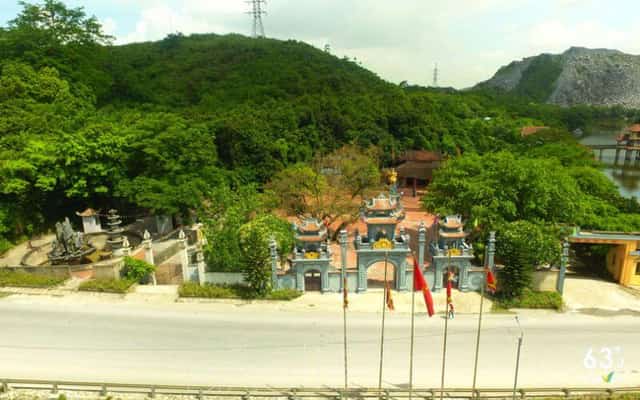
Lat Son Base Historical Site Ranked as a National Historical Site
Today, the Lat Son region, with landmarks such as Le Chan Temple, Thanh Chan Cave, and Giat Dau Mountain, is recognized as historical sites commemorating her contributions. The temple dedicated to the Female General was built by locals on Ong Tuong hill, near where she sacrificed herself. In 2023, the Ministry of Culture, Sports and Tourism recognized this base area as a National Historical Site, marking the cultural and historical values of the Lat Son region in the nation's tradition of building and defending the country.
Above is a compilation of 16 famous historical sites in Ha Nam for everyone to reference and explore. We hope this information will be useful and help you have a truly fulfilling journey exploring these historical sites.
Ninh Binh 10092 view
Update day : 02/10/2024

Monuments close by
See all
Temple of King Dinh Tien Hoang
The temple worshiping King Dinh Tien Hoang, also known as Dinh Bo Linh temple, Van Bong temple or Dai Huu temple (named after the place where the temple is located), currently belongs to Van Bong village, Gia Phuong commune, Gia Vien district, Ninh province. Jar. Legend has it that this is the place associated with the birth of Dinh Bo Linh, a national hero who was instrumental in suppressing the rebellion of 12 warlords, unifying the country, establishing the state of Dai Co Viet in 968. Here, also There are tablets worshiping loyal mandarins who are the four pillars of the Dinh dynasty including Dinh Dien, Nguyen Bac, Trinh Tu, and Luu Co. Legend has it that King Dinh Tien Hoang and his son Dinh Lien were murdered by Do Thich in the year 979. According to court rituals, the royal family conferred the title, beautiful letters, and established a temple to worship in their hometown. Thus, the temple was established long ago. Currently, the rest of the monument has the architectural style of the Nguyen Dynasty. There are many sources of information about King Dinh Tien Hoang, recorded in history and folk legends, and the general tone is to praise his talent and great contributions to the cause of unifying the country and opening up the economy. our country's orthodoxy after thousands of years of slavery. In his homeland today, there are still many legends and places related to the childhood of Dinh Tien Hoang as well as Nguyen Bac, Dinh Dien, famous generals from the same hometown as Dai Huu with King Dinh. Ky Lan Mountain is located at the beginning of Gia Phuong commune, nearly 3km from the temple, with King Dinh's mausoleum, Dai Huu cave, Nguyen Bac's mausoleum. To the southwest of the mountain there is a winding space that looks like a throne, halfway up there is a large, relatively flat area. Legend has it that Mr. Dinh Cong Tru, Dinh Tien Hoang's father, saw the beautiful scene and brought the king's grandfather's grave to this throne, building a mausoleum, called Lang Phat Tich, which has now been renovated. Next to Lang Phat Tich is Dai Huu cave halfway up the mountain. In the cave there are many beautiful shapes formed by stalactites, in some places there are shapes like Ky Lan, so it is also called Ky Lan cave. Previously, according to tradition, the cave had a temple to Son Than, which was the refuge of Mrs. Dam Thi and Dinh Bo Linh when Mr. Dinh Cong Tru passed away, as many books have written. To the southeast of King Dinh's mausoleum, there is also Nguyen Bac's mausoleum. The mausoleum is located next to the foot of the mountain. Right in front of the temple, about 200m away, is Bo De Mound, a tall, square, ancient land area of nearly 200m2 at the beginning of Van Bong hamlet. Legend has it that this is the old house foundation of Dinh Bo Linh. In the middle of the fields of Van Bong village, near the temple of King Dinh Tien Hoang, there is a relatively high area of land, thousands of square meters wide, with the ancient name Dao Ao (also known as Dao Ao land). Legend has it that this place was where Dinh Bo Linh's army gathered for military exercises. In general, the area around the relic today still retains many places and legends related to King Dinh Tien Hoang. These are valuable historical sources to clarify his background and career. Especially from his hometown in Gia Phuong commune today, up to Gia Hung (Gia Vien), to Truong Yen (Hoa Lu), the entire length and width of dozens of kilometers, every land has its own famous places and traditions. theory related to King Dinh Tien Hoang. The temple has been extensively renovated in recent years, but still preserves the ancient Nguyen Dynasty architecture. Facing west, there are three buildings, the architecture is in the style of "first, last". In front of the temple is a semicircular lake. Inside the lake, in the middle of the yard, two bronze pillars were built to form the exit and entrance to the relic. The temple area consists of 3 buildings: Tien Pagoda, Middle Hall and Chinh Tam. The front hall consists of 5 rooms, the architecture is in the style of stacking ironwood beams, and the gable walls are closed. All of the trap heads are carved with leaf patterns, especially the middle part of the trap head is carved with a dragon. The rafters in the truss system are all carved with leaf patterns. The roof of Tien Bai is shaped like two dragons flanking the moon. The middle street is adjacent to Tien Bai, consisting of 3 compartments, architectural style (the entire diaphragm system is located on the rafters), in front there is a door system, all the traps are carved with leaf patterns. In particular, the rafters on both sides of the porch door have quite sophisticated carvings of four sacred animals. The main building consists of 2 main rooms and 1 back room. The architecture is in the style of upper and lower floors. The relic still retains a number of precious artifacts such as worship statues, thrones, altars, and ordinations of dynasties... Every year, on the occasion of the festival of the ancient capital of Hoa Lu, people of Van Bong village and Gia Phuong commune also open Temple festival and participating in the fire palanquin procession from the king's homeland to the ancient capital of Hoa Lu. With outstanding historical and cultural values, the temple of King Dinh Tien Hoang was ranked by the Ministry of Culture and Information as a national historical and cultural relic in 1993. Source: Department of Culture and Sports of Ninh Binh province
Ninh Binh
9171 view
Rating : National monument
Tran Nam Dinh Temple
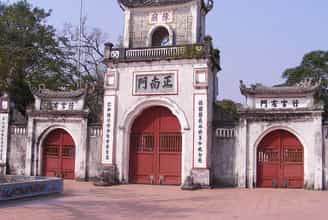
Nam Dinh Tran Temple relic area is a temple worshiping 14 Tran Dynasty kings, their families and mandarins with meritorious service. This place is also famous for the incense offering ceremony to open the Tran Temple seal in early spring and the Tran Temple Festival in the eighth lunar month every year. The Tran Temple - Nam Dinh relic area includes 3 main architectural works: Thien Truong Temple, Co Trach Temple and Trung Hoa Temple, with a common design and equal scale. In front there is a five-door gate. Through the gate is a rectangular lake. In the middle behind the lake is Thien Truong Temple. Thien Truong Temple, often called Thuong Temple, is located in the center of the Tran Nam Dinh Temple relic area. The temple was built on the foundation of Thai Mieu and Trung Quang Palace of the Tran Dynasty, which was formerly the family temple of the Tran family. Trung Quang Palace is where the Tran Dynasty emperors lived and worked. The current architecture of Thien Truong Temple includes the front hall, middle hall, main altar, incense burner, 2 rows on the left and right, 2 rows on the left and right of the morning glory tube, 2 rows on the left and right of the bamboo tube, 2 rows of the East and West. There are a total of 9 buildings and 31 rooms. The temple frame is built of ironwood, the roof is tiled, and the floor is tiled. The front hall is the place for worshiping and altars of mandarins who had great meritorious service in the Tran Dynasty. In the middle of the hall are the tablets of the 14 Tran Dynasty emperors. The main temple worships the four ancestors of the Tran family, and their wives and royal concubines. The incense burning court (sutra altar) houses the altar and tablets of the Tran Dynasty's officials. Co Trach Temple, often called Ha Temple, is located on the east side of the Tran Nam Dinh Temple relic site. In the front of the hall are tablets of three trusted generals of Tran Hung Dao, Pham Ngo, Pham Ngu Lao and Nguyen Che Nghia. The middle hall worships tablets and statues of Tran Hung Dao, his four sons, Pham Ngu Lao and other generals. The main altar placed the tablets of his parents, Tran Hung Dao and his wife (Princess Thien Thanh), 4 sons and 4 daughters-in-law, daughter and son-in-law. Burn incense (sutras) and place the dragon's temple, inside there is a statue of Tran Hung Dao and 9 Buddha statues. The space left the tablets of Truong Han Sieu, Pham Thien Nhan and Tran Dynasty officials. Thieves placed the tablets of the Tran dynasty's martial gods, Tran Cong and relatives of the Tran family. Trung Hoa Temple is located on the west side of the Tran Temple relic area. The temple was newly built in 2000, on the foundation of the ancient Trung Hoa Palace - where the Tran Dynasty emperors came to consult with the emperors. In Trung Hoa Temple, there are 14 bronze statues of 14 Tran Dynasty emperors placed in the middle hall and main palace. The incense burning court places thrones and tablets to worship the council of mandarins. Fraudulently worshiping civil servants. Fraudsters worship military mandarins. Every year, at the Tran Temple relic site in Nam Dinh, two major festivals will take place, which are the Tran Temple Opening Ceremony in early spring and the Tran Temple Festival in August, attracting a large number of local people and tourists from all over to attend. , grateful for the merits of the 14 Tran kings and praying for good things. Tran Temple is a special and important historical and cultural relic site of Nam Dinh province, ranked by the state as a national historical relic in 2012. Source: Nam Dinh City Electronic Information Portal
Ninh Binh
9121 view
Rating : National monument
Bao Loc Temple
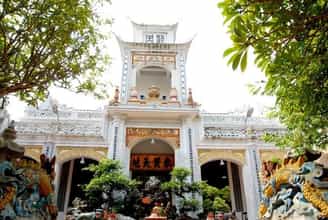
Bao Loc Temple, My Phuc commune (My Loc) was built on the "wooden ladder" land of An Sinh Vuong Tran Lieu, father of Hung Dao Vuong Tran Quoc Tuan and brother of Tran Thai Tong - the first king of Tran dynasty. During the Tran Dynasty, with the appearance of the Emperor's regime, in 1262, Tuc Mac village was changed to Thien Truong palace and was built on a scale like the second capital after Thang Long. Besides building palaces and magnificent houses for the emperors, the Tran Dynasty also conferred a series of fiefdoms on nobles, surrounding them like a protective belt of Thien Truong. At that time, An Lac hamlet was 2km north of Thien Truong center (as the crow flies). Legend has it that An Lac hamlet is the place where Tran Quoc Tuan was born and raised. With his great contributions in three resistance wars against foreign invaders, in April 1288 he was given the title "National Duke of Hung Dao Great King". When he died, the court re-titled him: "Grand Master, Supreme Patriarch Thuong Quoc Cong Nhan Vu, Hung Dao Great King". Bao Loc Temple was originally built along the Chau River, consisting of three ironwood rooms with tiled roofs. After the river bank eroded, the temple was moved to its current position. Existing on a small scale for a long time, in the early 20th century, Bao Loc temple was raised by people to upgrade it into a solid structure, quite large in size and height. The temple was built according to the design of Dong Phuong Bac Co, but was repaired to suit the traditional architecture of the nation. Construction began in 1928, it took 5 years for the project to be completed. The temple is located in the middle, facing east, on the left is the temple worshiping Buddha, on the right is the palace worshiping the Mother Goddess, behind the temple is Khai Thanh worshiping the king's father, mother, and wife. The entire relic is designed to be symmetrical and harmonious, with airy space creating a feeling of serenity during the holy ceremony. Bao Loc Temple is located in the middle, built in the style of a zigzag letter, including a front hall with 7 wide compartments, a long middle hall with 5 compartments, and a harem with 3 compartments. The architecture of the temple is simple, the columns are made of bricks, many beams are filled with durable and imposing reinforced cement. Although there are not many carvings, scattered in each part there are still themes: four sacred animals, water-rolling dragons, flowers and leaves, pine trees, chrysanthemums, bamboo, apricot trees... In particular, six sets of doors in the harem with plaques. Exquisite carvings bearing the artistic style of the Nguyen Dynasty. In the temple, in addition to the tablets, there are also two statues worshiping Tran Hung Dao (one made of bronze, one made of wood). The bronze statue in a sitting position weighs 4.8 tons, placed in the middle of the street. On both sides there are statues of Hung Vu Vuong Nhien and Pham Ngu Lao, his son and son-in-law. The agarwood statue is placed in the harem, on both sides are statues of literature teachers and martial arts teachers. Khai Thanh Temple is located in the back, the architecture is similar to the main temple but the foundation is 3 meters higher, worshiping Tran Hung Dao's father, mother, wife and two daughters. The worship arrangement here shows the spirit of respect for the teacher, integrity and filial piety of the Great King Hung Dao. Among the relics worshiping Tran Hung Dao, Bao Loc temple has special significance because this land is associated with his childhood. That's why people have the saying "Sinh Kiep Bac, Tran Thuong waterfall, Bao Loc's hometown". Every year, on his death day (August 20 of the lunar calendar), many visitors from all over have the opportunity to attend the traditional Tran Hung Dao festival. Source: Nam Dinh historical and cultural relics
Ninh Binh
9027 view
Rating : National monument

Temple of King Le Dai Hanh
King Le Dai Hanh's mausoleum is located at the foot of Ma Yen mountain to the south, on both sides there are two mountains that people call "Long chau, Ho phu", which are the arms of the throne, so the mountain is also called Hoan Y Son. In the outer citadel area of Hoa Lu Citadel today, it belongs to Yen Thuong Village, Truong Yen Commune, Hoa Lu District, Ninh Binh Province. King Le's mausoleum also has another name according to local people: Ma Quan. This name may come from folk beliefs about the role and position (servant) of Le Hoan during the reign of King Dinh Tien Hoang, however this name is ancient and not very popular. King Le's mausoleum is a type of burial relic, according to the nation's traditional traditions. According to ancient beliefs, the tombs of King Dinh and King Le were all placed in a place called "De Vuong's grave". King Le Dai Hanh, also known as Le Hoan, was formerly talented in martial arts, liberal, and had great ambition. Le Hoan joined the Hoa Lu insurgent army, followed Nam Viet King Dinh Lien to participate in battles, defeated the rebel warlords, and achieved many victories. He was respected by King Dinh Tien Hoang as a wise and brave man and became a Thap Dao general during the Dinh dynasty. Le Hoan led the army to expel the Tong invaders, defeated Champa, and consolidated the independent and unified feudal state apparatus. The government also took care to implement a number of positive measures for economic development. Le Hoan ascended the throne and changed his reign name to Thien Phuc. It can be said that under the reign of King Le Dai Hanh, Hoa Lu Capital and Dai Co Viet country had prosperity and stability. Politics, military, culture, and diplomacy tend to develop, marking important milestones. He deserves to be the person who quelled internal and external enemies, created the country's strength and showed authority to the northern Song Dynasty. In the year At Ty 1005, in March, King Le Dai Hanh passed away at Truong Xuan Palace. When King Le died, his officials buried him and built a mausoleum in the southwest of the foot of Ma Yen mountain. The size of the mausoleum is smaller than that of King Dinh Tien Hoang but still proves the majesty of the emperor. Behind is a stone stele, the main face of the stele has the words: "Le Dai Hanh Emperor's mausoleum" and the date of the stele: Minh Menh's 21st year (1840). According to folk tradition, in the land of Truong Yen, when building the Hoa Lu Capital, King Dinh and King Le both took Ma Yen Son as their criminal record, and took the Dai Van range as the rear of the capital. Ma Yen Mountain is also where the King often resides during every naval review. King Le Dai Hanh's mausoleum was restored in 2020 and is majestic and worthy of the Emperor's stature. The position of King Dinh's mausoleum and King Le's tomb is located in the Hoa Lu ancient capital relic area, attached to central relics such as: Temple of King Dinh - King Le and other nearby relics. In addition to its great historical and cultural value, a place that marks the nation's glory, this is also a place blessed with charming landscapes by nature, attracting tourists from near and far to visit and worship. , paying tribute to great men who have made great contributions to the country. Source: Management Board of Trang An Scenic Landscape Complex
Ninh Binh
8932 view
Rating : National monument
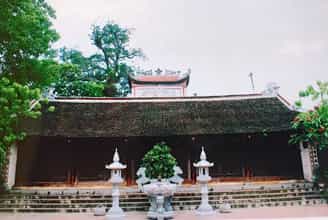
Van Chang communal house is a historical and architectural relic, traditional art and blacksmithing
Van Chang communal house is located on the territory of residential group number 16, Van Chang village, Nam Giang town. Van Chang village communal house is a place of worship and gratitude to the local people for the Six Patriarchs of blacksmithing. The genealogy of Van Chang village communal house said that the six craft ancestors together with 15 ancestors from the following families: Doan, Tran, Vu, Nguyen, Do, Ngo... recruited people to explore the fields and develop production. and career expansion. In the Year of the Ox (1373), during the reign of King Tran Due Tong, the reign of Long Khanh 2, after teaching the profession to the people here, the six ancestors returned to their old hometown of Hoa Chang village (Ha Tinh) to continue teaching the profession. forging. To pay tribute to the merits of the ancestors of the profession, local people named the village Hoa Chang - the original hometown of the Patriarchs (during the Nguyen Dynasty, it was changed to Van Chang village); set up a temple to honor: Phuc Than - Six Patriarchs - Tutelary God and take the 15th day of the 11th lunar month, the day the six Patriarchs from Van Chang village returned to their old hometown, as a taboo day. Currently, Van Chang village communal house still retains 6 decrees conferred with the title Khai Dinh 9 (1924) affirming the merits of "Protecting the country", "Ty people" and conferring on the Six Patriarchs: Duc Bao Trung Hung Linh Phu Van Son Saint Ancestor. In addition to the ordinations, Van Chang communal house also preserves many parallel sentences praising the merits and careers of the Six Patriarchs. Currently, along with Van Chang village communal house, Nam Giang town, Nam Truc district, Nam Dinh province worshiping the Six Patriarchs, other localities such as Ha Tinh and Ho Chi Minh City all have places to worship the Patriarchs. forging. Blacksmithing in Van Chang village, Nam Giang town was formed at the end of the 14th century, nearly 7 centuries ago. Initially, blacksmithing was just a side job alongside agricultural production. Through many historical periods, blacksmithing has gradually developed, separating from agriculture to go deeper into specialized production, becoming a traditional handicraft. In 1426, when the Lam Son insurgent army advanced to the North, a young man from the Doan family gathered villagers to stand up to kill the enemy and was awarded the title of Brave General. Knowing that there was a blacksmithing profession here, King Le Loi of Binh Dinh assigned the villagers the task of forging weapons for the insurgent army. Since then, Van Chang forging profession has continuously existed and developed. Also during the period of fighting against the Ming invaders, a group of Van Chang workers came to the Lam Son insurgent army to use the method of forging iron cannon tubes. This type of artillery was a signal for the insurgents to rise up and destroy the enemy. Currently, at Van Chang communal house, two cannons cast in iron are still preserved. During the Nguyen Dynasty, Van Chang blacksmith joined the army, many people were given the title "Tuong Muc", some were given the title "Water Ministry of Water Affairs" as the leader of the soldiers repairing weapons for military barracks, including both the navy and the land army. When the French invaded the North, many Van Chang workers stood in the army and people's ranks against the French. More than 2,000 Can Vuong troops commanded by Dr. Vu Huu Loi (1836 - 1886) were stationed in Giao Cu village (Dong Son, Nam Truc, Nam Dinh), all weapons were produced by blacksmith Van Chang. Up to now, after nearly 7 centuries, the traditional craft of blacksmithing has developed and spread strongly, forming the Nam Giang mechanical industrial cluster. Van Chang blacksmithing and Nam Giang mechanical engineering have become a key local economy, contributing to creating jobs, improving living standards, and building the local economy - culture - society today. a development. With typical values of history and artistic architecture, Van Chang Communal House has been ranked as a National Historical and Architectural Monument in 2018. Source: Nam Truc District People's Committee
Ninh Binh
8828 view
Rating : National monument
Nearby tourist attractions
See all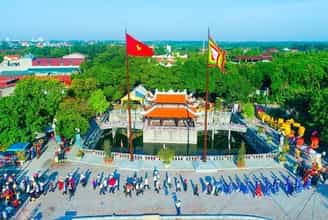
Lanh Giang Temple
Lanh Giang Temple - a famous spiritual destination in Ha Nam, also known by the familiar name Lanh Giang Linh Tu. Specifically, this temple is located in Yen Lac village, Moc Nam commune, Duy Tien district, Ha Nam province. This tourist destination is located right next to the foot of the dike connecting the old Ha Tay, on the right bank of the Red River. Opposite Lanh Giang temple is Hung Yen province. Therefore, visitors can easily get here by many different means, from road to waterway. Because of this location, many people still mistakenly believe that Lanh Giang temple is located in Hung Yen. Ha Nam is a province without an airport, so to get to Lanh Giang temple, visitors can hunt for plane tickets to Hanoi at Traveloka. Traveloka's Fare Notification, Reschedule and Refund features will provide you with maximum support during the booking process. Currently, flights to Hanoi's Noi Bai airport are operated regularly. Therefore, visitors can easily book flight tickets for any period of time. After landing safely at Noi Bai airport, you need to choose the next suitable means of transportation to Ha Nam province. Most tourists often choose bus 206 or some typical bus companies such as Phuc Loc Tho, Viet Trung, Thoi Dai, Man Tinh,... After arriving in Dong Van town, Duy Tien district, tourists who want to visit Lanh Giang temple need to move another 8km along Highway 38 to Hoa Mac town. From here, go another 3 or 4 kilometers and you can reach Yen Lenh bridge. Next, just turn left and follow the road right next to the Red River dyke and you can reach Lanh Giang temple, Ha Nam. According to records from documents, until now, people have not been able to determine the time when Lanh Giang temple was built. According to the inscriptions left on the roof of the second building, it is likely that Lanh Giang temple was restored in 1944. Through historical ups and downs, this temple still retains its original grand scale. Many legends have told that Lanh Giang temple is associated with the Three Famous Gods - the children of the noble lady Hoa Giam. Not only were they instrumental in helping King Hung fight against Thuc Phan's army, but they also supported Princess Tien Dung and her husband. Therefore, Lanh Giang Temple was established to recognize and commemorate the gods who helped King Hung defend the country. Every year, Lanh Giang Temple will have two major festivals to express remembrance to the water gods and pray for good weather all year round so that people can settle down and settle down. The first festival will take place in the 6th lunar month, lasting from the 2nd to the 5th. The second festival will continue to take place in the 8th lunar month, specifically August 20. The festival at Lanh Giang temple not only brings together many extremely sacred and solemn sacrificial rituals and holy processions, but also brings together many interesting and exciting games. Coming to Ha Nam on this occasion, visitors can not only admire the unique landscapes and spiritual architectural works here but can also learn more about the customs and unique culture of Ha Nam. this land. In 1996, Lanh Giang Temple was officially ranked as a national historical and cultural relic by the Ministry of Culture, Sports and Tourism. Since then, the temple has become one of the works that need to be preserved, protected and developed. Lanh Giang Temple consists of 3 buildings with 14 compartments along with a guest house and altar surrounded by solid walls. In the temple there are many valuable items, many precious antiques and statues worshiping the three gods of the Hung King period. Standing in front of Lanh Giang temple, visitors will surely be extremely impressed with the massive and majestic architecture. The Tam Quan gate is designed in the style of a stack of matches with eight roofs, creating a feeling of airiness. The tip of the sword is a beautiful dragon shape interwoven with extremely harmonious motifs. In front of the Tam Quan gate is a calm, blue semicircular lake adorned with colorful and fragrant water lilies. Following the bridge from the temple gate to the middle of the lake, visitors will encounter a tower hidden in the shadow of an old sycamore tree, both majestic, ancient but also extremely poetic.
Ninh Binh
8476 view
From January to December

Tran Thuong Temple
Tran Thuong Temple is currently a place to honor the national hero Tiet Trung Hung Dao Dai Vuong Tran Quoc Tuan and the generals who fought against the Mongol army in the 13th century. With more than a century of existence, the temple still retains its original beauty and is a symbol of history and pride of the people of Ha Nam. The land of Tran Thuong is known for the saying "Personal Dao, Rice of Tran Thuong" and the poem engraved on the motto at the temple: "The land of Tran Thuong is immense in welfare, bustling with fruits every spring." Previously, Tran Thuong was the center of 6 water canals. From here, you can go up the Red River to Thang Long or down to the sea to the East. Only about 3km from here is where the Tran family's tomb is located. Tran Thuong Temple is one of three major temples worshiping Hung Dao Dai Vuong nationwide. Legend has it that, on his journey against the Mongol army, Tran Hung Dao realized that the terrain here was very dangerous, so he set up 6 food warehouses to serve the war. This place today has become a place to preserve the historical spirit and pride of the people of Ha Nam. Tran Thuong Temple, a majestic and ancient architectural work located on sacred land in the style of "Four water turtles". The overall landscape of the temple includes the outer gate, the inner gate, 5 buildings, 15 compartments, divided into 3 palaces: first, second, third and two hai vu, 5 wells... The architecture and natural landscape of the temple Tran Thuong Temple is like immersing yourself in religion in a sacred cultural space. The value of the temple is reflected in its delicate decoration with unique motifs: two dragons flanking the moon, flying dragons, dancing phoenixes, water waves, clouds and sky... Creating a vivid, ancient picture containing folk philosophy. . The temple's collection of altar objects and ancient books is also very diverse, especially the statue of Saint Tran with a serious face but still a nurturing smile. With traditional historical value, Tran Thuong Temple shines with unique culture. Every year, the temple organizes two major festivals: the Saint Tran food distribution ceremony takes place on the night of January 14 and early morning of January 15; The death anniversary celebration from the 18th to 20th of the 8th lunar month attracts a large number of people and tourists. During the festival, many folk cultural activities are held, from the water procession, the river swimming competition to the "Dong Dong performance" - a traditional ritual, all emphasizing the moral "Remember when drinking water". source". Tran Thuong Temple is not only a place to organize festivals, but also a place to preserve memories of culture, history and beliefs. This is a symbol of respect for the saintly figures who saved the country, the pride of a nation with endless filial piety.
Ninh Binh
8182 view
From January to December

Truc Temple
Ha Nam Truc Temple is located in the Truc Temple - Ngu Dong Thi Son tourist area, in Quyen Son village, Thi Son commune, Kim Bang district, more than 7km from Phu Ly city along National Highway 21A. There are many stories about Ha Nam Truc Temple, but according to the old people who took care of the temple, in 1089, on the way to conquer the South through Quyen Son village, Ly Thuong Kiet's war fleet was caught by a sudden wind. blew the mast and swept the flag to the top of Cam Mountain. Feeling strange, he and his generals stopped, preparing to make offerings to heaven and earth, praying for the army's great victory. And that military victory was truly a great victory. Ly Thuong Kiet and his soldiers returned to pay their respects and allowed everyone to celebrate the victory. The festival lasts for months, the atmosphere is jubilant and bustling, and during that time he even taught the people here how to raise silkworms and weave cloth. Later, to commemorate the merits of Ly Thuong Kiet, the villagers built a temple right at the place where he held the festival, which is today's Truc Temple located deep inside the vast green bamboo forest. Truc Temple in Ha Nam is designed in the style of the letter "Dinh" including the temple gate, front hall and harem. The temple gate has 4 pillars: 2 central pillars over 6m high and 2 small pillars on both sides. Truc Temple's front hall is divided into 5 compartments and the harem has 3 compartments, all built in the traditional style of the 17th - 19th centuries: roofed with male tiles, built with interior bricks, exposed to the ceiling, and carved door system. following the themes of four sacred animals, four precious animals... with high artistic value. Not only can you admire the beautiful scenery and participate in the festival, coming to Truc Ha Nam Temple, visitors will also have the opportunity to see with their own eyes stone artifacts from the Ly Dynasty bearing the historical imprint of a heroic time. It is known that currently in Truc Temple, two unresearched antiques from the Ly Dynasty are kept: a pair of dragons and a stone aquarium. The pair of dragons are not very large, located symmetrically vertically, their heads facing the front hall but have different shapes. According to archaeologists who have been here, the dragon on the right, seen from the outside, is a Ly dynasty dragon with a soft, flexible shape; The dragon on the left is the dragon of the Tran Dynasty and has a bigger, stronger and fatter figure. The stone aquarium is made from monolithic stone, has a rectangular, square shape with sharp edges, the bottom of the tank is surrounded by a wave-shaped border, and the tank wall has a four-quarter pattern. Although the exact age of this ornamental tank is unknown, looking at the moss-covered details, one can tell that the tank dates back hundreds of years ago.
Ninh Binh
7797 view
From January to December
Zinc Drum
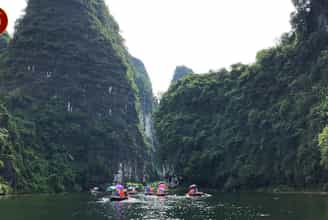
Kem Trong Ha Nam is one of the most beautiful natural landscapes in Northern Vietnam, featuring majestic limestone mountains and the gentle Day River. This is the ideal destination for those who love pristine nature and seek peace in the heart of nature. According to folk legend, during the Le Dynasty, the king was worried that the land of Kem Trong Ha Nam had prosperous feng shui that could affect the dynasty, so he ordered the Dao River to be dug to cut off the ley line of this area. This action not only has feng shui significance but also creates an amazing natural landscape, with a river winding between majestic limestone mountains. It is this thrilling story that has contributed to increasing the mystery and appeal of Kem Trong, attracting a large number of tourists to visit and explore. With a harmonious combination of rolling limestone mountains, the romantic winding Day River and pristine natural space, Kem Trong is an ideal place for visitors to freely create beautiful check-in photos. Each view here has its own beauty, from large rocks with strange shapes to green riverbank mudflats that create a poetic scene. Especially at dawn or dusk, when the sunlight shines on the water and rocky mountains, the scene becomes more magical and romantic than ever, making anyone want to preserve this memorable moment. Kem Trong Ninh Binh possesses many beautiful caves with splendid stalactite systems, formed over millions of years, creating a magical and mysterious space. Each cave here has its own unique characteristics, with stalactites with unique shapes such as curtains, pillars supporting the sky or interesting natural statues. When entering the caves, visitors will admire the light reflecting on the limestone blocks, creating a magical shimmering effect, giving the feeling of being lost in another world.
Ninh Binh
7167 view
From February to October

Bat scene paint
Eight scenes in the mountainous area of Tuong Linh commune (Kim Bang) were once the place where Lord Trinh Sam established his palace and were compared by the lord to eight famous beautiful scenes such as in Tieu Tuong (Yunnan, China). For a long time, the Bat Canh Son range (mountain range with 8 wings) has been considered a scenic spot of Son Nam town. According to Phan Huy Chu's Lich Trieu Chuong Chuong Loai Chi (Du Dia Chi section), in the 16th century, Trinh Doanh's Trinh Doanh came here to admire and likened Bat Canh Son to Tieu Tuong in China and established a palace to go there. about enjoyment. In the past, in Bat Canh Son, there were 8 pagodas and a temple worshiping the great earth spirit, arranged and built according to the theory of the eight trigrams and five elements. Attraction 1: Ong Chua Tien, also known as Ong Pagoda. Ong Chua Tien (Ong Pagoda) was built during the reign of King Tran Nhan Tong on Tuong mountain about 200m. The mountain is the first wall in the Bat Canh Son system in Ha Nam. The pagoda has an extremely sophisticated architectural style with eight battlements and four dragon corners, so this is the first and most important point in the Bat Canh Son landscape. Scenic spot 2: Ong Temple 2. This scenic spot has a large semicircular lake surrounded by rows of deep green trees. The lake has an area of up to 320 acres with green water all year round with an average depth of about 5m. According to legend, this is the lake left by the temple after a flood. Currently in the lake there are countless species of fish that can be exploited. Ong Temple was built in a triangular structure with hundreds of majestic and magnificent Buddha statues. Coming here, you will find your soul more quiet and peaceful. Scenic spot 4: Kieu Pagoda. Kieu Pagoda is located at an altitude of 150m on the mountain of the same name. Kieu Pagoda is located in the Southeast with a large area. The pagoda currently has 3 stele carved into the cliff, which is one of the important features of this place. Besides, the pagoda is also associated with legends about moonlight. Scenic spot 5: Ba pagoda. The pagoda became sacred when the village organized a procession to worship Phap Vu Buddha. Phap Vu Buddha belongs to the Four Dharma system at Dau Pagoda (Bac Ninh) including: Phap Van, Phap Vu, Phap Loi, Phap Dien. History also records the inspiration every time the Ly Dynasty kings came to Dau Pagoda to pray, from then on, pagodas from all over asked to receive the Four Dharmas to worship.
Ninh Binh
8146 view
From January to December
 AI Travelviet