
 vn
vn en
en ja
ja ko
ko zh
zh


Uncover Bình Phước: Exploring 19 Ancient and Iconic Historical Sites
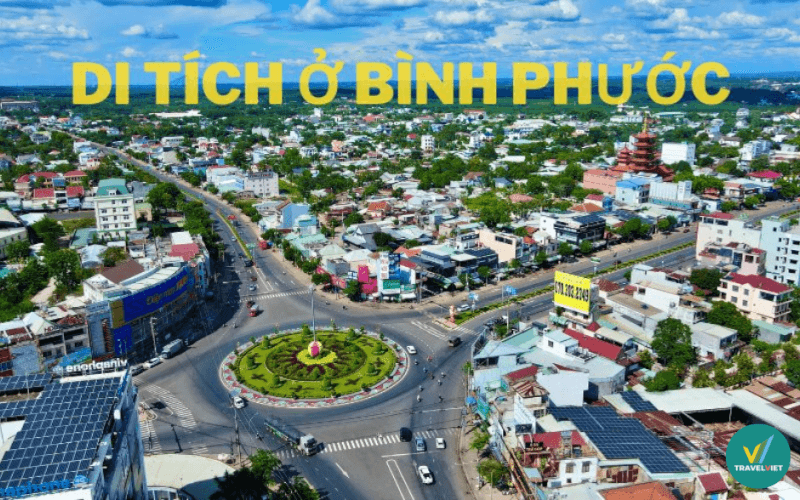
Bình Phước – a land brimming with pride, boasting a heroic history and home to numerous significant historical sites that travelers simply must explore. Discovering Bình Phước's historical sites is more than just a journey back to the nation's roots; it's also a chance to delve deeper into the indomitable spirit and struggle of its people throughout history.
When Bình Phước is mentioned, people often think of its vast rubber forests or the wild beauty of its nature. However, beyond its natural charm, Bình Phước also stands out with historical sites linked to the nation's glorious struggles. Join 63Stravel as we explore the prominent historical sites of Bình Phước in this article.
Visit 19 Ancient and Famous Historical Sites in Bình Phước
Follow 63Stravel to discover the ancient historical sites of Bình Phước with the list below.
Đồng Xoài Victory Site
Dong Xoai Victory Siteis a sacred symbol, erected to commemorate the 40th anniversary of Đồng Xoài's historic victory against the American imperialists. The monument not only immortalizes a glorious triumph but also honors the indomitable and heroic spirit of the Đồng Xoài army and people. Recognized for its special historical significance, it was designated a National Historical Site on December 12, 2014.
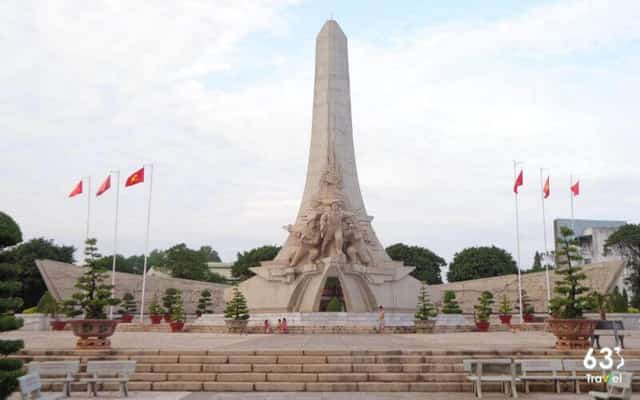
Đồng Xoài Victory Monument - A Historical Site Attracting Tourists in Bình Phước
The historical site spans 16,932.88 m² and includes several prominent features such as a memorial exhibition house, the victory monument, bas-reliefs, green spaces, and a fountain. The most striking feature is the 21-meter-high monument, intricately carved from granite, depicting three brave soldiers advancing, symbolizing the heroic spirit of those historic days. Two bas-reliefs behind the monument vividly recreate the epic battle, contributing to a solemn yet proud atmosphere.
The area around the monument is enveloped by lush greenery and features a modern lighting system, making it an attractive destination for visitors to Bình Phước. More than just a sightseeing spot, the Đồng Xoài Victory Monument also hosts social events, commemorations, rallies, and many meaningful cultural activities, becoming an indispensable part of the local community's spiritual life.
Tàu Ô Blockade Victory Site
Victory location: O Ship Blockadeis a heroic historical witness, deeply etched in the hearts of Bình Phước residents, commemorating the glorious victories of our army and people during the most brutal period of the Vietnam War. This place has become a symbol of profound gratitude and appreciation for the soldiers who sacrificed for independence and freedom, as thousands of the nation's finest fell on this very land.
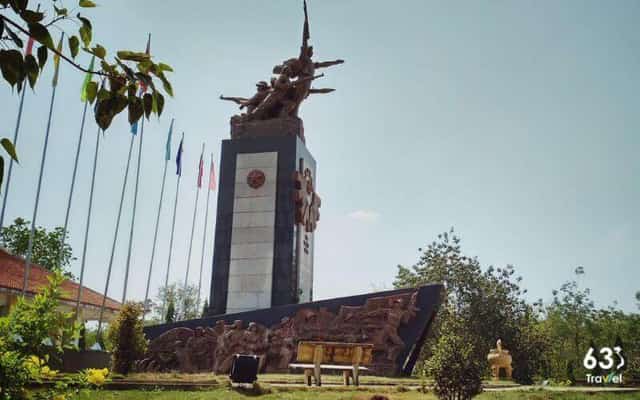
Tàu Ô Blockade Victory Historical Site
The name Tàu Ô originates from the stream of the same name that flows across National Highway 13, in Tân Khai commune. During the Nguyễn Huệ Campaign, the Tàu Ô Blockade played a pivotal role in military strategy, as the 7th Division established a battleground here to prevent enemy reinforcements from Saigon, ensuring the secure defense of Lộc Ninh district after its liberation.
Built on an area of 11,451.7 m² in 2009, the Tàu Ô Blockade Victory Historical Site includes a memorial stele house and a victory monument. It serves not only as a place to remember fallen heroes but also as a meaningful stop for younger generations wishing to learn about national history. Each visit here is not just a journey to the past but also an opportunity to honor the immense sacrifices of our ancestors in the struggle for freedom.
With its profound historical significance, the Tàu Ô Blockade Historical Site was designated a National Historical Site by the Ministry of Culture, Sports and Tourism in 2012. It not only attracts history enthusiasts but also offers visitors a sense of reliving the nation's glorious past.
Sóc Bom Bo
Sóc Bom Bo not only offers a chance to explore unique cultural beauty but also preserves glorious chapters of the nation's history. This place is closely associated with the resilient years of resistance against the Americans, symbolizing the indomitable spirit of the S'Tiêng people.
When visiting Sóc Bom Bo, travelers can not only listen to emotional historical stories but also experience the rich and distinctive cultural life of the S'Tiêng people, from their customs and traditions to their daily activities. This is certainly an interesting destination, offering both historical value and unique cultural insights.
Site of the Establishment of the Indochinese Communist Party Cell in Phú Riềng
Location of establishment of Indochina Communist Party Cell in Phu Riengis a historical symbol marking a significant period in the revolutionary movement of the rubber plantation workers in Southeast Vietnam. On October 28, 1929, the Indochinese Communist Party Cell (Phú Riềng Cell) was established here, with Comrade Nguyễn Xuân Cừ as Secretary, marking the emergence of the first Party organization in Vietnam's rubber industry.
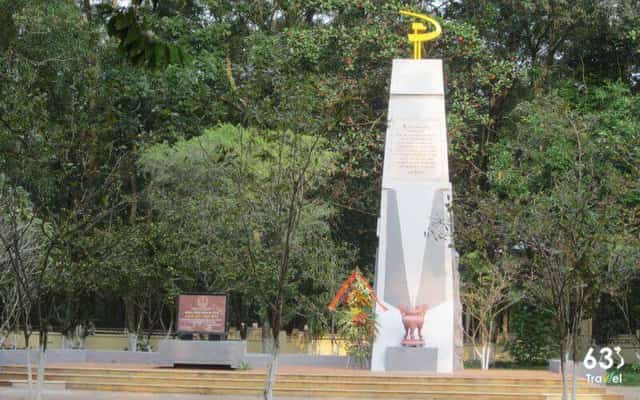
Site of the Establishment of the Indochinese Communist Party Cell in Phú Riềng - Ranked as a National Historical Site
Phú Riềng was once a large rubber plantation owned by Michelin Company, where thousands of workers were brutally exploited under French colonial rule. In response to these conditions, revolutionary cadres, notably Comrade Nguyễn Xuân Cừ, came here to lead the workers' struggle. The Phú Riềng Cell quickly organized numerous planned struggles, most notably the strike of 5,000 workers in 1930, which created the renowned "Red Phú Riềng" event, making a significant contribution to the struggle movement of the Vietnamese working class.
Due to its immense historical value, the site was recognized as a National Historical Site by the Ministry of Culture and Information in 1999. Today, it is not only a destination to recall revolutionary traditions but also a source of pride for the contributions of rubber workers to the cause of national independence. The site has been restored and embellished, becoming a symbol of the strong vitality of Bình Phước – a land of vast, sprawling "white gold" rubber plantations.
>> See more:17 Must-Visit Binh Phuoc Destinations That Will Leave You Enchanted
Bà Rá Mountain – Mơ Waterfall
Ba Ra Mountain – Mo Waterfalllocated in Bình Phước, is one of the three highest mountains in the Southeast region, standing at 723m above sea level. It is renowned for its rugged terrain and its connection to many heroic historical events of the nation. Known not only for its epic tales, Bà Rá Mountain is also an attractive tourist destination with stunning natural landscapes, including the Bé River, Mẹ Waterfall, and rich flora.

Explore Bà Rá Mountain - Mơ Waterfall in Bình Phước for a beautiful climbing and sightseeing experience
During the period from 1925 to 1941, the French colonialists built a large prison with three military camps at the foot of Bà Rá Mountain, where political prisoners and suspected communists were held. Today, traces of an airport built by the Americans during the war still remain on the mountaintop. The Bằng Lăng Hill area, part of the historical complex, also houses a stele house and a temple commemorating soldiers who sacrificed during the resistance.
For young adventurers, trekking Bà Rá Mountain is an unmissable experience. From the foot of the mountain, you can travel by vehicle or challenge yourself with a cable car ride to admire the panoramic mountain views. Additionally, Bà Rá Temple (Linh Sơn Miếu), located within the historical complex, hosts a festival on the 1st-4th days of the 3rd lunar month, attracting numerous visitors who come to sightsee and express their reverence.
Historical Site of the French Colonial Rubber Plantation
The French Colonial Rubber Plantation Exhibition Area is recognized as a provincial-level revolutionary historical site and is a prominent attraction in Bình Dương, alongside landmarks like Vĩnh Phước Communal House and Tổ Long Hưng Pagoda. It preserves the painful memories of the brutal exploitation endured by the Vietnamese people during the French colonial period.
In the early 20th century, the Định Hiệp and Dầu Tiếng areas, with their favorable climate and soil, became Michelin's rubber plantations. Thousands of workers were forced to toil under harsh conditions, leading to numerous struggles for their rights, most notably the 1933 strike by over 2,000 rubber laborers. This struggle compelled the plantation owners to make concessions.
Today, when visiting the historical site, you can see ancient rubber trees and historical artifacts, including rubber workers' housing, a latex processing factory, and labor tools. The exhibition also recreates the daily life of rubber workers, helping visitors better understand their arduous existence.
Vivid images, such as workers tapping latex or rubber worker families performing year-end rituals, transport you back to a painful period in the nation's history. This also clearly illustrates the exploitation that Tố Hữu depicted in his poem: "Selling oneself for a few coins. Flesh and bones buried beneath layers of rubber trees..."
The Uprising of the S'Tiêng People – Phú Riềng Commune Against French Colonialists
The uprising of the S'tieng people - Phu Rieng commune against the French colonialistson October 25, 1933, also known as "Mả thằng Tây" (Grave of the Frenchman), is located at Phú Riềng crossroads, Phú Riềng district, Bình Phước. This site marks a significant historical event when the S'Tiêng people rose up against the cruel domination of the French colonialists.
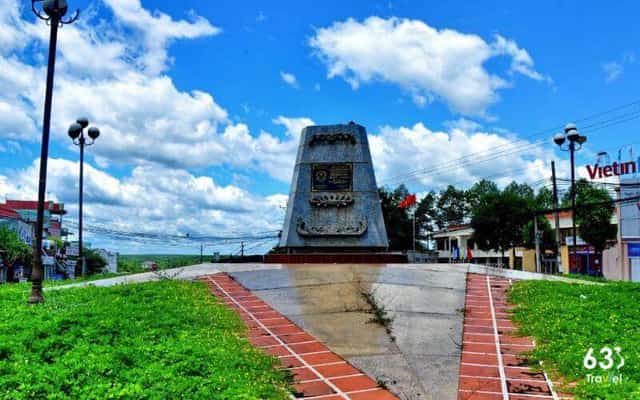
Historical Site of the Uprising of the S'Tiêng People – Phú Riềng Commune Against French Colonialists
In the early 20th century, French colonialists exploited rubber in Bà Rá district (now part of Bình Phước), turning this land into a place of torment for the indigenous people, especially the S'Tiêng community. France's brutal policies exhausted their labor and destroyed their dignity, pushing them beyond endurance.
On October 25, 1933, under the leadership of brothers Điểu Môn and Điểu Mốt, approximately 200 S'Tiêng youths ambushed and killed District Chief More – the head of the colonial administration in the area. This uprising became a historical milestone, demonstrating the resilient spirit of the S'Tiêng people.
After the uprising, the French colonialists erected a memorial stele for More, but for the Vietnamese people, this was a resounding victory, deeply etched in the hearts of Bà Rá residents. This uprising not only held immense significance for local history but also fostered patriotism and the spirit of struggle for national independence. On May 29, 1989, this site was designated a National Historical Site by the Ministry of Culture, recognizing its historical value and the indomitable fighting spirit of the S'Tiêng people.
Phú Lợi Prison, Bình Dương
Phú Lợi Prison, spanning 77,082 m², was recognized as a National Historical Site on July 10, 1980. It was one of the largest prisons of the American-Diệm regime in Southeast Vietnam, operating from 1957 to 1964, and stands as a testament to the crimes committed by the American-puppet government against patriots.
Phú Lợi Prison was dubbed an "earthly hell" due to its brutal torture methods, harsh living conditions, and policies of prisoner exploitation. Revolutionary soldiers and patriots incarcerated here endured every hardship, from starvation to forced labor. Despite this, their patriotic spirit and courage were never broken.
The prison was repurposed from a military base left by the French and Japanese. Later, the American-puppet regime expanded it into a detention and re-education center, implementing brutal repressive measures to crush revolutionary forces. The prison's architecture included administrative areas, soldiers' family quarters, and the "An Trí Viên" detention area, with three large camps: Chi Lăng, Bạch Đằng, and Đống Đa. Each camp had a strict security system with barbed wire fences, solid walls, and guard posts operating day and night.
Today, Phú Lợi Prison welcomes many visitors who come to learn about the history of the Vietnamese people's struggle. It preserves the memory of the indomitable patriotic spirit and sacrifices of revolutionary soldiers. Visitors to Bình Dương can combine their visit with other historical sites such as Vĩnh Lợi War Zone, Bàu Bàng Victory Monument, and Phước Thành Governor's Residence.
Lộc Ninh Military Airfield
Loc Ninh Military Airportspans 50,000 m² and was built by the American-puppet regime on March 10, 1965. Initially, the airfield was assembled using steel plates (Tec-nich) to supply food, ammunition, and transport war materials for the Lộc Ninh - Cambodia area. However, over time, the airfield deteriorated, with only the runway remaining.
After Lộc Ninh was liberated on April 7, 1972, the airfield became the site of many important historical events. On January 31, 1973, Senior General Trần Văn Trà led a military delegation of the Provisional Revolutionary Government to Saigon for the first session of the Four-Party Joint Military Commission. On February 12, 1973, a ceremony took place here to return 27 American officers, soldiers, and military personnel, marking the painful end of a phase of the war.
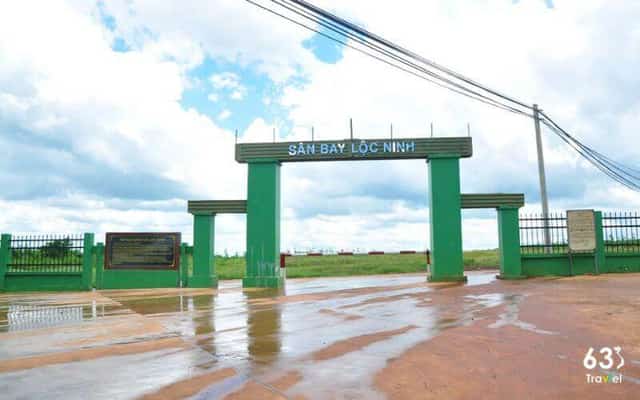
Lộc Ninh Military Airfield Historical Site
Between February 12 and March 28, 1973, this airfield was one of six locations for prisoner exchanges, with a total of 26,492 people regaining their freedom. The image of Ms. Võ Thị Thắng, the female student who fought for independence, smiling radiantly as she disembarked from the plane, became an unforgettable symbol, recalling the tireless efforts of revolutionary soldiers.
On September 12, 1973, the airfield also welcomed delegations from the International Commission, ambassadors, and heads of delegations. Today, many visitors, especially Americans, come here to remember "Lộc Ninh in those days," a past that will never fade. Lộc Ninh Military Airfield was recognized as a National Historical Site on December 12, 1986.
Tân Khai Communal House
Tân Khai Communal House was recognized as a provincial-level historical site on August 18, 2014, and is one of the important communal temples in Bình Phước. Built in 1901, the communal house not only worships the Thành Hoàng Bổn Cảnh (Tutelary God) but also commemorates the first pioneers who established the hamlet here.
The formation of Tân Khai is linked to 10 families from Tân Khánh - Bà Trà, notably the Huỳnh and Trần clans. They played a significant role in land reclamation before Tân Khai village was officially established in 1912. The name "Tân Khai" signifies people from Tân Khánh coming to clear land and establish a village.
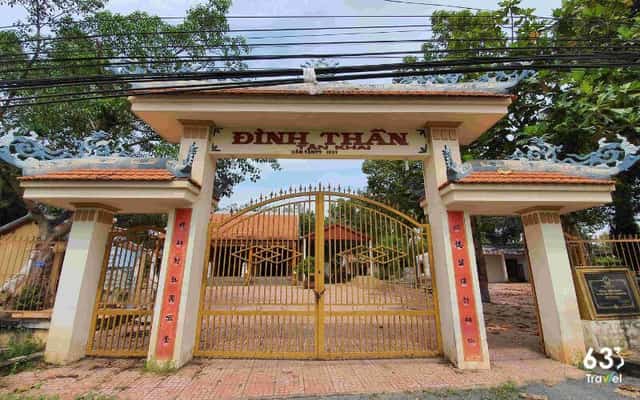
Tân Khai Communal House
The architecture of Tân Khai Communal House was influenced by Bưng Cù Communal Temple – a relic dating back over 200 years in Bình Dương. When the first settlers arrived, they brought their culture from Tân Khánh and preserved it to this day. The communal house was completed, and the village's Tutelary God was brought from Bưng Cù to be worshipped.
Enduring many upheavals during the resistance against the Americans, Tân Khai Communal House still stands as a historical witness, despite being relocated 11 times and suffering numerous destructions. Today, the communal house is situated on a 2,783 m² plot of land with various structures such as the Main Hall, Lecture House, and elaborately decorated screens.
The communal house is not only a place of worship but also a cultural center for the community. Major festivals like Lễ Kỳ Yên (on the 18th day of the 3rd lunar month) and Lễ Cầu Bông (on the 18th day of the 8th lunar month) are held here, praying for peace and abundant harvests. Notably, the buffalo fighting festival at Tân Khai Communal House has a unique characteristic: after the fights, the buffaloes are cared for and not sacrificed.
Sóc Lớn Pagoda
Sóc Lớn Pagoda is one of the oldest Khmer pagodas in Bình Phước province. Construction began in 1931 and it was inaugurated in 1937. Since 1954, the pagoda has served as a cultural and religious center for the Khmer community in Lộc Khánh commune.
This place also bears historical significance, having sheltered many revolutionary soldiers during the resistance against the French and Americans, despite suffering heavy damage to its main hall from three B52 bombs. By 2009, the pagoda was restored with a new appearance but still retained its original beauty.
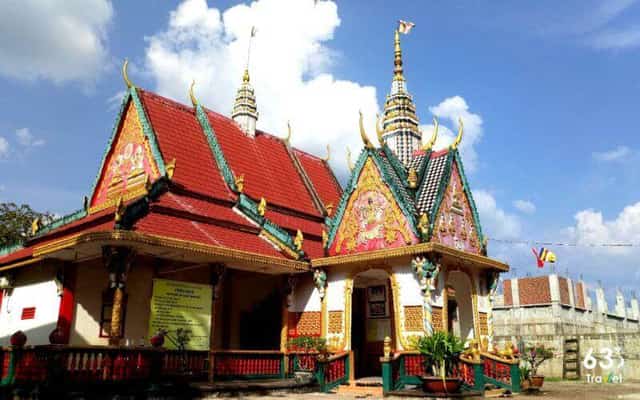
Sóc Lớn Pagoda in Bình Phước, showcasing the unique culture of the Khmer people
Sóc Lớn Pagoda showcases the traditional architectural style of the Khmer people, primarily worshipping statues of Shakyamuni Buddha, harmoniously blending landscape and architecture. The pagoda complex includes the main hall, stupas, the Sala lecture hall, and study areas.
The pagoda gate is exquisitely designed, 3m wide and 5m high, featuring distinctive Buddhist motifs. From the gate, a spacious path leads to the assembly hall (Sala), which is built facing East-West and is where offerings and ceremonial activities take place.
The Sala lecture hall has two floors: the ground floor serves as a ceremonial house, and the upper floor as a reception room. Besides the Sala, Garuda statues supporting the roof pillars symbolize unity and strength. The columns are adorned with celestial being patterns, reflecting a solemn beauty.
The pagoda is also a major cultural center, hosting many unique festivals such as Tết Nguyên Đán (Lunar New Year), Vassa (Rain Retreat), Dolta Festival, and Phật Đản (Buddha's Birthday). Additionally, regular charity activities take place at the pagoda. The Bodhi Stupa, with its unique pyramidal design, enshrines a statue of Brahma, encouraging people to do good and avoid evil.
>> You should see:15+ Famous Historical Sites in Bình Dương You Simply Must Visit
Bình Phước Museum
Bình Phước Museum is an important center for preserving and promoting cultural heritage. The museum comprises a Board of Directors and four specialized departments: Administration - General Affairs, Conservation Operations, Exhibition and Heritage Exploitation, and Museum Operations.
Following the impact of the Covid-19 pandemic, the Museum has made efforts to attract children and parents with enriching recreational activities, encouraging the exploration of historical culture through engaging scientific experiences. Over 4,000 teachers and students have participated in educational programs here, contributing to raising awareness about local history and culture.
The museum is open from 8:00 AM to 11:30 AM and from 1:30 PM to 5:00 PM, providing convenient visiting hours. Activities utilizing modern technologies such as virtual reality and 3D have enriched the experience, helping visitors clearly appreciate the value of cultural heritage.
Exhibitions at the Museum focus on two main themes: the culture and history of Bình Phước. They feature artifacts reflecting the daily life and customs of indigenous ethnic groups, especially the M'nông people's rice worship festival.
By applying advanced technology, the Museum has created an engaging exhibition space with clear annotations and subtle lighting, providing a vivid experience for visitors. With over 15,000 artifacts, Bình Phước Museum continuously affirms its role in preserving and promoting the unique cultural values of this region.
Headquarters of the Provisional Revolutionary Government of the Republic of South Vietnam
Lộc Ninh - one of the areas that witnessed many fierce battles in history, once served as theHeadquarters of the Provisional Revolutionary Government of the Republic of South Vietnam(PRGRSVN) and the end point of the Ho Chi Minh Trail. On April 7, 1972, Lộc Ninh became the first district in the South to be liberated, marking the establishment of political and military agencies here, including the Liaison House, which hosted diplomatic delegations.
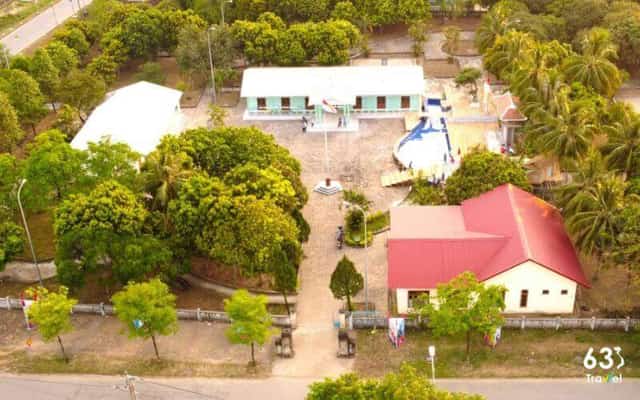
Headquarters of the Provisional Revolutionary Government of the Republic of South Vietnam
Originally, the house built in 1911 for a French rubber company was destroyed during the Nguyễn Huệ Campaign. In March 1973, the PRGRSVN decided to build a new headquarters on the old foundation, with a modern design and diplomatic reception functions. The building has two floors: the concrete ground floor for meetings and the wooden upper floor designed as a ceremonial reception room.
This site hosted the four-party military conference in 1973, discussing the terms of the Paris Agreement, with the participation of military representatives from the PRGRSVN, the Republic of Vietnam, the US military, and the International Commission. The conference's setup, like a round table, symbolized equality among the parties, while also emphasizing the failure of American imperialism in the struggle for independence.
The Liaison House is not only a historical site but also a symbol of resilience and ingenuity in the struggle to protect the nation. It was recognized as a National Historical Site on December 12, 1986.
Mass Grave of 3,000 An Lộc Compatriots Massacred by American Imperialists on October 3, 1972
Grave of 3,000 An Loc compatriots massacred by the US imperialists on October 3, 1972in Bình Long Town is a painful testament to the war, marking the immense loss suffered by the local people. This is not only a famous attraction like Bù Đăng Elephant Waterfall but also a mass grave for 3,000 people who perished during the 32-day and night Nguyễn Huệ Campaign.
The fierce battle between the Liberation Army of South Vietnam and the Army of the Republic of Vietnam resulted in thousands of casualties. After the hostilities ended, the Republic of Vietnam used bulldozers to bury the dead, creating the mass grave. On April 2, 1975, Bình Long was liberated, and by April 1, 1985, the grave site was officially recognized as a historical and cultural relic, deeply engraving the crimes of the American-puppet regime.
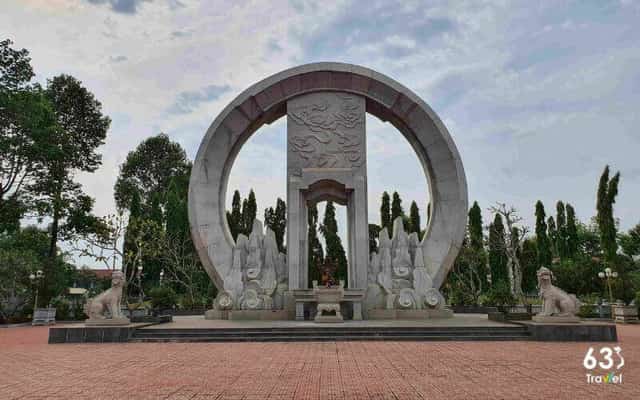
Mass Grave of 3,000 An Lộc Compatriots Massacred by American Imperialists on October 3, 1972
On June 11, 2012, Bình Phước province approved a project to restore the historical site, demonstrating its humanitarian significance and patriotic educational value. The restoration project officially commenced on July 1, 2013, on a large scale with an estimated cost of nearly 1,000 billion VND.
The historical site covers an area of 4,309 square meters, including various features such as a 12.6-meter-high natural stone memorial, a large mass grave, and facilities for visitors. After your visit, you can continue to explore Thác Đứng (Standing Waterfall), which offers an impressively wild beauty.
Headquarters of the Liberation Army of South Vietnam
Base of the Command of the Liberation Army of South Vietnam(also known as Tà Thiết Base) is a significant historical site from the two resistance wars against French colonialists and American imperialists. It served not only as the military base for the command of the Saigon liberation campaign but also played a crucial role in our army and people's military operations, contributing to the glorious victory of the Ho Chi Minh Campaign.
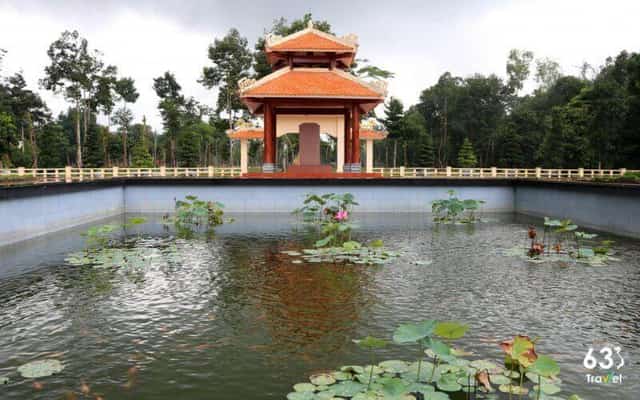
Headquarters of the Liberation Army of South Vietnam (Tà Thiết Base)
Known as "Government Forest," Tà Thiết Base was where the Military Commission and the Command of the Liberation Forces of South Vietnam were stationed, discussing and planning strategies. After Lộc Ninh district was liberated in 1972, this base became a hub for many important military activities.
Before the Ho Chi Minh Campaign in the Spring of 1975, Tà Thiết was extensively built with a robust system of tunnels, trenches, and training areas. You can explore relics such as the Command Bunker, Hoàng Cầm Kitchen, and the house of Senior General Trần Văn Trà. A day here will provide you with much valuable knowledge about history and patriotism.
VK98 Fuel Depot and Storage Tanks
VK98 fuel storage tanklocated in Lộc Quang commune, Lộc Ninh district, Bình Phước province, is part of the special national historical site system of the Trường Sơn Trail – Ho Chi Minh Trail. The general depot was built in 1974, covering an area of 10 hectares around Hill 117, with 7 storage tanks, each with a capacity of 250,000 liters, totaling up to 1,750,000 liters.
The storage tanks, made of steel and buried underground, are 10m in diameter and 3.5m high. They are arranged in a triangular formation and protected by forest trees and spike pits. A pipeline system connects the tanks, allowing fuel to flow naturally, facilitating convenient transportation from the VK96 Bù Gia Mập station.
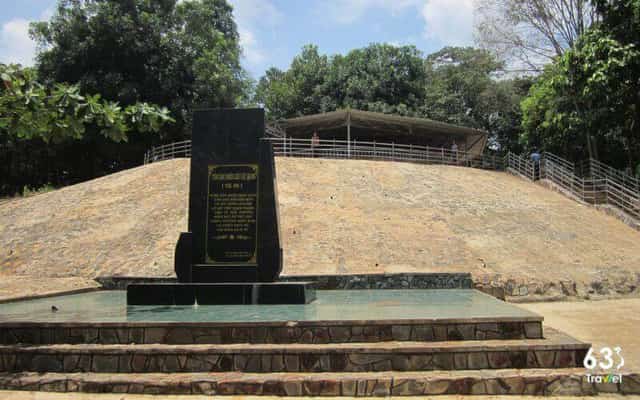
VK98 Fuel Depot and Storage Tanks
This historical site is not only a historical stop but also marks a significant imprint in the resistance war, making important contributions to the Ho Chi Minh Campaign. Today, the VK98 Fuel Depot and Storage Tanks historical site serves as a place to learn about the fuel supply system during the American War.
With its outstanding historical value, the site was recognized as a National Historical Site on April 21, 1989. It was further designated a Special National Site on December 9, 2013, affirming its crucial role in the nation's historical narrative.
Cù Lao Rùa Archaeological Site
The Cù Lao Rùa Archaeological Site, also known as Cù Lao Thạnh Hội, is situated between two branches of the Đồng Nai River. This site spans 277 hectares and is surrounded by picturesque riverine landscapes.
Discovered in 1888, Cù Lao Rùa is one of the most important archaeological sites in Southeast Vietnam. French researchers conducted excavations and announced findings of a culture dating back 3,000 to 3,500 years.
Through excavations in the late 20th and early 21st centuries, numerous artifacts such as stone tools, pottery, and jewelry have been found, indicating that ancient people here developed a rich cultural civilization. Notably, items like curved hoe blades and high-footed ceramic bowls with intricate patterns demonstrate their advanced crafting techniques.
Cù Lao Rùa is not only a valuable cultural heritage site but also makes significant contributions to the study of prehistoric history and culture in the Southeast region. Findings from the 2003 excavation continue to enrich the knowledge base of ancient cultural history, supporting the economic-cultural development and preservation of Vietnam's cultural heritage.
End Point of the VK96 Fuel Pipeline
End point of petroleum pipeline VK96located in Bù Gia Mập commune, Bù Gia Mập district, Bình Phước province, is part of the special national historical site system of the Trường Sơn Trail – Ho Chi Minh Trail. This was a crucial part of the bridge connecting the Northern rear and the Southern front during the resistance against the Americans.
From 1968 to 1975, a fuel pipeline system stretching over 5,000 km was established, meeting the essential needs of the war. On March 14, 1975, fuel reached the VK96 General Depot, from where it was secretly transported to VK98 and VK99 depots in Lộc Ninh, serving various battlefields, especially during the Ho Chi Minh Campaign, contributing to the victory of liberating the South.
The historical site still preserves six buried fuel tank pits and oil trenches, located approximately 500m from the Bù Gia Mập National Park patrol road. The rectangular tank pits measure 4-5m in width, 8-12m in length, and 1-2m in depth, forming a crucial fuel supply system for the campaign.
The VK96 Pipeline End Point was not only a fuel collection point but also marked the silent efforts of the Trường Sơn soldiers and fuel supply troops during the resistance. With its outstanding historical value, this site was recognized as a Special National Historical Site by the Prime Minister on December 9, 2013.
Vườn Trầu Revolutionary Historical Site
The Vườn Trầu Revolutionary Historical Site is located in Đồng Ba Ba hamlet, Long Hòa commune, Dầu Tiếng district, Bình Dương province, approximately 5 km from Long Hòa Commune People's Committee towards Long Tân commune. This is one of the important historical sites in the South during the resistance against the Americans, along with other relics such as Kiến An Forest and the Ho Chi Minh Campaign Forward Command Post.
Vườn Trầu was once a strategic stronghold, marking the birth of Phú Lợi Battalion, Bình Dương province's first armed battalion. With 500 cadres and soldiers, this battalion made many significant contributions to the war, helping to achieve the Spring 1975 victory and liberate the South.
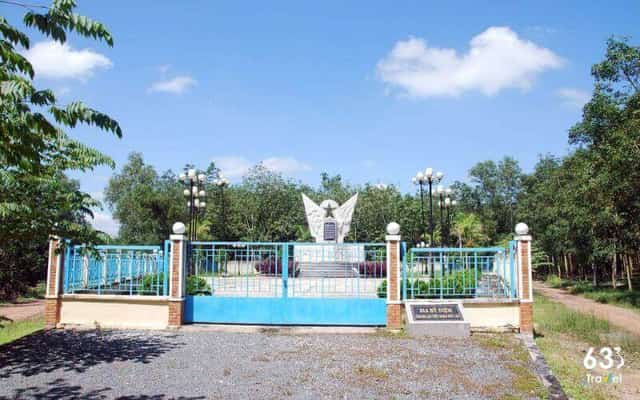
Vườn Trầu Revolutionary Base Area
Phú Lợi Battalion participated in many notable battles, such as the Đồng Sổ battle (December 28, 1964), the victory at Đồng Chèo base, and the ambush that annihilated the 2nd Battalion of Regiment 8 on July 8, 1965, seizing many weapons and capturing dozens of prisoners.
For its outstanding achievements, Phú Lợi Battalion was awarded the title Hero of the People's Armed Forces on August 30, 1995. On December 17, 2009, the Vườn Trầu historical site was designated a provincial-level historical relic, and a commemorative stele was erected to remember the sacrifices and accomplishments of generations of soldiers, conveying pride to future generations.
In summary, the article above shares information about 19 ancient and famous historical sites in Bình Phước that visitors can explore. Be sure to save this list if you have the chance to visit this region!
Dong Nai 11276 view
Update day : 25/09/2024



Monuments close by
See all
Tan Hiep Prison Historical Relic
Tan Hiep Prison, also known as "Tan Hiep Correctional Center", is located in Quarter 6, Tan Tien Ward, Bien Hoa City. Tan Hiep Prison Relic was ranked as a national relic by the Ministry of Culture and Sports on January 15, 1994. Tan Hiep Prison is one of the six largest prisons in South Vietnam and the largest prison in the Southeast region, built in an important military position, northeast of Bien Hoa town. Ahead is National Highway 1; Behind is the North - South railway line. This is an isolated location, convenient for transportation, easy for protecting, guarding, receiving prisoners from other places and transferring prisoners to Con Dao, Phu Quoc... Tan Hiep Prison has an area of 46,520 square meters with 8 prisons, including 5 prisons for communist prisoners and patriots. The prison is surrounded by 4 layers of barbed wire with 9 bunkers, 3 watchtowers with a team of guards and a modern alarm system. It's called "Correctional Center" but inside is actually a gun warehouse, an interrogation and torture room with the most modern tools. Each prison only has an area of nearly 200 square meters but holds 300-400 people, sometimes up to a thousand people. In particular, there are "repentance" rooms and "tiger cages" that are very small and narrow and living conditions are extremely harsh, prisoners live like in a crematorium. The diet was extremely unhygienic. The prison guards bought rotten rice and rotten fish to fertilize the fields, and fried them in oil to feed the prisoners, leading to many people being poisoned. With the determination to escape the imperial prison, return to the Party and the people to continue fighting and liberating the nation, on December 2, 1956, with the agreement of the Eastern Inter-Provincial Party Committee, the soldiers Communists were "detained" in Tan Hiep prison under the direct direction of comrade Nguyen Trong Tam (Bat Tam) - in charge of the prison Party Committee and a number of other comrades who suddenly broke the shackles. was able to free nearly 500 comrades and patriots. This event caused a stir in the Pentagon. America - Diem hastily mobilized both main forces and security forces, civil guards defending the three provinces of Bien Hoa, Ba Ria, Thu Dau Mot and two special forces to encircle and capture the prisoners, but all were defeated. failure. Our comrades and compatriots who escaped from Tan Hiep prison received help and protection from local facilities and returned safely to base. Among the escaped prisoners were comrades: Bay Tam, Hai Thong, Ly Van Sam... who became the core nucleus of the Dong Khoi movement later. In 2001, to partly recreate the crimes of the US - Diem against our comrades and compatriots imprisoned at Tan Hiep prison and describe the entire Tan Hiep uprising on December 2, 1956. , Dong Nai Museum has collected images, documents, and artifacts displayed at the relic and made a model to serve the research and sightseeing needs of all classes of people. Every day, the monument is open to visitors. Source: Dong Nai Electronic Newspaper
Dong Nai
15477 view
Rating : National monument

Nguyen Huu Canh Temple
Nguyen Huu Canh temple, also known as Binh Kinh communal house, is located on the left bank of Dong Nai river, formerly belonging to Binh Kinh hamlet, Binh Hoanh village, Tran Bien canton, now Nhi Hoa hamlet, Hiep Hoa commune, Bien Hoa city. It was ranked as a national historical relic by the Ministry of Culture, Information, Sports and Tourism on March 25, 1991. Nguyen Huu Canh Temple was built around the end of the 18th century. Initially, the temple was small in scale, with walls made of boards and a yin-yang tile roof, about 400m south of the current temple. Documents say: the temple was first rebuilt in the fourth year of Tu Duc (1851); By 1923, the temple was rebuilt at its current location. Nguyen Huu Canh was born in 1650 in Gia Mieu, Tong Son district, Thanh Hoa province in a family with many famous generals in the dynasty. He was a man of both literature and martial arts, accomplished many great victories and was trusted, loved and respected by Lord Nguyen. In the spring of the year Mau Dan (1698), he obeyed Lord Nguyen's order to invade Dang Trong while it was still very desolate. Arriving in Dong Nai, he set up his headquarters at Cu Lao Pho (now Hiep Hoa commune); took Dong Nai land as Phuoc Long district, built Tran Bien palace, took Saigon land as Tan Binh district, built Phien Tran palace, the land expanded thousands of miles. He recruited immigrants to settle down, organized the administrative apparatus gradually and systematically, encouraged land reclamation, and promoted Cu Lao Pho to develop into one of the busiest and most dynamic port towns throughout the century. 18 and officially annexed the new land of the South into the Dai Viet map. After returning from the invasion of the South, the following year he again served Lord Nguyen Phuc Chu's command to lead an army to suppress King Chan Lap and maintain the southern border region. In April of the year Canh Thin (1700), after completing his mission, on the way back to Rach Gam (Tien Giang), he fell ill and passed away on the 16th day of the 5th lunar month, at the age of 51 years old. On the way to his hometown for burial, his coffin was stopped at the land where he once had his headquarters on Cu Lao Pho so that local people could have the opportunity to say goodbye to him one last time. At the mandarin's communal house, local people built a tomb to remember this event. When hearing the news of Nguyen Huu Canh's death, Lord Nguyen was extremely sorry and conferred on him the title of High-ranking official of the Town Chancellor with the title: Thanh Marquis Ceremony and had his tablet enshrined at the Thai temple. Source: Dong Nai Electronic Newspaper
Dong Nai
13348 view
Rating : National monument

La Nga victory relic
La Nga Victory Relic (at km 104-112 on Highway 20 to Da Lat, in Phu Ngoc commune, Dinh Quan district) was ranked a national historical relic by the Ministry of Culture on December 12, 1986. To cheer for the Viet Bac victory in the fall-winter of 1947 and also to deal a fatal blow to the enemy, the command board of squad 10 decided to organize a big battle, to show the enemy that the Vietnamese people were , Vietnamese people do not easily submit to any enemy; With a spirit of courage and ingenuity after nearly half a year of preparation, studying the terrain, and choosing a location: at 15:12 on March 1, 1948, the La Nga ambush battle began and ended at 15:12 on March 1, 1948. 15:57 on the same day, in just 45 minutes. The victory of La Nga delighted the people of Dinh Quan in particular and the people of Dong Nai in general. This is a victory that demonstrates the cunning and courage of our army and people, causing the enemy to be stunned and defeated. From this victory, our force grew stronger and stronger, contributing to defeating the enemy's plan to attack quickly and win quickly, forcing them into a passive position. The scenic complex of Chong Rock, Mai Waterfall, La Nga River and La Nga Victory Monument is an interesting tourist complex of Dinh Quan. The amazing beauty of Hon Ba Chong, Da Voi Mountain, Hon Dia, along with the natural pagoda at the foot of the rocky mountain are typical clusters that create a harmonious beauty for the Da Chong scenic area. Dinh Quan Da Chong Complex is also a place that retains traces of prehistoric life. Here, under the stone roofs, along the streams and on the slopes along the valley, many production and daily life tools of the ancients made of stone, bronze and terracotta were discovered. During the 30-year resistance war. Dinh Quan is an important part of War Zone D. Da Chong witnessed the formation, development, stationing, and combat deployment of revolutionary forces. Today, a part of the land of Da Chong Dinh Quan scenic area has been used and built into the Dinh Quan District Cultural and Sports Center. In the near future, Da Chong Dinh Quan scenic area will be invested in and renovated, contributing to making the natural landscape more beautiful and becoming an attractive eco-tourism destination. Source: Dinh Quan District People's Committee
Dong Nai
13193 view
Rating : National monument
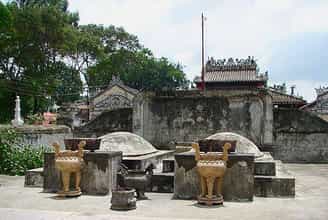
Trinh Hoai Duc Tomb Relics
Trinh Hoai Duc Tomb is located in Quarter 3, Trung Dung Ward, Bien Hoa City, Dong Nai Province. Ranked as a national historical relic by the Ministry of Culture, Information, Sports and Tourism on December 27, 1990. Under the Nguyen Dynasty, Trinh Hoai Duc's tomb was located in Binh Truc village, Tran Bien palace. During the French colonial period, it was changed to Binh Truoc, in Chau Thanh district, Bien Hoa province. In 1938, Trinh Hoai Duc's mausoleum was classified as a relic by the Far East School. Local people often call it "Mr. Mausoleum" and there are many ancient tombs built of compound laterite. Many people believe that this was previously the tomb of the Trinh Hoai Duc family. The tombs are all built in the shape of an elephant, with a rectangular block plan; The stone steles engraved with Chinese characters face southwest, the walls are covered with green moss. In the entire Trinh family tomb area, Trinh Hoai Duc's tomb stands out because of its architectural scale, perhaps this was the intention of the tomb builders in accordance with the ancient principles of family lineage. Before 1975, every year during the Qingming Festival, Trinh Hoai Duc's descendants from other localities came to pay their respects with solemn ceremonies. Later, there was a ceremony because some descendants of the Trinh family had grown old or wandered, so the visiting ceremonies were no longer maintained as before. In 1998, on the occasion of the 300th anniversary of the formation and development of Bien Hoa - Dong Nai, Trinh Hoai Duc's tomb was restored and embellished. The original tomb architecture was preserved, surrounded by a solid citadel. Behind the tomb is a raised wall, forming a wavy oval shape. On the wall is an inscription in Chinese characters that resembles a poem praising Trinh Hoai Duc's virtue, but it has faded over time and is no longer readable. Both sides are decorated with two insulated dragon heads. Currently, this wall is decorated with a hidden dragon pattern. In front of the tomb entrance is a large screen, engraved with Trinh Hoai Duc's biography and career. On the square pillars connecting the walls of the citadel in front of the tomb, Chinese couplets are carved, the content is mainly about history and Trinh Hoai Duc's erudition in research. Inside the citadel is the main element of architecture, consisting of two parts: Graves: one of Trinh Hoai Duc and one of the main wife, surnamed Le. The structure of the tomb is the same, shaped like an elephant, surrounded by a horseshoe-shaped edge, in front of each grave is a stone stele, engraved with Chinese characters; The surrounding area is decorated with lines of text, yin and yang symbols, and the bottom is embossed in the form of a kneeling leg. The contents of the steles at Trinh Hoai Duc's two graves briefly state the titles, positions, ranks, and titles that Trinh Hoai Duc was bestowed with, along with his wife; Stele: also clearly states the time is November of the year At Dau, children Trinh Thien Le Nhien, Trinh Thien Nhien Bao, and Trinh Thien Bao jointly established the stele. Trinh Hoai Duc, a great talent, a great personality, has contributed to laying the foundation for a circle of pride in Dong Nai - Dong Nai Culture, which is the pride of Dong Nai people. Source: Dong Nai province electronic information portal
Dong Nai
10062 view
Rating : National monument
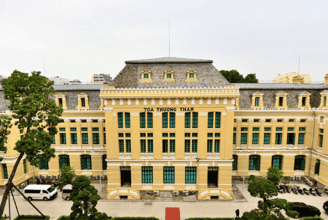
Long Khanh Dong Nai Administrative Court
The Long Khanh Provincial Administrative Building relic located on Cach Mang Thang Tam street, Xuan An ward, Long Khanh town, was ranked a national historical relic by the Ministry of Culture on November 16, 1988. Long Khanh Administration Building has a total area of 9,000 square meters, built in 1965 in French-style architecture, including a ground floor and an upper floor. This was the highest working headquarters of the American puppet in Long Khanh province at that time. In March 1975, the US - puppet government built the strategic defense line of Phan Rang - Xuan Loc - Tay Ninh to prevent the advance of our troops along the North-East gateway to Saigon. Long Khanh Administrative Building was chosen as the control center for all military activities of this defense line. Thoroughly grasping the ideology of the Party Central Politburo, the Regional Command decided to launch the Xuan Loc campaign to liberate Long Khanh town, destroy the enemy's strategic defense line, and advance to liberate Saigon. On April 9, 1975, 5 hours after the campaign started, a major battle took place at the Long Khanh Administrative Building. Comrades Pham Le Canh, Nguyen Van Trong, battalion 5; Nguyen Thanh Son, Nguyen Minh Duc, the 7th battalion of Regiment 266 of the 341st Division's assault spearhead led by comrade Tran Van Tran, attacking from the north of the town, planted the flag "Determined to win, determined to win" on the top of the flagpole. on the 1st floor of the Administration Building. This is a historic turning point victory for the Vietnamese revolution and the pride of the people of Long Khanh in the resistance war against America to save the country. After the liberation of the South on April 30, 1975, Long Khanh province was reorganized into Xuan Loc district. The Administration Building was repaired and became the headquarters of the People's Committee of Xuan Loc district. In 1991, Long Khanh district was separated from Xuan Loc district, the Administrative Building became the headquarters of the People's Committee of Long Khanh district. In 2004, the Administration Building was assigned to the Department of Culture, Sports and Information of Long Khanh town to manage and use: The ground floor is a library to store documents to serve readers, the upper floor is a traditional gallery with 176 documents and artifacts. Every year it attracts about 500 visitors, researchers and students. Source: Dong Nai Electronic Newspaper
Dong Nai
9877 view
Rating : National monument
Nearby tourist attractions
See all
Suoi Lam Lake
Suoi Lam Lake Tourist Area is one of the famous natural tourist destinations in Binh Phuoc next to Bu Gia Map National Park, Thac Mo Hydroelectric Lake, Ba Ra Mountain... With a romantic blue lake and forests. Rubber trees stretch to the horizon, the scenery here not only captures the hearts of the traveling community but also turns Suoi Lam Lake into the most popular weekend destination. It can be said that every season, this place captivates the footsteps of discoverers in a very unique way. If the period from December to January next year is memorable because of the cold weather and the radiant spring sunlight filtering through the leaves that are gradually changing color, then late February and early March will be the ideal time. Let you immerse yourself in the pure white color of the blooming coffee flower forest. Located in Dong Phu district, Binh Phuoc province, Ho Suoi Lam tourist area is very close to Ho Chi Minh City. With a distance of about 120km, it is extremely convenient for traveling, you can easily get here by many types of means of transport such as motorbikes, cars, and buses. A little more specifically about long-distance transportation, at Mien Dong Bus Station there are many bus routes departing from Saigon to Binh Phuoc. Depending on the bus company as well as the travel distance you choose, the expected ticket price will be around 65,000 VND to 100,000 VND/person. For backpackers who want to conquer Binh Phuoc in general and Ho Suoi Lam tourist area in particular by motorbike, below are the most popular routes from near and far: Starting from Saigon, you can go towards Binh Trieu Bridge to Highway 13 or Saigon Bridge to Hanoi Highway. No matter which route you choose, explorers will stop by Binh Duong - a place that welcomes you with a forest of rubber trees all along both sides of the road, as beautiful as a Korean movie, extremely suitable for check-in. virtual living". Possessing an area of up to 100 hectares, Suoi Lam Lake has a depth of about 4 meters. The lake surface here is calm all year round, making a special impression with its clear water reflecting the clouds. Surrounded by immense forests, the lake and stream are home to many species of freshwater fish such as silver carp and carp. carp, snakehead fish, carp... Not only does it impress with the pristine, peaceful and green natural scenery, coming here during the flower blooming season you also have the opportunity to enjoy the beautiful lake space like an earthly fairyland. The surface of the lake, which was originally like a shining mirror, is now covered with a layer of pure white flowers with extremely clear and pure beauty. Rowing a boat in the middle of the lake, you will soon let your soul drift along this beautiful forest of flowers and let them gently relieve all the pressure and fatigue that comes from a busy everyday life. Besides the captivating natural beauty, Suoi Lam Lake Tourist Area is also an ideal destination for relaxation, camping, fishing and picnics. Young people who come here after taking photos with the poetic lake and setting up tents to camp along the forest often participate in recreational activities such as bathing in streams, boating, water skiing... The tourist area also Providing large bamboo huts and cheap charcoal stove services to serve the picnic needs of families and groups of friends.
Dong Nai
8113 view
November to April

Ba Ra Mountain
As one of the three highest mountains in the Southeast region, Ba Ra Thac Mo Mountain, Binh Phuoc, located at an altitude of 723m above sea level and with rugged terrain, was once a place marking many heroic, resilient and heroic achievements. There are so many anecdotes associated with important historical events of the nation. At Ba Ra Mountain Thac Mo Binh Phuoc also has Be River, Thac Me, Thac Mo hydroelectric power plant and forests with diverse and rich flora. Coming here, you will definitely admire the beautiful landscape painting that captivates people's hearts. From 1925 to 1941, the French colonialists built at the foot of Ba Ra mountain a large prison consisting of 3 military camps: Military camp A to imprison thieves and robbers; Military camp B held female prisoners, political criminals, and people suspected of being communists but not convicted; Military camp C to hold political prisoners. Currently, on the top of Ba Ra mountain there are still traces of the airport built by the American invaders. In addition, to commemorate the merits, a stele house and a memorial temple for soldiers, soldiers and people who sacrificed their lives in the resistance war in the Ba Ra area were built on Bang Lang hill in the Ba Ra mountain relic complex. Thac Mo Binh Phuoc. Another option for young people who like to explore and conquer spectacular challenges is trekking Ba Ra mountain. From the foot of the mountain, you can travel by motorbike or car along the paved road leading to Bang Lang hill. There is a memorial stele here to remember the merits of heroic martyrs. In addition, you can also try to experience the feeling of riding the cable car here. Ba Ra Temple is a project belonging to the Ba Ra historical relic complex and is also known as Linh Son Temple. The design here is inspired by the beliefs of the Southeast region, similar to famous architectural works in the Ba Den mountain complex (Tay Ninh) and Ba Chua Xu (An Giang). On the 1st, 2nd, 3rd, 4th days of the third lunar month every year, the Ba Ra Temple Festival is held, attracting many people to gather here to visit and express their gratitude and belief in their beliefs. folk. Binh Phuoc is not only famous for tourist destinations such as Bu Gia Map National Park or Quang Minh Pagoda. Ba Ra Mountain Thac Mo Binh Phuoc is also one of the tourist attractions that attracts many people from all provinces and cities to admire.
Dong Nai
8167 view
From January to December
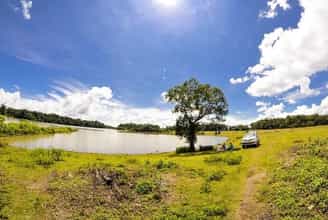
Bu Lach Grassland
If you are looking for a spacious and cool camping location near Saigon, please refer to Bu Lach Glade. Located in village 7, Dong Nai commune, Bu Dang district, Binh Phuoc, this is one of the most attractive camping locations for tourists. Surrounded by primeval forests and a large lake in the middle, Bu Lach has a strangely pristine and peaceful natural scenery. This place was originally a cluster of nearly 20 grasslands of different sizes with an area of up to 500 hectares. The reason for its name is due to a misreading of the local language of the M'Nong people. The village elders explained that here the word "lach" in the M'Nong language means "glad", in the glade there is a water tank so it is called Bau Lach, if read incorrectly it becomes Bu Lach. The road to Bu Lach Grassland is not too difficult. If you are from Saigon, you can buy bus tickets at Mien Dong bus station. Ticket prices are usually from 100k to 250k. If you want to explore nature and travel, you can travel by motorbike. There are two directions to get to Binh Phuoc. One is from Binh Trieu Bridge to follow Highway 133. The second direction is from Saigon Bridge to Hanoi Highway. Travel time is about 2 hours and 30 minutes to arrive. Check-in to the grassland, visitors will be amazed at what nature has bestowed upon them. These are vast green lawns surrounded by clear blue water, surrounded by primeval forests. Just like that, one glade follows another, endlessly green. The glades are usually about 5-10 hectares wide, but Big Glade is the most beautiful and widest, nearly 100 hectares. Another unique feature is that there is only one type of needle grass growing mixed with purple wildflowers, making the scene even more wild. Not only is the background beautiful for taking photos, you will also be impressed with the scenery here. Just standing there looking and breathing feels good. All the worries, fatigue, and dust have gone, leaving only the feeling of being surrounded by nature. Visitors here can also fish, walk sightseeing, boating, camping, play soccer on the grass, etc. Especially, in the dry season, the grass in the glade will turn bright yellow. You can bring tents to camp and hold BBQ parties. In addition to playing in the lake and grass fields, you can also go deep inside to see beautiful waterfalls. The grasslands and water basins are all protected forest areas and forbidden forests, so there are no residents living here. Around the grassland there are only villages of the S'tieng, M'Nong and Chau Ma ethnic groups. You can visit the communal houses to visit and learn about their culture. If you come in the third lunar month, you will be able to participate in their Dam Bau fish-catching festival.
Dong Nai
8352 view
From January to December
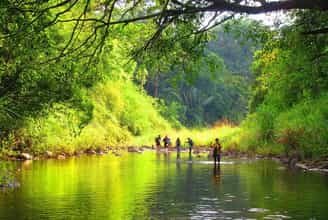
Bu Gia Map National Park
Known as one of the famous national parks in Vietnam thanks to its diverse natural ecosystem, flora and fauna that contribute to creating impressive scenery. Bu Gia Map National Park is currently a famous tourist attraction that many people choose to visit when coming to Bu Gia Map district, Binh Phuoc province. Although it has been established for many years, it was not until 2002 that this place was officially converted from a conservation area to a national park. With a total area of 25,601.18 hectares and divided into many conservation areas for many rare plants, directly affecting the genetic research process of many precious plant species. In particular, the forest coverage reaches 90%, creating a habitat for many types of animals. Not only does it play a conservation role, this is also a national park that greatly contributes to protecting and regulating water sources for hydroelectric and irrigation lakes. Visitors to Bu Gia Map National Park will be able to admire the close natural scenery, admire the green beauty, discover many precious flora and fauna species, and participate in interesting activities. Characterized by a sub-equatorial tropical monsoon climate, the national park has two distinct seasons: sunny and dry during the year. In particular, the average temperature will be about 25.8 - 26.2°C, which is quite favorable for visiting and exploring the national park landscape during the trip. Therefore, you can schedule a visit to the tourist area at any time of the year. However, to have a smooth visit and keep many memorable memories, you should choose to go during the dry season. Specifically, from November to early May of next year, you should avoid going to Bu Gia Map National Park during the rainy season because it will make it difficult to move and see the scenery. After arriving in Binh Phuoc province, to have a memorable and easier trip to Bu Gia Map National Park, many tourists are interested in choosing a quality place to stop. With the strong development of the tourism industry and the large number of tourists visiting every year, here you can find many hotels in Binh Phuoc. In particular, depending on the needs and desires of each person, they can choose a hotel with suitable quality for themselves. Therefore, you do not need to worry about where to stay on this tour. Besides, visitors can also refer to hotels in Binh Duong or City. Ho Chi Minh if you plan to visit during the day or camp on site. Trekking activities are indispensable when visiting natural tourist destinations such as national parks. During this process, you will experience many adventurous activities, immersing yourself in exciting space and scenery. At the same time, this is also an opportunity to explore many species of flora and fauna preserved in the national park. In addition, Da Voi Beach and Dak Mai Waterfall are an interesting attraction located in the national park area. Not only is it a large area, but this place also possesses many giant rocks in the middle of lush cashew gardens. and create the majestic Elephant Rock. Besides, Dak Mai waterfall flows from Dak Nong through Bu Gia Map national park combining changes in height to create an impressive and beautiful waterfall. One of the great experiences when coming to the famous tourist area in Binh Phuoc is to enjoy delicious dishes that are uniquely prepared and attractive. Some outstanding dishes that are highly appreciated by many tourists include: beef soup, bamboo-tube rice, wild boar meat, etc. All of them use available ingredients grown by local people. Through skillful processing, it creates unforgettable specialties from the first time you enjoy it.
Dong Nai
8198 view
November to early May

Stream lake
Suoi Giai Lake is a charming landscape located in Tan Lap commune, Dong Phu district. About 20 km from the center of Dong Xoai City, and about 80 km from the center of Ho Chi Minh City, Suoi Giai Lake is like a peaceful space nestled among the noise and dust of the city. The name Suoi Giai Lake comes from the connotation of Giai Nhan stream, which also means beautiful young woman. Therefore, the beautiful scenery here is often compared to a fairy descending to earth, gentle, gentle but no less flashy. Suoi Giai Lake is about 1.5 km wide, nestled between two hills, you can see the lake bed from above while driving. Review of Suoi Giai Lake shows that, in the past, Suoi Giai Lake was the upstream of a small stream. In 1978, after being approved by the Binh Phuoc provincial government, this place was converted into an irrigation dam with the task of storing and providing water for the use of the people here. Currently, this place is an interesting destination for the backpacking community, suitable for experiencing various types of activities such as camping, boating or fishing. Suoi Giai Lake is a large dam with a romantic and charming scene. At noon, the rays of sunlight shine down on the sparkling clear water, creating a very poetic and peaceful space. The most expensive scenery at Suoi Giai Lake must be at sunrise and sunset. When the sun appears and disappears, the scene seems to be dyed a brilliant orange-yellow color, lighting up the whole land and sky. On the lake bed, you can easily see the scene of a fisherman fishing and catching fish. It all took place under the sunset, painting a picture that couldn't have been more peaceful and romantic. Besides, when moving to Suoi Giai Lake, you will easily encounter wonderful and quite famous scenery. If you move from Binh Duong, you will pass by the Song Be Broken Bridge Relic, a famous place that appears quite a lot on the screen. In addition, when moving around the province, it will not be difficult for you to encounter Binh Phuoc rubber forests during the leaf-changing season. This is a place that many young people check in at the end of the year, when the forests are tall. The sun becomes bright yellow in a corner of Binh Phuoc sky.
Dong Nai
8061 view
November to April
 AI Travelviet