
 vn
vn en
en ja
ja ko
ko zh
zh


Ca Mau's Must-Try Specialties: Taste Them During Your Visit and Take Home Perfect Souvenirs!
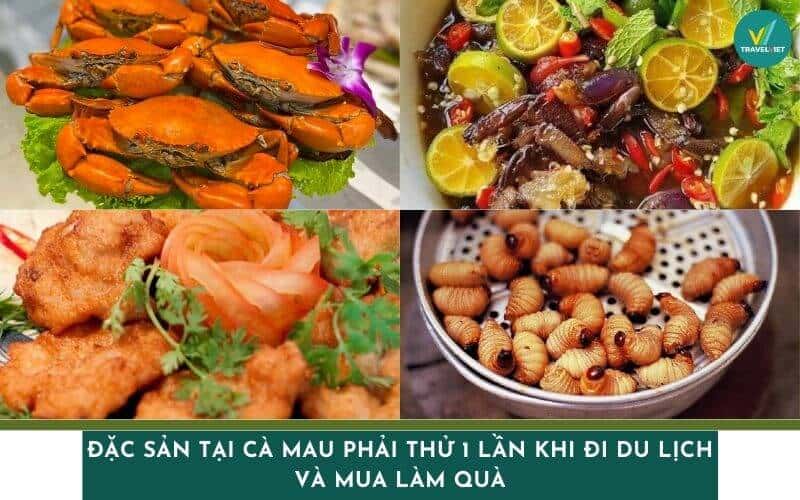
This curated list of Cà Mau specialties, featuring both must-try dishes and perfect souvenir ideas, is your ticket to fully discovering the unique flavors of Vietnam's southernmost region. More than just delicious food, each item offers a heartfelt taste of the Mekong Delta's riverine culture. This guide is truly worth bookmarking for your Cà Mau adventure.
Cà Mau isn't just memorable for its beautiful riverside landscapes at the southernmost tip of Vietnam; it also captivates visitors with its rich and distinctive cuisine. If you're wonderingwhat specialties in Cà Mau you absolutely must try when traveling and buy as gifts, the following suggested list will help you easily choose the most iconic flavors to savor and bring back for your loved ones. Let's joinTravelviet.netto find out!
Related articles:
- Top 4 Bungalows in Cà Mau: Quality Stays at Affordable Prices
- The Top 12 Must-Visit Ca Mau Destinations for Adventure Lovers
- Ca Mau's Top 8 Unforgettable Experiential Activities
- Our Top 5 Favorite Eco-Friendly Hotels in Ca Mau
- 4 Irresistible Villa Resorts in Cà Mau You'll Want to Bookmark
- Traveling to Cà Mau? What are some of the best local souvenirs and gifts to bring back home?
- Top 10+ Historic Sites in Cà Mau You Absolutely Must Explore
- Uncover Cà Mau: 15+ Incredible Destinations for Boundless Exploration
Cà Mau Specialties You Must Try and Buy as Gifts
When talking about Cà Mau, you simply can't miss its rustic yet flavorful riverside specialties, which are both worth trying during your trip and perfect for bringing back as gifts for family and friends.
Grilled Mudskipper
When it comes to Cà Mau specialties, the mudskipper (cá thòi lòi) immediately piques visitors' curiosity. This fish, which thrives in salty mudflats, is cleaned, simply marinated, and then grilled over charcoal, releasing a unique aroma. Its firm, naturally sweet flesh, dipped in chili salt or tamarind fish sauce, creates a rustic yet unforgettable culinary experience, truly embodying the spirit of this southernmost land.

Grilled Mudskipper
Spicy Chicken Silkworm Cake (Bánh Tằm Gà Cay)
Among Cà Mau's popular specialties, Bánh Tằm Gà Cay offers a novel sensation from the very first bite. Soft, white silkworm-like noodles blend with tender, sweet chicken, complemented by a mildly spicy, rich, yet not greasy curry sauce. This dish isn't flashy or elaborate, but it's enough to make a morning in Cà Mau feel complete and wonderfully comforting.

Spicy Chicken Silkworm Cake (Bánh Tằm Gà Cay)
U Minh Fermented Fish Hotpot (Lẩu Mắm U Minh)
U Minh Fermented Fish Hotpot (Lẩu Mắm U Minh) is considered one of Cà Mau's most distinctive specialties. The steaming hotpot, with its characteristic fermented fish aroma, is served with dozens of endemic wild vegetables, intriguing and delighting diners. It's a dish that might not appeal to everyone, but once you acquire a taste for it, its rich flavor will linger long after your trip.

U Minh Fermented Fish Hotpot (Lẩu Mắm U Minh)
Young Bee Larvae Salad (Gỏi Ong Non)
Not everywhere can you savor authentic Young Bee Larvae Salad (Gỏi Ong Non) quite like in Cà Mau. This unique dish is a Cà Mau specialty deeply connected to the traditional beekeeping practices of the U Minh Hạ locals. The rich, buttery bee larvae, mixed with wild herbs, aromatic greens, and a sweet and sour fish sauce, create an overall flavor that is both exotic and captivating, sure to make diners remember their first taste.

Young Bee Larvae Salad (Gỏi Ong Non)
Water Snake (Rắn Ri)
The water snake (Rắn Ri) is a familiar name among Cà Mau's specialties, especially for those who enjoy the cuisine of the melaleuca forests. This harmless snake can be prepared in various ways, such as stewed with lemongrass and coconut milk, made into snake porridge, or stir-fried, with each method highlighting the natural sweetness and chewiness of its meat. This dish is not only delicious but also clearly reflects the local people's close connection to nature.
Grilled Clams with Salt, Pepper, and Lime (Vọp Nướng Muối Tiêu Chanh)
Among Cà Mau's seafood specialties, Grilled Clams with Salt, Pepper, and Lime (Vọp Nướng Muối Tiêu Chanh) impresses with its rustic yet refined simplicity. After grilling, the clam meat retains its chewy texture and delicate sweetness, blending perfectly with a hint of fatty scallion oil and the harmonious salty-sour taste of the chili-lime salt. It's a simple dish, yet it allows diners to fully experience the briny essence of this coastal region.

Grilled Clams with Salt, Pepper, and Lime (Vọp Nướng Muối Tiêu Chanh)
Fermented Fish Noodle Soup (Bún Nước Lèo)
Amidst the slow pace of life in this southernmost land, Bún Nước Lèo quietly holds a special place in the hearts of locals. As a Cà Mau specialty, this dish is cherished for its broth, made from fermented fish, freshwater fish, and fresh shrimp, which is aromatic but not overpowering. A steaming bowl of noodles, served with fresh herbs, bean sprouts, and chives, offers a taste that is both rustic and rich, deeply authentic and truly unforgettable.
Coconut Silkworm Cake (Bánh Tằm Ngan Dừa)
Unlike its savory counterparts, Coconut Silkworm Cake (Bánh Tằm Ngan Dừa) captivates diners with its softness and delicate flavor. This Cà Mau specialty is made from rice flour, resulting in pristine white, perfectly chewy noodles, generously topped with fragrant, rich coconut milk. When eaten, it can be combined with shredded pork skin (bì), garlic fish sauce, or tomato sauce to create an interesting interplay of sweet, salty, and creamy flavors.

Coconut Silkworm Cake (Bánh Tằm Ngan Dừa)
Radish Cake (Bánh Củ Cải)
With its Chinese culinary influences yet a taste very familiar to the Mekong Delta palate, Radish Cake (Bánh Củ Cải) has gradually become a beloved Cà Mau specialty. The cake is made from rice flour mixed with shredded radish, dried shrimp, and minced pork, then fried with eggs until golden and crispy. With each bite, you'll experience a lightly crispy exterior, a soft and fragrant filling, and a unique aftertaste when dipped in sweet soy sauce.

Radish Cake (Bánh Củ Cải)
Palm Weevil Larvae (Đuông Chà Là)
When it comes to dishes 'not for everyone,' Palm Weevil Larvae (Đuông Chà Là) always sparks curiosity. This Cà Mau specialty is closely linked to the local forest ecosystem and date palm gardens. The larvae can be grilled, deep-fried, or eaten raw with fish sauce, offering a distinctive rich and fatty flavor. For those brave enough to try, this will be an unforgettable culinary experience on their journey through Cà Mau.

Palm Weevil Larvae (Đuông Chà Là)
Goby Hotpot with Vinegar (Cá Kèo Nấu Giấm)
On the culinary map of the Mekong Delta, Goby Hotpot with Vinegar (Cá Kèo Nấu Giấm) holds a very special place. As a Cà Mau specialty, this dish is appealing for the gentle sourness of the vinegar blended with the natural sweet and savory taste of fresh goby. The simmering goby hotpot, served with fresh vegetables, vermicelli, or poured over hot rice, offers a complete flavor profile, leaving you feeling light yet fully satisfied with the tastes of the Mekong Delta.

Goby Hotpot with Vinegar (Cá Kèo Nấu Giấm)
Fermented Catfish Paste (Mắm Cá Chốt)
When it comes to dishes with a strong traditional imprint, Fermented Catfish Paste (Mắm Cá Chốt) is an unmissable Cà Mau specialty. The catfish is marinated with roasted salt, rice wine, and roasted rice powder, then naturally fermented to develop its distinctive aroma. When eaten, the paste has a rich salty, fatty, and sweet aftertaste, often served with white rice, fresh vegetables, or bought as a gift for those who appreciate authentic Mekong Delta cuisine.
Cà Mau Fiddler Crab (Ba Khía Cà Mau)
Among the Cà Mau specialties sought after by many tourists, the fiddler crab (Ba Khía) always stands out. The best fiddler crabs are typically found during the flood season, with firm meat and rich roe. They can be prepared in various dishes like stir-fried with tamarind, fried with fish sauce, or made into the famous fermented Ba Khía paste. More than just a dish, Ba Khía is a culinary symbol deeply intertwined with the life and culture of the U Minh region's people.

Cà Mau Fiddler Crab (Ba Khía Cà Mau)
Cái Nước Cattail Shoots (Bồn Bồn Cái Nước)
Cattail shoots (Bồn Bồn) have long been a Cà Mau specialty, bearing the distinct mark of the Cái Nước riverside region. The pristine white, naturally crisp and sweet cattail core can be prepared as pickled vegetables, salads, soups, or stir-fried with shrimp, all equally delicious. For locals, Bồn Bồn is not just a familiar food but also a simple, beloved gift associated with many generations.
U Minh Melaleuca Forest Honey (Mật Ong Rừng Tràm U Minh)
When it comes to gifts that bear the distinct mark of nature, U Minh Melaleuca Forest Honey (Mật Ong Rừng Tràm U Minh) consistently tops the list of Cà Mau specialties chosen by tourists. The honey is dark golden, thick, with a gentle aroma of melaleuca flowers and a pleasant, subtle sweetness. Not only used for drinks or cooking, this forest honey is also considered a meaningful health gift, fully embodying the generosity of the renowned U Minh forest.

U Minh Melaleuca Forest Honey (Mật Ong Rừng Tràm U Minh)
Shrimp Cracker (Bánh Phồng Tôm)
Among Cà Mau's easily purchased and transportable specialties, shrimp crackers (Bánh Phồng Tôm) are always a favorite among many tourists. Made from finely ground fresh shrimp, blended with a unique spice mix, they puff up when fried, releasing an enticing aroma and natural sweetness. Perfect as a snack, served with salads, or enjoyed during Tết, they make a delightful gift for anyone.
Đất Mũi Squid Egg Cake (Chả Trứng Mực Đất Mũi)
Đất Mũi Squid Egg Cake (Chả Trứng Mực Đất Mũi) is a Cà Mau specialty with a rich, savory, and fatty flavor, making it an excellent gift. This dish is a harmonious blend of fresh squid, eggs, and rustic ingredients, creating a smooth texture and distinctive aroma. Simply fried or steamed, the squid egg cake is ready to become an appealing dish on any family meal table.

Đất Mũi Squid Egg Cake (Chả Trứng Mực Đất Mũi)
Fermented Snakehead Fish Paste (Mắm Cá Lóc)
Fermented Snakehead Fish Paste (Mắm Cá Lóc) has long been a Cà Mau specialty, deeply intertwined with the lives of the people in this riverside region. Freshwater snakehead fish is traditionally fermented with salt, creating a distinctive pungent aroma and a rich, savory taste. The paste can be steamed, braised, or served with fresh vegetables and white rice, making it an ideal gift for those who appreciate the authentic flavors of the Mekong Delta.
Various Dried Fish
If you're looking for a gift that truly embodies the Mekong Delta, dried fish is undoubtedly an essential choice among Cà Mau's specialties. From chewy, sweet dried goby (cá kèo khô) to firm-fleshed U Minh striped gourami (cá sặc rằn U Minh), each type offers a unique flavor. Cà Mau's dried fish isn't overly salty, retaining its natural sweetness, and just a quick grill or fry is enough to bring out its aroma for a rustic meal.

Various Dried Fish
Cow Skin Longan (Nhãn Da Bò)
Amidst the fruit-laden orchards, Cow Skin Longan (Nhãn Da Bò) is always a fruit that entices visitors to stop and taste. As a Cà Mau specialty, this longan has a glossy golden skin, thick flesh, and a rich, sweet flavor that isn't cloying, making it incredibly satisfying to eat. Tourists can easily find it at local markets or visit fruit orchards to pick it themselves and fully experience the atmosphere of the riverside gardens.

Cow Skin Longan (Nhãn Da Bò)
Longan Wine (Rượu Long Nhãn)
Distilled from the essence of Cow Skin Longan, Longan Wine (Rượu Long Nhãn) is a rare and unique Cà Mau specialty. The wine is handcrafted by infusing dried longan, glutinous rice wine, and some traditional Chinese herbs, resulting in a gentle aroma, a subtle sweetness, and an appealing golden color. This is not just a beverage but also a distinctive Mekong Delta gift, perfect for special occasions.
Cốn Xại – Xá Bấu (Pickled Radish and Mustard Greens)
In the world of pickled dishes, Cốn Xại is a Cà Mau specialty that sparks curiosity right from its name. Carefully selected mustard greens are wilted, then fermented with salt, sugar, rice wine, and galangal according to a unique recipe, creating a gentle sourness, a hint of sweetness, and a very distinctive aroma. Just a small bowl of Cốn Xại served with white rice or braised fish is enough to complete a meal.

Cốn Xại – Xá Bấu (Pickled Radish and Mustard Greens)
Despite its simple preparation, Xá Bấu (pickled radish) has won the hearts of many Mekong Delta families. This Cà Mau specialty is made from young radishes sun-dried to remove moisture, then seasoned to taste. Xá Bấu has a harmonious sweet and salty flavor, a light crispness, and is easy to store for a long time, making it perfect as a souvenir or for enjoying with rustic home-cooked meals.
We hope that this list ofCà Mau specialties you must try and buy as gifts when travelingwill help you easily choose your favorite flavors to savor and bring back for your family and friends. Don't forget to save thisCa Mauto make your Mekong Delta exploration even more complete and memorable.
Ca Mau 1285 view
Update day : 20/12/2025
Monuments close by
See all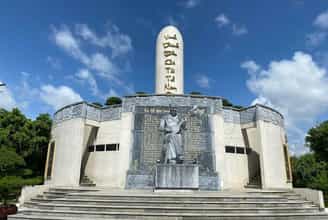
Memorial area for musician Cao Van Lau
Located in Ward 2, Bac Lieu City, the Southern Don Ca Tai Tu art memorial area and musician Cao Van Lau were recognized by the People's Committee of Bac Lieu province as a provincial-level historical and cultural relic in 1997. 2014, the Ministry of Culture, Sports and Tourism ranked it as a national historical-cultural relic. With an area of nearly 12,500 square meters with a total investment of over 70 billion VND, this is the resting place of the family of the late famous musician Cao Van Lau. In addition, the relic site also has construction items such as the Southern Don Ca Tai Tu and Cai Luong art gallery, the Cao Van Lau musician exhibition hall and Hoai Lang Da Co version, the Don Ca performance hall. Southern amateurs, Musical Instrument Garden, Semi-moon Lotus Lake... Going through the main gate, visitors will see the "Yue Cam Dai Dai" standing tall in the middle of the campus. The staircase going up to the Dai Dai with 32 steps symbolizes the development of Da Co Hoai Lang village from beat 2 to Vong Co hamlet with beats 4, 8, 16, 32, 64. Above the highest Dai is the symbol of the Pliers. stylization - the symbol of Southern amateur music associated with the image of musician Cao Van Lau. The pliers are stylized from bamboo sticks, the pliers part is hollowed out to create mystery and sacredness, evoking nostalgia and remembrance of the deceased. On the Nguyet Cam Platform, there are 21 ornamental pots representing 21 provinces and cities where amateur music is strongly developed. Right behind the Nguyet Cam Station is a statue of musician Cao Van Lau sitting holding a Pliers instrument, behind him is Da Co Hoai Lang - this is his immortal work, known as the "King's song" of opera theater. Southern salary so far. Next to it is the Musical Instrument Garden with 12 types of traditional musical instruments carved in green stone. Going straight through the Musical Instrument Garden is the Art Gallery of "Don Ca Amateurs and Southern Cai Luong Theater". Visitors will be able to see and learn about many precious documents, images and artifacts related to the formation and development of the art of Don Ca Tai Tu and Southern Cai Luong theater. The most popular place for tourists is the Exhibition House of musician Cao Van Lau. This place stores many artifacts such as books, newspapers, documents, and images about the life and career of musician Cao Van Lau. In particular, here visitors will admire the wax statue of the late musician made of silicon, very similar to the real person. In addition to the above-mentioned projects, the memorial area for the late musician cannot help but mention, which is the grave of the late musician's family, in addition to a stage house for performing traditional folk music, The souvenir shop... has really attracted tourists when they set foot in this land. The memorial area of musician Cao Van Lau is truly the most attractive attraction in Bac Lieu. If you have the opportunity to visit Bac Lieu province, don't forget to visit the souvenir area. Source: electronic information portal of the Union of Friendship Organizations of Bac Lieu province
Ca Mau
8722 view
Rating : National monument
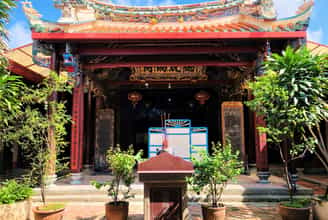
Thanh Hoang Ancient Temple
Recognized by the Ministry of Culture, Sports and Tourism as a national historical and cultural relic in 2001, the Imperial City Ancient Temple (also known as Vinh Trieu Minh Pagoda) is a relic expressing religious culture. The tutelary god of the Vietnamese people in Bac Lieu, a cultural feature that inherits the tutelary god belief of the Chinese people in Bac Lieu... Vinh Trieu Minh Pagoda is located on Dien Bien Phu Street in Ward 3 (Bac Lieu City) and was built in the year At Suu 1865. This is a place to worship the ancestors who have openly explored and expanded this land many years ago. previous century. Although it is not a place to worship Buddha, people used to call it Vinh Huong Pagoda, founded by the Minh Huong people. Later, local people called it Minh Pagoda, and now the official name is Vinh Trieu Minh Ancient Temple. The origin of worshiping the tutelary god is also from the Minh Huong people, inheriting the tutelary god belief in China. According to customs here, the time to organize the annual Imperial Wedding Ceremony usually lasts for 3 days and nights (24, 25 and 26 of the 7th lunar month) with rituals such as: worshiping, worshiping ghosts and distributing rice. … The pagoda faces the Bac Lieu River, the main door to the pagoda is assembled from green stone pillars meticulously and delicately carved with images of dragons, cranes, clouds... The entire pagoda architecture is built in the shape of the word "National". ”, a model of royal architecture of the Ming Dynasty (China). The porch is covered with three-layer yin-yang tiles, the roof corners are decorated with curving wave patterns. In addition, in the pagoda there are also carved patterns such as animals, ornamental plants, leaves and fairies... In front of the altar to worship the Tutelary God is a long table made of precious wood, in the middle of the table is a bronze urn about 70 cm high. , this is a rare type of bamboo urn in Vietnam... The ancient tutelary god Vinh Trieu Minh temple is a priceless heritage that represents a unique cultural and religious belief of the Chinese people in Bac Lieu. Source: Bac Lieu Newspaper online
Ca Mau
8089 view
Rating : National monument
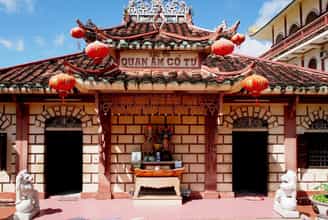
Phat To Pagoda (Sac Tu Quan Am Ancient Pagoda)
Phat To Pagoda is located in Ward 4, Ca Mau city. The pagoda was built in 1840, bearing the ancient architecture of the 19th century. This is the earliest place to propagate Buddhism in Ca Mau. The original name of Phat To Pagoda is due to the long-standing respect of the people of Ca Mau region to the monk who built the pagoda: Venerable Thich Tri Tam. Legend has it that around 1840, Ca Mau area was a reed area. Following the flow of people going to reclaim the land, there was a young man, To Quang Xuan, who went to collect firewood in the forest. When the ax hit the trunk of an ancient Bodhi tree, a tree appeared. The Buddhist scriptures were placed at the base of the tree. From then on, the young man built a shrine to worship Avalokiteśvara while cultivating and taking medicine to treat people on the banks of Quan Lo canal. Legend has it that To Quang Xuan recited the Diamond Sutra to transform wild beasts. People who know the language come in large numbers to ask for medicine and learn religion. Among these disciples, even ferocious tigers also came to learn the Dharma. Currently, that tiger's tower still exists, and the disciples in the temple call it Su Cau's tower. Later, thanks to people's contributions, To Quang Xuan built a simple temple made of leaves. Seeing this, Do Van Vien in the area was jealous and accused him of being a dishonest Taoist. He was arrested by superiors and brought to Saigon (now Ho Chi Minh City) under house arrest. But To Quang Xuan's morality made the mandarins admire him. He was brought back to Hue and ordained as a monk at Kim Chuong Pagoda. Seven days after receiving the precepts, he passed away. The king ordained him as a "monk" and at the same time bestowed brocade and sent people to bring his remains back to Ca Mau. Feeling sorry for him, in 1842, King Thieu Tri (Nguyen Dynasty) decreed that To Quang Xuan be ordained as Venerable Thich Tri Tam, repaired his thatched hermitage next to the old forest and decorated the pagoda with the name " "The Four Avalokitesvara Ancient Temple". Venerable Thich Tri Tam is revered by the people in the area as "Buddha Patriarch", so the pagoda is also called "Buddha Patriarch Pagoda". Phat To Pagoda has been renovated many times, the major restoration was in 1937. However, the original state of the ancient pagoda is still basically maintained. Worship artifacts such as wooden statues, wooden trays, single vases, bronze bells, parallel sentences, ordained orders from the king... are still preserved, proving the development of Buddhism during the period when the Vietnamese people began to make strides. important in the work of reclamation and forming a communal society with the three ethnic groups Kinh, Chinese, and Khmer in the southern land. During the resistance war against America, Buddha Pagoda was a place to hide revolutionary soldiers. On November 24, 2000, Phat To Pagoda was recognized by the Ministry of Culture and Information as a national historical and cultural relic. In addition to the main architecture of the ancient temple, on the right from the temple gate, there is also the office of the Executive Board of the Buddhist Association, Ca Mau Buddhist Intermediate School, and the office of the Special Committee for Nuns. On the left of the main architecture, there is also the free Tue Tinh hall for the poor, the Buddhist Family Assembly Hall, the Sangha house... Every week, Buddhist studies and lectures are held here. Every year, on every major Buddhist festival such as the full moon ceremony in January, Buddha's birthday, Vu Lan... Buddha Pagoda becomes a place for festivals, a large number of monks, nuns, and Buddhists gather to attend. Source: Ca Mau Tourism
Ca Mau
7968 view
Rating : National monument
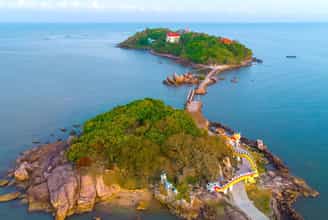
Hon Da Bac relic site
Hon Da Bac is about 500 meters from the mainland, has an area of 6.34 hectares, located in the west of Ca Mau Peninsula, in Kinh Hon hamlet, Khanh Binh Tay commune, Tran Van Thoi district, Ca Mau province. Silver Rock includes Ong Ngo Rock, Silver Rock, and Odd Silver Rock. The highest peak of the island is about 50 meters above sea level. Although not a large island, Hon Da Bac is very convenient for all types of marine vehicles to anchor and avoid storms. Along with Hon Khoai, Hon Chuoi, Hon Da Bac is one of the island clusters with a strategic economic - defense - security position in the sea - Ca Mau island. Looking on the map, Hon Da Bac looks like a forward station guarding the air and sea southwest of Cape Ca Mau. Silver Rock - as its name suggests - around the island, on the water surface, and on the seabed, thousands of granite stones of all sizes lie on top of each other, forming many shapes as if arranged by humans. Walking on Hon Da Bac, visitors encounter Fairy hands, Fairy footprints, Fairy wells, and tiger feet. On the eastern peak of Hon Da Bac, there are large rocks and a fairly wide surface. Between the two pieces of rock there is a deep hole shaped like a foot. Legend has it that that footprint is the Fairy's foot, and this piece of rock is the Fairy's yard. On the island there are a few small temples such as Hang Pagoda and Tinh Do Pagoda. In particular, on the highest peak of Hon Da Bac is Ong Nam Hai temple - a place to worship the 13m long Ong fish skeleton. On May 20, 1995, Ong fish drifted into the Ong Doc river mouth area. About 3 days later, Ong Giat (died), Song Doc fishermen buried him and in 1996 brought the skeleton to Hon Da Bac to worship. Whenever fishermen in this area encounter big waves or strong winds when going to sea, they are saved by Ong fish. Therefore, the fishermen here silently thanked him and worshiped him as a god who saved humanity. Legend has it that Ong Nam Hai temple is very sacred. Today, not only fishermen in the area but also tourists from everywhere who hear his sacred voice come to pay their respects and pray for him to bless his family with peace, without encountering troubles or troubles. During the years of resistance against the US to save the country, the enemy chose Hon Da Bac as the place to station the 105 mm artillery platoon to control the Khanh Binh Tay revolutionary base area and the western coastal line of Ca Mau. This is also the location where the CM12 project took place, defeating the plot to import, sabotage, and overthrow the socialist regime in our country by the reactionary organization "Vietnam Restoration" led by Le Quoc Tuy and Mai Van Hanh. head. On June 22, 2009, the Ministry of Culture, Sports and Tourism recognized the relic: Hon Da Bac - CM12 Counterintelligence Plan Command Center (September 9, 1981 - September 9, 1984) as a Monument. national history and culture. The Ministry of Public Security and Ca Mau province built the CM12 Victory Monument, Traditional House, and Uncle Ho temple at this famous relic. Source: Ca Mau Province Electronic Information Portal
Ca Mau
7946 view
Rating : National monument
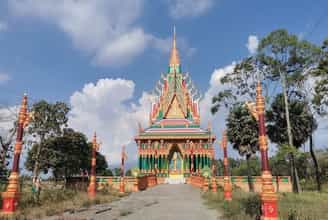
Cao Dan Pagoda historical site
Saraymel Chey Pagoda (Cao Dan Pagoda) is located in hamlet 7, Tan Loc commune, Thoi Binh district, Ca Mau province. Cao Dan Pagoda is located next to Highway 63 (in hamlet 7, Tan Loc commune, Thoi Binh district), about 16 km north of Ca Mau city center. Cao Dan Pagoda was built in 1922 on an area of 4 hectares, at the intersection of Duong Cay canal, donated by Mrs. Diep Thi Lai. At that time, people often called Chau Trang Pagoda (Bach Nguuu). After being burned by the enemy many times, in 1998, Cao Dan Pagoda was newly built. Inside the main hall of the pagoda there is a large altar, worshiping only Shakyamuni Buddha. Opposite the main hall is the Venerable Huu Nhem tower, built in 2003, 17m high, 12m² area. In 1954, the Geneva Accords were signed, we had to bring a group of core officers and children to the North, choosing Cao Dan Pagoda as the study center for the core officers and children. rolled in the province to send to the North. The remaining core cadres used their legal positions to the fullest extent; the cadres who had not yet been exposed were infiltrated into the enemy's ranks. The number of officials revealed to be roaming the operating area or withdrawing into secret. Revolutionary organizations were also reorganized and transformed to suit the situation at that time. On the other hand, Cao Dan Pagoda was directed by the Party to move next to bridge highway No. 6 (National Highway 63), to avoid enemy observation. At the same time, there are people's houses as security shields to make operations easier. During the two resistance wars against the French and the Americans, the Board of Directors and the monks and Buddhists of Cao Dan Pagoda were closely associated with the revolution. Cao Dan Pagoda is the secret base of the revolution. Among them, Venerable Huu Nhem, former abbot of the pagoda who passed away during the resistance war against the US, held the position of Vice Chairman of the National Front for the Liberation of the Southwest Region, actively campaigning for monks and the Management Board. ruled over pagodas and a large number of local Kinh - Hoa - Khmer ethnic people participated in the resistance war against the Americans to save the country. The enemy repeatedly bombed and destroyed the temple; Many monks and Buddhists heroically sacrificed their lives. Today, at Cao Dan Pagoda there are still many unfilled bomb craters, proving that the enemy's destruction cannot overshadow the rebellious and patriotic spirit of Buddhists and monks. During the process of formation and development, Cao Dan Pagoda has not only performed the task of maintaining religion, but also performed well the tasks of a patriotic citizen, always attached to the nation and the leadership of the Party and the strong revolution that has been created. The results are very appreciable. At the same time, we must not separate from the great national unity bloc to participate in the struggle against French and American invasion, contributing to completely liberating the South and reunifying the country. On December 29, 2017, Cao Dan Pagoda was decided to rank as a national monument by the Minister of Culture, Sports and Tourism. Source: Ca Mau Province Electronic Information Portal
Ca Mau
7816 view
Rating : National monument
Nearby tourist attractions
See all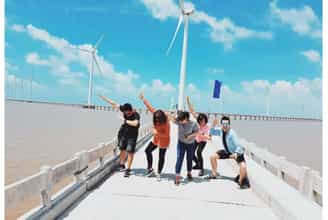
Bac Lieu Beach
It doesn't stand out with its fine white sand beaches stretching along the clear blue water like Nha Trang, Vung Tau,... but Bac Lieu sea with one side salt water and alluvial silt brings a new flavor to the West. The south of our country creates a wild, rustic and equally interesting beauty. In terms of geographical location, Bac Lieu province is the land following Ca Mau province, forming the southernmost region of the country, all belonging to the Southwest region. Although quite remote, Bac Lieu is not inferior to other Western provinces in terms of tourist attraction because there are many famous attractions such as wind power fields, Nha Mat tourist area, Quan Am Nam Hai pagoda or Prince's house. Bac Lieu and the famous beach of the same name,... Traveling to the West and visiting these destinations, you will feel the beauty of the landscape, the architecture as well as the honesty and spontaneity of the people. people of the "land of fortune". The famous beach of Bac Lieu province is located along DT38 road. Located in Nha Mat ward, Bac Lieu city. This place is only about 10km from the city center so it is very convenient to move and combine sightseeing with many other famous tourist attractions in the inner city. If you want to go to this beach from Ho Chi Minh City and other provinces, you can choose one of two main means of transport: motorbike and passenger car. Departing from Ho Chi Minh City to Bac Lieu, it will take you about 6 hours to travel the 280km long road. If you choose to ride a motorbike, you will be able to take the initiative in your journey and have the freedom to stop and admire the scenery to take photos any time you like. Because along the way, there are many beautiful scenes typical of the West such as golden rice fields or fruit gardens or many bustling floating markets in the early morning like Nga Bay Hau Giang floating market. If traveling by motorbike, you can climb the following route. First depart from Binh Chanh and then go to Binh Thuan intersection. Then visitors turn onto National Highway 1A and continue moving about 30km to reach Tan An bridge in Long An province. You continue to reach Tien Giang province, pass the My Tho city welcome gate and head to National Highway 1A, go about 65km further to reach My Thuan bridge. Crossing this bridge will reach Vinh Long province. You continue to move about 33km more to reach Can Tho bridge. Coming here, tourists continue to drive another 110km long to reach Nga Bay Hau Giang area. The journey is about to end because you only need to go through Soc Trang province a little further to reach Bac Lieu city. At this time, go about 10 km more to reach Bac Lieu beach. If traveling by bus, the simplest way is to take the bus from the Western bus station in Ho Chi Minh City to Bac Lieu. Bus ticket prices range from 160,000 VND - 300,000 VND/person depending on the type of car. With this way of traveling, you only need to get on the bus and get some sleep before arriving at your destination because the travel time is about 6 hours. Traveling to Bac Lieu and checking in to the beach of the same name by bus is quite convenient because it saves you time and keeps your health, but in return it will not bring you as many experiences as riding a motorbike, so it depends on the situation. health and schedule of your choice. Once arriving at Bac Lieu Bus Station, visitors just need to get off the bus and take a motorbike taxi to the beach, the price is only about 20,000 VND. Source: luhanhvietnam.com.vn
Ca Mau
8435 view
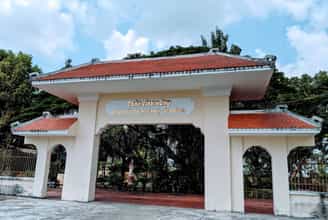
Vinh Hung ancient tower
Vinh Hung ancient tower is located in Trung Hung 1B hamlet, Vinh Hung A commune, Vinh Loi district, Bac Lieu province, about 20 km from the city center. Follow National Highway 1A, from Bac Lieu towards Ca Mau, go 5km to Sap bridge, turn along the Vinh Hung market path to reach Vinh Hung tower. Not only is this the only remaining Oc - Eo culture tower architecture in the Southwest, but during the excavation at Vinh Hung tower, archaeologists also obtained many extremely valuable artifacts. with many stone, bronze, ceramic, precious stone statues... marking a rather long period of existence and development (from the 4th century to the 13th century AD) of Vinh Hung ancient tower. Vinh Hung Tower has undergone many surveys. In 1911, French scholar Lunet de Lajonquiere discovered it under the name Tra Long Tower. In 1917 Henri Parmentier came to survey this area and reported it in the journal of the Far Eastern North Ancient School (No. XVII, volume 6, 1917, pages 48-49). In this report (under the name Luc Hien tower) he listed a number of artifacts discovered inside and outside the tower. In particular, among them is a stele found in Phuoc Buu Tu pagoda next to the tower engraved with Sanskrit characters, clearly stating the month Karhila, year 814, corresponding to 892 AD, and the name of King Yacovan-Man (20th century AD). 9th century). Archaeologists have determined that the tower was built around the 9th century AD to worship the Khmer king named Yacovar - Man. In May 1990, archaeologists from the Ho Chi Minh City Institute of Social Sciences. Ho Chi Minh City Institute (now the Institute for Sustainable Development of the Southern Region) in collaboration with Minh Hai Provincial Museum came to survey and dig a survey hole, discovering a number of artifacts such as god statue heads, inscriptions, grinding tables, Linga – Yoni… Continuing the journey to clarify the value of a national monument, as well as to serve the restoration, embellishment, and anti-degradation of Vinh Hung tower relics, in 2002 and then in 2011, The Archaeological Research Center coordinated with the Bac Lieu Provincial Museum to excavate around the tower. These excavations continue to do things such as revealing the base of the tower, solving traces buried in the ground to have solutions to restore and embellish the tower to promote the value of the monument. Many valuable artifacts have been discovered during surveys such as: the Goddess statue carved in the traditional style, the round Oc Eo Phu Nam statue, the right hand of the "God Statue", a number of Linga - Yoni, objects ceramics used in everyday life and especially the set of bronze statues are considered by archaeologists to be a unique collection of statues, a "national treasure", including a number of unique statues of very high value. In 2011, the Vinh Hung tower relic was restored and renovated, including the following items: exhibition house, stele house, guard house, fence and a number of other items to preserve and promote the value of the relic. From a distance, the tower looks like a cylindrical block standing tall in the middle of the forest, with an ancient appearance - part of it is covered with moss, while the rest has many places with patchy bricks pushed deep into the heart of the Tower due to long periods of exposure. the influence of rain and sun. Bac Lieu province had to go to the East to find soil and bring it back to be baked into bricks to restore a damaged front part. The ancient tower has a quite simple and rustic architecture on a promontory of about 100m2, the Tower's door faces west, the base of the Tower is rectangular with two sides of 5.6m and 6.9m. The height of the Tower is 8.2m (calculated from the Tower's base). All three sides East - South - North are built of bricks. The wall at the base of the Tower is 1.8m thick. The higher you go, the thinner the wall becomes. The wall is gradually tilted towards the top, forming a rolling dome. Through many changes in history, what created an ancient tower thousands of years old? According to many scientists, the ancient Khmer people used a special construction technique, they used a vegetable glue to stick bricks together, without using construction materials such as cement, or lime mortar like now. The tower was built with two types of bricks of different colors. From the base of the tower to a height of 4m are red bricks and from 4m upwards are white bricks. Looking in from the main door is the restored Linga - Yoni set symbolizing yin and yang harmony. The original Linga - Yoni set is being preserved at the museum. From the unique values recorded, Vinh Hung Ancient Tower has been recognized by the Ministry of Culture, Sports and Tourism (now the Ministry of Culture, Sports and Tourism) as a national architectural and artistic relic since 1992. If you have the opportunity to travel to Bac Lieu, remember to take the time to visit Vinh Hung ancient tower to better understand an ancient civilization. The scenery here is very attractive to tourists. In addition to the tower architecture, visitors can breathe fresh air filled with the scent of field flowers, and look over the vast fertile fields of a land that has been sweeten.
Ca Mau
8183 view
From January to December
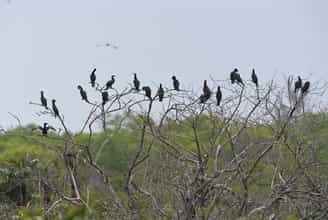
Bac Lieu Bird Sanctuary
Bac Lieu Bird Park in the Mekong Delta is a remaining part of the rare mangrove forest in Vietnam today. 6km from Bac Lieu town towards the sea. Visitors just need to move on the road named after the late musician Cao Van Lau to the right, to the 30/04 canal to reach the bird garden in Hiep Thanh commune, Bac Lieu town. If you travel from the northern provinces, you can book a flight to Ho Chi Minh City. From here you will have two ways to move to Bac Lieu Bird Park. The first way is to travel by bus, from the Eastern or Western bus station to catch a bus to Bac Lieu with ticket prices ranging from 160,000 VND to 180,000 VND/person. The second way is to use a motorbike, follow National Highway 1A to Bac Lieu. From the center of Bac Lieu city, cross Quay bridge (Kim Son bridge), follow Cao Van Lau street in the direction of Mat house about 3km, turn right and continue about 3km across the 30/4 canal to reach the nature reserve. Bac Lieu bird garden. Bac Lieu Bird Sanctuary with an area of more than 385 hectares, including 15 hectares of primary forest, this place is home to about 46 different bird species such as guinea pigs, small cormorants,... 150 animals, 58 species of fish, 7 frog species, 10 mammal species, 8 reptile species, 109 plant species belonging to 90 genera of 46 families and a number of other animal species create a rich flora and fauna with high biodiversity. In addition, the flora of Bac Lieu bird park has about 181 species including date palms, toadstools, bean sprouts, fish sauce,... which play an important role in the life, reproduction and nesting of wild birds. wild. Normally, birds belonging to the stork group use date palm trees to make nests and breed, while fire herons will use betel trees and toads to build nests during the breeding season. Nowadays, with the stress of work and life, many people tend to go to nature to enjoy fresh, comfortable atmosphere. Therefore, Bac Lieu bird garden is increasingly becoming the focus of attention, attracting thousands of tourists here. Exploring Bac Lieu bird garden, visitors seem to be lost in a new world, when the noise of moving vehicles or skyscrapers growing close together gradually disappears, leaving only the silvery blue. of the natural jungle, the melodious sounds emanating from all kinds of birds and immersing yourself in the cool and fresh atmosphere. Coming to Bac Lieu bird garden, visitors can choose to walk around following the signs or rent a car to see the 5km long natural scenery with a rental price of about 40,000 VND/person. In addition, visitors can take a boat trip to see birds along the two sides. If you come to the bird garden in the afternoon, you can see a rare, charming and poetic scene when the purple color of the sunset blends with the nursery color of the ripe rice fields in the distance. Adding to the colorful picture is the image of different flocks of birds flying back to their nests. They fly in an orderly formation, some species fly forward in an arrow shape, some species choose to scatter and scatter so that when they return to their nest, they rush across a corner of the forest. Besides, when night falls, it is also the time when nocturnal foraging birds wake up and begin their hunting trip, breaking the silence of the night. The canal was built around the forest containing fish,... creating an additional food source for the animals here. Therefore, the number of bird species gradually increases, becoming increasingly rich and diverse. From May to October every year, birds often gather at Bac Lieu bird garden, they often nest in trees until January, then move to another place. This is considered the festival season for birds and is also the ideal tourist season to explore Bac Lieu bird garden.
Ca Mau
7956 view
May to October
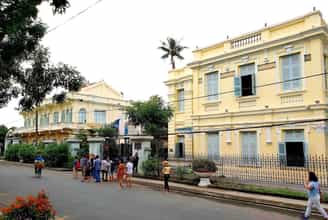
Prince's house in Bac Lieu
When talking about Bac Lieu, people not only mention Cao Van Lau and the art of Don Ca Tai Tu, but also many anecdotes about Ba Huy (The Prince of Bac Lieu), famous for his entertainment at one time. Traveling to Bac Lieu, it would be a mistake if you did not take the time to visit the Prince of Bac Lieu's house to admire the majestic architecture of the largest house in the six ancient Western provinces. Bac Lieu Prince's House is currently located at 13 Dien Bien Phu, Ward 3, Bac Lieu City, next to the bank of Bac Lieu River. The house has luxurious Western architecture, built from 1917 to 1919 when completed. The house possessed the most majestic architecture in the Western provinces at that time, so the people here called it "big house". The mansion was built by Mr. Tran Trinh Trach, aka Trach Council, father of Prince Bac Lieu when the prince was only 19 years old. Mr. Tran Trinh Trach is the owner of 74 fields, with 110,000 hectares of rice land and nearly 100,000 hectares of salt fields. At that time, the entire Bac Lieu province at that time had 13 lots of salt fields, 11 of which belonged to him. Mr. Trach has 7 children, 4 girls and 3 boys. Among the three sons, Tran Trinh Huy is notorious for playing around and is famous for his love of girls. It is known that the total assets that Prince Bac Lieu inherited and "wasted" on luxury entertainment is estimated at over 5 tons of gold. The villa was designed by a French engineer, most of the construction materials were brought from Paris. Many details, materials, and furniture in the house are imported from France, from bolts and screws to construction details, all of which are stamped with the letter P to show their origin. As soon as you step into the house, visitors will be fascinated by the meticulous and sophisticated design lines, exuding elegance and magnificence. Yellow lights radiate shimmering light, creating a cozy and elegant feeling. Each pillar of the house is decorated with many beautiful patterns. The first floor (ground floor) of the mansion includes 2 bedrooms, a living room and two large halls with a large staircase leading upstairs. Upstairs there are also 2 bedrooms and two large, airy halls, absorbing sunlight and wind, making the mansion always airy and cool. The stairs to the second floor are made of marble, divided into 3 sections, each section has 9 steps symbolizing longevity and eternity. The wooden stairs leading to the terrace were formerly the place where Mr. Trach, Prince Bac Lieu's father, used to dry money. Up to now, the project is more than five years old, but the architectural and artistic values at Mr. Ba Huy's mansion are not only not "outdated" compared to the times, but on the contrary, have become even more precious and highly appreciated. The kitchen part of the house was converted into a ticket counter for customers. The house also displays many objects associated with the anecdote of "The Black Prince". This car was bought by Mr. Tran Trinh Trach in 1930 in Saigon to welcome his son, Prince of Bac Lieu, back from studying abroad in France. Visiting the prince's house in Bac Lieu today, you will admire the precious remaining artifacts such as: 2 hot beds and a cold bed, a set of sofas made from a single piece of wood, a set of "Three unicorns" turntables (a round table with a stone surface, triangular kneelers carved with 3 unicorns), a set of "Banch statues" (shaped like an armchair placed on the back of an elephant), a "Tam Thanh" stall (3 walls) which is the sleeping place of Tran Trinh Khuong, his younger brother. of Prince Bac Lieu), the bed of Mr. and Mrs. Council Trach, the bed for guests to smoke opium, the card table, flower vases,... are all very valuable items. One place where people stopped the longest was the altar of Mr. Tran Trinh Huy and his first wife. It is said that no one can count how many wives Prince Bac Lieu has, but his first wife is Mrs. Ngo Thi Den, who was married properly, the daughter of a rich lord in the area. The remaining people are his concubines, including a woman of French nationality. Visiting the Bac Lieu Prince's mansion, in addition to being introduced to the architectural features, the birth of the house, and related items and utensils, visitors are also told many anecdotes about its owner (Mr. Ba Huy) by the tour guide. According to these anecdotes, the Prince of Bac Lieu was the first Vietnamese to own a private plane in the country; first visit to fields by plane; The first organizer of beauty contests (predecessor of later beauty contests) in the South... He is from Bac Lieu, owns a lot of land, salt department (salt making land), coal mining, and rents the most buildings, so he is very wealthy. Typically, the story of burning money to cook tea with Prince Bach or "The prince of Bac Lieu burns money to cook eggs to show that he is rich" has entered the lyrics... The Prince of Bac Lieu and his anecdotes have become nostalgic and of the past. Today, the mansion, also known by the popular name Bac Lieu Prince's House, has become a favorite destination for domestic and foreign tourists. And it is also the anecdotes about the dissipation, bohemian and luxurious lifestyle of the Prince of Bac Lieu that make tourists from far away more curious, curious to once see the residence of the Prince of Bac Lieu.
Ca Mau
8696 view
From January to December
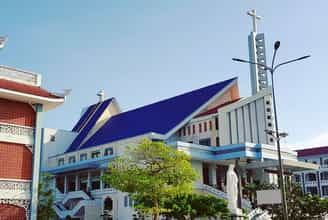
Tac Say Church
Tac Say Church, also known as Father Diep Church - The most famous church in the Western region. Coming to Tac Say church, in addition to visiting the grave of Father Truong Buu Diep, people can admire the unique architecture of the Catholic church, one of the most beautiful churches in the western provinces. Tac Say Church is located right on National Highway 1A, 37km from Bac Lieu in Hamlet 2, Tan Long commune, Gia Rai district, Bac Lieu province. According to local elders, the name Tac Say is due to the fact that in the past there was a small shortcut passing by the church, located among the reeds. The pronunciation of the Southern people gradually changed the sound "off" to "off". occlusion”. Tac Say church is considered a branch of the ancient Bac Lieu church. Initially, this place was visited by Father Jules DUCQUET, a French priest. Father then established 4 parishes in the Western region, including the Bac Lieu parish. In 1925, Tac Say church was established. In August 1926, Father Paul Tran Minh Kinh was appointed as the first parish priest of the church. In March 1930, Father Francis Truong Buu Diep took over a new position to replace Father Kinh. During his time here, Father Diep moved the church from the inside to the outside facade to its current location. Father Diep is also a person who has made great contributions to the formation and development of Tac Say church. Tac Say Church - a place associated with a famous figure - Father Truong Buu Diep, a priest who is considered a saint because of his holiness, bestowing grace and blessings on those who believe and pray. There are many different anecdotes about Father's death as well as the story about Tac Say church. But all say that Father Diep is a courageous man who dares to sacrifice his life to protect others. With the contributions of fellow workers and pagans at home and abroad, Tac Say Church has recently been restored and built with many new spacious items, not only a place of pilgrimage for local people but also a place of pilgrimage for local people. A spiritual tourist destination for many domestic and foreign groups to pilgrimage and worship. The church has a strange and unique architecture consisting of 3 floors, the ground floor is a place for guests to rest, the 2nd and 3rd floors are where mass is held with a very large lobby. The sanctuary is a place of worship and is also decorated with delicately carved precious woods, making the sacred atmosphere here more solemn. Diep's father's resting place has the architecture of a building with three large roofs, the middle roof has a large clock creating a highlight for the building. Built according to Asian architecture but still carries the beauty of Vietnamese culture. This project has the same shape as ancient Vietnamese temples but has been renovated and renovated accordingly. Traveling to Bac Lieu, coming here, everyone sincerely prays for peace, bringing people peace of mind, serenity, putting aside daily worries and worries with the desire to create for each person. human beings a peaceful, good, tolerant and compassionate life. Every year, especially on March 11 and 12, large numbers of people from many places come to pilgrimage and visit Tac Say Cathedral and Father Diep's grave. On weekdays, the church has 3 masses: 5:00 am, 9:00 am and 5:00 pm. On Sunday, there is an additional mass at 7:00 am.
Ca Mau
8790 view
From January to December
 AI Travelviet