Relic point Vietnam
Việt Nam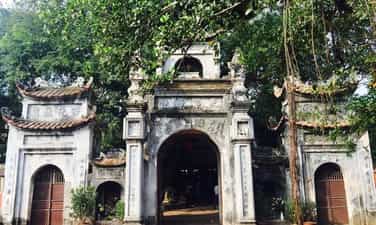
Mau Temple
Mother Temple, also known as Hoa Duong Linh Tu, is located on Bai Say Street, Quang Trung Ward, Hung Yen City. Mother Temple worships Duong Quy Phi, also known as Duong Thien Hau. According to history books and Ngoc Pha, she was the wife of King Song De Binh. In 1279, the Yuan army invaded the Song state, and the king and royal family boarded boats and fled to the South. On the way, they were captured by Yuan general Truong Hoang Pham. King Song and a number of concubines who refused to surrender jumped into the sea to die. Duong Quy Phi's body floated to the sand, and the people carefully buried him and built a temple. According to "Dai Nam Nhat Thong Chi", Mau Temple was built during the reign of Tran Nhan Tong, in the reign of Thieu Bao (1279). Over the dynasties, the Temple was restored and conferred many times. By the 8th year of Thanh Thai (1896), the Temple was largely restored and had the same architectural scale as today. The temple was built on the "Crouching Dragon" land overlooking Crescent Lake with spacious space, creating the "Son Dieu Thuy" position. The Nghi Mon Gate of Hung Yen Mau Temple is quite imposing, with a match-style architecture of two floors and eight roofs, with curved knife-heads. The door is built with a rolling arch, has one main door and two side doors, two pillars on top have 2 crocodiles flanking the door. On the arch, there is a large inscription in Trien script "Duong Thien Hau - Song Trieu" and a Chinese script "Thien Ha Mau Nghi". Through Nghi Mon is the temple yard. In the middle of the yard is an old tree with an age of more than 700 years, combined by 3 trees of banyan, banyan, and sapphire firmly entwined together, casting luxuriant shadows around Hung Yen Mother Temple, increasing even more. solemn, secluded appearance. This is one of the oldest trees in the North. The Great Pagoda of Hung Yen Mau Temple consists of 3 compartments, the architecture is in the style of eight dragon-scale tiled roofs, the roofs are curved like a flanking dragon. The beams, lotuses, and pillars are carved in the shape of leaves, flowers, dragons, phoenixes, and the traps are carved in the shape of dragon heads. On both sides of the Great Pagoda are Luu Ly Palace and Quang Han Palace. The Tien Duong court also consists of 3 compartments, the architecture is in the style of stacking lotus mats, splendid with horizontal panels, parallel sentences, sacrificial objects, canopies, flags, robes, weapon racks, palanquins, bowls, and dragon communal houses. painted bright yellow lipstick. The roof is decorated with the image of "Two dragons flanking the moon", a dragon blade flanking a dragon, and a sophisticated phoenix dancing. The harem consists of 5 compartments, architecturally styled with 12 main columns, 6 military columns, soft floral and leaf-engraved panels, and a set of table doors carved with chrysanthemums. Inside there is a statue of Duong Quy Phi with a kind face, along with two servants, Kim Thi and Lieu Thi, dating from the 17th-18th centuries. In addition, in the Hung Yen Mau Temple, many precious relics are preserved such as dragon sieves, dragon robes dating from the 18th-19th centuries and 15 ordinations from the Le to Nguyen dynasties, praising the faithful example of Duong Quy Phi. . Every year, the Mau Temple Festival in Hung Yen is held from the 10th to the 15th of the third lunar month, attracting a large number of people in the region and tourists from all over to attend, worship, and pray for good things. happy. The ceremony took place solemnly. The festival includes folk games and singing songs. In particular, during the festival there will be two exciting processions. The sickle procession from Dinh Hien to Hung Yen Mother Temple, led by flags, drums, gongs, dragons, bowls, and lo bo, with lion and dragon dance teams. The procession goes around the streets, the golden dragon curves from the beginning to the end of the procession, there is a dance "The child goes to the float"... In 1990, Hung Yen Mother Temple was ranked as a national historical, cultural, architectural and artistic relic. Source: Hung Yen city electronic information portal
Hung Yen
4716 view
Rating : National monument
Thai Lac Pagoda
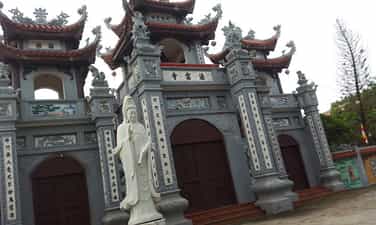
Thai Lac Pagoda, Lac Hong commune, Van Lam district is also called Phap Van Tu. Lac Hong commune has 4 pagodas worshiping 4 gods in the Four Dharmas: Phap Van, Phap Vu, Phap Loi, Phap Dien, i.e. the gods of clouds, rain, thunder, and lightning. Among them, Thai Lac pagoda worships the god Phap Van. Thai Lac Pagoda was built during the Tran Dynasty and underwent 4 renovations in the early 17th and 18th centuries. The pagoda was built in the style of interior and exterior, through the three-entrance gate is the main worship area. The pagoda was built on a high mound, often called the turtle's back. The pagoda still retains 3 ancient steles recording the restoration and embellishment processes. Up to now, there are only 3 wooden constructions from the Tran Dynasty remaining in the country, namely Dau Pagoda in Bac Ninh, Boi Khe Pagoda in Hanoi and Thai Lac Pagoda. On the dunes, the pillars of the rafters, and on the pillars, there are many large carvings bearing the artistic imprint of the Tran Dynasty. The upper palace of Thai Lac pagoda is considered one of the oldest wooden structures in Vietnam from the 14th century. Thai Lac Pagoda previously had about 20 carved reliefs, also known as dunes, but now only 16 remain relatively intact. 16 carved paintings are mounted between the upper and lower vertical beams to cover the decorative border. 16 carved paintings are arranged from the outer space to the inner space. The paintings depict many themes with the floating technique. Chisel carvings and wood grain create a soft, flexible, fanciful look like paintings. It can be said that these 16 reliefs are one-of-a-kind carvings. Not only that, each column, rafter, and inscription preserved to this day also speaks of the antiquity and value of time, history, and sacredness of Thai Lac Pagoda. People in the area tell each other that Thai Lac pagoda is very sacred. If anyone passes by without removing their hat to show respect, they will fall, or if they do not get off their horse when passing the pagoda, they will also fall from their horse. Thai Lac Pagoda is decorated in the style of before God and later Buddha, meaning that the statue of the Four Dharmas is placed in front of the Buddha statue. The statue of Phap Van is placed in the center of the three jewels palace, an ancient statue dating from the Later Le period. The pagoda still retains two statues of the Three Buddhas, representing the past, present and future. These are statues of Nguyen Dynasty sculpture style. With its historical value, time, and sacredness of the ancient pagoda, Thai Lac pagoda has become an outstanding spiritual destination of Hung Yen. Therefore, the pagoda was recognized as a special national monument in 2018. Source: Hung Yen Newspaper
Hung Yen
5558 view
Rating : Special national monument
Huong Lang Pagoda
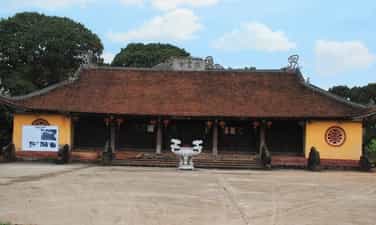
Huong Lang Pagoda, also known as Lang Pagoda or Giac Vien Pagoda, is located in Huong Lang village, Minh Hai commune, Van Lam district, Hung Yen province. In addition to worshiping Buddha, Huong Lang Pagoda also worships Queen Mother Ỷ Lan - a woman who was good at public affairs and housework during the Ly Dynasty. This is a beautiful artistic architectural work with historical, cultural and scientific value. Legend has it that the pagoda was built by Queen Mother Ỷ Lan during the Ly Dynasty, around 1115. The pagoda is large-scale, covering an area of nearly one hectare, including many buildings, with an architectural layout of "foreign internal work". Including a three-entrance gate with three entrances and steps leading up to a flat platform. The pagoda is divided into three levels, from this level to the second level there are also three entrances, the third level is the main area. This is an area including monk's house, council house, and Buddha hall. During the resistance war against the French, the pagoda was destroyed, and it was only restored in 1955. The pagoda faces the main direction to the Lang River. The front hall is arranged on high steps with carved stone steps. The building has a lotus-shaped truss-style architecture with four rows of columns. All columns are placed on stone platforms decorated with lotus petal patterns, in the style of the Ly Dynasty. The trusses are made of ironwood with carved patterns of floral themes. The blocks floating on the statue's surface have almost no rough edges, all are smooth, smooth and elaborate, with no sudden breaks in rhythm. It can be said that this is the most massive statue pedestal of the Ly Dynasty still preserved at the monument. In addition, the pagoda also has ten pairs of stone handrails, carved with phoenix, fox and chrysanthemum; 4 perpendicular stone columns support the stone beams of the building, many of the stone pillars are carved with lotus and chrysanthemum petals very meticulously and sophisticatedly. These are priceless works of the Ly Dynasty that are still preserved. The great worship hall faces the main pagoda overlooking the Lang River, near the village road, restored in 2005, with a scale of 7 rooms. If you want to enter the front hall, you have to go through the steps. Here, the steps are separated into 5 paths by 6 steps carved in the shape of a stone crocodile facing the front. The front hall has a lotus-shaped truss architecture with four rows of column bases, all columns are placed on stone platforms decorated with lotus petal patterns, in the Ly Dynasty style. The rafters are made of ironwood and carved with stylized floral motifs. The harem court is a space away from the front court building. The harem has a frill-style architecture with two floors and eight roofs. In the middle of the harem is the "mascot" of a lion wearing a lotus crown, forming a large stone pedestal. Huong Lang Pagoda still preserves many very special and unique relics of the Ly Dynasty. Also here, people discovered a site named Lang Pagoda Site, including a lion statue also known as Mr. Sam. The pagoda has ten pairs of stone handrails, carved with phoenix and fox, string chrysanthemums, four square stone pillars at four corners supporting the stone beams of the previous building and many stone pillars carved with lotus petals and chrysanthemums. Because of its cultural - historical, artistic, and architectural values, Huong Lang Pagoda was ranked by the Ministry of Culture, Sports and Tourism as a national historical, cultural, architectural and artistic relic on September 11. March 13, 1974. Source: Hung Yen province electronic information portal
Hung Yen
4830 view
Rating : National monument

Dau An Temple
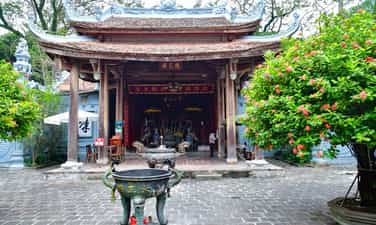
An Xa Temple (also known as Dau An Temple), written name is Thuy Ung Quan, located in An Xa village (also known as An village), An Vien commune, Tien Lu district, Hung Yen province. Based on the documents and artifacts still preserved at the site and the stories of the elders in the village, An Xa temple is the place to worship the Jade Emperor, Ngu Lao Tien Ong (gods of Taoist culture). religion), along with the Heavenly Immortals and Earth Immortals - those who have publicly cleared the wild swamps, eliminated wild animals, taught people to cultivate, established Cha village, and built "Thuy Ung Quan", to pray for rain. Favorable weather, good wind, good harvest. Based on legends, stories of the village elders and valuable ancient relics still preserved at the site, An Xa temple was built quite early, around the 16th century at the latest. – XVII, up to now it has been restored and embellished many times. An Xa Temple was built on high land shaped like a dragon's head in the west outside An Xa village. In front of the temple are luxuriant ancient trees that shine into the clear blue lake, considered the village's "water gathering and blessing" place. Surrounding the outer ring are moats and rich fields. The front of the temple faces south, with an architectural plan in Cong style including: 5 Pre-Teacher rooms, 3 Ong Sang rooms and 3 Hau palace rooms. In addition, located inside and outside the relic grounds, there are still a number of architectural works associated with the formation and stories related to the figures worshiping at the relic: Ha Temple, Ky Niem Temple located on two sides. side of the main temple. Opposite both sides of the temple yard are two rows of Giai Vu houses. On both sides of the Three Entrances are Mother Temple and Thien Quan Temple. Outside the relic grounds to the East are two communal houses Vo and Can communal house. Three gates: built on a square plan, including 3 doors and two roof floors. Around the four corners, there are four large bronze pillars. Tam Quan's roof is covered with funny-nosed tiles. The three gates of An Xa temple have a bronze bell cast in the Later Le Dynasty, the 34th year of Canh Hung, and a drum. The Pre-Saint Court: is a 5-compartment building, made in the style of a gable wall. The structure is in the style of 4 rows of columns. The altar is where the altar to worship the Jade Emperor (middle space) is placed, and the two side rooms are where the altars to worship Thien Tien and Dia Tien are placed, along with horizontal paintings, parallel sentences and valuable worship objects. Sculptures decorating the Tien Te court mainly include three main themes: mascots, flipped leaves and twisted patterns in the artistic style of the 19th and 20th centuries. Morning glory pipe: this item is made entirely of monolithic green stone. The entire system of pillars, parallel sentences, diaphragms, and hammock doors here are made of stone with panels weighing up to tens of tons, carved with dragon shapes by contemporary artists and craftsmen, and carved with dragons on the outside. The couplets in Chinese characters are extremely sophisticated and unique, rarely seen in Vietnamese religious buildings. The harem: consists of 3 rooms, in the style of a gable wall that covers the throne. This is where the altar to worship Tam Thanh Luc Ngu is located. Above the lower roof is the match neck made of stone divided into different cells decorated with images of phoenix, dragon, and lotus, with three Chinese characters "Thuy Ung Quan" engraved in the middle. The roof is covered with traditional tiles, the ridge is left plain without decoration. The front wall is built of monolithic green stone. The middle space is built into a row of pillars to form an altar, the door is carved with motifs: Bats holding money (phu ham tien), cranes standing on the back of turtles to express wishes for happiness, fortune and wishes. Let the villagers of An Xa live long and forever. In the center of the Harem is a terracotta incense altar in the shape of a rectangular box. Other construction items include: Ha Temple: Thien Quan Temple. Mau Temple. Temple of Remembrance. Dinh Vo. Dinh Can. Regarding historical value: An Xa Temple is a typical cultural center, a typical example of the transformation and integration between Taoist temples and temples. An Xa Temple Festival takes place from April 1 to 12 (lunar calendar) every year. With the above special value, the historical cultural, architectural and artistic relic An Xa Temple was ranked a special national monument by the Prime Minister on December 31, 2020. Source: Department of Cultural Heritage
Hung Yen
4574 view
Rating : Special national monument
Da Hoa Temple
Da Hoa Temple is also called Chinh Da Hoa Temple, located in Da Hoa village, Binh Minh commune, Khoai Chau district, Hung Yen province. Temple of Chu Dong Tu - Tien Dung - Princess Hong Van. The temple overlooks the Red River and Tu Nhien beach, and is said to be the place where the love affair between Chu Dong Tu and Tien Dung formed. Da Hoa Temple was built a long time ago, the current project was built at the end of the 19th century, from 1884 to 1886 by Chu Manh Trinh, a native of Phu Thi village, general of Me So, police officer of Hung Yen province. The project is famous for its massive scale and unique architectural ideas, in harmony with the natural landscape. The temple area includes 18 large and small projects: stele house, bell tower, banh ward, noon gate, altar house, incense burning building, second palace, third palace, harem and hermitage houses, tarpaulin houses, and houses. horses, artillery houses. The temple roofs have a stylized dragon boat shape. If you look down from above, you will see the temple roofs, combined together to look like a group of boats bobbing on the river. Chu Manh Trinh intended to shape the temple area to look like the yacht of eighteen-year-old Tien Dung, daughter of the 18th Hung King, traveling on the river. Da Hoa Temple still retains many precious relics. Statue of Saint Chu Dong Tu and his two wives cast in bronze, life-sized. Three thrones worship Chu Dong Tu and his two wives, made of wood, balanced layout, the top of the throne is carved with a dragon in the facing position. The throne dates back to the late 16th and early 17th centuries, and is considered the oldest of its kind still found in our country. Da Hoa Temple Festival is held from February 10-12 of the lunar calendar. The main day of the festival begins with a procession of tutelary gods from 8 villages of the ancient Me district to the main temple (including Me So, Da Hoa, Bang Nha, Phu Thi, Phu Trach, Thiet Tru, Nhan Thap villages). Each procession has flags, gongs and drums, precious bowls, lo bos, bowls of sounds, palanquins, bowls of tribute, dances of life, dragons, and lions. The procession of 8 villages meets each other with gongs and drums resounding, golden dragons winding from beginning to end of the procession. The next day is the water procession. The procession includes water palanquins and palanquins of 8 ancient Mexican villages taking boats to the middle of the Red River to hold a ceremony to bring water to the temple. The whole river section is filled with the bustling sounds of drums and gongs, and bustling bowl music. Da Hoa Festival organizes dragon dance, wrestling, and human flags. Dragon dance, there are 6-8 dragons. The dragon's dance movements are controlled by the person holding the ball and the sound of the mouth drum. The dragon dances around, winding rhythmically. When the drums beat slowly, the dancing is slow; when the drums beat fast, the dancing is fast and exciting. Dragons dance singly, in pairs, or all dragons in villages dance, demonstrating the skillful movements of their village's dragons. Participating in wrestling are 70-80 year old men, dressed in festival clothes, with scarlet turbans, blue shirts, yellow shirts, red and yellow belts, performing symbolic wrestling movements. This performance reminded everyone of the gratitude of Chu Dong Tu - Tien Dung for saving many people from illness and to prove that they were completely healthy, they took each other to the yard to wrestle and perform tricks for their grandparents to see. . Human flag, held at the temple yard. There are 32 troops divided into 2 factions, one male and one female. The people playing the roles of generals and chess pieces are both unmarried men and unmarried women. The most beautiful are the roles of grandfather and grandmother. Chess players from all over come to compete high and low. In 1962, Da Hoa Temple was ranked by the state as a National Historical Architectural and Artistic Monument. Source: Hung Yen province electronic information portal
Hung Yen
5604 view
Rating : National monument

Xich Dang Temple of Literature
Xich Dang Temple of Literature is located next to the Red River, which is red and heavy with silt all year round, in Lam Son ward, Hung Yen city, Hung Yen province. The reason why the Temple of Literature has such a name is because it was built on the land of Xich Dang village in the 17th century (Late Le Dynasty) on a small initial scale, until the 20th year of Minh Menh (1839), Nguyen Dynasty, was built. It has the current scale on the foundation of Nguyet Duong Pagoda (Xich Dang Pagoda). With more than 400 years of existence, enrolling 161 great scholars, Xich Dang Temple of Literature has demonstrated the studious spirit of people on this land. "First Kinh period, second Pho Hien". In the 17th century, under the reign of King Le Thanh Tong, to revive Confucianism, the court established many schools outside Quoc Tu Giam school in the towns. In Son Nam town (including the provinces of Ha Nam, Nam Dinh, Ninh Binh, Thai Binh and part of Hanoi and Hung Yen) there is Xich Dang literary temple (also known as Son Nam literary temple) built recently. as a place to worship the sages, as well as a place to organize the town's exams. After many changes in the geographical division of the towns under the Later Le, Tay Son, and Nguyen dynasties, Xich Dang literary temple became the literary temple of Upper Son Nam town and later of Hung Yen province. In front of the gate of Xich Dang Temple of Literature are two rice trees that are hundreds of years old, and statues of two large stone pigs carved in the 18th century. The three gates (also known as Nghi Mon gate) of Xich Dang Temple of Literature is one of the works that still retains unique architectural features among the remaining temples in Vietnam. Built in a frilly architecture, two floors with eight roofs and an attic. On both sides of the Tam Quan there are two loudspeaker platforms, used to announce the names of candidates and announce the regulations in the examinations. Instead of the drum tower like in the Quoc Tu Giam and Mao Dien literature temples, in the Xich Dang literature temple, the drum tower is replaced by a bell tower. The sound of the bell and the bell ringing is the signal that the exam has begun and ended, and it is also a call to express gratitude and gratitude to the wise men during each festival. The two bells and bells of the Temple of Literature are also ancient relics cast and created in the 18th century. The inner temple area is structured in the style of Tam: including Tieu Tu, Trung Tu and Hau palace. The roof system is structured in a "real estate" style. The main side faces south. The inside of the inner temple shines with a system of great letters, parallel sentences, hammock doors and a system of pillars and rafters completely painted with gold and covered with metal. The most valuable artifacts in the temple of literature still preserved today are 9 stone steles engraved with the names, hometowns, and positions of 161 people who passed the university entrance exam in the ancient Upper Son Nam town. Of which 138 are in Hung Yen and 23 are in Thai Binh. From the first exams under the Tran Dynasty to the last exams at the end of the Nguyen Dynasty, Hung Yen province had people passing high scores. Every time, there are talented people from Hung Yen who pass the exam to help the country and the people. At Xich Dang Temple of Literature, there are currently two statues of Confucius and Confucian scholars worshiping. Along with that is the statue of the prominent teacher, the first principal of the Quoc Tu Giam Temple of Literature Chu Van An. In 1992, Xich Dang Temple of Literature was ranked as a national historical and cultural relic by the Ministry of Culture, Sports and Tourism. Every year, on the 4th and 5th days of the Lunar New Year, the Temple of Literature holds a festival with activities such as writing the first words of spring, holding ceremonies, offering incense, calligraphy exhibitions, singing ca tru, and gradually restoring old festival again. In addition, during exam season, teenagers and students go to the temple to learn about the studious tradition of their ancestors and burn incense to pray for further development in their studies. Source: Vietnam National Tourism Administration
Hung Yen
5238 view
Rating : National monument
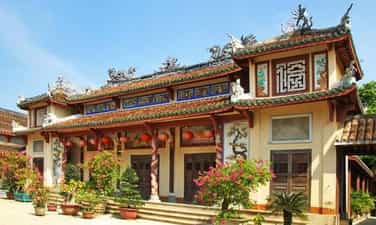
Phuoc Lam Pagoda
Phuoc Lam Pagoda is in Thanh Ha Commune, Cam Ha Ward, Hoi An City, Quang Nam Province. According to the history of Dang Trong Buddhism, Phuoc Lam Pagoda was founded by Zen Master Thiet Dinh - Chanh Hien, name An Triem, (1712 - 1796) in the mid-18th century. The pagoda was restored many times in 1822, 1864, 1891, 1909, 1965... There is an epitaph recording the process of restoring the temple. In the 4th year of Duy Tan, Phuoc Lam Pagoda was honored with the Golden Sea of Four Colors, an honor reserved only for private pagodas that have made great contributions to faith and community welfare. The building has unique architecture. The campus of the project is Mon-shaped with 3 main areas: gate, yard and main hall. 1. Three-entrance gate There are 2 side gates on both sides in the East and West and 1 main gate in the middle, both built of bricks. Above the main gate is the inscription "Phuoc Lam Tu" 2. Temple yard The temple grounds are shaded with ancient trees, ornamental plants and flagpoles. Surrounding the yard are screens, the East building (where to receive guests and the monk's residence) and the West building (place of worship). 3. Main hall This is a house with 3 main rooms and 2 side rooms covered with yin and yang roofs, a boat-shaped roof embossed with winding dragons, phoenixes, and unicorns. The main hall is the area where statues of Buddha, statues of Avalokiteśvara Bodhisattva, statues of Mahasthamaprapta Bodhisattva and altars of Tram Trai and Four Heavenly Kings are placed. 4. Ancestral church The ancestral church is a new building built in 1965 right behind the main hall. This is the worship area for the person who founded Phuoc Lam pagoda and the deceased abbots. Currently, Phuoc Lam Pagoda preserves many valuable antiques, typically: delicately carved ancient woodblocks, sets of ancient porcelain bowls, bronze bells, bronze bells, incense burners, wooden boards, and censers. , celadon porcelain bowls, wood-carved Buddhist scriptures...... After more than 200 years of existence, the building is tinged with the moss of time but the value left by Phuoc Lam Pagoda remains forever. Phuoc Lam Pagoda was ranked as a national monument in 1991. Source: Quang Nam Museum
Da Nang
6242 view
Rating : National monument
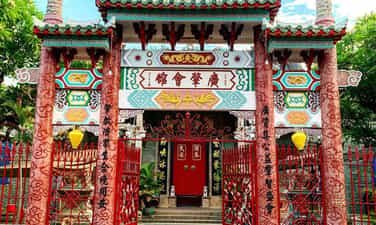
Cantonese Assembly Hall
The Cantonese Assembly Hall is located at 176 Tran Phu Street, Hoi An City, Quang Nam Province. The Cantonese Assembly Hall is known as an important historical relic of Hoi An ancient town. With Chinese-style architecture. The Cantonese Assembly Hall was built around the end of the 18th century. From the 15th to the 19th century, Hoi An was one of the main trading ports of our country, not only that, it was also visited by many Chinese people. reside, trade and do business. An association of Chinese Guangdong merchants, when coming here, decided to build an assembly hall in 1885. This place became a place of worship and a gathering place for compatriots to meet, regularly helping each other in business. as well as other life needs. The Cantonese Assembly Hall in Hoi An is also known as the Quang Trieu Assembly Hall. Initially worshiping Confucius and Thien Hau Thanh Mau, after 1911 it was converted to worship Tien Hien and Quan Cong. With a unique architecture built in the shape of the national character, from wood and stone materials, the assembly hall is a closed building with three-entrance gate, a large garden decorated with many ornamental plants, in the middle is Phuong communal house, East and West sides of the house, main hall and backyard,... quite similar to other assembly halls in Hoi An. • Triple gate:. There are 3 large paintings of 3 famous mandarins of the Three Kingdoms period: Liu Bei, Truong Phi and Quan Cong. • Pre-electric house:. With a large scale, this place includes elaborately carved stone walls. The roof has many levels, has a soaring shape interspersed with embossed images bearing ancient legends. • Campus of the Assembly Hall:. Including a large garden, with many ornamental trees that are meticulously cared for and pruned. In the middle of the yard there is a large lake, inside is a winding dragon image carved based on the legend. "Ly fish turns into dragon". • Main hall:. With a large space, characterized by large supporting pillars divided into 3 compartments: the middle compartment worships Quan Cong, the remaining two sides worship Phuoc Duc Chanh Than and Thai Bach Tinh Quan. • Left vu, right vu:. To connect the electricity bill with the main hall, both sides also have a left vu and right vu which are simply designed. • Place to welcome guests:. Located to the right of the main hall, it is also the place where important conferences are discussed. • Backyard: The clubhouse's backyard is very spacious with many trees. The highlight is a delicately carved dragon-shaped fountain and a large painting of Quan Van Truong. Currently, the Guangdong Assembly Hall still retains highly valuable ancient relics such as four large horizontal panels, a pair of Chinese celadon porcelain pedestals, a bronze censer up to 1.6 meters high... The most special among That is the painting of Guan Gong riding a horse to protect Liu Bei's wife, solemnly hung on the stone wall at the guild hall. According to the explanation of the Guangdong Assembly Hall, this painting is associated with a real story in Chinese history. In the first lunar month of every year, the Nguyen Tieu festival will be held at the guild hall to pray for a year of good weather, good business, and meetings with fellow countrymen. In addition, on the 24th day of the 6th lunar month, there is also a huge Quan Cong festival to express respect to the talented general. Source: Quang Nam Tourism Newspaper
Da Nang
5597 view
Rating : National monument
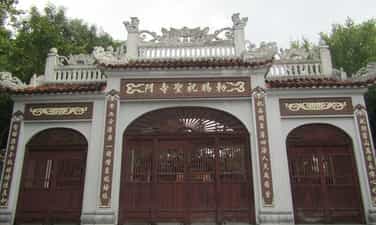
Chuc Thanh Pagoda
Chuc Thanh Pagoda is located in area 7, Tan An ward, Hoi An, Quang Nam. This is where the Chuc Thanh Zen school of Lam Te Zen was born. With a diverse collection of Buddha statues and unique ancient architecture. Among the famous temples in Hoi An, Chuc Thanh Pagoda is the most sacred and oldest temple in the Quang region. Built in the 17th century by Zen Master Minh Hai. Chuc Thanh Pagoda was built in the triangle architectural style. This is a blend of typical decoration and sculpture of Vietnamese and Chinese culture. This is also the most popular and popular architectural style in temples in Vietnam. The three-entrance gate with its ancient tiled roof and the image of two solemn unicorns, along with the image of three blooming lotus flowers, all create a solemn and sacred space according to Buddhism. The most special part of the temple grounds is the ancient tower with 16 tombs. This is where the remains of Patriarch Minh Hai and many other saints of the sect are stored. In addition, within the temple grounds there are many statues of gods and Buddhas sculpted extremely sophisticatedly and vividly, creating unique experiences when visiting. The main area is built in the middle of the campus, with a strong column truss system. The pagoda's roof is covered with soft, curved yin-yang tiles. At the top of the roof is a pair of dragons facing each other, leaning towards the sun in the middle. Behind the two dragons are two phoenixes flying out and looking back. Next, down to the porch, the temple roof is decorated with patterns, carved with images of Shakyamuni Buddha from birth to death, and at the last corner of the porch are two unicorns standing facing the front. Inside, in the middle space, there is a statue of the Three Worlds at the top, on the lower table is a statue of Maitreya Buddha, on both sides are Ananda, Kasyapa, statues of Bodhisattvas Manjushri and Samantabhadra, and statues of 18 Arhats. On both sides are statues of Ho Phap and Tieu Dien with a height of 1 meter 75 meters. Furthermore, inside the main hall there is also a system of large and small drums, large and small drums, and many parallel horizontal panels. Next to the main hall is the front hall, which has 4 large steles recording the restoration of the pagoda, naming the pagodas and monks who contributed to building the pagoda. The innermost area is the Hau Tam area, the Eastern statue, the Western statue and the To hall. Behind the Main Hall is the Hau Temple worshiping Ksitigarbha, Pho Lien Hoa and Ai So Than. On both sides are the Eastern statue - the residence of the Sangha and the Western statue worshiping incense. Going through an open yard with many precious ornamental plants, you will reach the To Duong. The Ancestral House was built quite simply as a place to place the thrones of the patriarchs and abbots of the pagoda through generations. The system of dragon statues and tablets is also very delicately and elaborately carved, demonstrating the talented hands of ancient artisans. Source: Collection of Quang Nam tourism newspaper
Da Nang
5245 view
Rating : National monument
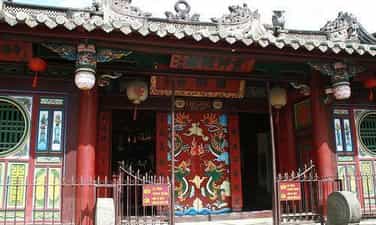
Quan Cong Temple
Quan Cong Temple (address - 24 Tran Phu Street) is also known as Ong Pagoda, the literal name is Trung Han Cung, built by the Minh Huong people who settled in Hoi An and the Vietnamese together in the mid-17th century. . The temple worships the talented general Quan Van Truong (Quan Vu or Quan Cong), a famous historical figure of the Three Kingdoms period who is very admired. He is one of the "Ten Saints of China" and the "Four Great Three Kingdoms", becoming a model and symbol of Righteousness - Trust - Faithfulness - Courage, and is honored as a Saint. Worshiping Quan Cong aims to admire and praise his kindness and loyalty, so that people can follow his example. Guan Yu is one of the most famous generals in Chinese history. He had many great contributions, defending Han, suppressing Wu, and destroying Wei. Because Hoi An used to be an urban area - a trading port, where trading contracts of Chinese merchants often took place, the Quan Cong temple was built according to their religious needs. The architecture of Quan Cong Temple consists of four buildings, a vestibule, two left and right palaces and a large main hall. The four buildings were built in a script style, stacked in structure, with unique roof tiles and roofs, decorated with elaborate dragon motifs. The main hall has a statue of Quan Cong, dressed in a dragon-embroidered robe embossed with gold, his face is majestic and bright, his eyes looking forward in ecstasy. The main hall also has two statues: Chau Thuong, the brave and loyal servant of Quan Cong, and the statue of Quan Binh's loyal son; with two horses the same height as real horses, on the left is a white horse, on the right is a red horse - a war horse that Quan Cong is very precious about. These statues are exquisitely crafted, demonstrating the skill of ancient craftsmen. In addition, in Quan Cong Temple there are many willow plaques, banners, ordinations, stone steles and ancient artifacts. In particular, the Temple also preserves the ancient poem and fable composed by Xuan Quan Cong Nguyen Nghiem (father of the great poet Nguyen Du) in 1775, when serving as left general of Binh Nam army. in Hoi An; along with two paintings by Uong Si Cu and Nguyen Lenh Tan. Having gone through many ups and downs of history, everything remains intact. It is also a rare historical relic that still exists today, preserving the mark of the Trinh - Nguyen conflict in Dang Trong from the 18th century. Quan Cong Temple was granted the title of National Historical - Cultural Monument on November 29, 1991. Source: Quang Nam Tourism Newspaper
Da Nang
6233 view
Rating : National monument