
 vn
vn en
en ja
ja ko
ko zh
zh


Lầu Bà Cố Hỷ

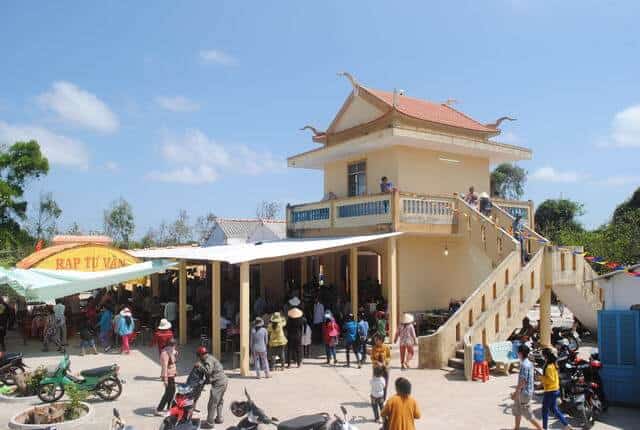
Lầu Bà Cố Hỷ Ba Động is a sacred structure that beautifully embodies the rich coastal folk culture of Trà Vinh.
Spiritual Beauty by the Sea
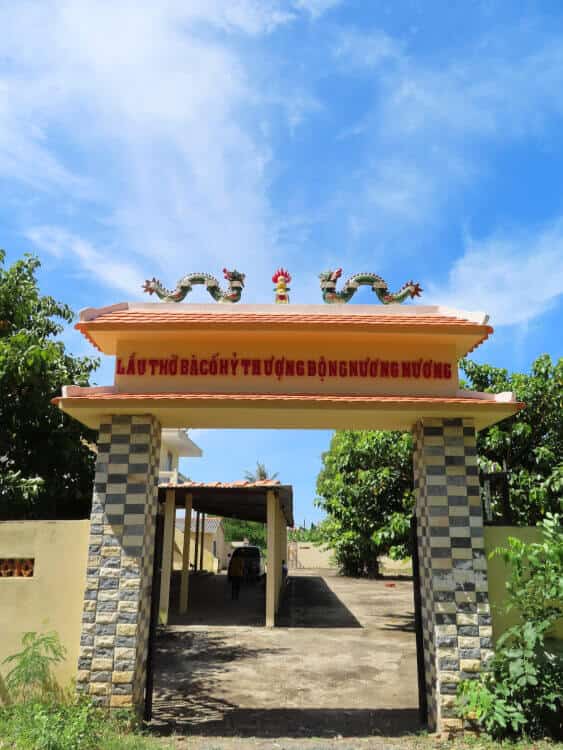
Lầu bà Cố Hỷ Ba Động, also known by shorter names such as Lầu bà Ba Động and officially named Lầu bà Cố Hỷ Thượng động nương nương, is located in Ba Động Hamlet, Trường Long Hòa Commune, Duyên Hải Town, situated 51 km southeast of Trà Vinh City and 12 km northeast of Duyên Hải Town.
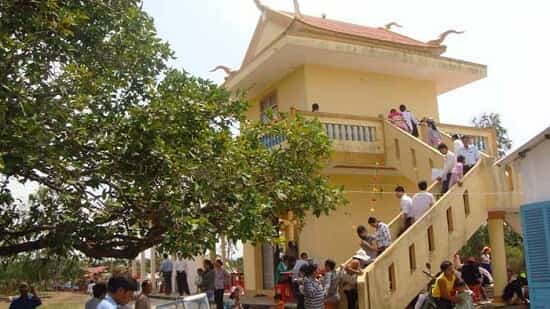
The worship of Bà Cố Hỷ is a traditional folk belief among Vietnamese fishermen. This belief flourished in the Bình Thuận region, South Central Vietnam, and was carried by fishermen as a spiritual cultural heritage during their centuries-long migration southward. Thus, the custom of worshipping Bà Cố Hỷ is regarded as a “certification” of the local inhabitants' origins during their southward expansion. Furthermore, from the pre-insurrection period through the two resistance wars against French colonialism and American imperialism, Lầu bà Cố Hỷ Ba Động and the community of followers made significant contributions to the cause of national liberation.
Based on this, Lầu bà Cố Hỷ Ba Động was recognized as a provincial-level historical and cultural relic by the People's Committee of Trà Vinh Province in 2015.
In the Mother Goddess worship tradition of Vietnamese people in Central and Southern Vietnam, Bà Cố Hỷ is a unique goddess, considered both a benevolent deity and a vengeful spirit. Legend has it that long ago, in a coastal village in Quảng Nam, there lived a beautiful orphan girl with her kind adoptive father. Malicious rumors spread that the girl was involved in an incestuous relationship with her own father, leading the villagers to trap her in a basket and drown her in the sea. Her body drifted to the Cà Ná region, where local people buried her and erected a temple on a hill in her honor. Filled with an unyielding sense of injustice, the girl's sacred spirit transformed into a dragon, soaring across oceans and rivers to rescue upright people caught in fierce storms, but also ready to brutally punish those who were deceitful and harmed others. Fishermen from Bình Thuận, having experienced her divine interventions many times, established numerous temples on high sand dunes along the coast, honoring her with the name Bà Cố Hỷ. Oaths and curses like “Bà Cố Hỷ will gouge out your eyes”, “Bà Cố Hỷ will twist your throat”… deeply ingrained themselves in the minds and shaped the behavior of generations of fishermen, encouraging them to do good, avoid evil, and live harmoniously with nature and their village community.
During the time of assisting Lord Nguyễn Ánh, General Lê Văn Duyệt once stopped at a desolate temple in Cà Ná, praying to the goddess for her protection of his army. After his victory, Emperor Gia Long bestowed upon her a royal decree with the honorary titles “Thượng động Cố Hỷ Tiên Phi” or “Thượng động Cố Hỷ Nương Nương”. From then on, the worship of Bà Cố Hỷ became a popular folk belief among fishermen in the South Central region, especially in coastal areas with three large sand dunes belonging to Bình Thuận Province.
During their southward migration between the 17th and 19th centuries, a segment of Bình Thuận fishermen settled and established villages in the coastal areas of Trà Vinh, bringing with them the worship of Bà Cố Hỷ. A distinctive feature of this practice was their choice of high sand dunes or the construction of tall towers for worship. The coastal region of Trà Vinh once housed many Bà Cố Hỷ worship establishments, the most prominent being Lầu bà Bến Cát (now retaining the place name Vàm Lầu, in Mỹ Long Bắc Commune, Cầu Ngang District), Động bà (now transformed into Giác Linh Pagoda, dedicated to Buddha, also in Mỹ Long Bắc Commune, Cầu Ngang), and Lầu bà Ba Động. By the end of the 20th century, Lầu bà Ba Động remained the sole Bà Cố Hỷ worship site in Trà Vinh Province that was well-built, managed by an administrative board, and featured traditional festivals organized quite systematically each year.
Lầu bà Cố Hỷ Ba Động was established in conjunction with the land reclamation and village founding process by the people of Trường Long Hòa. Initially, this place of worship was simple, featuring a basic wooden frame and a roof made of nipa palm leaves. By the early 20th century, villagers collectively rebuilt it with ironwood (căm xe wood) and a tiled roof. During the American War, Lầu bà suffered damage from bombing raids and was rebuilt grandly in 2008, appearing as it does today.
Lầu bà Cố Hỷ Ba Động is built on a spacious compound spanning 3,000 square meters. The main architectural feature is the Goddess's temple, connected to a performing hall (vỏ ca) used for the 'múa bóng rỗi' ritual dance and for preparing offerings. In front of the courtyard is a small shrine dedicated to Đại Càn Nguyên Soái or Nam Hải Đại Càn Tướng Quân, which is the spiritual tablet for the whale. Behind it is the 'nhà trù,' or kitchen, and to the left is a row of houses used to host visitors from all directions attending the Vía Bà festival.
The Lầu bà (temple) features a ground floor and an upper floor. The ground floor is dedicated to Bà Chúa Xứ, a popular form of Mother Goddess worship in the Mekong Delta region, considered the goddess who governs the land and the vast sea. The altar for Bà Chúa Xứ is placed in the center. To the left is the altar for two young deities, “Tài” and “Quí” (pronounced in the Hokkien dialect), who are actually “Đại” (Great) and “Tiểu” (Small). Legend says they are her two sons and also her attendants. To the right is the altar for Nam Hải Quốc Gia, the spiritual tablet for the whale, a sacred creature believed to have been assigned by Avalokiteshvara Bodhisattva (Guan Yin) to patrol the seas and rescue those in distress.
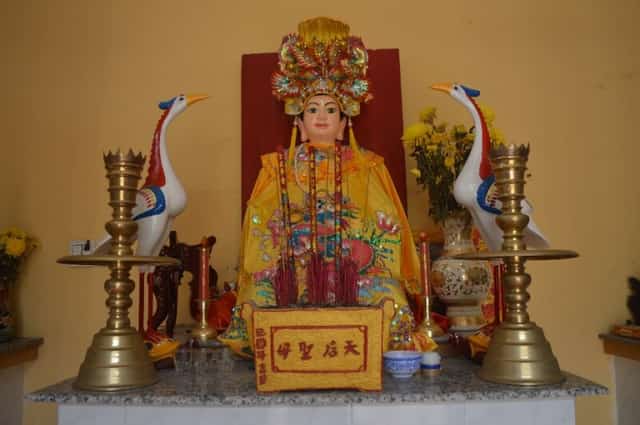
The upper floor houses a rather secluded worship chamber, encircled by a surrounding corridor. At the center of the chamber is the altar with a statue of Bà Cố Hỷ, flanked by statues of Bà Thủy (Water Goddess) and Bà Hỏa (Fire Goddess). A unique aspect of Lầu bà Ba Động is that, although Bà Cố Hỷ is a form of Mother Goddess worship with a clear mythology, once popular from the South Central region to the Mekong Delta, generations of Trường Long Hòa residents have identified this goddess with the historical figure Triệu Thị Trinh (also known as Bà Triệu), a renowned female general from the early centuries CE who fought invaders to save the country. Legend has it that when the elders cast lots to seek permission to establish Lầu bà, a red-painted wooden box mysteriously washed ashore during a storm. The villagers took it back out to sea by boat, but before long, the box drifted back to shore. The elders reverently brought it ashore, and upon opening it, discovered two royal decrees (sắc phong Thần) for the deities, honoring the siblings Triệu Minh Công (also known as Triệu Quốc Đạt) and Triệu Thị Trinh. The elders understood that their village had been honorably chosen by the deities as a dwelling place, so they erected a communal house (đình) to worship the male decree (Ông) and brought the female decree (Bà) into the Lầu, where it is worshipped alongside Bà Cố Hỷ.
This phenomenon of identifying a Mother Goddess with a historical figure reflects the patriotism and national origins of the Trường Long Hòa people through many historical ups and downs.
Trường Long Hòa is a land rich in patriotic traditions and revolutionary struggle, serving as a solid base for the Provincial Party Committee and revolutionary armed units of Trà Vinh Province throughout the two resistance wars. Amidst these collective achievements, the Lầu bà religious establishment, its management board, and the community of followers made significant contributions.
During the pre-insurrection period, Lầu bà served as a meeting place for the Party Cell and the Vanguard Youth organization of Trường Long Hòa, where preparations were made for the local uprising to seize power in August 1945. Soon after, when French colonialists threatened to invade Trà Vinh by sea, Lầu bà became a barracks for the provincial Republican Guard forces and local people, who established a coastal defense line to thwart the enemy's advance.
After invading Trà Vinh, French colonialists established Ba Động District, making the Ba Động area its administrative center. The army and people of Duyên Hải used Lầu bà as a springboard for their attack, driving the district headquarters out in February 1947. In 1951, Lầu bà also served as a staging point for our army and people to sink a notorious enemy fleet, eliminating over 200 enemy soldiers.
Following the Đồng Khởi Uprising in September 1960, the resistance war against the Americans by the army and people of Trà Vinh increasingly gained momentum. Lầu bà became a crucial base within the Trà Vinh Provincial Party Committee's network in Trường Long Hòa. This very location was chosen by the Provincial Military Command to open numerous training courses for military cadres across provincial, district, and commune-level armed units. Notable examples include the political-military cadre course and the special forces training course. Many trainees who grew up here became talented leaders, commanders, or heroes of the armed forces. After being damaged by American bombing, the management board of Lầu bà donated ironwood (căm xe wood) pillars to the provincial military ordnance department, which used them to manufacture gunstocks, thus contributing to arming the armed forces.
From 1963 to 1966, Trường Long Hòa was one of Trà Vinh Province's two crucial reception points for weapons arriving from the 'Ships Without Numbers' (Đoàn Tàu Không Số) fleet, part of the Hồ Chí Minh Trail at sea. Lầu bà served as a transit point, temporarily storing weapons and military equipment before their distribution to key military units in the region and to the Provincial Military Logistics of provinces in the Mekong Delta.
Under the mobilization of the local Party Cell, many young men and women from the community of Bà Cố Hỷ Ba Động followers left their families to join the resistance, liberate their homeland, and contribute to the cause of liberating the South and reunifying the country.
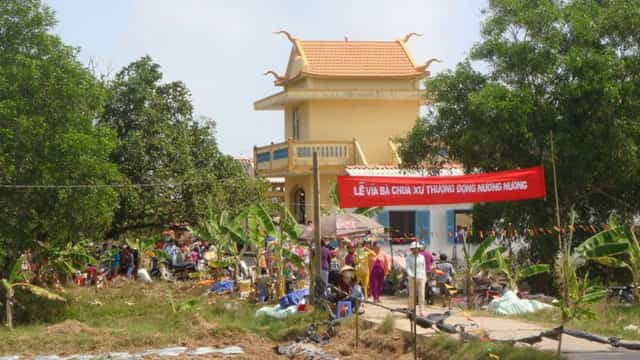
The Mother Goddess worship always goes hand-in-hand with the Vía Bà festival. The Vía Bà Cố Hỷ festival at Lầu bà Ba Động is held twice a year, in spring and autumn, on the 15th–16th days of the 1st lunar month and the 15th–16th days of the 7th lunar month, with the main Vía festival days being the 15th and 16th of the 1st lunar month. Because Lầu bà Ba Động is one of the rare well-preserved Bà Cố Hỷ worship sites with a diligently maintained management board, the Vía Bà festival is not only a celebration for local residents but also attracts thousands of coastal dwellers from provinces spanning from Tiền Giang and Bến Tre to Sóc Trăng, Bạc Liêu, and Cà Mau. The main rituals of the Vía Bà Ba Động festival are as follows:
– The 15th Day of the 1st Lunar Month: The Túc Yết Ceremony (6 AM: responsible individuals gather to review preparations); Mộc Dục Ritual (7 AM: cleansing and changing the robes and crowns of the Holy Mother's statue); Nghinh Ông (Procession to Welcome the Gentleman) (9 AM: a procession of village elders carrying incense burners, drums, parasols, and palanquins to bring "Ông" back. "Ông" here refers to Triệu Minh Công, also known as Triệu Quốc Đạt, the elder brother of female general Triệu Thị Trinh. "Ông" is also understood as Đức Ông Nam Hải, the spiritual tablet of the whale); Khai Lễ – Chầu Mời (Opening Ceremony – Invitation) (12 PM: the resounding beat of drums and gongs signals the Holy Mother's arrival to reside in the temple, overseeing all worship activities of the villagers); Tế Tiền Vãng (Ancestral Offering) (4 PM: a ritual offering to the venerated ancestors and benefactors who contributed to reclaiming land and establishing the village); Múa Bóng Rỗi – Địa Nàng (Ritual Dance – Earth Spirit) (7 PM, lasting until late night: male and female ritual performers (bóng cô, bóng cậu) dance and sing, offering various items to the Holy Mother, and also providing folk performance art for the villagers' enjoyment); Chánh Tế (Main Offering Ceremony) (11 PM – 12 AM: the main offering ritual with a full array of food and offerings, along with a eulogy praising the Holy Mother's virtues, praying for her grace and protection upon the people, especially those at sea).
– The 16th Day of the 1st Lunar Month: Tống Ôn Ceremony (10 AM: a sorcerer performs rituals to dispel negative energy, evil spirits, and diseases); Tiễn Ông (Farewell to the Gentleman) (12 PM: a procession of formally dressed people escorts Ông's spiritual tablet back to its original place).
Throughout these two days, in parallel with performing the rituals, the management board of Lầu bà hosts visitors from all directions, fostering a joyful and united atmosphere.
Vinh Long 5209 view
Update day : 30/10/2023
Source : travinh.gov.vn Affiliate links
Monuments close by
See all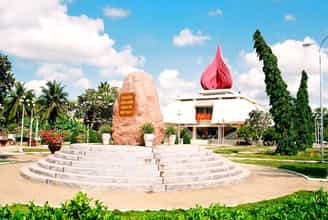
Dong Khoi Ben Tre Special National Monument
Dong Khoi Ben Tre relic belongs to Dinh Thuy commune, Mo Cay Nam district, Ben Tre province. The place where the historical event Dong Khoi Ben Tre took place, opening the Dong Khoi movement of the South Vietnamese revolution. In May 1959, the Party Central Committee held its 15th Conference to review the domestic situation and set out revolutionary guidelines for the whole country and the South, determining the basic task: Liberation of the South from imperialist rule, achieving national independence and the plowmen having their own fields, completing the people's national democratic revolution in the South, moving towards building a peaceful, unified, independent Vietnam. democracy and prosperity. In early December 1959, comrade Nguyen Thi Dinh - Deputy Secretary of the Ben Tre Provincial Party Committee held a meeting at Cu Lao Minh, the Ben Tre Provincial Party Committee selected 3 communes Dinh Thuy, Phuoc Hiep and Binh Khanh in Mo Cay district (now is Mo Cay Nam district) as the guiding base and the starting place of Dong Khoi. At 11:00 a.m. on January 12, 1960, in Dinh Thuy commune, all the people rose up and attacked the enemy. Opening the movement, on the morning of January 17, 1960, revolutionary forces arrested and executed Doi Ty - commander of the General Civil Guard, notorious for his cruelty. Next, the revolutionary forces and the masses surrounded Snake Communal House - where the Civil Guard General was stationed and surrounded and occupied Vam Nuoc station. Our forces captured the station and took control of the situation. Our troops captured 15 guns, 10 grenades and 1,000 bullets of all kinds, liberating all communes and hamlets in Dinh Thuy, puppets and soldiers in the area. rumors of disbandment. At 10:00 p.m. on January 17, 1960, when ordered to rebel, the people of Phuoc Hiep took to the streets to demonstrate their strength to support action groups besieging the civil guard station and the commune. Phuoc Hiep was engulfed in cheers, drums and the continuous explosion of pipes and loudspeakers calling for surrender. The people of Phuoc Hiep commune smashed the enemy's stranglehold, gaining mastery over the entire commune. On January 18, 1960, the people of Binh Khanh commune simultaneously stood up to defeat the hamlets, commune guards, spies and informers, and seized power. Because the puppet forces here were very strong, it was not until 12:00 midnight on January 20, 1960 that Binh Khanh commune was completely liberated. Following the direction of the province, people throughout Mo Cay district simultaneously rebelled, day and night; The continuous sound of drums and gongs spread throughout Cu Lao Minh and Cu Lao Bao. Young men and women were organized into teams, hoisting flags, carrying large guns and small guns with coconut palms, and dragging them like water bursting its banks to demonstrate revolutionary spirit, intimidate the enemy's spirit, making them lie down in fear. stay in the garrison. From Ben Tre, the Dong Khoi movement quickly spread throughout the Mekong Delta provinces. On the night of January 24 and early morning of January 25, 1960, many rural areas rose up to destroy evil, break the grip, disband communes and hamlets, and gain mastery. Until mid-1960, the Dong Khoi fire continued to spread to the Central Highlands provinces, creating a vibrant chain uprising throughout the Southern and Central Highlands provinces. Dong Khoi Traditional House was built in 2001, with a total area of 5,029.3m2, including main items: reception house, victory stele and traditional house. The reception house is built of reinforced concrete, has a pink ceramic tile floor, and a red tiled roof. The house has three doors made of iron frames painted gray and covered with glass, the main door facing East, two side doors facing South. The victory stele was built on the right side of the relic, consisting of seven concentric circular steps covered with blue polished stone. The front facing south is engraved with eight golden words "Heroes rise together, defeat the Americans and destroy the puppets". The back of the stele is engraved with the content "Miracle Fire" because Ben Tre province launched a contest to write an epitaph praising Dong Khoi in 1960, and was engraved on the stele to commemorate the 45th anniversary of Dong Khoi Ben Tre. The Traditional House has a ground floor and an upper floor, on the roof is a 12m high Dong Khoi torch symbol. The inside of the ground floor displays images, documents and artifacts of the political struggle movement of the people of Ben Tre from July 1954 to the end of 1959. The upper floor displays images, documents and artifacts from the Ben Tre people's political struggle. Dong Khoi movement. In the middle hall, there is a stylized wall embossed with the words "Heroes rise together, defeat the Americans and destroy the puppets", next to it is a sand table representing the Dong Khoi Ben Tre movement. Dong Khoi Ben Tre relic was ranked by the Prime Minister as a special national relic on December 22, 2016. Source: Department of Cultural Heritage
Vinh Long
9217 view
Rating : Special national monument
Ben Tre Provincial Museum
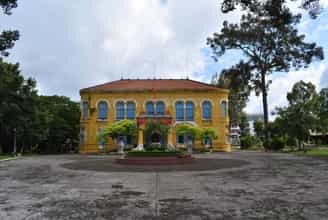
Ben Tre Museum was established in 1981, located at 146 Hung Vuong Street, An Hoi Ward, Ben Tre City with an area of about 20,000 square meters. The main side of the Museum faces the Ben Tre River with shady ancient trees and many lush, precious ornamental flowers - a poetic, gentle, profound scene filled with charm and attraction; The back side faces Cach Mang Thang Tam street, one of the busiest streets of Ben Tre city. Coming to Ben Tre Museum, you can visit, study, and research locations in this complex: National relic "Colonel Pham Ngoc Thao's residence and activities" (recognized as a National Historical Monument in 2015), the House is the Palace of Counsel (France) - Governor's Palace (USA) was built Following the French architectural style (1876) with solemn and ancient features, this place displays images and artifacts about the history and revolutionary traditions of the province's people during the two resistance wars against the French colonialists and the imperialists. American invasion; display pictures and documents about the intelligence soldier, Colonel Pham Ngoc Thao; Giong Noi Archaeological Relics display. The province's Socio-Economic Achievements Exhibition House (2003): displays images and artifacts in the local economic, cultural and social construction from after April 30, 1975 to the present - this place still exists. is a place to display unique and rich topics in many fields with great achievements of the province. Coconut house (2012): 3-room house built of coconut wood in the style of a Southern rural house. The house is designed in a gentle, spacious way with a strong national character, reflecting the simplicity and soul of the Vietnamese people. Inside the church of Uncle Ho and AHLLVTND, Colonel Pham Ngoc Thao, on the wall are displayed images and artifacts related to Ben Tre coconut trees in the resistance war as well as in cultural activities. The coconut house also organizes exchanges of "Don Ca Tai Tu", "Singing Sac Bua",... on the night of the 30th of each month. Coming here, visitors can feel the peace and warmth while enjoying Ben Tre folk melodies performed by artisans and amateurs. Outdoor display area: includes large-sized cubic objects such as plane wrecks, artillery, bomb casings... collected during the war; Around the campus are interwoven miniature landscapes: rice fields, buffaloes, lotus ponds, coconut bridges,... creating a feeling of closeness and familiarity with visitors. It is one of the red addresses for educating extremely meaningful revolutionary traditions, and is an interesting and attractive tourist destination. Each year, Ben Tre Museum attracts about 40,000 tourists inside and outside the province as well as international tourists to visit, learn, study, entertain, experience, and enjoy cultural heritage and folk art. Ben tre. Ben Tre Museum was recognized as a National Historical Monument on August 28, 2015 by the Ministry of Culture, Sports and Tourism. Source: Ben Tre Tourism
Vinh Long
8991 view
Rating : National monument
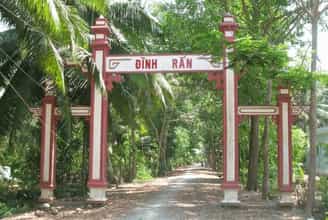
Ben Tre Snake Temple
Snake Temple in Mo Cay, Ben Tre has long been a sacred place, because this place is associated with many legends about the snake god protecting people. Not only that, Dinh Ran is also the place where Hero of the Armed Forces Nguyen Thi Dinh - aka female general Ba Dinh - started the Dong Khoi movement. There is an anecdote that said that when Ms. Ba Dinh was pointed out by Viet traitors, it was the snake god in Dinh Ran who "protected" Ms. Ba, helping her escape from the enemy's vicious gun barrels... Snake Communal House, also known as Dinh Nhon Communal House, is located in Dinh Thuy commune, Mo Cay district, now Mo Cay Nam, Ben Tre province. Snake Communal House is located on a small, isolated road, with spindly eucalyptus trees planted on both sides of the road. According to the people here, in the early 18th century, the four families Nguyen, Phan, Trinh, and Vo were considered the ones who explored this land. This place used to be deserted, with few people and many wild animals. So, when they arrived in this land, the elders built a small temple to worship Mr. Ho. Not long after the temple was established, more and more residents in the area came to admire and worship. The village elders here recently asked to establish a village and named it Dinh Phuoc village. The small temple was built into Snake Communal House. It is called Snake Communal House because in the past there were many high mounds here where many snakes lived. Every time the day comes to worship the temple, the snake appears and disappears for a moment. The offering is left behind after the offering, then the snake comes and takes it away. Since then, the lives of people in the area have become better, crops have always been bountiful, and villagers have been healthy. In the past, in front of the communal house gate, there was a pair of big snakes. That pair of snakes did not harm the people in the area but only ate the meat of beasts, lobsters, and leopards. People in the area call it "Mr. and Mrs. Snake". After the day of national unification, that pair of snakes was no longer seen. In early 1960, Mrs. Nguyen Thi Dinh, known to coconut people as Ms. Ba Dinh, secretly together with the leaders of the Ben Tre Provincial Party Committee, went to Snake communal house to have a meeting to discuss Dong Khoi day. The news leaked out and reached the ears of the Republic of Vietnam regime. The Ngo family immediately sent an army led by a security lieutenant to ambush the Snake temple to capture the revolutionary soldiers. Many soldiers were afraid of the "Snake God" and did not dare to go. A bit confused, the Lieutenant carried a lot of grenades with him so that when he encountered the giant "Mr. and Mrs. Snake" he would blow them up. "My soul is broken", when I was almost able to capture Ms. Ba Dinh, suddenly a soldier screamed wildly, thinking he had seen "Mr. and Mrs. Snake". The soldier pulled out the grenade pin, intending to throw it to "Mr. and Mrs. Snake", but for some reason, he threw it back at his comrades. The soldiers were excited that the other soldier must have been possessed by the "Snake God". The Lieutenant Commander was also seriously injured and a few days later was bitten by a poisonous snake and died. Puppet soldiers attempted to sabotage Snake communal house. But because they were afraid to go near the communal house, they used bombs and grenades to destroy the sacred communal house. Although desolate and dilapidated, Snake Communal House is still a sacred land that surrounded revolutionary soldiers during the years of bloody and horrifying resistance. In 1993, the Ministry of Culture and Information recognized Snake communal house as a national historical and cultural relic. Source: Compilation of People's Electronic Newspaper
Vinh Long
8916 view
Rating : National monument
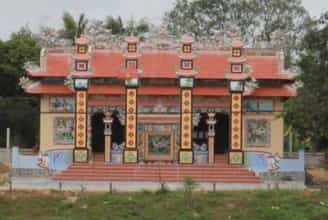
Phu Le Communal House
Located in Phu Khuong hamlet, Phu Le commune, Ba Tri district, Ben Tre province, Phu Le Communal House was allowed by King Minh Mang to establish a communal house in 1826, on the basis of the wooden leaf communal house built previously. On January 29, 1852, the communal house received the title of king Tu Duc. Amidst the quiet space, the gate of Phu Le communal house appears majestic and outstanding. The communal house is nearly two hundred years old and has been renovated many times but still retains its ancient features. The communal house is hidden among the canopy of ancient trees. When the sun shines, the rays of sunlight creep through the leaves, shining on the brick walls and mossy stone steps, further enhancing the inherent majesty and serenity of the communal house. The terrace and foundation of the communal house are constructed of green stone, with bricks on top. The communal house includes a total of 10 rooms: 6 main rooms attached to the roof and 4 additional rooms arranged in the "Dinh" style, which was also popular in the Mekong Delta in the past. The communal house's pillars are made of ironwood, a rare wood in the Southwest region, 40cm in diameter, and the roof is covered with fish-scale tiles. The communal house includes 6 incense tables, all painted in red and gilded with a very sophisticated dragon, unicorn, and phoenix image following the motif of ancient Vietnamese communal houses and pagodas. In particular, the art of multi-layered carving on wood surrounding the columns in the main hall shows the expert skills of the craftsmen of that day. Legend has it that when building the communal house, the elders in the area invited workers and artisans from Hue to carve these beautiful wooden works. Not only are the conventional images of four sacred animals of ancient Vietnamese culture, but also images of fish and crabs of the Ba Tri sea area - common animals that are also included in the architecture. shaping. The grandeur and majesty of the communal house shows the rich life and cultural richness of the residents of Phu Le in particular and the Ba Tri region in general at the beginning of the last century. Due to war and time, the architectural works and interior decorations (incense burners, scrolls, horizontal panels, screens, sashes, ceremonial items...) have been greatly degraded and damaged. However, the basic parts of the architecture remain intact, undamaged by bombs and bullets, especially the lacquered and gilded wooden sculptures that have been preserved to this day. Phu Le Communal House is the religious center of the resident community, where the villagers entrust their wishes to the god who supports the village, ordained by the state as Tutelary God Bon Canh. In addition to the Tutelary God, the previous sages and later sages who had meritorious achievements in discovering and establishing villages were also brought into the communal house to worship. The difference of Phu Le communal house is that on Tet or the communal house worship festival (Ky Yen ceremony) held on the 18th and 19th of the third lunar month every year, right in front of the communal house, a opera will be held to attract the attention of the crowd. island of people and tourists from all over. On the 9th - 10th day of the 11th lunar month, the communal house holds a ceremony to pray for a good harvest. On January 7, 1993, Phu Le Communal House was recognized by the Ministry of Culture and Information as a national historical and cultural relic. Traveling to Ben Tre, coming to Phu Le, you will also discover the traditional craft village of Phu Le (including weaving and making wine), including the craft of making wine that has existed for a long time. Phu Le sole wine is loved and known by many consumers because the product is delicious, pure, of stable quality, non-toxic and suitable for consumers' taste. Source: Ben Tre Tourism Newspaper
Vinh Long
8764 view
Rating : National monument
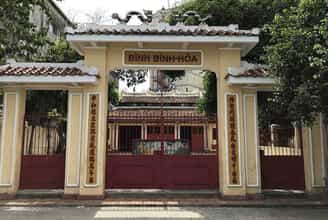
Binh Hoa Communal House
Binh Hoa communal house is located close to provincial road 26, in Binh Ninh hamlet, old Binh Hoa commune, now provincial road 88, hamlet 5A, Giong Trom Town, Giong Trom district, Ben Tre province. Binh Hoa Communal House was first built in 1812. The communal house was built by people from simple materials such as trees, leaves, and bamboo to worship the village's tutelary god. In 1852, Binh Hoa Communal House in Ben Tre was ordained by King Tu Duc. This is a very meaningful ceremony when the gods worshiped in the communal house receive recognition from the king. Since then, the communal house has become more known to the people, they come here to celebrate mass to pray for peace and luck. By 1903, the celebration committee stood up to organize and mobilize people to contribute effort and money to rebuild Ben Tre Binh Hoa Communal House on a larger scale. The construction process took 10 years, from 1903 to 1913, when it was completed. The main material used is four iron wood, the structure is attached with tenons and dowels, absolutely no nails are used. This is a very familiar style of pagoda construction during the Nguyen Dynasty. Although rudimentary, it is still extremely sturdy. On December 25, 1959 of the lunar calendar, a Ngo Quyen police regiment commanded by Le Xuan Khanh came from Ben Tre to station here. They used Binh Hoa communal house as a place to imprison and torture our revolutionary soldiers and compatriots. The Wei army used many brutal and cruel forms of torture. According to some records, the total number of compatriots they captured here, tortured and killed was more than 400 people. The hundred-year-old communal house has witnessed the blood of countless compatriots shed, and is also a historical witness to the crimes of the enemy. By 2012, Binh Hoa communal house was restored by the Department of Culture, Sports and Tourism of Ben Tre province in conjunction with the People's Committee of Giong Trom district. The process of renovating the monument lasted for 1 year, retaining the characteristics of the communal house but expanding its scale and building additional auxiliary works to serve visitors and tourists. When completed, the total area of Binh Hoa communal house is 9,000m2 with main items including: martial arts house, incense burner, main hall, lobby, corridor, back hall, Quan Thanh temple. Currently, Binh Hoa communal house still preserves more than 100 exquisite wooden sculptures including horizontal panels, parallel tureens, bamboo panels, reliefs, and incense burners. Binh Hoa Communal House was ranked as a National Historical, Cultural, Architectural and Artistic Monument on January 7, 1993. Source: Summary of Ben Tre tourism newspaper
Vinh Long
8681 view
Rating : National monument
Nearby tourist attractions
See all
Lan Vuong tourist area
Lan Vuong tourist area is an extremely interesting sightseeing and entertainment destination in Ben Tre. Lan Vuong tourist area is located on provincial road 887, in hamlet 2, Phu Nhuan commune, about 5km from Ben Tre city. From pristine fields, it has been designed to create a garden-variety Culture - Sports - Tourism Area that attracts a large number of tourists from near and far. Traveling to Ben Tre, coming to Lan Vuong, you will not only enjoy Ben Tre's specialties but also enjoy fresh air without noise and dust, immerse yourself in green nature with gardens, sweet fruits, Ornamental flowers and rowing boats are very charming and poetic. The entertainment games at Lan Vuong tourist area all have a rustic character typical of the Western river region: Fishing and casting nets to catch fish, boating, digging ditches to catch fish, wading in fields to catch crabs and snails. The large, airy space of a coconut countryside will certainly make visitors flutter. In addition, you can also visit the green-skinned grapefruit garden, the hybrid wild boar farm, the goat farm... Coming to Lan Vuong, you can freely enjoy fruits such as: An Phuoc plum, Taiwanese mango, jackfruit. precious, gooseberry, star fruit... In addition, visitors can shop for handicrafts or enjoy typical dishes of the Southern region at restaurants in the tourist area. Not only is it an entertainment destination, Lan Vuong tourist area is also a picnic and camping location for many households and groups. The cuisine at Lan Vuong Tourist Area is also quite special, not delicacies but just simple, rustic countryside dishes. These dishes are all made from ingredients found by tourists participating in fishing or catching fish activities and many typical Southern dishes such as grilled snakehead fish, shrimp boiled in coconut water, free-range chicken. ...in the thatched huts and long houses roofed with nipa palm leaves, they are close to nature and no less luxurious.
Vinh Long
7294 view
From January to December
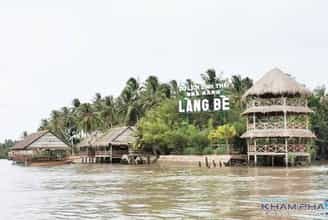
Be village tourist area
Lang Be Ben Tre tourist area is located not far from Ho Chi Minh City, only about 75km, so it is very suitable for short trips. Located at number 81B/6B, An Thoi hamlet, An Khanh commune, Chau Thanh district, Lang Be tourist area is considered one of the extremely attractive entertainment and resort destinations, especially in the summer or late summer. week. The reason it is called Lang Be is because this famous eco-tourism area is closely associated with the raft fish farming profession of indigenous people. This place will definitely be an ideal destination with garden scenery, charming rivers typical of the West, many interesting entertainment activities and countless delicious dishes waiting for you to enjoy. Lang Be tourist area has a cool, pleasant climate all year round so you can come here at any time. However, according to the experience of many young people exploring the coconut land, the most suitable time is still summer (from June to August). Because this is the time when the weather is dry, sunny, almost no rain, extremely convenient for you to move, visit rivers and experience many other outdoor activities. Moreover, this is the fruit harvest season in the West, so you can also enjoy countless famous fruits such as mangosteen, durian, jackfruit, grapefruit, rambutan... in the gardens in the area. Lang Be tourism. Because Lang Be tourist area is located quite close to Ho Chi Minh City, you can travel here by bus or motorbike. If you take a bus, you should choose the bus companies running the Western bus station route to Ben Tre with high quality and reputation such as Thanh Buoi, Phuong Trang, Minh Tam... However, because the road to the tourist area is quite good. It's simple, so you can go by motorbike for more convenience and initiative. Departing from the center of Ho Chi Minh City, you move to the West along National Highway 1A - Long An Province - Tien Giang Province - Rach Mieu Bridge - Ben Tre Province - Ca Chuoi Bridge - Lang Be tourist area . If you follow the route starting from the foot of Rach Mieu bridge, you will turn onto the road towards Con Phung tourist area, continue moving until you see a sign, then turn right across Ca Chuoi bridge. From here, you just need to run straight a short distance to reach Lang Be tourist area. As soon as you set foot in Lang Be tourist area, you will immediately be surprised by the natural scenery that is so poetic and charming but has a strangely close and familiar feature. This eco-tourism area is located right next to the riverbank and was designed to look like a miniature Southern village with a very simple and rustic natural landscape imbued with the coconut land of Ben Tre. Walking around the tourist area, you will definitely fall in love with the simple village roads, thatched-roof houses on the water's edge, green grasslands and nipa palm trees swaying in the wind, bringing a feeling of relaxation and comfort. . Moreover, Lang Be tourist area also possesses a fresh, airy atmosphere, completely separate from the dust and noise of urban areas, so it is very suitable for you to enjoy a wonderful vacation in the countryside. Rare peace. Because this place is located near the famous island complex of Long, Lan, Quy, and Phung, on the way to sightsee, you can also combine visits to these destinations. One of the most exciting and popular activities in Lang Be tourist area is participating in folk games. There is a diverse list of games for you to explore, such as swinging on swing bridges, single rope swings, group rope swings, driving over monkey bridges, hitting ditches to catch fish, making clay explosives, and canoeing. , wind the coconut leaf trumpet... These games are guaranteed to give you the feeling of reliving your mischievous, adorable and unforgettable childhood. Although not as large and rich as Cai Mon or Vinh Kim fruit gardens, in Lang Be tourist area there is also a quite lush and lush fruit garden. If you travel here during the ripe fruit season (around June to August every year), you can not only visit and admire the garden but also pick and eat all kinds of delicious, fragrant fruits. If you want to buy it, please contact the resort's staff to weigh it and pay. As the land of coconut trees and many famous river products, Lang Be tourist area will definitely bring you impressive delicacies. Indeed, here serves all the famous specialties of Ben Tre cuisine such as coconut tofu salad, grilled chicken with salt and chili, fried giant fish, crayfish hotpot, coconut weevils, coconut rice... A small note: if you go in a large group, remember to book a table and order in advance. Because this will help the staff prepare the food in the most thoughtful way and as soon as your group finishes having fun and sightseeing, they will be able to eat right away without having to wait long.
Vinh Long
6932 view
From June to August
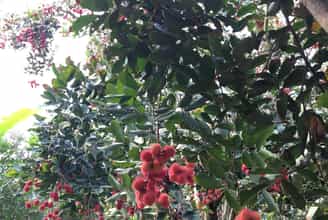
Miss Cai Mon garden, Lach market
Rivers laden with alluvium and green orchards laden with fruit are the trademarks of the Western provinces. One of the provinces in the Southwest region that develops eco-tourism of fruit picking in gardens is Ben Tre. Visit Cai Mon fruit garden, Cho Lach district, you will be truly surprised at the greenness and richness that nature has bestowed on this land. Cai Mon - Cho Lach fruit garden is known as the "kingdom of fruits, seedlings and ornamental flowers" of Ben Tre province. This land attracts tourists because of the beauty of a pure Southern countryside and romantic village roads winding around lush green gardens, countless flowers and fruits... If you want to find Cai Mon orchard, ask for directions to Vinh Thanh commune, Cho Lach district, Ben Tre. From the center of Ben Tre city, cross Ham Luong bridge, follow Highway 60, go about 4 kilometers to Tan Thanh Binh - Mo Cay Bac intersection. Then continue to turn right, follow provincial road 882 to connect with national highway 57 for about 10 km more. According to elders in Cai Mon fruit village, this name has existed for a long time, before the name Vinh Thanh commune. The word "Cai" in Cai Mon means large canal. Cai means "little river" (this is the ancient language of the Funan people). Southerners consider big things to be Good, such as main roads, bookies, etc. "Mon" is a corrupted pronunciation of the word "Mun" (Khmer means honey). Writer Son Nam, who specializes in writing about Southern culture, said that in the past, on both sides of the canal in Cai Mon land there was a lot of honey because this was a land of luxuriant fruit trees, with flowers all year round. Full of branches, it attracts bees to nest and suck honey. Therefore, the name Cai Mon originates from such a meaning. Cai Mon fruit gardens are surrounded by four rivers of the Co Chien and Ham Luong streams, so the climate is mild all year round and the trees are luxuriant and lush. This place has become a rich garden with delicious fruits famous throughout the Mekong Delta such as rambutan, grapefruit, mango, longan, plum... and the specialty Cai Mon durian with yellow rice and flat seeds. Visitors can visit Cai Mon garden any time of the year, regardless of season. Every year, Ben Tre province organizes the Cho Lach delicious and safe fruit festival in the summer, usually on the occasion of Doan Ngo festival (5/5 of the lunar calendar), this is also an ideal time for tourists to love fruit. trees to visit and enjoy. Coming to Cai Mon - Cho Lach garden, you will be attracted and attracted to your eyes from the moment you step into the garden. The luxuriant fruit bunches and bent branches seem to want to "invade" the space of the leaves. Fruitful durian gardens, ripe red rambutan gardens laden with branches, strawberry gardens laden with fruit dangling in clusters, and mangosteens, mangosteens, oranges, tangerines, mangoes, grapefruits, longans... It's not wrong to say this place is the kingdom, the largest fruit granary of Ben Tre in particular, and the Southwest region in general. Only then can we see that nature is so favorable to the land of Cai Mon - Cho Lach, then we can see how patient and talented the farmers of this land are in order to take care of and create lush orchards. buckling branches like that. Not only can visitors take a walk in the garden, they can also enjoy fruit on the spot and have the option to buy it as gifts for relatives. In particular, following the gardener's footsteps, you will also be introduced and instructed on how to care for each type of fruit tree to have the most productive and quality fruit seasons. One very interesting thing when traveling to the West, visiting Cai Mon fruit garden, tourists who want to stay can stay at a homestay (in a homestay). These can be said to be interesting experiences for any tourist. Traveling to Cai Mon fruit garden, visitors can also try many local specialties of the Southern region such as pancakes filled with mussels or rice snails, shrimp miles,... Or listen to the melodious melodies of amateur folk music, sweet and profound. Experience a simple, rustic life when participating in production and living activities with people in the river countryside. Not only are there fruit gardens laden with fennel fruits, Cai Mon is also known as the land of many types of ornamental flowers such as marigolds, chrysanthemums, bougainvillea, dahlias, carnations, raspberry chrysanthemums, etc. Every year, Cai Mon flower village provides the national market with hundreds of varieties of ornamental flowers and precious ornamental plants of all kinds. Cai Mon is a land of "spiritual geniuses", producing many talented people for the country, including the famous Truong Vinh Ky, one of the world's famous scientists in the 19th century, whose stele house still exists today. Memorial welcomes visitors. On the opposite side is Cai Mon Church, one of the oldest and largest churches in the South, built in 1872; The 9-storey bell tower, 56.52m high with 06 bronze bells cast in France with a total weight of up to 4,000 kg... is a sight not to be missed. Many visitors to Cai Mon share the same opinion that this is a "good land for birds to perch on" and it is difficult to forget Cai Mon because there are people there who are very hospitable, honest, and incredibly kind.
Vinh Long
7419 view
From January to December
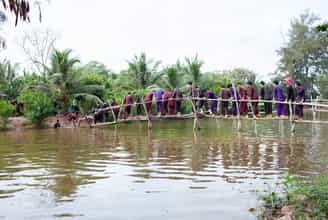
Vam Ho bird sanctuary tourist farm
If you have the opportunity to visit Ben Tre coconut land, don't forget to go to Vam Ho, the largest bird sanctuary in Ben Tre province, to explore the wonderful nature, listen and see with your own eyes the flocks of birds flying in the sky. Vam Ho Bird Sanctuary is located on the right bank of the Ba Lai River in the communes of My Hoa, Tan My and Tan Xuan, Ba Tri district, Ben Tre province, with an area of over 67 hectares. From the center of Ben Tre province, there are many roads leading to the Vam Ho Bird Sanctuary eco-tourism area with a strong impression of mangrove forests. The most convenient route: through Giong Trom to Tan Xuan, Ba Tri district, about 30 kilometers. The time when most tourists visit Ben Tre is from October to April, when birds begin to gather here to breed. It can be clearly seen that the tops of mangroves, cork, and fish sauce are heavy with bird nests. . In August they fly away again. This custom has been maintained for decades. Vam Ho Bird Sanctuary is a unique ecosystem area, typical of coastal mangrove forests of the Mekong Delta, with high biological value and potential for eco-tourism development. Traveling to Ben Tre, coming to Vam Ho Bird Sanctuary, you will experience canoeing through the lush green forests filled with bird sounds. Visit the resistance base, cross rickety bamboo bridges, lie down in a swinging hammock under the forest foliage, and breathe in the fresh air of the Ba Lai river. It's rare to find a place as wild, truly beautiful, with lots of birds and aquatic products as here. Currently, this place owns over 120 rare bird species such as storks, egrets, gongs, gray herons, white ibis, teal... and many types of wild animals such as pythons, snakes, squirrels, weasels, bats, monitor lizards... Vam Ho is a mangrove area, with an average height of 1.25 meters above sea level, so it is safe from annual high tides. Vam Ho's vegetation has nipa palms, dates, mangrove trees, fish sauce... at high levels, which are ideal for resident birds; Meanwhile, the lower layer includes dominant plants such as mangroves, hibiscus, holly, toadstool, sea spinach, reeds... very convenient for storks and egrets to build nests and reproduce. Inside the bird garden is a system of canals crisscrossed like a spider web, so there are a lot of shrimp and fish, mainly goby fish, crabs, crayfish... which are a rich source of food for the birds and storks here. Visiting Vam Ho Tourist Farm - Bird Sanctuary, visitors can also visit the old resistance base that once hid many revolutionary troops underground; Participate in some rustic games such as: riding a monkey bridge, walking on a rope across the lake, riding a mini cyclo, old swing games... This place also develops an area to grow many types of tropical fruits that bear fruit all year round, for visitors to enjoy fruits such as grapefruit, jackfruit, papaya, soursop, etc. grown organically without chemical fertilizers. , picked by you yourself. After watching nature full of interesting birds and animals, guests can stop at the restaurant and enjoy delicious dishes prepared by the skillful people here: cork hot pot, fish braised in clay pot, banh xeo, fish sauce. pork belly steak, folk cakes... The most interesting thing is in the afternoon, when the sun is about to set, visitors will hear the interesting "symphony" of thousands of birds of all kinds flying from all over, chirping together after a day of flying to search for food all over the world. direction and the sound of the herd preparing to flap its wings to search for food at night. Vam Ho Bird Sanctuary is a precious asset that nature has bestowed on Ben Tre province. Coming here, visitors will enjoy the fresh air, as well as discover many interesting things about the mangrove forest, have the opportunity to learn about the lives of animals, and at the same time, visitors will also find here a living area. Agriculture is typical of wet rice civilization where there are many rivers, canals and gardens.
Vinh Long
8097 view
From January to December
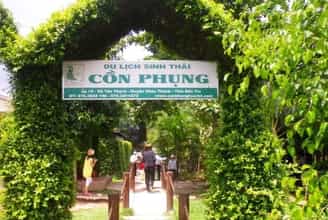
Con Phung tourist area
Ben Tre is a rich land blessed by nature with a mild climate all year round and a system of rivers and rivers heavy with alluvium. With lush fruit orchards and vast green coconut gardens, Ben Tre has attracted a large number of tourists to experience the type of eco-tourism and river gardens imbued with the love of the people here. Con Phung is one of the most famous Ben Tre tourist destinations. Con Phung, also known as Tan Vinh islet, is a floating island in the middle of the Tien River in Tan Thach commune, Chau Thanh district, Ben Tre province. Con Phung is located in the complex of four sacred animals (Dragon, Lan, Turtle, Phung). Among them, Quy and Phung islands belong to Ben Tre province, while Long and Lan islands belong to Tien Giang province. In some regions of Vietnam, usually in the South, people use the concept of dune or island to refer to the middle beach, which is a strip of land formed in the middle of a large river thanks to the process of long-term alluvial deposition. Con Phung was initially just a floating island in the middle of the Tien River in the 1930s with an area of about 28 hectares, but due to abundant alluvial deposits each year, it has now reached over 50 hectares. The name Con Phung came from when Mr. Nguyen Thanh Nam came here to build Nam Quoc Phat Pagoda in the early twentieth century. While this project was under construction, workers found an ancient bowl shaped like a Phung bird, so it was named Con Phung. In addition, the reason it also has another name is Dao Dua island is because Mr. Nguyen Thanh Nam, when he came here to build Nam Quoc Phat Pagoda, founded a sect called Dao Dua. Dao Dua advocates bringing peace and living by fruits. The travel distance from Ho Chi Minh City to Ben Tre will take about 1.5-2 hours. You move across Rach Mieu bridge, turn left and there will be a riverside road, here there is a ferry to take you to Con Phung. If not, you can go to the pier in My Tho, then depending on the number of people, rent a boat to go to Con Phung. With charming river scenery, rich gardens and many attractive activities and services, Con Phung annually welcomes thousands of visitors to explore and experience. When mentioning Con Phung - Ben Tre, it is impossible not to mention the Dao Dua architectural work associated with the anecdote of Dao Dua leader Nguyen Thanh Nam. This place has many unique architectures still preserved such as: Chin Rong yard, Hoa Binh tower, traditional room introducing the land and people of Ben Tre... After 50 years of construction, the relic still retains its beauty. its original. Going deeper inside, visitors can enter the "coconut maze", have the opportunity to understand more about the people, life and culture of the coconut land at the Coconut Museum, a house made entirely from coconut tree trunks. . Coconut is present in war, economy, culture, cuisine... to create Ben Tre's appearance. One must admire, admire, and admire the ingenuity of the artist. From lifeless coconut logs, artisans have created hundreds of sophisticated, eye-catching handicraft products with rich artistic value. Coming here, visitors will have to "take home" something as a gift for relatives to remember Ben Tre. Traveling to Ben Tre, coming to Con Phung, visitors can also witness the entire process of making these extremely delicious and flavorful Southwestern coconut candies: From mixing, cooking candy, cutting candy. , packaging are all made from the hearts and love of the people here. And surely everyone who comes to these coconut candy factories will bring themselves a few bags of sweet gifts from this land of Con Phung! Con Phung is like a miniature Western village of the Mekong Delta. Visitors can explore and learn many unique features of culture and customs in the rustic life of the people of Ben Tre coconut land. Many families still maintain their lifestyle mainly by raising bees to collect honey from longan flowers and some other flowers. The scenery at Con Phung is very peaceful, poetic and what could be more wonderful than when visitors can experience taking a boat ride on the river, walking on the coconut-shaded village streets of Chau Thanh district - Ben Tre; Ride a horse-drawn carriage, drink honey tea, enjoy tropical fruit dishes, listen to traditional folk music, and especially experience rowing a canoe in small canals with both sides lined with nipa palm trees and other rivers. The cork tree sways with poetic white flowers. Coming to Con Phung, visitors not only immerse themselves in the charming river nature, but also enjoy rustic dishes of Western gardens made from available fresh ingredients such as fried giant fish. , fried sticky rice, fish sauce hotpot, coconut weevil fried in butter, free range chicken porridge, coconut rice and coconut fried shrimp... All of them contain the flavor of coconut that makes diners fascinated and remember forever. Definitely don't forget to drink a glass of cool coconut water. Experiencing the feeling of adventure, thrill, heart-pounding, requiring courage is also something that visitors to Con Phung are especially impressed with, bringing joy and relaxing moments when participating in water games. such as cycling across a plank bridge, Zipline across a lake, cable-stayed bridge, balancing bridge... or transforming into a farmer in traditional costumes and trying to catch fish in ditches... The open space of the river and garden, enjoying rustic dishes, admiring unique miniature works, seeing with your own eyes the hot fragrant coconut candy factory... all bring excitement and freshness. Happy for tourists from near and far when coming to Con Phung of Ben Tre coconut land. If you want to have a true trip to Ben Tre, fully explore the beauty of this land, please contact MeKong Adventure Company specializing in Ben Tre Tours at phone number 0292.3819.219 - 0932.886.008 (Ms. Chi) to receive the most attentive service. During our Ben Tre Tour, you will not only visit Con Phung but also explore famous tourist attractions such as: Cu Lao Thoi Son, Vinh Trang Pagoda (Tien Giang).
Vinh Long
7126 view
From January to December
 AI Travelviet