Relic point Vietnam
Việt Nam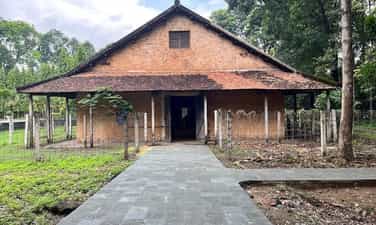
Phu Loi Prison Relics
Phu Loi Prison Relics is located on Mot Thang Twelf Street, Phu Loi Ward, Thu Dau Mot Town. The current total area is 77,082m2, and was recognized by the state and ranked as a national historical relic on July 10, 1980. Existed for eight years (1957-1964). But with an indomitable spirit of resilience, Phu Loi prisoners united and fought heroically to victory. With the plot to invade the South, using demagoguery and terrorism to the campaign of "denouncing communism" and "destroying communism" within just 2-3 years after the Geneva Agreement, My Diem caused countless incidents. Many crimes throughout the South. By saying "it's better to catch a wrong person than miss one", they have built more prisons. Phu Loi Prison is one of the major US-Diem prisons in the South, built in mid-1957 to imprison and torture revolutionary soldiers and patriots at that time. The first number of prisoners they brought to Phu Loi was 4 women and about 100 men, and by the end of 1957 it had increased to 3,000 prisoners. They divided the prison into many areas: administrative area, soldiers' family area, An Tri Vien area - called "An Tri Vien" area but actually a prison camp. The prison area includes 3 camps: Chi Lang, Bach Dang, Dong Da. All 3 camps have 9 cells marked A,B,C,D,... each camp is separated by a thick barbed wire wall. Surrounding the three camps are two high walls, with several layers of barbed wire, and an electric lighting system at night, completely isolated from the outside. In the middle of the prison there is a high dome to observe the entire camp. There are 4 entrance gates and 4 strictly guarded bunkers around. There are two main gates: the first gate carries the sign "Phu Loi Correctional Center", the second gate carries the sign "An Tri Vien". By the end of 1958, the number of prisoners reached nearly 6,000 people, of which 1,000 were female prisoners. Prisoners from all over the country unfortunately fell into the hands of the enemy and were gathered here. The harsh regime of Phu Loi prison was no different from many other prisons at that time, eating rotten rice, rotten fish, salt, fish sauce with maggots... Living in filth, lacking water, lying in cells, tiger cages, labor forced labor for diseases without treatment... and brutal beatings... and they set up very harsh "24 prohibitions" as an excuse to beat prisoners. In the face of both terrorist and demagoguery tactics, scenes of brutal torture and extreme exile, the brothers and sisters in prison still maintained their steadfastness and strong will to fight. That is thanks to the Party's leadership and the self-discipline in cultivating and training the revolutionary moral qualities of patriots and communists. Through practical experience in the secret movement, in just a short time, Party members in the camps were able to organize communication lines with each other, and groups of Party members in secret cells were formed one after another. create. In early 1958, Phu Loi Central Party Committee was established. During their years here, the prisoners were directed by our Party's secret organization. The Representative Board, the Tam Giao Team, or the Compatriots in each prison act as the core of the struggle, step by step fighting with the enemy demanding to improve life, against repression, and against torture of prisoners. It's all thanks to the steadfastness of the members of the Communist Party of Vietnam. Phu Loi Prison became a proof of US and puppet crimes in South Vietnam; This place is a symbol of the courage of party officials, revolutionary comrades and patriots who fell in prison for independence, freedom, peace and happiness for their homeland. Source: Binh Duong province electronic information portal
Ho Chi Minh City
5407 view
Rating : National monument
Chau Hung Pagoda
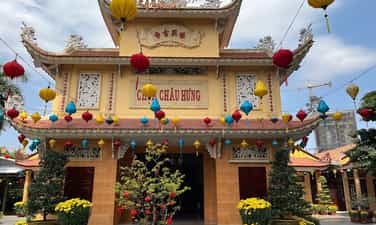
Chau Hung Pagoda is located at 37 Cay Keo Street, Quarter 1, Tam Phu Ward, Thu Duc City. Established in 1884 with a simple structure, it has been restored and repaired many times. The pagoda was completely newly built in 2006 and completed in 2009, with a construction area of 365 square meters on a total area of 5,796 square meters. Before April 30, 1975, Chau Hung Pagoda was built on Go Cat land, surrounded by rice and morning glory fields. This is a red address, used to be a facility to hide guerrilla cadres and soldiers to stand at the gateway of Saigon. The monks, monks, and abbots here are people who always have revolutionary aspirations. The undercover forces in this area always use the temple as their base of operations. In early 1973, when the Paris Agreement was signed, the enemy gathered troops to protect Saigon, so the Northern Thu Duc battlefield at that time was like a pocket containing enemy units to block the northeast direction of Saigon, preventing the enemy's forces from attacking the enemy. Our forces sent troops down to attack Saigon, so they continuously organized sweeps and cleared the terrain. At this time, our forces had a very difficult time holding on. The pagoda was built according to the structure of Vietnamese culture, creating cool ventilation and harmony between people and nature. With separate architecture such as the living room, the house of rebirth and the temple grounds with many types of ornamental plants and rockeries. The pagoda has a two-letter floor plan structure and a gate built in the form of a three-entrance gate. Seen from the outside, the pagoda is built of reinforced concrete with the main yellow color of Buddhism, including two separate towers: Tower 1: Is the front of the pagoda above the front hall. The tower has 2 floors and at the top of the tower is attached a Dharma wheel. In the middle of the 2nd floor is written "Chau Hung Co Tu" in Chinese characters. The lower floor is written "Chau Hung Pagoda" in the national language, and on both sides there are two pairs of parallel sentences in Chinese characters. The ground floor is the main hall door, only open on major holidays or full moon days of the month. Tower 2: Has 2 floors, higher than tower 1, on both sides of the tower are the words "Van" and "Buddha" in Chinese characters. Chau Hung Pagoda is a religious facility with cultural and historical value, ranked as a City-level relic on August 18, 2011. Like other temples, Chau Hung Pagoda is a place for people and believers to find encouragement, comfort, and relieve pressure in life; is a place to wish and wish for a good future, and at the same time is also a place to teach people to know how to live a good life. Although the pagoda has been restored many times with solid materials, the ancient pagoda is no longer valuable, but in the pagoda there are still 14 ancient statues, 4 dragons and a horizontal plate engraved with 4 words " The group of seals and lights has existed for a long time. Not only that, Chau Hung Pagoda also contributed significantly to the struggle for national liberation. Through two long resistance wars, the pagoda has sheltered, cared for, and sheltered countless generations of officers and soldiers in fierce bomb and bullet situations. Many Buddhists of the pagoda were suspected by the enemy or arrested and brutally beaten and tortured. However, the Buddhists of the pagoda still stood firm in the face of many difficulties and challenges and were a solid base of operations for the revolution until the day of national unification. Source: Thu Duc City Cultural Center
Ho Chi Minh City
4857 view
Rating : City-level relics
Buu Thanh Pagoda
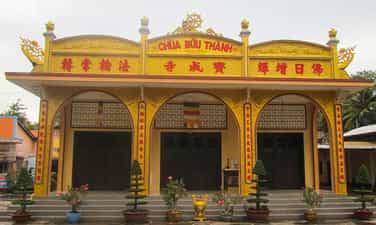
Buu Thanh Pagoda is located at 62 Street 6, Ong Nhieu Quarter, Long Truong Ward, Thu Duc City. On November 30, 2006, Buu Thanh Pagoda was recognized as a City-level historical relic. Buu Thanh Pagoda was built in 1801, belonging to the Northern sect. The founder of Buu Thanh Pagoda was the Dharma Patriarch Tien Hien, who led the pagoda for 32 years and passed away in 1833. In its early days, the pagoda had quite a large architectural scale, built of precious wood, located on a large area of land. During the war against the French in 1947, the pagoda was completely burned. In 1955, Venerable Thich Hue Thanh restored the new pagoda about 50m northwest of the old pagoda, located on a land area of 6.5 hectares. After 10 years of being re-established, Buu Thanh Pagoda was once again destroyed by the American invaders. In 1976, Venerable Thich Hue Thanh returned to restore the pagoda and assigned his disciple, Venerable Thich Hue Canh, to be the abbot. Regarding worship, Buu Thanh Pagoda belongs to the Northern sect, so in addition to the central figures worshiped are Amitabha Buddha, Shakyamuni, and Maitreya; The pagoda also worships the Holy Mother, Quan De Thanh Quan, and the Five Elements. Buu Thanh Pagoda was built in the style of the letter "Tam", the main works include: Main hall, To hall, and dormitory. In addition, within the pagoda grounds there are also a number of other works such as: Tam Quan gate, guest house, hall and residence of monks, Linh Son Thanh Mau shrine, Cuu Trung stupa worshiping Ngoc Xa Loi Buddha, worshiping the late Venerable Thich Hue Thanh... Having gone through two resistance wars against the French and Americans, which were also two times the pagoda was completely destroyed and then re-established, there are almost no ancient relics left in the pagoda today. All artifacts in the pagoda today such as: Dai Hong Chung, drum, Buddha statue, diaphragm, tureen... have been recreated in the last few decades. However, in the temple yard, there are still 12 green stones at the base of the pillars, square in shape, each stone measuring 40x40cm. In addition, in the pure land behind the pagoda (where the ancient Buu Thanh pagoda was located) there are still 5 ancient laterite towers of the previous abbots of the pagoda. These are probably the only relics that prove the long existence and former grand scale of Buu Thanh Pagoda. Source: Thu Duc City Cultural Center
Ho Chi Minh City
4786 view
Rating : City-level relics
Steel Wire Historical Site
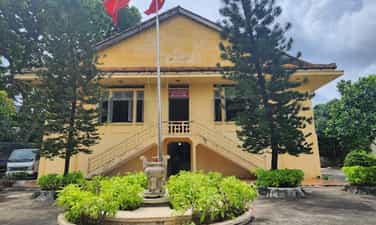
The Steel Wire Bot relic includes 3 separate houses, Western-style architecture, brick walls, tile roofs, located on high land in Tang Nhon Phu A ward, district 9, Thu Duc city. Steel Wire House was built a long time ago. According to elders over 80 years old, they saw the Steel Wire house when they were young. Before 1945, the Steel Wire House was formerly known as the Steel Wire House because it was built to serve as a news transmitting and receiving station for the French. The station is designed to consist of three separate houses with 'western' style architecture with three antenna columns, the tallest of which is over 70 m. The project was designed by two Frenchmen, Hermall and Stéru, to serve the invasion of the French colonialists before 1945. The steel wire is a house with one ground floor and one floor, with many windows facing out in four directions. On the left side of the house there are two stairs leading to the first floor. The strangest thing is that in Steel Wire Bunch there is a secret cellar used to lock up and torture people they consider 'rebellious'. The tunnel has only one vent at the top. The mouth of the tunnel is small (0.4 m2) just large enough for a person to stand upright and enter the tunnel. In 1945, when Japan staged a coup to oust France in Indochina, the Steel Wire House was occupied by Japanese fascists. Not long after, the Japanese fascists were defeated, the French colonialists returned and the Steel Wire House belonged to the French again. When retaking the Steel Wire House, the French colonialists took down the antenna column (leaving only one column) and built two more brick houses with high floors, one for the commander named Pi-rolet and the other. The remaining room is reserved for French soldiers to guard. Since the day they took over Steel Wire, the French army has turned this place into a prison, arresting, besieging, torturing, and interrogating the people of the heroic Tang Nhon Phu village and those they suspect of being involved. , providing supplies to revolutionary soldiers. Here, during the nine-year resistance war against the French colonialists, French soldiers interrogated and tortured countless people as well as resilient revolutionary soldiers. They arrested and brutally used all methods of interrogation. There are prisoners who suffocated to death because the cellar was overcrowded and there was no oxygen. Many other people, regardless of age, young or old, male or female, whenever they were suspected by them, they had to stand in line so they could shoot them and throw their bodies into the Cau Ben Noc River. More brutally, they also used machetes to decapitate, threw the body into the river, the head was impaled on a stake, and formed a long line in front of the steel wire fence to 'expose the crime', preventing patriots from standing up. Being surrounded by steel wire during nine years of resistance against the French colonialists was a living hell for many innocent people. The Steel Wire Basket Relic was recognized by the Ministry of Culture, Sports and Tourism as a national historical and cultural relic on January 18, 1993. Source: Tang Nhon Phu A Ward Youth Union
Ho Chi Minh City
8270 view
Rating : National monument
Linh Dong Temple
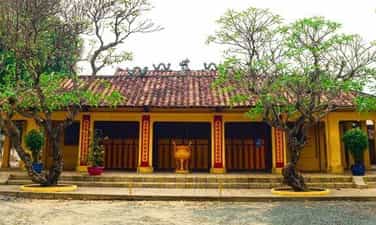
Linh Dong Communal House is now located at 28 Chuong Duong Street, Linh Chieu Ward, Thu Duc District. The communal house is located on a high mound, with an area of 2479.1m2. The front porch faces East-South. This is a unique project with historical - cultural, architectural and artistic value; Demonstrates the cohesion of the village community of Southern residents, the spirit of respect and remembrance of the merits of the ancestors who publicly destroyed the village and established the family... while also demonstrating wisdom, the talent and ingenuity of ancient artisans. Based on the Chinese characters engraved on the roof beam of the front hall of Linh Dong communal house "Quite the smell of the year, precious of autumn, auspicious day of the sun" (building the communal house on an auspicious day in the 9th month of Quy Mui year - 1823) it can be determined that Linh Dong communal house was built in early 19th century. In the beginning, Linh Dong communal house architecture could be built on a small scale and with light materials. Over time, the communal house's architecture changed to become more spacious and dignified with brick walls, tiled roofs, and wooden structural systems such as columns, trusses, beams, beams, rafters, and rafters. still preserved intact to this day. Linh Dong Communal House is a valuable architectural and artistic work. Over a long period of existence and development, the architecture of Linh Dong communal house still retains many elements of traditional Southern village communal house architecture. Linh Dong Communal House was built in the shape of the letter Tam including three houses: front hall, central hall and main hall, guest house and kitchen, the rest is the communal house yard. Among them, the outstanding architecture of the pre-electric power and main hall. The front hall is a five-compartment house, the main hall is in four-pillar style with a total of 32 wooden pillars supporting the entire yin-yang tile roof system. The altars in the main hall are arranged facing each other. The center is the shrine to worship the Than Thanh Hoang Bon Canh; In front is the Council altar; On the right is the shrine worshiping Five Earth Gods and the shrine worshiping Tien Hien Chi Vi; On the left is the shrine worshiping the Five Grain Gods and the shrine worshiping Hau Hien Chi Vi. In particular, the communal house also preserves the title bestowed by King Tu Duc on Than Thanh Hoang Bon Canh in Linh Chieu Dong village, An Nghia district on November 29, the 5th year of Tu Duc (January 8, 1853). In addition, the communal house also preserves many precious artifacts made of wood, delicately carved with themes such as: dragon - unicorn - turtle - phoenix, crane - turtle, flowers - leaves - fruit... Every year, Linh Dong communal house organizes a big holiday, Ky Yen festival. Ky Yen Festival takes place on the 15th and 16th of the 10th lunar month with the purpose of praying for peace and prosperity in the country, good weather, and a good harvest. During these days, people in the Linh Chieu area and tourists flock to the communal house to attend the worshiping ceremony. In addition, the communal house also holds the Thuong Nguyen ceremony (January 15), the Trung Nguyen ceremony (July 15) and the death anniversary of the ancestors Ta Duong Minh (family name is Huy, nickname is Thu Duc) on the 19th day of the 6th lunar month. calendar. With typical historical - cultural values and artistic architectural values, Linh Dong communal house is ranked by the Ministry of Culture, Sports and Tourism as a national historical, cultural, architectural and artistic relic today. November 4, 2020. Source: Department of Culture and Sports of Thu Duc City
Ho Chi Minh City
4798 view
Rating : National monument
Phong Phu Communal House
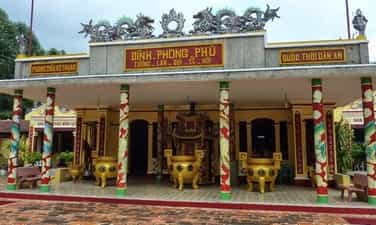
The communal house is located on a land of 4.2 hectares, in Quarter 3, Tang Nhon Phu B Ward, Thu Duc City. In addition to its architectural and spiritual values, the communal house is also a historical revolutionary relic. Phong Phu communal house was built at the end of the 19th century, when Phong Phu village was named in An Thuy district, Saigon county in 1880. The communal house has gone through many ups and downs of history, however, the elders in the communal house always maintained contact with the revolution and made many contributions during the two periods of resistance against the French colonialists and the American imperialists. In 1993, Phong Phu communal house was recognized by the State as a historical cultural and revolutionary relic and ranked as a national historical relic. The communal house is classified as a historical-revolutionary relic because in the corner of the garden, there is a secret basement to hide revolutionary officials. During the anti-American war to save the country (1954 - 1975), Phong Phu communal house was a gathering place for troops and a stopping place for revolutionary cadres in the Thu Duc area. The communal house is also a place that regularly provides money, food, medicine, oil, etc. to revolutionary cadres. In 1960, the entire family was arrested on suspicion of supplying supplies and having ties to the revolution. In prison, even though they were interrogated, they refused to testify. When they were released from prison, they continued their path of supporting the revolution. Phong Phu communal house has two layers of gates. The first layer has two doors left and right, in the middle is a stele of Ong Ho. The second gate layer is built in the style of three gates, in the middle is the Bach Ma statue. Behind the three gates is the Than Nong altar and rockery. On both sides of the rockery are the Ngu Hanh Nuong Nuong temple and the statue of Ong Ho. Vo ca is placed in the middle facing the main hall. Along the longitudinal axis of the project, in the middle there is the main hall, main hall, dormitory, and kitchen. On both sides of the main hall are a traditional house and a fruit and vegetable washing house. On the roof of the facade is decorated with two dragons and pearl paintings encrusted with colorful ceramic pieces. Decorative motifs are still familiar themes in Southern communal houses such as dragons, unicorns, turtles, phoenixes, eight immortals, and fish turning into dragons. In the communal house, all the horizontal paintings and couplets are painted with bright red and gold paint. A special feature of the communal house is the open-air altar placed in front of the Ngu Hanh Nuong Nuong temple. During the resistance war, incense was used here as a signal when an enemy appeared. On the first and full moon days and Ky Yen festival, many people visit the communal house, many groups of students come to learn about the historical and architectural value of the communal house. Ky Yen Festival is also the biggest ceremony of the year to pray for peace and sacrifice to Thanh Hoang among temples in the South. This is also the main ceremony of Phong Phu communal house, taking place on the 14th to 16th day of the 11th lunar month every year. This cultural activity has existed for a long time and every year, during holidays, thousands of local people flock to the communal house. Everyone lit incense sticks to pray for peace and remember the revolutionary soldiers who once lived here Many people are attached to the communal house as a lifeline and a sacred memory. Many generations of people here have tried their best to preserve the communal house and its cultural quintessence. In 1997, Prime Minister Vo Van Kiet visited the communal house and lit incense sticks to pay tribute to the soldiers who sacrificed their lives for the Fatherland. The communal house was affirmed by its predecessors as the most famous communal house in the City and in the Southern region. Phong Phu communal house is a spiritual place, attracting millions of visitors from all over, especially every spring and Tet. Source: Thu Duc City Cultural Center
Ho Chi Minh City
5074 view
Rating : National monument
Xuan Hiep Communal House
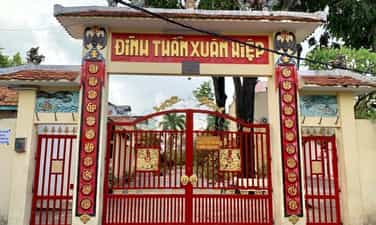
Temple of Xuan Hiep, located at Street 5, Quarter 2, Linh Xuan Ward, Thu Duc City. Xuan Hiep Communal House, formerly known as Xuan Truong Communal House, was probably built between 1818 and 1885. From the day it was built until now, the communal house has undergone many restorations and repairs. The architecture of Xuan Hiep Temple is made of wooden materials. The main character worshiped at the communal house is the Ban Canh Thanh Hoang God. This deity was bestowed by King Bao Dai of the Nguyen Dynasty on July 27, 1934. Outside, we worship the Tutelary God. The communal house also worships the Council of Gods such as: Left ban, Right ban. Five Earths, Five Grains, Early Sages, Later Sages, Immortal Masters, Water Gods, Tiger Gods, White Horses. Artifacts of historical value include: 1 decree made of Do paper (copy paper) given by King Bao Dai to the God of the Ban Canh of Xuan Hiep village, An Dien canton, Gia Dinh province on July 27, 1943. ; 1 long snare; 6 sets of holes - worshiping objects modeled after weapons such as: sticks, bronze awls, long swords, spears, hammers, axes (including 40 sticks), wooden handles, bronze blades; 2 bronze swords; 3 pairs of cranes standing on the turtle's back, made of wood; 1 bronze gong. Artifacts of artistic value include: 14 delicately embossed and engraved wooden horizontal panels with themes of two dragons and pearls, two dragons of the Japanese dynasty, daisies, and Chinese characters; 7 pairs of wooden tureens are delicately embossed and engraved with themes of dragons, stripes, buttons, and Chinese characters; 6 wooden lamella bags are delicately carved, embossed, and engraved, with themes of two dragons and moons, grapes - squirrels, four sacred animals, monkeys - peaches; 9 wooden altars and altars are delicately embossed and engraved, with themes of two dragons, moon and moon, four sacred animals, birds and flowers; 1 wooden chariot horse; 1 wooden God throne; 1 pair of cranes standing on the back of bronze turtles; 1 ceramic flower vase; 14 sets of three things (incense burner and pair of candlesticks) made of bronze. The overall architecture of Xuan Hiep Temple is built in a triangle style, including 3 main blocks: electricity hall; main hall and rear hall (shared in one block); kitchen and living room. All three blocks are located on a vertical axis. On the right side of the communal house yard is the Ngu Hanh Nuong Nuong temple, built in 1968. Behind the Ngu Hanh temple is the Thuy Long temple built in 1937 with the purpose of worshiping the God of Xuan Truong spring water. Opposite the electricity bill is the first block. Vo ca was built in a "four-pillar" style with the purpose of making a stage for singing boi songs on occasions of worshiping at the communal house. The second block is electricity. With the "three compartments and two wings" style architecture, the front hall has three doors for the three compartments, these three doors are only open during ceremonies. On weekdays, if you want to enter the communal house, you have to go through the side door in the right hallway. Inside the front hall are altars and altars: right in front of the entrance to the middle room is the altar of the Internal Council. The third block is the main hall and rear hall. This block of houses was built in the "four-pillar" style, with a fish-scale tile roof in 1946 to replace the rotten yin-yang tile roof. On the edge of the roof is a ceramic statue of two dragons with pearl paintings. Every year, Xuan Hiep temple has a main holiday, Ky Yen (praying for peace), this holiday takes place on the 15th and 16th of the 11th lunar month. With typical historical, cultural, and artistic architectural values, Xuan Hiep Communal House has been ranked by the Ministry of Culture and Information as a national historical, cultural, and architectural artistic relic. December 15, 2004. Source: Thu Duc City Cultural Center
Ho Chi Minh City
5032 view
Rating : National monument
Truong Tho Communal House
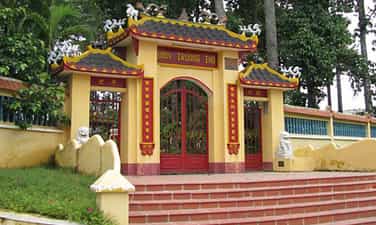
Truong Tho Temple is located in Quarter 8, Truong Tho Ward, Thu Duc City. Truong Tho communal house worships the original Thanh Hoang God with the hope that the Thanh Hoang God will bless the people in the village. The character of Thanh Hoang according to oral tradition is Chau Van Tiep - a general of the Nguyen Dynasty. The original decree was burned by the French, now it has been suspended and the copy is kept. Not only worshiping the Thanh Hoang God, the communal house also worships the Left and Right Bans, Inner Council, Foreign Council, Former Sages and Later Sages, Immortal Master, Than Nong, Ngu Hanh, Bach Ho, Thanh Long, Bach Ma … Architecturally: Truong Tho temple looks extremely majestic among the rows of trees with its unique architecture. The communal house was built in the same style as the front hall, main hall, back hall, kitchen and warehouse with a total area of 518 square meters. From the three-entrance gate to the grounds of the vestibule, we will first see the image of the Shen Nong temple and the Bach Ma herd, all built of cement. The communal house is designed in the style of three compartments and two wings, the entire roof is supported by 48 round columns, the columns are all precious wood, each column is 30cm in diameter, the columns are from 4m to 6m high, and have green stone bases. The structure is built in a civil style but is very technical, using four pillars as the fulcrum placed in the middle of the main hall to bear the load. The ends of the trusses are pierced and wedged tightly with wood to hold the truss against wind and storms, and divide the force between the main hall, the front hall and the back hall. In particular, the rafters are carved according to the theme "Dragon sitting on the gate", the dragon tail points towards the front, the dragon head is carved on the top of the rafter at the back. The art of carving the dragon's head and tail as well as the patterns on the rafters and beams are extremely sophisticated. The ends of the rafters piercing the columns to maintain balance are a very rare folk style. The front hall has many very rare worship artifacts, there are three incense tables worshiping the internal and external councils with tablets on top and an altar of President Ho Chi Minh with the words: "Holy life without command" The back hall is connected to the main hall. The outstanding architecture at the rear of the hall is the ends of the rafters through wooden columns with skillfully carved dragon heads representing the deep dragon in the communal house (long ngoa trieu), implying auspiciousness radiating throughout the communal house. At the base of each wooden pillar are round green boulders. At the middle altar, there is a horizontal panel hanging above with the words: Dai Huan Enlightenment (the founder has great merit). On both sides there are two altars for officials and incense officers, with many tablets placed on top. Above the two altars there are also five horizontal panels inscribed with: Phong Dieu Vu Thuan - Enjoy Vu Thanh - Thuong An Ha Thuc - Tien Dai Quan Quan - Tien Dai Dai Huong Position. The back court is the meeting place for the Court's Board of Directors before the ceremony and is also the place to entertain guests on major holidays. Adjacent to the backyard is a row of independent houses. This place is used as a kitchen and warehouse to store utensils, cups, bowls, and cups to serve worship. Truong Tho communal house was recognized by the Ministry of Culture and Information as a national historical, cultural, architectural and artistic relic on December 30, 2002. Truong Tho communal house is a folk belief facility with historical as well as architectural and artistic value. From its founding until now, through many ups and downs of history, the communal house is still the common home of Truong Tho people. Source: Thu Duc City Cultural Center
Ho Chi Minh City
5667 view
Rating : National monument
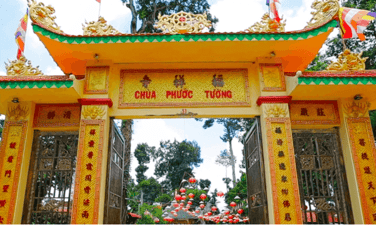
Phuoc Tuong Pagoda
Phuoc Tuong Pagoda is a national historical and cultural relic, recognized by the Ministry of Culture and Information on July 27, 1993 and recognized as an architectural and artistic relic on January 7, 1993. Phuoc Tuong Pagoda is an ancient temple of Ho Chi Minh City, located on Street 102, Quarter 7, Tang Nhon Phu A Ward, Thu Duc City. The pagoda follows the Northern sect founded by Zen master Linh Quang - Buddha (1736 - 1788), the 35th generation Lam Te Zen sect was founded in 1741. In the year Giap Ngo (1834) under Minh Mang dynasty, the fourth generation abbot was Tu Minh, moved the pagoda to the present location, and reconstructed it on a large scale. Phuoc Tuong Pagoda is located on a fairly large area of land, nearly 30,000 m², covered with many large green trees. In the temple grounds, there are many Buddha statues and shrines arranged around the temple yard such as the statue of Shakyamuni Buddha under the Bodhi tree, the shrine of Tam The Buddha, Avalokiteśvara Bodhisattva, Stupa... The pagoda was restored many times during the reign. Nguyen family. The temple's architecture today is the result of reconstructions in the 1930s, 1952 and 1991. The pagoda was built in a pure Southern ancient pagoda style, the rows of houses were built in an inverted L shape with a main axis and a secondary axis. The main axis is a large-scale collective, the architecture includes: main hall, ancestral hall, lecture hall, Thien Tinh courtyard, monks' hall, the end of the main axis is the main street. The secondary axis includes the east corridor located to the left of the main axis, used for warehouses and kitchens. The front hall of the pagoda has statues of the Dharma Protector, Vajra and blue sashes carved according to the theme of cranes. A unique sculpture with historical value is a horizontal panel hanging in the front hall with the words "Phuoc Tuong Tu" dating from the reign of King Minh Mang in 1834. Next to the front hall is the main hall. The main hall is the main worship area and displays many ancient Buddha statues. In the middle of the main hall is a large blue sash, carved according to the theme of the four sacred animals: Dragon - Unicorn - Quy - Phung. In front of the main hall, there are columns carved with golden dragon bodies curving along parallel sentences painted in red and gilded. Close to the main hall is the Patriarch Hall, where there is an altar to the ancestors, a statue of Patriarch Dat Ma and tablets of the temple's abbots, and an altar to 9 Thai Sanh mothers, which people often call "the temple". "Mother gave birth to mother" and a pair of wooden "Dragon Christmas" tureens. Phuoc Tuong Pagoda as well as other pagodas in the South are decorated according to the formula "Buddha's first, then the Patriarch's". The pagoda has 53 statues, 13 horizontal panels, parallel sentences and many lamellas, deities, and tablets. There are many types of worship statues, some are made of stone, made of earth, and most are made of wood. Some wooden statues at the pagoda were carved in the early 19th century, still have rough features but have great value of antiques dating back hundreds of years and have many good parallel sentences, beautiful words, delicate carvings, and gilded lacquer. brilliant. Source: Thu Duc City Cultural Center
Ho Chi Minh City
5555 view
Rating : National monument
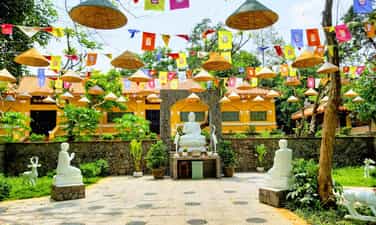
Hoi Son Pagoda
Hoi Son Pagoda, located at 1A1 Nguyen Xien Street, Long Binh Ward, Thu Duc City. The temple is located on a small hill about 15m above sea level. According to many recorded documents, Hoi Son Pagoda was originally founded and led by a Zen master named Khanh Long in the late 18th century, so the pagoda is also called Khanh Long Pagoda. The book Gia Dinh Thanh Thong Chi introduces the pagoda: "At the tail of the Chau Thoi mountain range to the north, a branch splits into the territory of Long Tuy village, then emerges on a high, flat, spacious mound; On the mountain there is a tiger cave and a water stream, and people live along it. On the mountain there is Hoi Son Pagoda, the place where Zen Master Khanh Long created to practice...". Over time, Hoi Son Pagoda gradually shows signs of damage and deterioration. In 1938, Buddhist nun Thich Nu Nhu Thanh and her disciple Thich Nu Nhu Tien renovated, repaired and upgraded a number of additional works inside the temple. In July 2012, a fire broke out at Hoi Son Pagoda and burned down the entire wooden main hall of the pagoda. By 2015, the project to restore the National Architectural and Artistic Monument of Hoi Son Pagoda was implemented. Compared to the area of the old main hall's foundation, the width of the new foundation has been expanded by 4 meters. Accordingly, the height and length are also expanded proportionally to the overall design to serve the learning activities of monks and Buddhists. Although it is over 200 years old and has undergone many repairs and new constructions, up to now Hoi Son Pagoda still preserves the basic architecture of an ancient pagoda such as: yin and yang tiled roof, colored tiled floor. ,... The temple yard is designed to be extremely spacious to accommodate a number of Buddha and Bodhisattva statues. The front of the main hall is where the statue of Shakyamuni Buddha is located. On both sides of the main hall, the temple also places the Maitreya Buddha Statue and the Avalokiteshvara Buddha Statue. According to historical research experts, Hoi Son Pagoda still has many archaeological sites that have not been excavated. This site is located just below the 18,000 m² campus on an ancient alluvial area in which there is a 4m thick layer of laterite, covered by a thin layer of soil. Due to the impact of erosion, washing away and the influence of weather conditions, these artifacts have gradually been exposed. According to current statistics, there are about 89 stone tools and many pieces of pottery dating back thousands of years. There are few pagodas that bring as much historical value as Hoi Son Pagoda. Besides the items mentioned above, the pagoda also preserves many ancient statues and other rare artifacts Because of its historical values and beautiful poetic landscape, on January 7, 1993, the Ministry of Culture and Information recognized Hoi Son Pagoda as a national historical, cultural, architectural and artistic relic. . Currently, the pagoda is considered the pagoda with the most beautiful landscape in Ho Chi Minh City. Every year, the pagoda welcomes thousands of tourists and Buddhists to worship and visit the pagoda. Source: Thu Duc City Cultural Center
Ho Chi Minh City
4980 view
Rating : National monument