Relic point Vietnam
Việt Nam
Victory location Route 7 - Song Bo
The legendary victory on Route 7 - Song Bo in March 1975 is always the pride of the Party Committee and every person living in Ayun Pa town and neighboring districts of Phu Thien, Ia Pa, Krong Pa, Gia province. Lai. This is where the largest pursuit of the enemy in the history of the Indochina war took place, led by our 320th Division in coordination with the local troops of Gia Lai and Dak Lak to crush the withdrawal of troops from the Central Highlands. of the puppet 2nd Army Corps, causing the enemy to fall into disastrous defeat; Marked the end of the Central Highlands Campaign in the spring of 1975 - the opening campaign for the General Offensive to completely liberate the South and unify the country. On March 4, 1975, the Central Highlands campaign opened, with a solid battlefield formation. In the following days, the entire Central Highlands was jubilant in the atmosphere of our soldiers liberating Buon Ma Thuot. With this victory, the Central Highlands campaign ended, the US-Puppet strategic position in South Vietnam was broken in a crucial area; The coastal areas of the Central region, the Southeast, and Saigon are threatened. With the victory in the Central Highlands, the revolutionary war of our army and people entered a new period: from an offensive of strategic significance, developing into a general offensive of strategic significance throughout the South, causing resulting in a historic victory in the spring of 1975. And, with the victory of Route 7 - Bo River, according to our records (and the enemy's recognition) - this was the decisive blow that made the strategic retreat plan of Major General, Commander of the 2nd Puppet Corps - Pham Van Phu was completely bankrupt. Bo River Bridge and Cay Sung Bridge became the enemy's terror. Also here appeared the heroic fighting example of Hero of the People's Armed Forces Nguyen Vi Hoi, who single-handedly shot down 6 enemy tanks, destroyed 21 enemies, contributing to writing the epic poem Route 7. After the country's liberation, Road 7 was renamed National Highway 25, becoming a vital traffic route connecting the Central Highlands and Central Highlands provinces. The historical relic of Victory on Road 7 - Song Bo is located on Highway 25, which is the contiguous area between Song Bo ward and Ia Sao commune (Ayun Pa town). On December 28, 2001, this location, along with the 7 River Bo Road Victory, was recognized by the Ministry of Culture and Information as a national historical relic. According to the minutes regulating the protection area of the Victory Road 7 - Bo River relic made by the Provincial Museum on August 11, 1998, the relic area has an area of 15,396 m2, located southeast of the Bo River bridge. , the East borders Hoang village (Ia Sao commune), the West borders National Highway 25, the South borders National Highway 25, the North borders Bo River. This is considered a red address for historical and traditional education for future generations. Source: Gia Lai Electronic Newspaper
Gia Lai
4968 view
Rating : National monument
Xa Temple
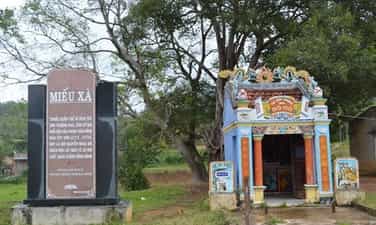
Xa Temple (Thuong An 2 village, Song An commune, An Khe town) belongs to Tay Son Thuong Dao Special National Monument Complex. Through many historical changes, the temple with many thrilling legends is still preserved by the people. Every year, on holidays and Tet, people in the area hold offerings to pray for gods to bless them with a peaceful, prosperous, and happy life. In the middle of a large plot of land, the Snake Temple is nestled under a row of ancient trees. On the left of the temple, there is a stele inscribed: Xa Temple belongs to the Tay Son Thuong Dao relic complex, the early base of the Tay Son peasant movement (1771-1773); This is where Nguyen Nhac cut a snake to take blood to sacrifice to the flag when sending his troops to the plain. Over the past 250 years, people in the Tay Son Thuong region have still passed down many thrilling stories related to Mieu Xa, the snake god. Legend has it that after a period of preparing strong soldiers and generals in Tay Son Thuong, in the year of the Snake (1773), the three Tay Son brothers (Nguyen Nhac, Nguyen Hue, Nguyen Lu) marched down to the plain. The army reached the beginning of Mang Pass (An Khe Pass), when a very large snake jumped from a tree to block the road. Among the generals, there were people who thought this was a bad omen and suggested withdrawing troops. Nguyen Nhac determined not to retreat but to move forward, draw his sword, cut off the snake's head, and use his blood to sacrifice to the flag. Down in the plain, the insurgents surrounded and defeated Quy Nhon citadel. After this victory, Nguyen Nhac had his soldiers build a temple to worship the snake god at the top of Mang pass. Contrary to the snake-slaying anecdote, folklore also holds that in 1773, Nguyen Hue commanded an army from the Upper Path to the Lower Path. At the beginning of An Khe pass, I saw a pair of ebony snakes lying in the middle of the road. Seeing that, Nguyen Hue immediately got off his horse and clasped his hands in prayer. As soon as his prayer ended, two snakes raised their heads and slithered forward. After walking a while, a snake crawled into the bushes along the road. When it came back, it held a dragon sword in its mouth and gave it to Nguyen Hue. Whenever going into battle, King Quang Trung-Nguyen Hue often used dragon swords to fight the enemy, winning many famous victories such as Rach Gam-Xoai Mut, Ngoc Hoi-Dong Da. To commemorate the snake god's gratitude, the king ordered people to build a temple at the top of Mang pass. In the past, the Snake Temple was built of bamboo leaves, surrounded by old forests. In 1957, people held a ceremony to ask the snake god for permission to move the temple to its current location to facilitate care and incense. “During the years of resistance against the French colonialists and American imperialists, many times, Mieu Xa was burned down by the enemy. But later, people immediately rebuilt it to have a place to worship the snake god. On February 20 and August 20 of the lunar calendar, people in the area and the Temple Management Board organize offerings to Quy Spring and Quy Thu according to traditional rituals; Every month, worship on the full moon and the first day of the year to pray for favorable weather, good crops, prosperous people's lives, and the local socio-economic development. Source: Gia Lai Electronic Newspaper
Gia Lai
5078 view
Rating : National monument
Plei Oi national historical and cultural relic
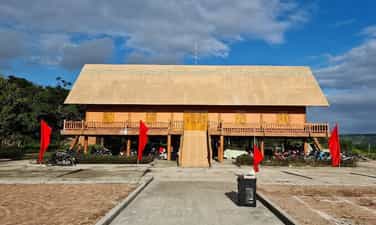
Plei Oi Historical-Cultural Relic Area is located in Plei Oi village - Ayun Ha commune, recognized as a National Historical-Cultural Relic in 1993. The place preserves many cultural values, including "Ceremony". Yang Potao Apui's rain prayer" was recognized by the Ministry of Culture, Sports and Tourism as a national intangible cultural heritage on June 8, 2015. This place also preserves almost intact artifacts such as: Magic sword, Oi Tu gong set, Chu Tao Yang mountain; Potao APuih tomb area, ancient Jrai people's house area, water wharf area... According to the Jrai people's concept, when humans are born, all things appear, at this time there is a god who gives water particles to bring life. for all things it is the God of rain. The god brings luck and happiness to people. In Jrai legend, there are 14 generations; The fire king "Potao Apui" used his magic sword to pray for rain when he was in the planting season or in the middle of the farming cycle and encountered drought or crop failure. Therefore, every year, Jrai people conduct a rain-praying ceremony to pray for heaven and earth to grant good rain and wind, good crops, a prosperous life for the people, and everyone to be safe and healthy. Here, visitors will experience the sacred and mysterious festival space; witnessed the Potao Apui (Fire King) using magic swords to pray for rain when the harvest season was about to begin or in the middle of the farming cycle but encountered drought and crop failure; In the minds of the Jrai people, if they displease the gods, they will not be given rainwater, causing illness and constant hunger and cold. In addition, special art programs are being urgently practiced by units and people with the desire to offer visitors elaborate, attractive and interesting performances such as: Gong dancing of local Jarai people; Directly participate in dances to invite wine, dance from the Northwest girls, traditional throwing game of the Tay ethnic group... Coming to Ayun Ha Irrigation Lake Ecotourism Area, visitors will admire the largest irrigation project in the Central Highlands, located in Thanh Thuong A village, Ayun Ha commune, at the foot of Chu Se pass, far from Highway 25. 1 kilometer. With an area of nearly 40 km2, the total irrigation water flow is 253 million cubic meters, providing abundant water resources in Phu Thien district and surrounding areas. There, visitors will enjoy the vast, rich space of hills, mountains, young water, charming and intimate, and visit the Ayun Ha Hydroelectric Plant with its green, peaceful campus. In addition, the lake surface is also a place to organize canoe and boat activities to serve visitors. Besides. Quang Son Pagoda is located in Thanh Thuong A village, Ayun Ha commune, 8 km west of the district administrative center, led by nun Thich Nu Nguyen Nhut, Quang Son pagoda is located at the foot of the mountain surrounded by green forests. Along with the Ayun Ha main canal system, it creates a solid fulcrum for charming mountains and water, meeting the religious needs of people from everywhere. Source: People's Committee of Ayun Ha commune - Phu Thien district - Gia Lai province
Gia Lai
6100 view
Rating : National monument

Dak Po Victory Memorial Stele
Dak Po - a famous place, a historical relic recording the resounding victory of the army and people of Dak Po in our nation's great resistance war to defend the country, here on June 24, 1954, the battle took place. launched an ambush to destroy the entire Mobile Army 100 (abbreviated as GIM 100), the strongest type of the French expeditionary force in Indochina. The Dak Po victory contributed to defeating the French Attland campaign. The Dak Po victory is one of the exemplary victories of intelligence and heroism in defeating the enemy. 64 years ago, on June 24, 1954, the main force Regiment 96 of Inter-Region 5 coordinated with Company 78 of Regiment 120 and local guerrilla militia to organize an ambush on Route 19, defeating the enemy. The 100th Mobile Army of the French colonialists is on its way to retreat from An Khe to Pleiku. The battle on Route 19 in Dak Po territory only lasted 7 hours, our troops took control of the battlefield, the enemy's 100th Mobile Army was completely destroyed. Our troops destroyed 500 enemies, wounded 600, captured 800 alive (including Nam Barroux - Commander of GIM 100) and captured all of the enemy's advanced weapons and vehicles. including: 375 motor vehicles (including 1 tank and 229 brand new vehicles), 18 105mm cannons and many other weapons, military equipment, military supplies and ammunition. The enemy's 100th Mobile Army was destroyed, our troops wiped out the entire enemy base system on Route 19, took over Tan An special zone, liberated the entire An Khe district (now An Khe town). and Dak Po district) and the eastern area of Pleiku town (now Pleiku city). With the Dak Po victory, the 96th Regiment successfully completed its mission, destroying the entire European and African Mobile Army GIM 100 of the French colonialists and enemy forces in the An Khe sub-region. The Dak Po victory created a sudden turning point, directly causing the enemy army in the Central Highlands to be defeated, giving the French army a heavy defeat, making an important contribution to Dien Bien Phu, and also to the French army. The country completely defeated the enemy's will to invade, forcing them to quickly sign an armistice agreement and soon restore peace throughout Indochina. Therefore, the Dak Po victory is considered "The Dien Bien Phu Victory of Inter-Region 5". However, to achieve this glorious victory, 147 officers and soldiers of the 96th Regiment and youth volunteers, militia and guerrillas of our units sacrificed heroically, but up to now their remains have not been found. . Dak Po will forever be one of the glorious victories of our army and people in the resistance war against the French. After this victory, President Ho Chi Minh sent a letter of praise: "The activities have had quite good achievements. Please, on behalf of the Government, praise you and reward the group that just won well at An Khe - the first-class Resistance Medal...". The Dak Po victory is forever the pride of the army and people of all ethnic groups in Zone 5 in the cause of national liberation struggle under the leadership of the Party and the great Uncle Ho. This is also a memorable lesson for all invading forces, a warning to the dark plans of invading forces that are about to set foot on this heroic land. In order to honor and commemorate the great merits and sacrifices of officers and soldiers of the 96th Regiment and local units, in 1998, the Ministry of Labor, War Invalids and Social Affairs and Gia Lai province built The Dak Po Victory Memorial Stele House was later recognized as a national historical relic by the Ministry of Culture, Sports and Tourism on December 28, 2001 on the ranking of relics and the Certificate of recognition as a historical relic. History - Culture. Source: Dak Po district electronic information portal
Gia Lai
5069 view
Rating : National monument

Jackfruit garden, Co Hau field
"Jackfruit Garden, Co Hau Field" belongs to the Tay Son Thuong Dao complex, the early base of the Tay Son movement, now in Nghia An commune, Kbang district, Gia Lai province. "Jackfruit Garden, Co Hau Field" is where Ya Do, also known as Co Hau - daughter of a Bahnar chief, wife of Nguyen Nhac, who had the merit of building the logistics force for the Tay Son army in the years beginning of the uprising. She and her compatriots in the area and the insurgents explored a 20-hectare area of land at the foot of Ca Nong mountain (now in Nghia An commune) to grow rice and food crops. In addition, she also planted a jackfruit garden to create more food sources for the insurgents. The fruits of "Jackfruit Garden, Co Hau Field" are a great contribution of Ya Do and the Bahnar people to the Tay Son movement. The memorial stele memorializing Ya Do's gratitude is located on an open plot of land. The stele engraves the merits of Ya Do and the people of Bahnar. The relic was recognized as a national historical relic by the Ministry of Culture, Information, Sports and Tourism in 1991. Right next to the memorial stele house is the green rice field where she and her compatriots reclaimed land in the past. growing food crops, lovingly called "Co Hau's Field" by later generations. Today, households still receive land to grow rice here, keeping the original appearance of the fields. The ancient jackfruit trees are dozens of meters tall, with lush foliage shading the entire forest. Their trunks are as big as a person's arm and have knobby knobs. These jackfruit trees are labeled with names to help people be aware of protecting the monument. The jackfruits are only as big as a kettle and have a crooked waist. Jackfruit is ripening on a tree trunk that has turned brown. In the past, these jackfruit trees were a source of food to provide additional nutrition for the Tay Son insurgents. When Ya Do passed away, her remains were buried at Dat Mountain (Cuu An, An Khe), now in An Dien Bac village right next to her house. After that, An Dien people built a palace to worship her made of wood and thatched. In the 19th century, people rebuilt the palace with bricks, lime, and mortar to worship her. Source: Gia Lai Museum
Gia Lai
6009 view
Rating : National monument
Hero Nup Memorial House
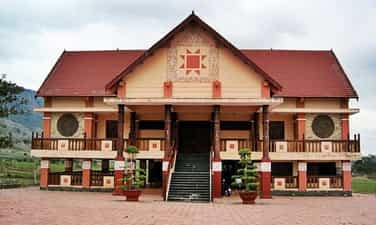
Hero Nup Memorial House - Stor resistance village is a typical historical and cultural relic of Kbang district, Gia Lai - a land rich in revolutionary tradition. Evidence on this land includes many provincial and national historical relics. One of them and the most typical is Stor resistance village relic - Hidden Heroes Memorial House. Hero Hiding as a leading bird of the revolutionary movement, fighting against the enemy to save the villages and country of ethnic minorities in the Central Highlands. The Hidden Hero Museum, also known as the Hidden Hero Memorial House, was built in 2010 and inaugurated on May 6, 2011, this is also the pride of the people of the Central Highlands. The museum is like a big house located in Stor village, To Tung commune, Kbang district, Gia Lai province. The Stor Resistance Village relic has become a symbol of the Central Highlands peoples, a symbol of courage, resilience and passionate patriotism. This is a place not to be missed when coming to this place, visitors come to commemorate the national hero who devoted himself to the great resistance. This relic was built on an area of 5 hectares, the combination of tradition and modernity creates a unique character for this place. The large gate opens to welcome visitors. When coming to the relic site, visitors will also be warmly welcomed by the people of Stor village with friendly smiles. If possible, they can also enjoy traditional festivals of the Bahnar people and feel the dances. sinuses, Gong sounds of the villagers and rustic dishes but it has become a specialty of the village. Stepping inside, you will see the memorial area and statue of Hero Nup and on both sides display many artifacts, images, precious documents about the life and career of Hero Nup along with many documents. records about the resistance village of Stor. Inside there is a model room simulating the resistance war against the French colonialists of his villagers. His real name is: Dinh Nup was born in 1914 and died in 1999 in Stor village of the Bahnar ethnic group. He was the leader of the people of Stor village to stand up against the enemy. Pictures and memorabilia of his life show the glorious victories and simple life of the national hero. Hero Nup Memorial House is a place to store valuable artifacts, over 400 pictures, documents, memorabilia of Hero Nup and many typical cultural artifacts of the Bahnar people. The simple and simple yet heroic and resilient beauty has created a special attraction for tourists. The environment here is fresh, the people's daily life is still very traditional, the people here are extremely open and friendly to everyone and visitors from other places will leave us with an unforgettable impression. . Source: Gia Lai Museum
Gia Lai
5335 view
Rating : National monument

Tay Son Thuong Dao Historical Relic Area
Tay Son Thuong Dao is the common name of the land located above the An Khe pass area, now belonging to An Khe town, Kong Chro district, Dak Po district and K'Bang district, called Tay Son Thuong Dao. to distinguish it from the lower Tay Son district, Tay Son district of Binh Dinh province. The Tay Son Thuong Dao relic complex currently includes 17 relics divided into 6 clusters distributed mainly in An Khe, and partly in Dak Po, Kong Chro, and Kbang. This complex was officially ranked as a national historical relic by the Ministry of Culture, Sports and Tourism in 1991 and will continue to be ranked as a special national historical relic in 2021. An Khe town is the main area of the Tay Son Thuong Dao relic complex where Tam Kiet (the three Nguyen brothers) chose to be the base to launch the legendary Tay Son movement. This is a place where, thanks to the rugged terrain, the vast mountainous forests and protected Ba River, this place also has very rich sources of forest products and land, suitable for raising soldiers and expanding the force. Food and grain storage during the early period of the uprising was also the starting point for the glorious historical journey of the Tay Son Dynasty. The entrance area is a large gate with two rows of monolithic stones and Bahnar gongs bearing the breath of Central Highlands culture. The gate area is also decorated with embossed reliefs of the Tay Son uprising such as people riding elephants, scenes of communal houses, scenes of carrying goods to battle, rivers, streams, and hills. The delicately crafted images express joy, steadfastness and confidence in the cloth-clad heroic leader, and belief in victory. Passing through the gate, visitors will see two rows of stone horses sculpted full of courage and pride with extremely prominent white color. The horses are sculpted in a galloping position towards the gate, with elegant and heroic lines. Entering the center of the Tay Son Thuong Dao relic area, visitors will see the Tay Son Tam Kiet communal house, the Tay Son Thuong Dao museum and An Khe Truong. Tay Son Tam Kiet Temple has ancient architecture with traditional tiled roofs, columns carved with ancient embossed motifs, in front of the temple is a very large painted pond surrounded by gray stone pillars creating a unique landscape. harmonious accent. Meanwhile, Tay Son Thuong Dao Museum is a place to store and display artifacts and pictures about the uprising. Coming to the Tay Son Thuong Dao historical relic site on the 4th and 5th days of the Lunar New Year every year, visitors will participate in the Hue Bridge Festival to commemorate the Tay Son uprising. The festival consists of two main parts: the ceremony with solemn rituals according to ancient customs to pray for good weather and peace, the country and people are safe, and the festival part is traditional cultural activities such as performing Tay Son traditional martial arts, performing arts. gongs, ring fighting, playing folk games... The scale of the Hue Bridge festival is very large, demonstrating unique culture and preserving traditional cultural beauty, contributing to promoting the historical value as well as promoting tourism of the Tay Son Thuong Dao relic area. Over hundreds of years, the relic still stands the test of time as a reminder of the roots and heroic past of our ancestors so that the next generations can build a more prosperous and beautiful homeland. Source: Gia Lai Tourism
Gia Lai
8754 view
Rating : Special national monument
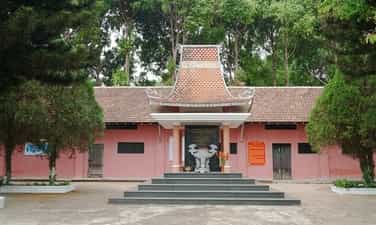
Pleiku prison
Pleiku Lao House is located on a high red soil hill, Thong Nhat Street, Dien Hong Ward, Pleiku City, Gia Lai Province. The prison was built by the French from 1925 to 1941 and was solidly repaired. The total area of the prison area is about 7 hectares, surrounded by solid 3m high walls with layers of barbed wire fencing. In the northwest and southwest corners, there are two guard posts with armed soldiers on duty 24/7. In the east, there is a guard bunker. During the early period from 1925 to 1945, Pleiku prison was the place where France imprisoned patriots and some communist party members active in the Bau Can and Bien Ho Red Relief Associations such as: Phan Luong, Nguyen Ba Hoe, Tran Ren, Lam Thi No. From June 1946 to 1954, France exiled prisoners of war and political prisoners through extreme torture and execution such as comrades Nguyen Dong, Nguyen Nho, Dao Lut, and Le Gioi. In June 1948, the prison cell was established, contacted the outside organization and established a commune cell, Bau Can plantation, and the prison cell formed a joint cell with comrade Ho Hoan as secretary. led the fight against harsh prison regimes, against beatings, limited hard labor, protected the personality of communists and organized prison escapes. In the years 1965-1968, the revolutionary movement developed strongly and widely throughout Gia Lai province and during the 1968 Tet Offensive, political prisoners of Pleiku prison united to attack the enemy by sabotaging the enemy. The prison escaped, but the enemy shot and killed 46 people and injured many others. After the Tet Offensive, at Pleiku prison, the enemy locked up 800 political prisoners, and at this time the harsh regime of prisoners was also strengthened; However, with faith in the victory of the revolution, the revolutionary soldiers imprisoned by the enemy here were not afraid of sacrifice and hardship, remained united, persevered, and did not surrender to the enemy. In July 1968, the prison Party Committee was established with comrade Nguyen Kim Ky as secretary, leading the fight against the enemy right in the prison. The brutal forms of torture, both physical and mental, by the enemy still could not subdue the will and indomitable spirit of the revolutionary soldiers. On the afternoon of March 15, 1975, political prisoners rebelled to liberate the prison, ending 50 years of control by the imperial prison regime. On December 12, 1994, Pleiku Prison was decided by the Ministry of Culture and Information to be recognized as a national historical relic. Pleiku prison is one of the "red addresses" to educate revolutionary traditions for the people, especially pupils and students. Many Party organizations and Youth Unions have chosen this place to organize activities, recruit party members, union members and meet and listen to former prisoners tell stories. This place has become a tourist attraction for domestic and foreign tourists every time they set foot in this land rich in revolutionary tradition. Source: National Museum of History
Gia Lai
5541 view
Rating : National monument
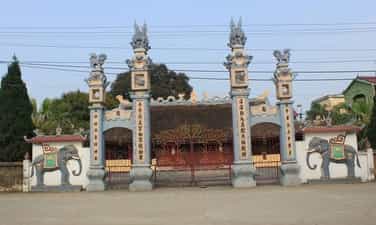
Dinh Kha Do
Kha Do communal house is located in Viem Nam Viem ward, Phuc Yen city, built in the Later Le dynasty (Le Canh Hung - 1741) to worship Tam Giang Dai Vuong - Famous general who helped Trieu Viet Vuong defeat the Luong invaders; Queen Minh Phi - Holy Mother who gave birth to Duc Tam Giang; Assistant Assistant Nuong Tu - Duc Tam Giang's younger sister, was instrumental in being in charge of military provisions. Legend has it that Saint Tam Giang was appointed General of the Army by King Trieu Viet to fight against the Luong invaders (6th century). He and his three younger brothers used guerrilla tactics to defeat the Luong invaders led by Tran Ba Tien. King Trieu Viet ascended the throne for a while, but due to not listening to his advice, he lost his throne by Ly Phat Tu. Ly Phat Tu sent someone to summon his brothers to become mandarins, but he did not accept them, saying: "I am loyal and do not worship two lords" and then he and his entire family perished on the Nhu Nguyet River. Remembering his merits as well as his example of loyalty, along the three rivers Thien Duc, Nhat Duc, and Nguyet Duc, there are 298 villages and communes worshiping and honoring him as village tutelary god. Kha Do communal house is an ancient, massive architectural work built in the architectural style of the Later Le Dynasty. The communal house's carvings are concentrated in the middle space, the area with the harem, the holy place, the place where military and theocratic power gathers, and mainly depict dragons and cosmic animals, along with the ceiling and worship relics. , the decorations make Kha Do communal house extremely solemn, expressing the authority of royal culture, concentrated and promoting its full strength. With ingenious art and tight layout, cosmic animals such as dragons, lyches, turtles, and phoenixes express the aspirations of human life here more than 200 years ago. This is the outstanding success of the art of carving wooden ceilings at Kha Do communal house of our people during the Le Trung Hung period. Currently, Dinh Kha Temple still has many valuable worship relics of ancient folk art, arranged in the middle of the communal house and on the harem, from the bottom up and according to the material. Wooden items include: altar palanquins, altar altars, altar thrones, altar horses, floating trays... Paper items include: Jade family tree, ordaining... Porcelain items include: incense bowls, water vases, wine bottles. Bronze objects include cranes, candles, and pedestals. Fabric items include pipe fans, ashes, clothes, etc. Nowadays, Kha Do communal house has main holidays during the year such as: 1st and 15th full moon days of every month; January fifteenth and August 2nd are the main parties; May 2 and October 15 are side parties; April 10 is the death anniversary of the village's tutelary god. Kha Do village communal house has a very unique custom: The custom of "Buying Quan Vien", today called "Buying Tu Van" of the young men in the village. In feudal times, the way to buy was to have chicken sticky rice, betel and areca nuts, and incense sticks waiting for the occasion to be placed on a tray and brought to the temple to celebrate the tutelary god and present to the village to buy officials. Nowadays, it's a bunch of bananas, betel and areca nuts, and incense cards to buy documents. Every young man in the village wants to be bought because they feel proud that they have a seat in the village communal house, so they have to live ethically - the family style lest the villagers laugh at them for being ordinary. Currently, the book for monitoring documents continues to follow the old book for officials, very closely and fairly. Those who buy first will be seated first in order (called Table), regardless of age and dignitary. The first two tables, called the Nhat table, sit in the middle of the pavilion, each table seats 3 people. The next two tables called the Second table also sit next to the First table in the middle of the pavilion, each table seats 4 people. After the First and Second tables come the tables of village and commune dignitaries, each with 4 people sitting in the middle of the communal house. Next, there are 4 people sitting at the tables of the officials (Tu Van) on both left and right sides of the pavilion. All tables are covered with mats and the meals are arranged the same according to the instructions of the organizers. Officials (Tu Van) can only change seats or tables to the next or upper table when the person sitting in front is dead or absent. Just like that, seat rotation is not a priority, no matter who it is. Thanks to the strict and fair order, there is no disunity or competition for each other's seats. This is a beautiful local custom still preserved to this day. Source: Information Portal - Electronic Communication of Phuc Yen City
Phu Tho
4557 view
Rating : National monument

Memorial area of President Ho Chi Minh on Co To island
Special National Relic of President Ho Chi Minh's Memorial Site on Co To Island was previously named "Historic Monument of President Ho Chi Minh's Memorial Places on Co To Island", and people often call it affectionately. is Uncle Ho's relic. This is a special relic, with its own value, not overlapping with any relic in the system of relics about President Ho Chi Minh throughout the country. The relic is located in the southwest of Co To island, now belonging to zones 1, 2, 3, Co To town. According to relic records, after President Ho Chi Minh visited the mining area and allowed Hai Ninh province (now part of Quang Ninh province) to erect a statue of Man on Co To island (January 1962), the Hai Ninh Administrative Committee decided to erect a statue of Uncle Ho and build a memorial area for President Ho Chi Minh on Co To island to commemorate the event of Uncle Ho's visit to Co To island on May 9, 1961. This relic area includes 5 relics: President Ho Chi Minh statue relic site, temple relic site, Doc Khoai relic site, souvenir exhibition house relic site and salt field relic site. The first statue of President Ho Chi Minh on Co To Island was a cement bust, built and inaugurated in 1968. In 1976, the bust was replaced by a full-body statue, made of reinforced concrete. steel. In 1996, the Department of Culture and Information (now the Department of Culture and Sports) upgraded the statue of President Ho Chi Minh on Co To island on the basis of keeping the full-body statue model intact but adapting the material from concrete. reinforced steel to granite material to ensure the sustainability of the project. The project was completed on May 12, 1997. Behind the statue of President Ho Chi Minh is a stele marking the event of Uncle Ho's visit to Co To island on May 9, 1961. Uncle Ho's statue and stele marking the event were built right at the location where the helicopter carrying Uncle Ho to visit Co To landed in the past. According to history books, during his visit to Co To Island, when passing through the potato fields, President Ho Chi Minh wanted to see the yield and quality of potato varieties grown on the island, said Comrade Hoang Chinh, Secretary of the Hai Ninh Provincial Party Committee. Tried digging up a potato bush for Uncle to see. The President Ho Chi Minh Memorial Exhibition House on Co To Island is a renovated project (in the 1970s) from the former Co To Commune Administrative Committee headquarters. This is the place to display a number of artifacts about the historical periods of Co To island district, especially artifacts related to Uncle Ho. The relic has become a highlight of great political significance and has great value in many aspects in terms of landscape, culture - history and aesthetics in the northeastern sea of the country. The historical relic of President Ho Chi Minh's memorial area on Co To island is a lasting "cultural milestone", a "sovereignty milestone" of Vietnam on the island, and a precious national heritage that needs to be protected. Preserve and honor the unique historical and cultural values of the monument in association with educating the nation's traditions and history. At the same time, it is also a special asset and a driving force for Co To to change and transform, aiming to become a dynamic marine economic region, attracting investors as well as domestic and international tourists to Co To. Bowl. Uncle Ho's statue on Co To island is a work of high visual artistic value, has a very special position in the system of monuments to President Ho Chi Minh at home and abroad, is the first and beautiful statue of Uncle Ho. of the Northeast region. In addition to the value of visual arts, the monument also has the value of harmonious landscape, built on a beautiful terrain with charming feng shui, overlooking the windy, white-sand beach of Co To Bay. smooth and winding stretches. An ideal swimming beach. A sheltered parking area for boats whenever there is a storm. Over the course of more than 50 years of formation and development, the historical relic of President Ho Chi Minh Memorial Site on Co To Island has always received attention from the competent authorities and all people, investing resources for it. planning, renovation and embellishment work. Since being recognized by the Ministry of Culture and Information as a national relic until now, some items of the Historical Relic of President Ho Chi Minh Memorial Area on Co To Island have been preserved in their original state. Earlier this year, the relic was recognized by the Prime Minister as a special National Monument. Source: Quang Ninh Electronic Newspaper
Quang Ninh
4066 view
Rating : Special national monument