Relic point Vietnam
Việt Nam
Communal houses, temples, and shrines in Ha, Phu Tho province
The cluster of relics of Ha communal houses, temples, and shrines (often called Dinh as Ha communal house, called Ha temple as Ong temple and Ha temple as Ba temple) was built in a flat, airy location in Huong Nha commune, Tam Nong district. , Phu Tho province. The cluster of relics worships the female general Xuan Nuong and the Ten Ministry of Gods who helped Hai Ba Trung defeat To Dinh and win victory. Currently, the relic complex still preserves a jade genealogy compiled by Nguyen Binh Phung in 1572, recording the behavior of the Gods in the relic. 1. Ha Communal House: Built on a large area of land, facing East-South, in front of the communal house is a pond and fields. The communal house has Dinh architecture, the Dai Bai consists of 5 rooms, 2 left (currently only 5 rooms remain) and the Harem has 2 rooms, is structured with 4 rows of wooden pillars, currently there are only 16 columns, including 8 main columns and 8 columns of troops. 2. Ha Temple (Ong Temple): Built on a high mound, facing East - South, in front and to the right of the temple is a pond (called a semi-circular lake), Nhat-style architecture, including 5 worship spaces Vertical, the door opens at the gable end, built in the style of a gate with 3 arched doors and two copper pillars shaped like gardenia. The great inscription in front of the communal house's door reads three words: "Toi Linh Tu". 3. Ha Temple (Ba Temple): Built on the same land of Don Ha, facing East - South, in front and behind are ponds and lakes, the architecture is 3 vertical altars, 5.10m long, 4.0m wide. 80m, including 16 wooden columns (8 main columns, 8 sub-pillars). The Ha communal house, temple, and shrine relic cluster is a complex of relics with historical and artistic value. In particular, the relic complex still preserves many valuable artifacts such as: ordination, jade genealogy, 3 ancient thrones, 2 palanquins, a collection of bowls, bowls, water hyacinths, porcelain trays and many sacred objects. value. The traditional festival is preserved and maintained at the relic complex on the 10th day of the first lunar month with many folk performances and games, especially the buffalo bridge festival. The cluster of relics of Ha communal houses, temples and shrines was recognized by the Minister of Culture and Information as a national historical, architectural and artistic relic on December 28, 2001. Source: Department of Cultural Heritage
Phu Tho
3690 view
Rating : National monument

Au Co Mother Goddess Temple
Located on the sacred land of outstanding people (Hien Luong commune, Ha Hoa district, Phu Tho province), Au Co Temple is a special historical and cultural work, a symbol of patriotism and great tradition. national unity. The image of mother Au Co giving birth to Lac and the Red son of Vietnam in a bag of hundreds of eggs has become an immortal image that lives forever in the thoughts, feelings and minds of generations of Vietnamese people. When Lady Ngoc Nuong gave birth to Au Co, she saw auspicious clouds protecting her, and fragrance spread everywhere, a sign of "Fairy coming to earth". Growing up, Miss Au Co was very beautiful, "Compared to flowers, she could speak, compared to pearls, fragrant pearls", diligent in reading, good at playing the flute, and proficient in phonics. After getting married, Lac Long Quan took Au Co from Lang Suong cave to Nghia Linh mountain. Au Co went into labor and gave birth to a sac of a hundred eggs that hatched into a hundred children. When the children grew up, Lac Long Quan told Mrs. Au Co, "I am a Dragon, she is a Fairy, water and fire are difficult to get along with... so 50 children followed their mother up the mountain, 50 children followed their father down to the sea. In order for it to be passed down for a long time, all of you will later become gods. Of the 50 children who followed their mother, the first son succeeded to the throne, took the title of the first Hung King, named the country Van Lang, established the capital in Phong Chau, and passed down 18 generations of Hung kings to rule the country for 2,621 years (From Nham Tuat year 2879 to 258 BC). Wherever Ms. Au Co and her children went, they won people's hearts and minds, teaching people to grow rice, plant mulberries, raise silkworms and weave cloth. On that mile-long road, one day he arrived at Hien Luong site, Ha Hoa district, Son Tay town. Seeing beautiful natural scenery, with high mountains and wide fields, long rivers, and vast blue lakes, Lush grass, flowers, and abundant fish and animals. He reclaimed land and established hamlets, taught people to grow rice, plant mulberries, and raise silkworms to weave cloth. Loan well, Phuong well, Thi mound, Cay Dau mound... are names from ancient times that still remain in the memories of the people here. When the farm was stable, he and his children set out for new lands. When the country had recovered and the frontier had expanded, he returned to Hien Luong, where he had chosen to spend his life. Legend has it that on the 25th day of the twelfth month of the year Nham Than, Mrs. Au Co and her flock of fairies flew back to heaven, leaving a silk bib under the banyan tree, where the people built a temple to worship, eternal incense and smoke. To express gratitude for the merits of Mother Goddess Au Co and educate the nation's traditions, more than 500 years ago, in the 15th century in the post-Le era, King Le Thanh Tong conferred deity and built the Temple of Mother Goddess Au Co in Hien Luong commune. - Ha Hoa district; Au Co Mau Temple was recognized as a national historical and cultural relic in 1991. The main holiday of Au Co Temple is the "Fairy's Day" on the seventh day of the first month. In addition, there are other holidays during the year such as February 10 and 11, March 12, August 13... Source: Electronic Information Portal of Ha Hoa District - Phu Tho Province
Phu Tho
3875 view
Rating : National monument
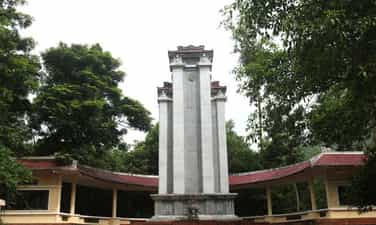
Khuon Manh Forest Relic
Khuon Manh Forest is located in Trang Xa commune, Vo Nhai district, has rugged terrain, and was once the place of operation of revolutionary cadres and guerrillas during the secret period. On September 15, 1941, the founding ceremony of the National Salvation Army II took place here, which was a milestone marking a period in the history of the resilient revolutionary struggle of our Party and people in the cause of national liberation. clan. History records: At Bac Son - Vo Nhai base, the French colonialists' terrorist repression of the revolution took place fiercely, the National Salvation Army I had to withdraw from the base to preserve its forces and many Party facilities. broken, the revolutionary movement encountered difficulties. At that time, Comrade Hoang Quoc Viet, member of the Party Central Committee, and the Bac Son-Vo Nhai base leadership advocated the restoration of the National Salvation Army I to maintain the sound of Bac Son armed guns and encourage the revolutionary movement. network. On the morning of September 15, 1941, at Khuon Manh forest, comrade Hoang Quoc Viet, on behalf of the Party Central Committee, announced the establishment of the Second National Salvation Army, assigned the flag and tasks to the Team to fight against terrorist enemies, eliminate fraud, and destroy enemies. reactionary oligarchs, protect the revolutionary base, protect the bases, strengthen and develop self-defense teams, maintain the guns of armed struggle to encourage the revolutionary movement of the whole country. The command board of the assigned Team consists of three comrades: Chu Van Tan - Commander; Nguyen Cao Dam - Directing political officer; Tran Van Phan - Deputy Commander. The initial team had 36 officers and soldiers (3 female), a few days later the number increased to 46 people, organized into 5 squads, equipped with rudimentary weapons: flintlock guns, bayonets, spears... Between After the siege of the French colonialists and the ruling apparatus of the feudal henchmen, the National Salvation Army II was established, this was a predecessor force of the Vietnam People's Army. Khuon Manh Forest, the location where the National Salvation Army II was established on September 15, 1941, was ranked as a national historical relic by the (former) Ministry of Culture and Information, and Trang Xa commune was honored as Hero of the Force. armed forces in the resistance war against the French. Currently, the list of the National Salvation Army II is solemnly engraved on a marble stele, carved into the great Khuon Manh forest, an important historical event in the struggle for national liberation of the Vietnamese people. Source: Thai Nguyen Electronic Newspaper
Thai Nguyen
4343 view
Rating : National monument
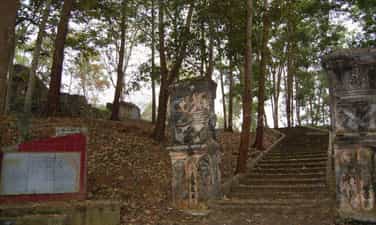
Cho Chu prison historical site
Cho Chu Prison Relics is located in Vuon Rau hamlet, Cho Chu Town, Dinh Hoa district, Thai Nguyen province. In 1889, Cho Chu was occupied by the French colonialists. In 1894, they established a representative agency to rule this area. By 1916, they started building a prison. Initially, the prison was made of simple bamboo and wood to imprison common criminals. Later, they imprisoned patriotic soldiers participating in the Thai Nguyen Uprising (1917) and Yen Bai Uprising (1930). In 1940, the Bac Son Uprising broke out, they arrested many officers participating in the uprising and brought them here to detain. In 1942, the French colonialists built a solid prison made of bricks, tiles, and cement that could hold 200 people at a time, including a number of political prisoners transferred from Cang Ba Van, Son La prison. In August 1943, 100 political prisoners from Son La Prison were detained here, including many comrades who were members of the Communist Party. From there, a Communist Party cell in prison was formed. Because they were able to install people in the ranks of enemy soldiers, Cho Chu Prison Cell was often directed by the Northern Region Party Committee. In prison, Communist soldiers turned the prison into a school, studying Mac-Lenin theory, learning how to organize and lead the revolution, and practice political courage. Here, Communist soldiers in Cho Chu Prison published the newspaper "Thong Ngan" and created plays with patriotic content, national pride, and revolutionary songs to encourage communist soldiers. , patriots persistently struggled, waiting for a favorable opportunity to escape from prison and go out to work. On October 2, 1944, we organized 12 comrades to successfully escape from prison, contributing to building important bases in Dinh Hoa, Dai Tu and Nguyen Hue War Zone. These are comrades Song Hao, Le Hien Mai, Ta Xuan Thu, Hoang Ba Son, Le Trung Dinh, Vu Phong, Nhi Quy, Tran Tung, Chu Nhu, Nguyen Cao and Pham Ngoc Bong... Cho Chu Prison Relics is a place that marks the barbaric crimes of the French colonialists and is also a vivid symbol of revolutionary soldiers who devoted their lives, fighting and sacrificing for the independence and freedom of the Fatherland. . Many comrades have held up a shining example of the spirit of learning and growth through the practice of indomitable struggle, making worthy contributions to the cause of national liberation. Cho Chu Prison was ranked a National Historical and Cultural Relic by the Ministry of Culture and Information on February 25, 1998. Source: Dinh Hoa District Electronic Information Page, Thai Nguyen Province
Thai Nguyen
4837 view
Rating : National monument
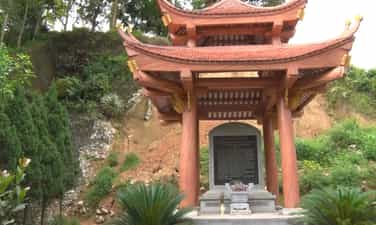
Cang Ba Van historical site
Ba Van Cang is located in Binh Son commune, Song Cong city, Thai Nguyen province - a countryside rich in revolutionary tradition. Before 1941, Ba Van Prison was part of Thai Nguyen province prison, built by the French on a remote area of land in Ba Van village, with difficult traffic, sparse population, separated from the outside by the river. Labour. This prison was proposed to be built in 1902, but for many reasons, construction did not begin until 1913. Initially, Thai Nguyen province prison had a small scale, the cells were made of bamboo, wood, and simple thatched roofs to house common criminals. Realizing that this prison is located in a place of "sacred forest, poisonous water", being imprisoned here is the safest, the French government has renovated and expanded the prison, building it more solidly to be able to take over many prisoners. than. There are solid fences around the prison, four corners are guarded by four guard posts. The prison is the home of the warden and soldiers, with a separate guard post for the guard. On September 29, 1936, the French President issued a Decree on full amnesty for prisoners throughout Indochina. Many political prisoners - patriotic communist soldiers - after being acquitted, have returned to work, connecting with leaders of the patriotic movement from North to South to fight for freedom, democracy, food and clothing. and peace. Before the outbreak of strikes, demonstrations, market yards, lockouts, struggles for tax collection, against tyranny oppression,... taking place from urban to rural areas, January 21, 1940 , The French Government has issued a Decree on the house arrest or deportation from their places of residence or detention in concentration camps of "dangerous elements" for national defense and common security, essentially for house arrest. Former political prisoners were acquitted in previous periods. Implementing this Decree, the colonial government in Vietnam established "special labor" camps (camp spécial des travailleurs) to detain political prisoners who had been acquitted in previous years, including Ba Van camp. was established under the Decree of the Governor of Tonkin on October 28, 1941. Ba Van Camp was maintained until October 1944 and between 1941 and 1944, about 200 prisoners were brought here for detention. After Ba Van Cang was abolished, the French colonialists sent political prisoners to be detained at Nghia Lo canton, Yen Bai province, established in 1944. In December 1994, the Ministry of Culture and Information issued a Decision to recognize Cang Ba Van historical relic as a national relic. The traces of Cang Ba Van are no longer there anymore, because in the past the prison was just rows of houses made from bamboo, the 5 meter high fence was built from sharpened bamboo sticks. This place has become a center for research and development of mountainous livestock, with the largest horse farms in Vietnam today. The strong, smooth-haired horses ready to gallop will create a lot of excitement for visitors, especially children. It feels like visitors are in the remote Mongolian steppe, not in Thai Nguyen. Source: Thai Nguyen Electronic Newspaper
Thai Nguyen
4181 view
Rating : National monument
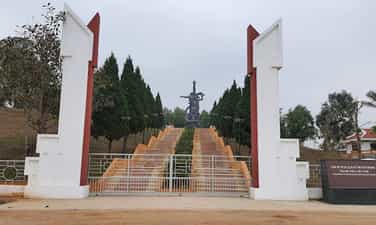
Location for establishing the Youth Volunteer Team
Historical relic The location of the establishment of the Central Youth Volunteer Work Team (July 15, 1950) is located at Go Tho hill, Yen Lang commune, Dai Tu district, Thai Nguyen province. The establishment of the Central Youth Volunteer Work Team is a milestone marking the maturity of the Vietnamese Youth Volunteer Force in the nation's long resistance war against foreign invaders, marking its activities. The actions and dedication of many generations of officials and young people during the resistance war against the French colonialists. Currently, the location is where spiritual and cultural activities of officials and people of Dai Tu district and of Vietnamese officials and youth take place. The relic site was invested and built by the Ho Chi Minh Communist Youth Union Central Committee in 2002 on the occasion of the 52nd anniversary of the traditional Youth Volunteer Day. The relic site has 5 categories of works, monuments, memorial houses, and stele marking events, including: - Youth Volunteer Monument Area: located in the central and highest position of the Monument Area. The cluster of statues is the image of two young volunteers in the side-by-side position of the winner, symbolizing heroic indomitable will on a monolithic stone pedestal. The statue is about 5m high, the stone pedestal is 2.5m high, and about 2m wide. - Statue system area: Includes 8 statues made of monolithic stone carving heroes representing Vietnamese Youth: Ly Tu Trong (1931), Kim Dong (1943), Tran Van On (1950), Vo Thi Sau (1952), Nguyen Van Troi (1964), Nguyen Viet Xuan (1964), Doan Thi Lien (1966), Kpa Klong (1975). - Traditional House Area: The traditional house has a total area of 516 m², in the middle of the house there is a 1.5m high, 0.8m wide stele with a semi-arc shaped forehead, the front is covered with engraved red granite. Golden letters: "Our youth have made many good achievements and deserve to be Heroic Youth of a Heroic nation." - Main gate of the monument and fence system: Including the main gate and open fence in front of the monument. At the main gate, there is a monument nameplate made of monolithic granite material. The relic site has historical value, the first place of origin of the birthplace of the Vietnamese youth volunteer force in Thai Nguyen province, connected to other historical sites related to volunteerism in the Viet Bac region. and the whole country. With the above typical value, the location of the establishment of the Central Youth Volunteer Team (July 15, 1950), Thai Nguyen province, was ranked as a national historical relic by the Minister of Culture, Sports and Tourism. Join on February 24, 2023. Source: Department of Cultural Heritage
Thai Nguyen
3851 view
Rating : National monument

Hanoi flagpole
The flag tower, "Hanoi Flagpole" is located on Dien Bien Phu Street, Ba Dinh District, Hanoi, built in 1812, under the reign of King Gia Long of the Nguyen Dynasty on the southern part of Thang Long Imperial Citadel, where the building was built. Tam Mon citadel of Thang Long Imperial Citadel during the Le Dynasty. This is the reference point, marking the origin at the southern end of the main central axis of the citadel, from here follow the "fishing path", through Doan Mon and then to the most important point, the central point of the Imperial Citadel is Kinh Thien Palace. . Hanoi flagpole is now the most intact and majestic structure in the Thang Long Imperial Citadel complex. The Flag Pole is built with three base floors and a column body. The base floors are shaped like a truncated square pyramid, gradually getting smaller, overlapping each other, and surrounded by bricks. The first floor is each 42.5m long; 3.1m high with two brick stairs leading up. Second floor, each length is 27m; 3.7m high with 4 doors, the East door has two words "Nghanh Huc" (welcoming the morning light), the West door has the words "Hoi Quang" (reflected light), the South door has the words "Reflected light". “Huong Minh” (toward the light), the North door has no inscription. Third floor, each length is 12.8m; 5.1m high with a door to the stairs facing North. On this floor is the body of the Flag Pole, 18.2m high; Eight-sided cylindrical shape, tapering upward, each bottom side is about 2m. Inside the body is a staircase of 54 steps that spirals up to the top. The whole is illuminated (and ventilated) by 39 fan-shaped holes. The top of the Flag Pole is made up of an octagonal building, 3.3m high, with 8 windows corresponding to the eight sides. In the middle of the floor is a circular cylinder, 40cm in diameter, reaching the top of the floor, where the flagpole is placed (the flagpole is 8m high). The entire Flagpole is 33.4m high, if including the flagpole, it is 41.4m. "Hanoi Flagpole" is one of the few architectural works in the Hanoi citadel area that was lucky enough to escape destruction by the French colonial government in three years 1894-1897. On October 10, 1954, for the first time, the red flag with yellow star - the national flag - flew atop the "Hanoi Flagpole" and was recognized as a historical relic in 1989. On October 10, 1954, the whole of Hanoi was jubilantly excited to welcome the big festival, Victory Day, the capital Hanoi was completely liberated. The whole of Hanoi gathered at the "Hanoi Flagpole" waiting for the historic moment: The National Flag Hoisting Ceremony at the top of the "Hanoi Flagpole". At exactly 3:00 p.m., October 10, 1954, the City Theater's horn blew for a long time. The military band performed the National Anthem under the direction of comrade Dinh Ngoc Lien. The national flag was raised slowly to the rhythm of the military march. For the first time, the red flag with yellow star - the national flag - flew atop the "Hanoi Flagpole". From the date of construction until now, "Hanoi Flagpole" has been nearly two hundred years old. When the Democratic Republic of Vietnam was born, the image of the "Hanoi Flagpole" was solemnly printed on the currency of the State Bank of Vietnam issued for the first time. For more than half a century, mounted on the top of the "Hanoi Flagpole" is a red flag with a five-pointed yellow star flying majestically in the sky of the thousand-year-old capital of Thang Long - Hanoi, forever a symbol of glory. , is the pride of the nation, the independent and free country of Vietnam. According to research documents, since 1986, a red flag with a yellow star measuring 24 square meters has always flown on the Hanoi Flagpole. Today's Hanoi flagpole is located on Dien Bien Phu street, with ancient mother-of-pearl trees growing around it and at its foot is a luxuriant longan garden. According to some research documents, in a photo taken in 1890 by Louis Sadoul, a French military medical officer, the Lenin Monument flower garden area at the foot of the flagpole today is also Elephant Lake because it is a place to bathe elephants. of the Nguyen Dynasty. The ancient tree ranges of today were not yet planted at that time. In the photo, it can be seen that the French army has set up semi-permanent barracks on the ramparts of the Flagpole to station their troops. Also during this period, the Hanoi Flagpole was also used by the French army as an observation tower. During the US war of sabotage, the Flagpole was also an observation tower for Hanoi's air defense troops. At that time, from the top of the flagpole you can see both Hanoi and its suburbs. What's special is that during Hanoi's hottest days, the inside temperature of the Flagpole is always cool like it has air conditioning. The structure of the up and down doors of the Flagpole is also so scientific that no matter how heavy the rain, water does not flow into the tower. Source: Thang Long - Hanoi Heritage Conservation Center
Hanoi
3876 view
Rating : National monument

Hoa Lo prision
Hoa Lo Prison was built in 1896, initially named Prison Centrale, but to avoid people's curiosity and excitement, it was changed to Maison Centrale and is now called Maison Centrale. The name is still on the main gate leading into the monument. This prison was built by the French in 1896 on the outskirts of the city with the purpose of serving as a central prison for both Central and Northern Vietnam. This place held mainly political prisoners and patriots who opposed the colonial government. Known as hell on earth, during its time of operation, Hoa Lo prison has become a detention place for many generations of Vietnamese revolutionary soldiers and activists with a prison architecture designed designed with extremely barbaric and cruel forms of torture and coercion. The most typical example is the guillotine machine, which has brought the prison to the top 10 most notorious prisons in the world. The total area of the entire former prison area was more than 12,000 square meters. However, today only 2,434 square meters remain to be preserved to become a relic. Also because it was built on the land of Phu Khanh village, Vinh Xuong canton (formerly) is a craft village specializing in producing ceramics, day and night the kiln is blazing, so the village is also called Hoa Lo. During the French colonial period, Hoa Lo prison was designed and built with a structure consisting of 4m high, 0.5m thick stone walls reinforced with electric steel wires. The entire prison area is divided into 4 zones A, B, C, D. In which: - Areas A and B: For prisoners under investigation, unimportant prisoners or prisoners who violate prison discipline. - Area C: For French or foreign prisoners. - Area D: For prisoners awaiting death penalty Hoa Lo Prison is known as Hell on Earth with the prison's construction design allowing Hoa Lo to accommodate about 500 prisoners. The prisons are designed with harsh and extremely brutal detention and coercion regimes. From a famous pottery craft village, the French colonialists turned the land of Hoa Lo into a place of physical and mental imprisonment and exile of thousands of patriotic soldiers. Living in an imperial prison with a harsh detention and torture regime, the soldiers still maintained their morale and turned the prison into a school, a place to disseminate revolutionary theory. Some typical torture tools such as guillotines, electric cameras, canes... The French colonialists paid great attention to the construction of all door designs, locks, and shackles here. Specially brought from France, very tightly managed. Before it was completed, in January 1899, Hoa Lo prison took over the detention of people. According to the original design, this place was only enough to hold 500 prisoners, but the prison has been expanded many times to accommodate more prisoners. In the years 1950-1953, Hoa Lo imprisoned up to 2,000 prisoners. Becoming a living hell that no one wants to enter. Dungeons are considered a terrifying obsession for any prisoner with fiery slaps, beatings, being shackled, being shackled, eating, sleeping or toileting all in just a narrow space. dark. Most people who are locked up here for a while will suffer from edema and scabies due to lack of hygiene and sunlight. Surrounding the prison is a wall of stone and steel reinforced by a system of barbed wire with high voltage current running through it. The four corners are watchtowers capable of observing every move of the entire prison. The iron door and lock system was brought from France. The cells, dark rooms, and cells are cramped, lacking air, and the notorious prison guards, with many years of experience in prison management, are ready to oppress and even take the lives of prisoners. On June 18, 1997, the Ministry of Culture, Sports and Tourism recognized the furnace prison as a national historical relic. Source: Hanoi People Magazine
Hanoi
3936 view
Rating : National monument
Co Loa Citadel Relics
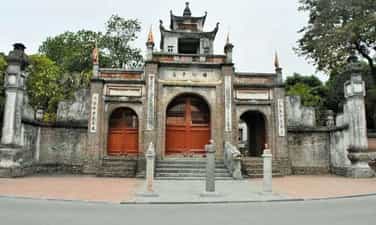
Co Loa Citadel relics are located in Dong Anh district, Hanoi city. At this location, there are traces of the Son Vi culture, belonging to the late Paleolithic period, about 20,000 to 11,000 years ago. About 4,000 years ago, residents of the Phung Nguyen culture also settled on this land. Around 208 BC, after unifying the two tribes of Au Viet and Lac Viet, establishing the state of Au Lac, An Duong Vuong chose this land to establish the capital, building Co Loa citadel (Oc citadel, Tu citadel). Long citadel, Loa citadel)... Currently, the relic has a conservation planning scope of 830 hectares. According to statistics, in the Co Loa area there are currently about 60 relics (including 07 national relics), including types: architectural and artistic relics, historical relics, revolutionary relics, relics. archeology. Co Loa relics are also an archaeological site of outstanding value, associated with periods of Vietnamese archaeological culture, such as Son Vi culture, Phung Nguyen culture, Dong Dau culture, Go Mun culture , the pinnacle of which is Dong Son Culture, with many typical archaeological sites: Dong Vong, Bai Men, Dinh Chien, Dinh Trang, Ma Tre, Citadel, Ngoai Citadel, Thanh Trung, Xuan Kieu, Nhoi hamlet, temple Thuong, Tien Hoi, Duong May, Cau Vuc... In this area, archaeologists have discovered tens of thousands of working tools, musical instruments and bronze weapons, contributing to clarifying many issues about An Duong Vuong period and the history of this land. Co Loa Citadel: has an area of nearly 46 hectares, including 3 citadels (Inner citadel, Central citadel, Outer citadel) closed, covered with soil, with a total length of 15,820km. The citadel was built based on the natural terrain - connecting mounds, heaps and high strips of land along the river; Surrounding the citadel are moats connecting with the Yellow River. On the citadel's surface there are mounds of earth protruding outward, called "hoi ho"; The citadel has a place cut into a gate, and a temple to worship gods is built above. Thuong Temple (An Duong Vuong temple): built on a land area of 19,138.6 square meters. At the entrance to the middle door of the temple, there are a pair of stone dragons, bearing the artistic style of the late Le Dynasty. The temple also preserves 5 stone steles and 53 artifacts of unique historical, cultural and scientific value. Co Loa Communal House (Ngu Trieu Di Quy): has a floor plan shaped like the letter "Dinh", including a large communal house and a harem. The great communal house consists of 5 compartments, 2 wings, wooden frame structure, funny-shaped tiled roof, with 4 curved corners. The roof rafters are structured in the style of "gong rack, beam stacked", with 6 rows of pillars. The harem is connected to the main court through a set of doors below and a roof above. The decorative themes on this architecture are in the artistic style of the 18th century. In particular, the communal house still preserves 17 artifacts with quite typical historical, cultural and scientific value. My Chau Am (Ba Chua Am or My Chau Temple): located on an area of 925.4m2. The architectural layout is arranged in the form of "pre-Nhat, post-Dinh", including pre-sacrificial buildings, middle hall and rear palace. Co Loa Pagoda (Bao Son Pagoda): was built around the beginning of the 17th century, the ground layout is in the form of "internal Cong, foreign nationality", including items: front hall, incense burner, upper palace, harem , bell tower, tomb tower, back gate, Patriarch's house, nun's house, guest house. In particular, the pagoda also preserves 132 artifacts of unique historical, cultural and scientific value. Mach Trang Pagoda (Quang Linh Tu): built in the Later Le Dynasty, on an area of 4,922.4 m2. The pagoda faces south, including the following items: Three Jewels, front hall, upper palace, Mau house, dance floor, corridor... Mach Trang Communal House: located on a high plot of land, with an area of 6,198.4 square meters, including front altar items, grand communal house and harem. With the typical historical, cultural and scientific values of the monument, on September 27, 2012, the Prime Minister decided to classify Co Loa Citadel as a historical, architectural, artistic and archaeological relic. Special national monument. Source: Department of Cultural Heritage
Hanoi
3955 view
Rating : Special national monument

Khuyen Luong Communal House
Khuyen Luong Communal House formerly belonged to Tran Phu commune, Thanh Tri district, now Tran Phu ward, Hoang Mai district, Hanoi. Khuyen Luong is a very famous ancient village in the southeast of Thang Long citadel. At the end of the Tran dynasty, Khuyen Luong was located in the fiefdom of the famous god Tran Khat Chan, a great historical figure of the Tran dynasty, who had the merit of smashing the Champa army and killing King Che Bong Nga who invaded our country's borders. The beauty of the land that Lieutenant General Tran Khat Chan chose to build into a manor estate was praised by Nguyen Trai: In that area, the land is red and ripe with black and green colors, the fields are top-class, and the Kim Nguu river is moreover. Like a horizontal strip of silk, it is a gift from nature to this region. In 1399, general Tran Khat Chan was murdered after his plan to kill Ho Quy Ly failed, and the fief was also destroyed and destroyed. Although loyalist Tran Khat Chan only stayed with this land for a short time, his merits and career left a deep mark in the cultural life of the people in the region. To show their admiration and gratitude to him, the villages in the old manor area, including Khuyen Luong village, all worship Tran Khat Chan as the village God Emperor protecting community life. Located in a countryside rich in historical tradition, Khuyen Luong communal house relic has a long history of existence over time. The communal house has been restored and repaired many times. During his lifetime, Tran Khat Chan built a manor estate in this area. In the estate planning, Khuyen Luong was planned as a mulberry growing area and silkworm rearing, a traditional profession that stuck with the villagers forever. The image and career of the famous general Tran family are always imprinted in the memories and spirituality of generations of Khuyen Luong villagers. Over time, Khuyen Luong communal house used to be a revolutionary base during the resistance war against the French. In June 1945, two classes were established at Khuyen Luong communal house to propagate the national language. On August 19, 1945, the Viet Minh seized power in Hanoi. These two classes were the core factors that overthrew the old government, established a new government of the people and established the Self-Defense Team, Youth Union, and Association. women to participate in fighting to protect the government. By June 1946, the first cadre training class of the Vietnam Trade Union opened at the communal house. In 1947, the people of Khuyen Luong village built a base in the enemy area. The communal house was a place to mobilize people to buy resistance bonds and mobilize people to hide officers, soldiers and militia and guerrillas. From 1948 to 1949, the revolutionary movement was very strong, the enemy always terrorized and robbed the people, the enemy sent the West to set up camp at Khuyen Luong church to suppress the revolutionary movement here. At the communal house gate on October 21, 1949, they shot and killed comrade Nguyen Van Khang, a guerrilla. By June 1950, they set up camp right at the beginning of the village, surrounded and searched to sabotage the local revolutionary movement. Despite this, the people are still united in fighting, protecting officers, and defending their homeland. In 1961, doing well in animal husbandry and becoming the flagship of the Capital's agricultural movement, the people of Khuyen Luong were honored to welcome Uncle Ho, Prime Minister Pham Van Dong, Prince Souphanouvong and Uncle Ton Duc Thang to visit. . In 1964, when the US escalated its invasion of the North, Khuyen Luong Communal House was a place to store military supplies (pots, pans, dry food and medicine) for combat purposes. In particular, the communal house is a place to store anti-aircraft artillery shells from two artillery positions and one missile position to protect the Red River ferry bridge. Khuyen Luong communal house was ranked as a historical and architectural and artistic relic by the Ministry of Culture and Information in 1996. Source: Hanoi People Magazine
Hanoi
3502 view
Rating : National monument